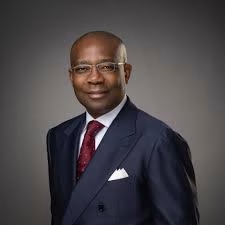
Dr Omakoji Simeon Oyiguh: Fighting insecurity in Kogi State with bare hands
By Theophilus Abbah
Angels had snatched my mother from the gate of death. We had to ferry her to the foremost tertiary hospital that shone as the glory of our State- Kogi State Specialist Hospital, Lokoja. That was in December 2025, when the unfriendly humidity from the mountains encircling the capital city was fierce and unforgiving.
The ambience of this medical facility was a contrast to the chaotic and broken asphalt roads that tore from other parts of Lokoja to the hospital on Muhammadu Buhari Way. It wore the innocence of a new baby; it flashed the light of hope for the sick and feeble.
The well-designed and paved walkway, football-size parking lot, well-groomed flowers, the fresh paint on the walls of the hospital’s buildings, and the roof, proud of wearing glossy sheets, all provided a scenic environment that was welcoming.
That impression can only take root in the minds of those not already torn apart by the desperate race to secure relief for their loved ones.
On the hazy morning of December 15, 2025, a drowsy truck driver veered off course and rammed into my mother in our village. The collision left her with multiple fractures, yet by God’s benevolence she survived what felt like a cruel wind of fate.
In the aftermath, we found ourselves clinging to hope, knowing that divine mercy had spared her life. But to complete the miracle God had begun, we needed angels in human form—people whose compassion, skill, and sacrifice could bridge the gap between survival and healing.
His genuine, selfless nature gave me confidence that he was the right medical professional to seek advice from.
In the haze of anxiety that unsettled me, I thought of a medical doctor I could turn to for guidance. The first name that surfaced in my mind was Dr Omakoji Simeon Oyiguh. I had never consulted him about my personal health before; my only encounters with him were through a community platform. Yet his dedication to the organization was instinctive—like the effortless skill of someone naturally writing with the left hand. His genuine, selfless nature gave me confidence that he was the right medical professional to seek advice from regarding my mother’s health.
He did not disappoint. Though he was not on call that day, Dr Oyiguh breezed into the specialist hospital to meet me and my mother that sticky evening. I hurried out to receive him at the expansive car park. It was a weekend; there were few vehicles in the parking lot, so it was easy for me to identify his tall frame as he stepped out from his car.
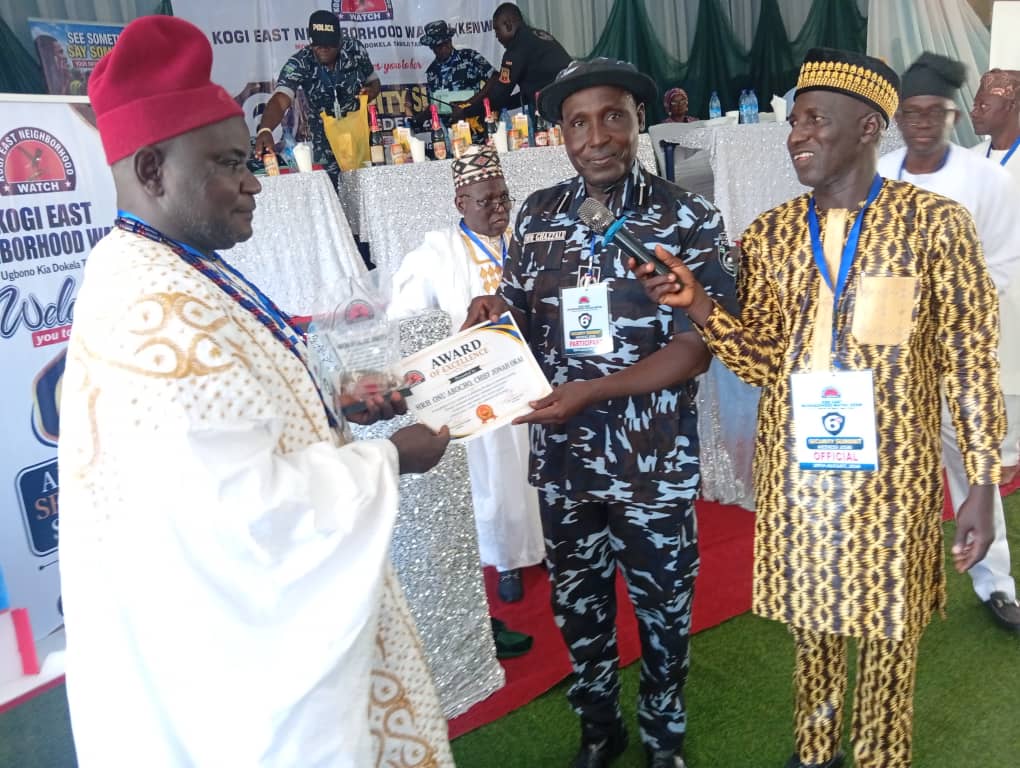
Kogi East Neighbourhood Watch on 29th August 2026, at its 2026 Annual Conference in Dekina, Kogi State, presented awards to individuals who have made contributions to the Security of Kogi East. Among them were the Onu Abocho HRH Okai Jonah Idrisu . The award was collected on his behalf by Onojomi of Emewe Opada, HRH Alhaji Abdullahi Acheneje Onogwu .
We exchanged pleasantries, and almost immediately he began asking a series of questions about my mother’s condition. Drawing from fragments I had gathered—snippets from her caregivers and secondhand details from the doctors who had attended to her—I pieced together an outline that I hoped would give Dr Oyiguh a clearer understanding of the scope of her health crisis.
He listened attentively until I had shared every detail I could. Then we moved quickly into the Accident and Emergency Ward. Like any seasoned doctor, he examined my mother’s eyes, knees, legs, hands, head, mouth, and the other areas marked by the accident.
He offered no immediate comments, speaking only to engage her in light conversation as a way of testing her mental alertness. Soon, the medical staff on duty gathered around Dr. Oyiguh, greeting him and explaining their observations. He asked questions that were strictly medical—well beyond my understanding—and responded mostly with nods, sparing his words. Finally, he stepped out of the A&E ward, and I followed behind him.
There’s no cause for alarm.
I was all ears. Dr Oyiguh led the way to the staircase to the main inpatient ward of the specialist’s hospital. As we leaned on the black and now damp rail, he and I brainstormed about the complications around my mother’s health.
“There’s no cause for alarm,” he began, feeding my confidence with assurances that the medical doctors and nurses attending to my mother were very reliable and deeply committed to their job.
It was good to hear a positive remark from a doctor.
“I saw she bends, complaining about chest pains,” Dr Oyiguh continued.
“Yes,” I responded. “But the test result shows she had no injury or fracture on the chest; the fractures, from the X-ray, are around her thigh and knees.”
After a few seconds of introspection, imagining the possible cause of the inconvenience in my mother’s chest, Dr Oyiguh came up with an idea. “I suspect it could be an ulcer; she may have had the symptoms of an ulcer previously, before the accident. I’m not sure, but I’ll recommend you get Gascol suspension. It could help…”
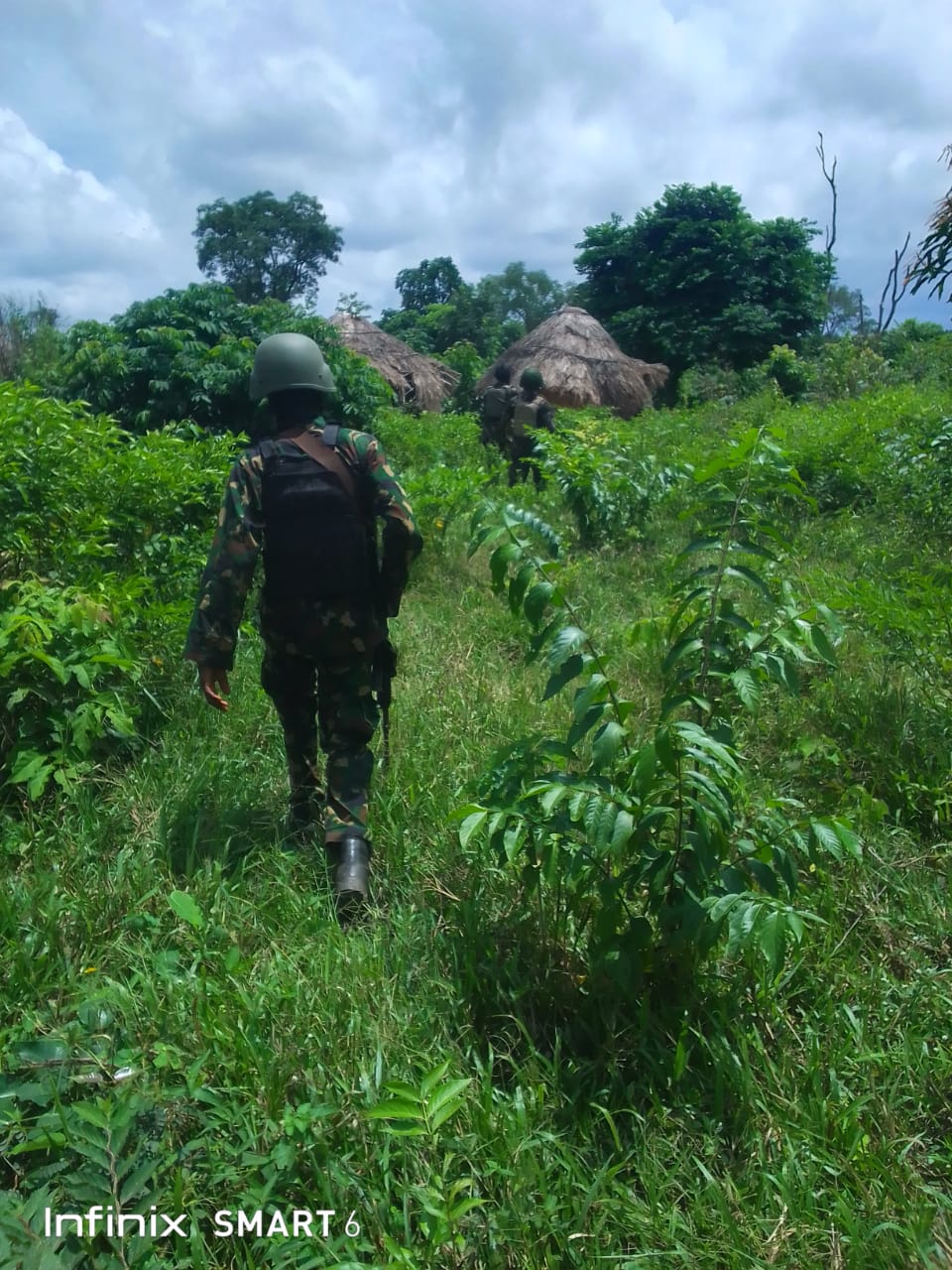
Kogi Forest, where over 21 kidnapped victims were rescued.
Just then, Dr Oyiguh’s worn-out phone began to vibrate furiously, disrupting our discussion. “Yes,” he spoke into the mouthpiece.
He adjusted his posture, perhaps to hear with clarity, as he listened to the voice from the other end. Lines of worry appeared on his forehead; his lips spread out in alarm, as if a member of his family was in danger.
“Where?” he shouted as if the voice at the other end was deaf. “Is the driver wounded?” “How many passengers were in the vehicle?” “What about the police post in the next village?”
The deluge of questions Dr Oyiguh asked the caller ploughed the graph of trouble in my mind’s eye. Apparently, there had been a kidnapping incident.
“Kidnappers have struck at Adumu-Igah, in Olamaboro Local Government Area,” he turned to explain to me.
Read Also: Jacob Choji Pwakim: Apostle of Dialogue and Peace in Plateau State
I was pricked by the name of the village. We had imagined that banditry was in a distant, accursed land. It had come close to my ancestral roots.
“That’s my district,” I revealed to Dr Oyiguh.
“Really?” he asked rhetorically, apparently shocked at the coincidence.
“I had my primary school education at Igo, next to Adumu-Igah,”I explained.
“Ah!” he exclaimed. “You people must organize yourselves. There is a primary school by the road; kidnappers had taken over the school premises, carrying out their activities openly, but the villages are too scared to challenge them. Now, they waylay travellers on that road, kidnap them, and take them somewhere behind a hill across that road. From there, they collect ransom and engage in terrible things.”
Unaware of the risks, the people of that community welcomed some herders and even provided them with grazing land. Now, bandits have embedded themselves among the herders.
The call shifted our conversation to the issue of insecurity in Igalaland. Dr. Oyiguh—a medical doctor and former Chairman of the Kogi State chapter of the Nigerian Medical Association (NMA)—has taken on a demanding role that keeps him vigilant day and night, analysing the security situation in Kogi East senatorial district.
Though he carries no official title, position, or compensation, he has become the driving force behind the Kogi East Neighbourhood Watch (KENW). Under his coordination, KENW has evolved into a dynamic body—adapting roles, generating ideas, and tailoring strategies to address the unique challenges of insecurity in the region.
“We combed the hills around Adumu-Igah,” he explained. “We observed that the area has a peculiar relationship with the Fulani. Unaware of the risks, the people of that community welcomed some herders and even provided them with grazing land. Now, bandits have embedded themselves among the herders.
They set up roadblocks on the highway at unsuspecting times, kidnap passengers and motorists, take them to hideouts beyond the hills, and use communication networks to negotiate ransoms. That’s what we discovered. But we are working with security agencies to flush them out of those forests.”
Read Also: Adakole Daniel: An Accountant-turned-Peace Mediator in Benue State
As calls poured into his handset from different parts of Kogi East, the medical doctor responded to each with the urgency of an emergency. At intervals, he shared updates on the KENW WhatsApp platform—a space where alarms, exaggerations, misinformation, suspicions, assumptions, and conspiracy theories often circulate.
Despite the chaos, this middle-aged doctor found time to address every message: clarifying facts, debunking falsehoods, informing members about measures taken by security agencies, advising victims’ families on how to respond to bandit attacks, guiding them on cooperating with the police, army, and vigilantes, and generally calming fears whenever incidents seemed overwhelming.
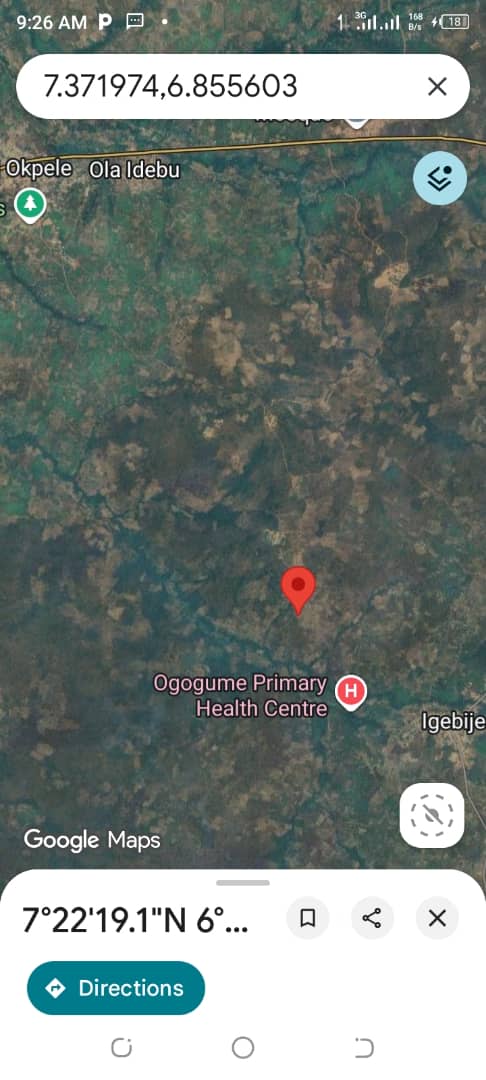
Ariel view showing mapped area of the Kogi community struck by bandits
Insecurity in Kogi East has assumed a troubling dimension, with highways and rural corridors becoming theatres of repeated kidnappings.
Armed gangs exploit the forested terrain of Ofu and Dekina, ambushing vehicles and abducting passengers into hideouts. In August 2026 alone, two major incidents occurred: sixteen victims were seized along Ojuwo-Ajengo–Mamerebo roads, while fifteen passengers of a Peace Mass Transit bus were abducted near Mamerebo.
Both groups were rescued after fierce gun battles involving the Army, Police, Navy, and vigilantes. Earlier in July, coordinated abductions along the Itobe–Achigili axis highlighted the persistence of flashpoints, while June witnessed sporadic attacks on commercial buses.
Though security forces have successfully freed victims, the frequency of these incidents underscores the fragility of safety in Kogi East. The reliance on joint operations and community intelligence reflects both resilience and vulnerability, as residents continue to live under the shadow of abduction threats. With fluency, Dr Oyiguh discussed the chaotic and vile insecurity around my own village.
Why did Dr Oyiguh take upon himself the muddy, slippery, and gruelling effort of coordinating community policing efforts in Kogi East, in addition to his tedious and demanding medical practice as a Family Medicine doctor?
The late Justice put the burden upon me, though I had no security background, to coordinate efforts to make the people more security conscious.
“I didn’t plunge into this out of idleness,” Dr Oyiguh explained. “About eight years ago, when kidnappers began to strike in Kogi State, they were abducting lawyers, judges, directors, officials in the Ministry of Justice, prominent and ordinary people of the State. Then, the late Justice Ibrahim Atadoga Shaibu, who was the President of the Kogi State Customary Court of Appeal in Lokoja, invited me to his office for a discussion. He had noticed my activities in the past and felt I could mobilize Igala people to take their security seriously. The late Justice put the burden upon me, though I had no security background, to coordinate efforts to make the people more security-conscious.”
Dr Oyiguh took the challenge seriously. Without prior experience in the security sector, he understood that mobilising people against criminal elements was like walking into a dark alley for a medical doctor. His first step was to bring together retired Generals of the Armed Forces of Nigeria, senior police officers, security experts, lawyers, and those already involved in mobilizing vigilantes in local communities across Kogi East. He rallied them to brainstorm strategies for countering the incursion of abductors into the communities.
The wheel of consultations eventually led him to Navy Commodore Godwin Obaje (rtd) mni, an expert in community policing. At the time, Obaje—a top military officer of Kogi East origin—had just completed the Senior Executive Course at the National Institute of Policy and Strategic Studies, where he and his Distinguished Mates had conducted a year-long rigorous research and comparative studies on Community Policing.
The activities of KENW have made it difficult for criminals to penetrate and have a foothold in Kogi East.
Their recommendations on template community policing to the Federal Government of Nigeria deepens and provided a renewed focus and commitment to the subject as it is being witnessed around the country currently. The retired senior naval officer’s input and guidance, with contributions from other experts, provided the cradle for birthing Kogi East Neighbourhood Watch.
The activities of KENW have made it difficult for criminals to penetrate and have a foothold in Kogi East, but many challenges remain. “Government’s low commitment to community policing is a major impediment to its growth and effectiveness,” Dr Oyiguh said. According to the medical doctor cum security enthusiast, “Our political leaders have yet to come to terms with their constitutional responsibility of ensuring the welfare, safety and security of citizens”.
“And if it claims to be doing so, it should be supporting KENW efforts at entrenching community policing in all communities of the State”. He observed that our policemen and soldiers cannot be everywhere at the same time. Therefore, the people, especially those living in rural areas, should be the first responders when security breaches occur. “Regrettably, the government is not encouraging those who are mobilising people in rural areas to take their personal and community security seriously”, the Chairman of KENW Central Coordinating Committee added on a sad note.
“Secondly, we have observed that many people still do not realise they must take responsibility for their own security,” he added. “They expect security personnel to arrive immediately when there is an attack or security breach, but that is not realistic. To illustrate the misplaced priority of most Nigerians, the erudite medical doctor and security enthusiast said that whenever an accident or security breach occurs anywhere in Nigerian, people often bring out their mobile phones and begin recording videos of the incident instead of taking steps to defend themselves or mobilize help for the victims.
“It has been challenging to instil this kind of orientation, but we are making the effort”, he concluded.
As coordinator of KENW—an organization that is being run without government support—Dr. Oyiguh plays multiple and significant roles in confronting the bloodshed and brutality inflicted by bandits in Kogi East. Although many individuals occupy offices or hold titles in KENW’s structure, it is Dr Oyiguh who consistently and fearlessly executes the most difficult tasks.
He is regarded as the hub of the organization, coordinating efforts across all nine local government areas in Kogi East. Each local government and district has its own coordinator, but they all rely on Dr. Oyiguh for guidance on the appropriate steps to take in responding to security incidents.
At another level, the medical doctor maintains direct contact with vigilante leaders in districts and, in some cases, villages—particularly in volatile areas such as Ogane-Inugu, Ife, and the Dekina axis.
Through these connections, he receives text messages, videos, photographs, and information which he in turn shares with security operatives. This network has become the most reliable source of security information in Kogi East.
Many people still do not realize they must take responsibility for their own security.
Both Nigerians in the diaspora and those abroad rely on the integrity of the updates Dr Oyiguh provides on the KENW platform as fact-checked and verified accounts of the situation. His ability to crowdsource information from multiple sources allows him to carefully analyze and distil details before sharing them.
For journalists reporting about insecurity in Kogi East, Dr Oyiguh has become the most trusted source of credible information. He is frequently quoted across multimedia platforms—radio, television, newspapers, and digital outlets—cementing his role as a central figure in shaping public understanding of the security challenges in Kogi East and by extension, community policing.
At the time of putting together this story, Dr Oyiguh was responding to a security breach. He wrote on the platform:
”Dear all,
I have received a report of kidnapping at Emewe in Abocho of a villager going to the farm and was kidnapped. I have requested the Focal Person in Biraidu old district to present it as a report, while supporting the police, which called his attention to it.” From this dispatch, his central role, working with ‘focal persons’ and the police, is very apparent.”
The statement above was posted on the platform at about 12.40 pm. Few hours after, at 16.13pm, he would write a note of appreciation.
“Dear All,
“Appreciation to the 21 Battalion Commander and the Biraidu Old District Focal Person”
“This is to appreciate the above for swift response to show presence and mobilize for bush combing when the victim was released. The Battalion Commander is still waiting for report of debriefing for further action. The Biraidu old district Focal Person has demonstrated sufficient understanding of the community policing strategy and can be trusted to intervene appropriately in that corridor.”
Not only the people of Kogi East, but also security institutions in the State have found a reliable ally in Dr Oyiguh. They hold meetings with him on a regular basis on how to tackle very intricate security situations involving kidnap incidents, bandit attacks on farming communities, or even communal violence, which may not necessarily involved herders. On several occasions Dr Oyiguh had commended the 12 Brigade Lokoja currently under the command of 2 Division Nigerian Army, Ibadan, the Police Commissioner of Kogi State, the Department of State Service (DSS) and the Naval Outpost in Kogi East for responding to distress calls and aborting the schemes of criminals that have stolen peace from the people.
Perhaps, the most frustrating, but unavoidable, role Dr Oyiguh plays is that of crowdfunding, to meet urgent financial needs of the organization. Most times, there was need to put fuel in the tanks of motorcycles used by vigilantes, or pay medical bills of those wounded in action; or, sadly, contribute to the funeral expenses of those who lose their lives in deadly encounters with bandits.
Communities and family members looked up to Dr Oyiguh to mobilize funds for such expenditure. On many occasions there would be need for coordinators to hold crucial meetings or tour trouble spots in order to come up with measures to checkmate threats or prevent future attacks.
It is this same man who raises the appeal for financial support from the people. The Kogi East Security Summit, an annual event that brings together stakeholders in the subregion—including traditional leaders, elites, intellectuals, vigilantes, and security experts—is coordinated by Dr. Oyiguh.
Although many would not envy him, nor wish to wear his shoes, he shoulders the difficult and unenviable task of fundraising. Securing money from the people for a noble cause in Kogi East is often compared to pressing water out of stone.
For a platform that assembles some of the most important personalities in the region, one might expect fundraising to be as easy as fetching water from a cistern. But that is not the case. Dr. Oyiguh’s appeals often fall on deaf ears, and on many occasions, the dedicated medical doctor has had to rely on his personal savings to finance projects. All the same he remains grateful to the few that had consistently supported KENW in the arduous task to keep people and communities in Kogi East safe and secure.
Dr Oyiguh has enlightened the people to take responsibility for their own security. This is a major achievement, and it has led to a reduction in the spate of kidnapping and other forms of attacks in Kogi East.
Dr Sabastin Abu, who is Egena Onu Ife, in Omala Local Government Area, says Dr Oyiguh, as leader of KENW, has achieved a lot and changed the narrative about insecurity in Kogi East.
“Dr Oyiguh has enlightened the people to take responsibility for their own security. This is a major achievement, and it has led to a reduction in the spate of kidnapping and other forms of attacks in Kogi East. He has mobilized people in villages, districts. All traditional rulers are made to think security. He has played a unique role in community policing in Kogi East.”
On the insecurity in Ife, he said Dr Oyiguh had been in the forefront of reconciling warring communities, engaging with stakeholders to address areas of disagreement and bring about peace. The second dimension of insecurity—the invasion of villages by criminal herdsmen—is also being addressed through the efforts of KENW.
“The chairman of Omala LGA has been working closely with Dr. Oyiguh and other groups along the Benue State border to restore peace in the area. In Ogane-Inugu and the Dekina axis, where some
criminal herdsmen and bandits have been attacking villages, KENW has raised awareness among the people. They are being mobilized to build local capacity to respond to such invasions.”
Alhaji Tijjani Labaran, a journalists based in Lokoja, who has known Dr Oyiguh for over three decades, says the medical doctor’s success in the community policing efforts is due to Dr Oyiguh’s transparency and passion.
“He always gives a credible and transparent account of funds raised in support of this project,” Alhaji Labaran said. “He’s not a greedy man. I remember a top politician in Kogi State gave him financial support to contest an election into the House of Assembly in 2003. After the contest Dr Oyiguh returned a substantial part of the fund to the politician; retiring expended part with receipts and appropriate evidences. The politician was shocked.”
Labaran observed that the security situation in Kogi East had improved tremendously. “Kogi West has been the hotbed of banditry, but with the military onslaught there, the criminals have attempted to infiltrate Kogi East. They’ve found it difficult to do so because Dr Oyiguh’s KENW has sensitized the people of Kogi East on how to respond to such attacks. But he does not allow the people to take the law into their hands. The intelligence gathered from vigilantes in Kogi East are passed to the police, military and DSS operatives. These security agencies carry out operations against criminals in Kogi East. I have heard them commend Dr Oyiguh’s efforts on several occasions.”
Someone must mobilize the people to confront the current security threat.
Kogi East senatorial district is home to prominent figures—former state governors, senators, members of the House of Representatives, Ministers of the Federal Republic of Nigeria, political party leaders, heads of federal and state agencies, commissioners, members of the House of Assembly, business tycoons, and top military officers, many retired as Generals. Yet, many of these individuals, who rose to national prominence on the strength of Igala and Kogi East, have now taken a backseat. Some have not even stepped forward to be counted as bandits and terrorists ravage the region.
In today’s polarized political climate, where the State is divided along ethnic lines, Igala politicians who are “fortunate” to secure appointments in the State’s executive or legislative councils often turn blind eyes to the plight of Kogi East. Their silence reflects the body language of many persons in power, who have weaponized ethno-political divisions stemming from the 2023 electoral disputes.
Against this backdrop, how does Dr. Oyiguh cope? “I see this as a divine assignment,” he reflects. “This is what God wants me to do at this time in the history of our people. I am here for now; someone must mobilize the people to confront the current security threat. I thank God for choosing me to do it. Remember, we are here today. In the next 100 years, we will all be forgotten. Let us do our best for our society while we are still in this land of the living.”
Read Also:’I’ve Negotiated the Release of 40 Victims from Terrorist Enclaves’
Author

Sign up for The Insight Newsletter
Get in-depth, research and data-based interpretative reports from around Nigeria.