
Where Is the ₦400m? Sen. Achonu Accuses Governors of Sabotaging LG Autonomy
By Emmanuel Kwada
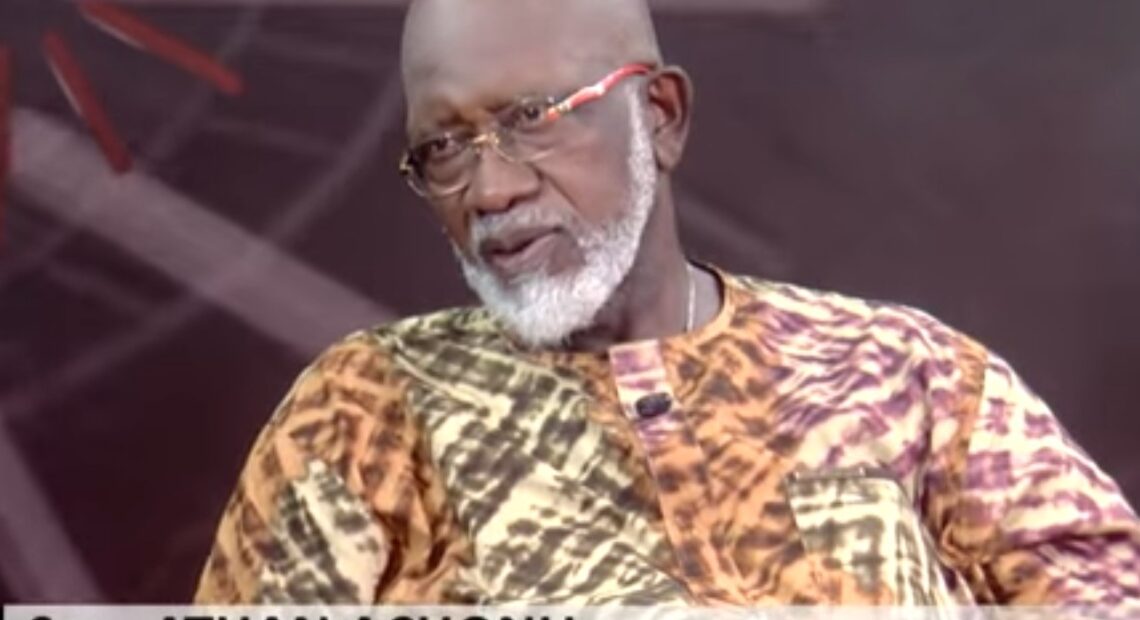
Former senator and public affairs commentator, Ethan Achonu, has accused state governors of frustrating local government autonomy and diverting resources meant for grassroots development, arguing that the practice has contributed significantly to insecurity, poverty, and underdevelopment across Nigeria.
Speaking during an interview on Arise Television, Achonu alleged that governors’ control over local government finances has weakened governance at the grassroots and undermined democratic accountability.
The erosion of local government autonomy began years ago when governors increasingly assumed control of council funds.
According to him, Nigeria’s development challenges cannot be addressed effectively unless local governments are granted genuine political and financial independence.
The former lawmaker maintained that local councils are the closest tier of government to the people and should serve as the primary drivers of development in rural communities.
He argued that the concentration of power and resources at the state level has deprived local governments of their ability to execute projects, stimulate local economies, and respond to community needs.
Achonu claimed that the erosion of local government autonomy began years ago when governors increasingly assumed control of council funds and administrative structures.
He argued that the trend disrupted economic activities in rural areas, where local governments previously awarded small contracts and funded community projects that created employment and circulated money within local economies.
Many local government councils now receive significantly higher allocations following the removal of fuel subsidy.
He dismissed claims that local governments lack the capacity to manage public funds, noting that constitutional mechanisms already exist to hold council chairmen accountable through elected councillors and legislative oversight.
The former senator also questioned the implementation of the Supreme Court’s ruling granting financial autonomy to local governments, arguing that little has changed despite the landmark judgement.
According to Achonu, many local government councils now receive significantly higher allocations following the removal of fuel subsidy, with some councils reportedly entitled to hundreds of millions of naira monthly.
He questioned whether such funds were reaching their intended destinations and alleged that governors continue to exercise substantial control over council resources.
He further argued that state control of local government elections has weakened democracy by ensuring that council chairmen often emerge from the same political parties as state governors.
According to him, this arrangement has diminished political competition and reduced accountability at the grassroots level.
Genuine local government autonomy remains one of the most critical reforms required to address Nigeria’s governance challenges.
On insecurity, Achonu drew a direct connection between weak local governance and the persistent security challenges facing many parts of the country.
He contended that empowered local governments would be better positioned to identify security threats within their communities and work closely with security agencies to address them.
The former senator expressed support for initiatives such as forest guards and community-based security structures but cautioned against the establishment of state police under what he described as an overly centralized and governor-dominated system.
Achonu called on President Bola Ahmed Tinubu to take stronger steps toward implementing full local government autonomy, insisting that meaningful grassroots development and improved security depend on returning power and resources to local councils.
He maintained that genuine local government autonomy remains one of the most critical reforms required to address Nigeria’s governance challenges and unlock development at the community level.
The remarks have added to ongoing national discussions over the implementation of local government autonomy following the Supreme Court’s ruling and the broader debate about governance, accountability, and resource control in Nigeria’s federal system.
Read Also: Why Debt Hurts Africa More: The High Cost of Borrowing and the Continent’s Development Dilemma
Author

Sign up for The Insight Newsletter
Get in-depth, research and data-based interpretative reports from around Nigeria.

