
Dapo Akande Becomes 4th Nigerian to Serve on the ICJ
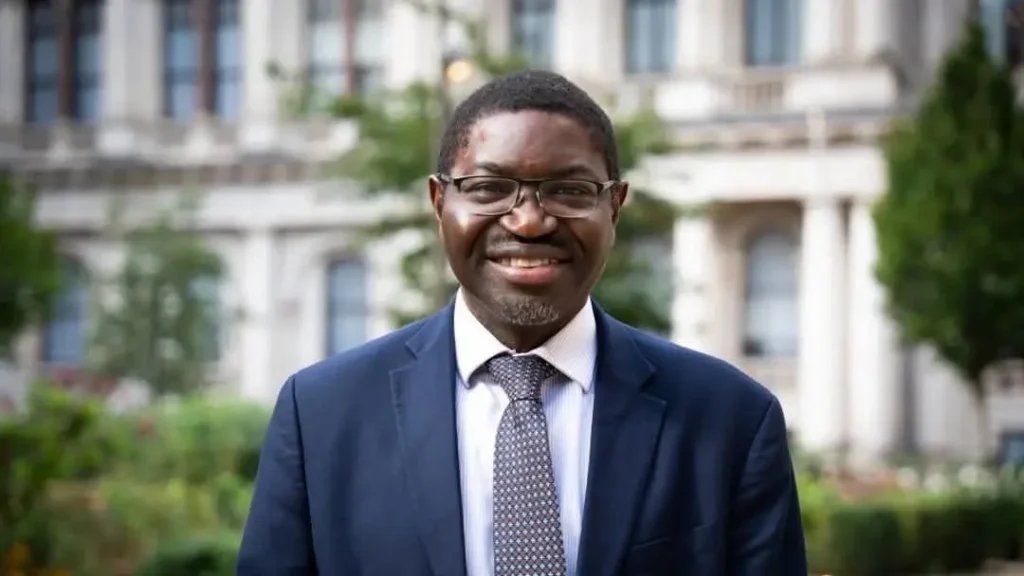
Oxford professor’s election as the United Kingdom’s candidate brings Nigeria’s distinguished history at the world’s highest court back into focus, following three prominent Nigerian jurists who served before him.
By Emmanuel Kwada
Professor Dapo Akande, a Nigerian-trained international law scholar at the University of Oxford, has been elected a judge of the International Court of Justice (ICJ), becoming the fourth Nigerian-connected legal scholar to serve on the prestigious international bench.
Akande’s election followed a United Nations vote on Tuesday, November 3, 2026, securing him a nine-year tenure at the principal judicial organ of the United Nations, which adjudicates legal disputes between countries and provides advisory opinions on international legal questions.
His emergence is particularly significant for Nigeria, whose legal professionals have maintained a notable presence in international jurisprudence for decades. However, Akande is not the first Nigerian to occupy a seat at the World Court. Three distinguished Nigerian jurists preceded him, laying the foundation for the country’s longstanding association with the institution.
Akande contested and won the ICJ seat as the United Kingdom’s candidate.
The first was Justice Charles Onyeama, who served at the ICJ from 1966 to 1976. He was succeeded by Justice Taslim Olawale Elias, who served from 1976 to 1991 and made history as the first African to become president of the court, holding the position between 1982 and 1985.
Another Nigerian legal heavyweight, Prince Bola Adesumbo Ajibola, followed Elias, serving from 1991 to 1994. Ajibola, a former Attorney-General and Minister of Justice of Nigeria, further strengthened the country’s reputation in international legal affairs.
Akande’s election therefore adds another chapter to this distinguished history, although an important distinction surrounds the capacity in which he secured the position.
Despite his Nigerian legal training and academic connections, Akande contested and won the ICJ seat as the United Kingdom’s candidate.
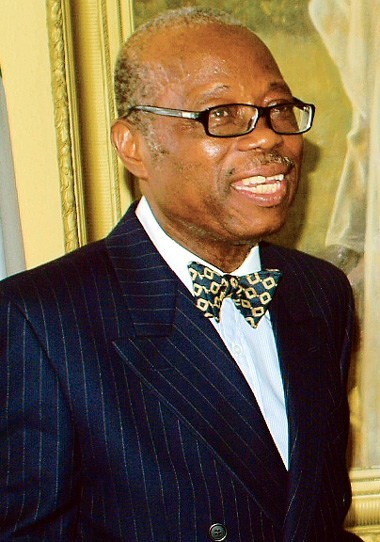
Prince Bola Ajibola, SAN, KBE, CFR
The British government describes him as a dual UK-Nigerian national and said his election restores British representation on the court after a nine-year absence.
His candidacy received support from the British Prime Minister, government ministers and diplomats who campaigned for him across the world.
Welcoming the outcome, British Prime Minister Andy Burnham described the election as a demonstration of the UK’s commitment to international law and its role in promoting global stability.
He expressed confidence that Akande would bring integrity, legal rigour and independent expertise to the court.
Akande, in his reaction, expressed gratitude to the countries that supported his election, pledging to perform his judicial responsibilities independently and impartially.
He said he would decide cases based on a faithful application of international law and contribute to the peaceful resolution of disputes between nations.
Foreign Secretary Ed Miliband also congratulated the professor, describing his legal expertise, independence and commitment to international law as valuable assets to the court and the wider international community.
Akande’s emergence reflects nearly three decades of experience in international law as an academic, legal practitioner and adviser.
The International Court of Justice is one of the six principal organs of the United Nations.
He is a Professor of Public International Law at the University of Oxford, a Fellow of All Souls College and an elected member of the United Nations International Law Commission.
His academic background includes the University of Oxford, the London School of Economics and Obafemi Awolowo University, Nigeria, where he received part of his legal education before establishing himself internationally.
Beyond academia, Akande has built considerable experience advising governments and international organisations. He has served as counsel, adviser and expert in cases before international courts and tribunals, including the ICJ itself.
His advisory work has covered governments across all five United Nations regional groups, as well as major international institutions, including the United Nations and the African Union.
His election is therefore not simply a recognition of his academic accomplishments but also of decades of engagement with complex international legal questions.
The International Court of Justice is one of the six principal organs of the United Nations. It consists of 15 judges elected independently by the UN General Assembly and Security Council for nine-year terms.
Its responsibilities include resolving legal disputes submitted by sovereign states and providing advisory opinions on questions referred to it by authorised United Nations institutions.
For Nigeria, Akande’s achievement offers an opportunity to celebrate the global recognition of a legal scholar whose professional foundation is closely connected to the country’s legal education system.
However, his election should not be mistaken for Nigeria securing a new seat at the court. He was elected as the United Kingdom’s candidate, not as Nigeria’s official nominee.
Nevertheless, his Nigerian background, legal training and professional journey underline the international influence of Nigerian legal education and scholarship.
From Charles Onyeama, who opened Nigeria’s chapter at the ICJ in 1966, to Taslim Elias, who rose to become the court’s first African president, and Bola Ajibola, who continued that legacy, Akande now joins a distinguished line of Nigerian-connected jurists.
His election is another reminder that Nigerian legal expertise has continued to find recognition beyond the country’s borders, even as the distinction between national identity and official representation remains important.
Author

Sign up for The Insight Newsletter
Get in-depth, research and data-based interpretative reports from around Nigeria.