How Overloading, Poor Boat Balance Led to Bayelsa Tragedy as Eyewitnesses Recount Horror That Killed 29
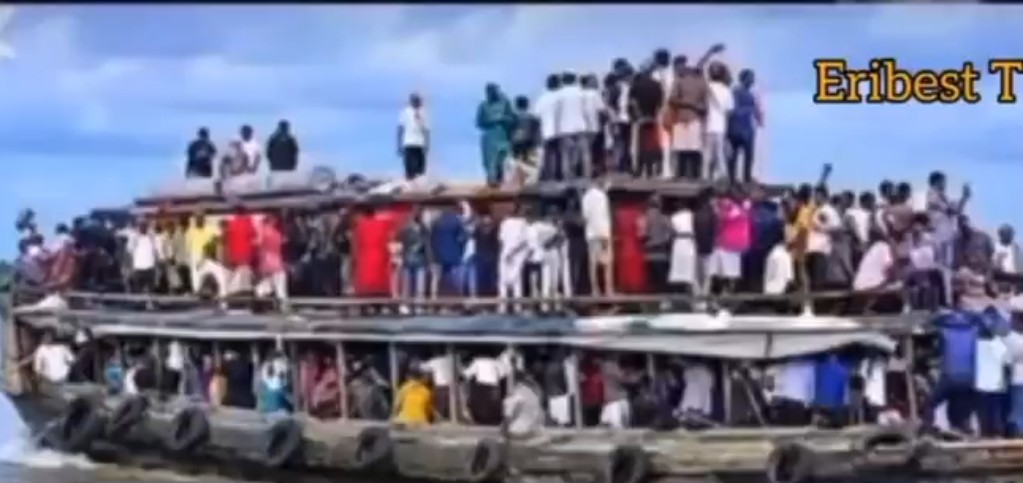
By Emmanuel Kwada
The tragic boat accident in Bayelsa State that claimed 29 lives has taken a more disturbing turn, as eyewitnesses and survivors have recounted the terrifying moments before the vessel capsized, exposing alleged safety violations, overcrowding and the boat operator’s failure to heed passengers’ warnings.
The incident, which occurred on Friday, November 20, 2026, involved a wooden passenger boat popularly known as a ‘Love Boat’ conveying mourners from Ayama community to Ukubie community in Southern Ijaw Local Government Area of the state.
The passengers were travelling to attend a burial ceremony when the boat capsized around 11 a.m. near the river junction between Oweikorogha and Otuan communities.
29 people have died in the disaster.
According to the latest casualty figure announced by Bayelsa State Governor, Douye Diri, 29 people have died in the disaster, while rescue and recovery efforts have continued.
As accounts of the tragedy emerge, two particularly painful testimonies have drawn attention: an eyewitness explanation of how the boat allegedly became dangerously unstable before overturning, and a survivor’s heartbreaking account of losing several members of her family.
In a video shared on social media by @smoothpere on Sunday, November 22, an eyewitness identified in the footage as speaking for Eribest TV provided a detailed account of the events that allegedly led to the disaster.
She explained that overcrowding had become a common practice among passenger boat operators serving riverine communities, particularly along routes connecting Golama, Ogwenbury and Ukubie.
According to her account, boats are sometimes loaded in multiple layers, with cargo placed at the bottom, passengers occupying the seating area and additional people standing or sitting on top of the vessel.
She alleged that the ill-fated boat was excessively crowded, with passengers refusing to disembark even after being informed that the vessel had reached its capacity.
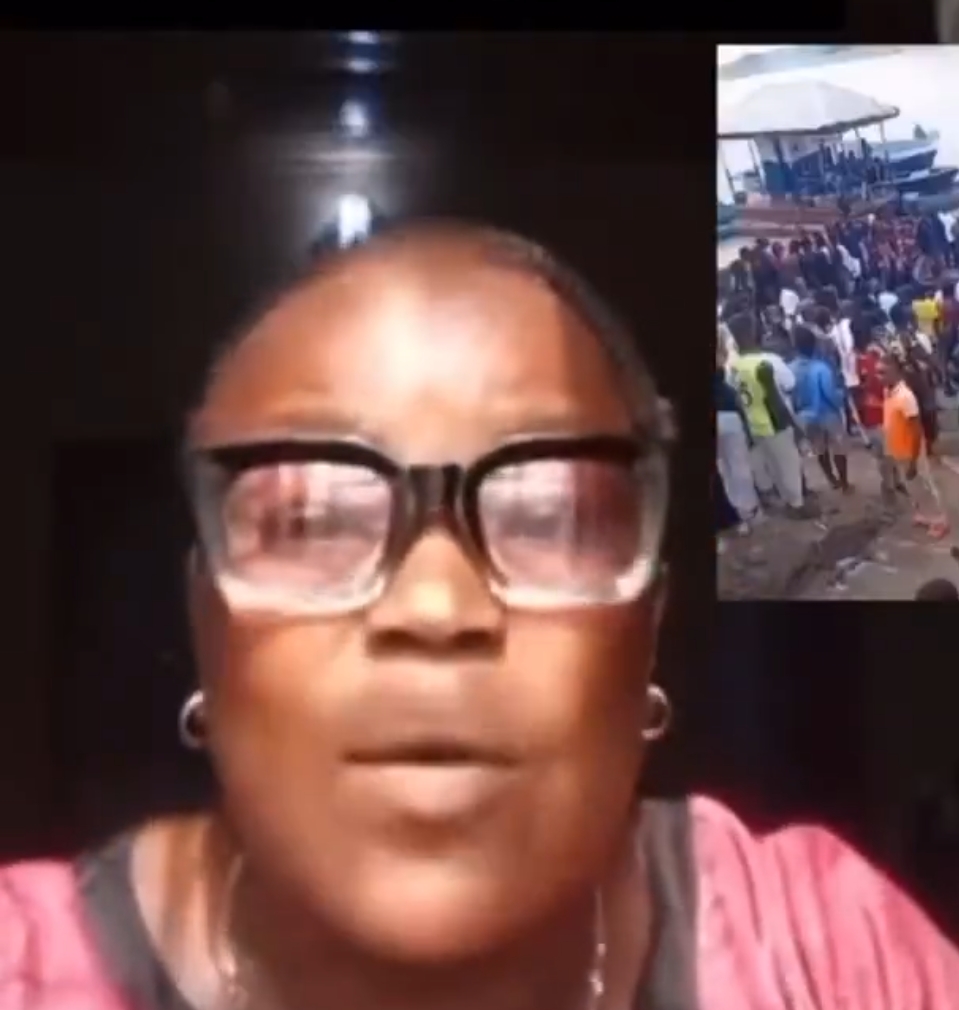
More disturbingly, she claimed that the lower section of the boat, ordinarily used to carry heavy items such as cement and pure water to help stabilise the vessel, was empty.
As a result, much of the weight was concentrated above the boat’s normal loading level, allegedly affecting its balance.
The eyewitness said the vessel began tilting and rocking dangerously as it moved through the water, prompting frightened passengers to call on the operator to stop and allow some people to get off.
However, according to her account, the operator continued navigating despite the warnings.
The boat eventually overturned, throwing passengers into the water and triggering panic and confusion.
She stressed that the tragedy should not be reduced to whether the passengers knew how to swim, arguing that the circumstances surrounding the accident could have endangered anyone on board.
Her account points to alleged overloading, poor weight distribution and the operator’s decision to continue despite warnings as possible contributing factors. However, these details remain eyewitness allegations and have not been established as the official findings of an investigation.
Beyond the circumstances surrounding the accident, the human cost of the disaster has emerged through the emotional testimony of a female survivor.
Where we were standing, the boat broke from above and pressed us down.
The woman recounted how she struggled desperately to escape after the boat capsized, leaving her trapped beneath the overturned structure alongside other passengers.
She disclosed that she lost several members of her family and neighbours, including her elder sister, her sister’s son and his wife, as well as a neighbour and the neighbour’s son.
According to her, she was the only person among those close to her who survived the incident.
Recounting her terrifying experience, she explained that part of the boat broke from above and pressed passengers underneath, making it difficult for them to escape.
She said she struggled to free herself while swallowing water until another person eventually helped pull her out.
“It’s only me that is safe. When I came out, somebody held me. I was drinking water. I was not able to come out. I struggled before I came out. Where we were standing, the boat broke from above and pressed us down,” she recounted.
The survivor also disclosed that the bodies of some of her missing relatives and neighbours had not been recovered at the time of the interview.
Her testimony has brought a deeply personal dimension to the tragedy, illustrating how one boat journey to attend a burial ceremony ended with families losing several loved ones.
Governor Douye Diri disclosed on Sunday that the death toll had risen to 29, while more than 50 survivors had been accounted for and were receiving medical attention.
The governor described the incident as avoidable, alleging that the boat was not suitable for river transportation and had operated from an unauthorised loading point.
He also expressed concern that some passengers could still be trapped inside the submerged vessel, explaining that the absence of a passenger manifest had made it difficult to establish the exact number of people on board.
Reports from community sources have suggested that the boat may have carried far more passengers than its safe capacity, although the actual number remains uncertain.
The preliminary police account identified a mechanical fault as a possible factor in the accident. Other accounts have raised concerns about overloading and the operator’s alleged refusal to heed passengers’ warnings.
The boat operator reportedly fled after the incident, while the vessel’s manager was taken into custody as investigations commenced.
Tinubu Approves ₦250m for Victims’ Families
In response to the tragedy, President Bola Tinubu approved ₦250 million in financial assistance for the families of those affected.
It’s only me that is safe. When I came out, somebody held me. I was drinking water.
Vice-President Kashim Shettima announced the intervention during a condolence visit to Bayelsa on Sunday, where he also visited survivors receiving treatment in hospitals.
Tinubu also directed the Niger Delta Development Commission (NDDC) to procure boats to improve transportation in riverine communities.
Meanwhile, Minister of Marine and Blue Economy, Adegboyega Oyetola, ordered the National Inland Waterways Authority (NIWA) to conduct a comprehensive investigation into the immediate and remote causes of the accident.
The Bayelsa State Government has also taken responsibility for the medical bills and feeding of survivors while search and recovery operations continue.
The Bayelsa tragedy has once again exposed longstanding safety concerns surrounding water transportation in Nigeria, particularly in riverine communities where boats remain an essential means of movement.
Overloading, inadequate safety equipment, poor vessel maintenance and weak enforcement of maritime regulations have repeatedly been identified as factors contributing to deadly boat accidents across the country.
For many residents of Bayelsa, travelling by water is not a matter of convenience but a necessity, given the limited road connections between several communities.
Governor Diri has therefore appealed to the Federal Government to support the construction of more roads across the state to reduce dependence on water transportation.
For the families who boarded the boat expecting to attend a burial, the journey ended in another tragedy of their own — one that has left communities grieving and survivors struggling to come to terms with devastating losses.
Author

Sign up for The Insight Newsletter
Get in-depth, research and data-based interpretative reports from around Nigeria.