
12 years after, Chibok schoolgirl marries in America.
By Emmanuel Kwada
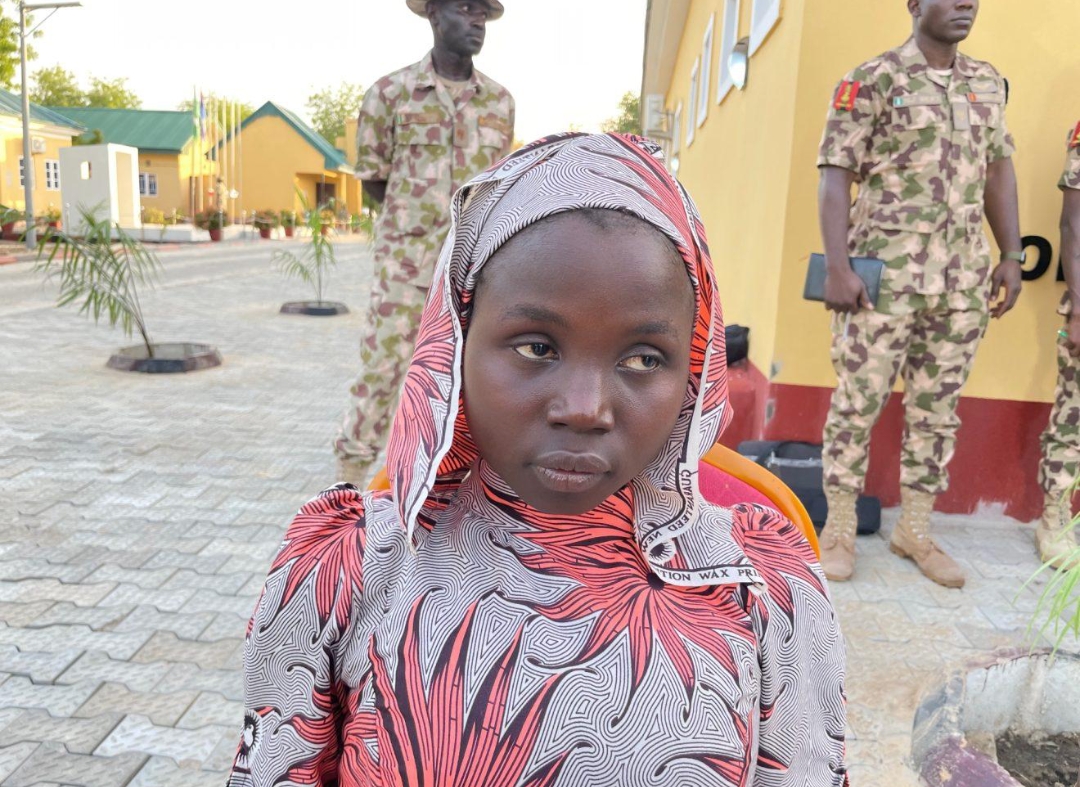
A Chibok schoolgirl who spent more than 12 years in Boko Haram captivity has reportedly regained her freedom, revealing that she was married to eight insurgents and had two children during her ordeal, in another development that has renewed attention on the fate of the girls abducted from Chibok, Borno State, in 2014.
The survivor, identified as Jinkai Yama, reportedly emerged from captivity in November 2026 alongside another Chibok woman whose identity has not been publicly disclosed. Both women reportedly returned with children after years in the hands of Boko Haram.
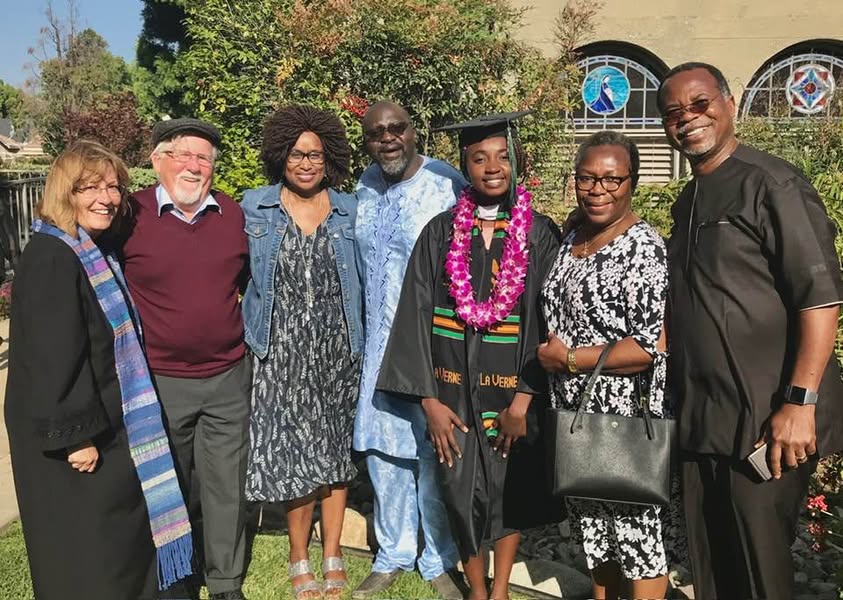
Their reported escape came days after Deborah Ishaya, one of the Chibok girls relocated to the United States following the 2014 abduction, celebrated her wedding in America.
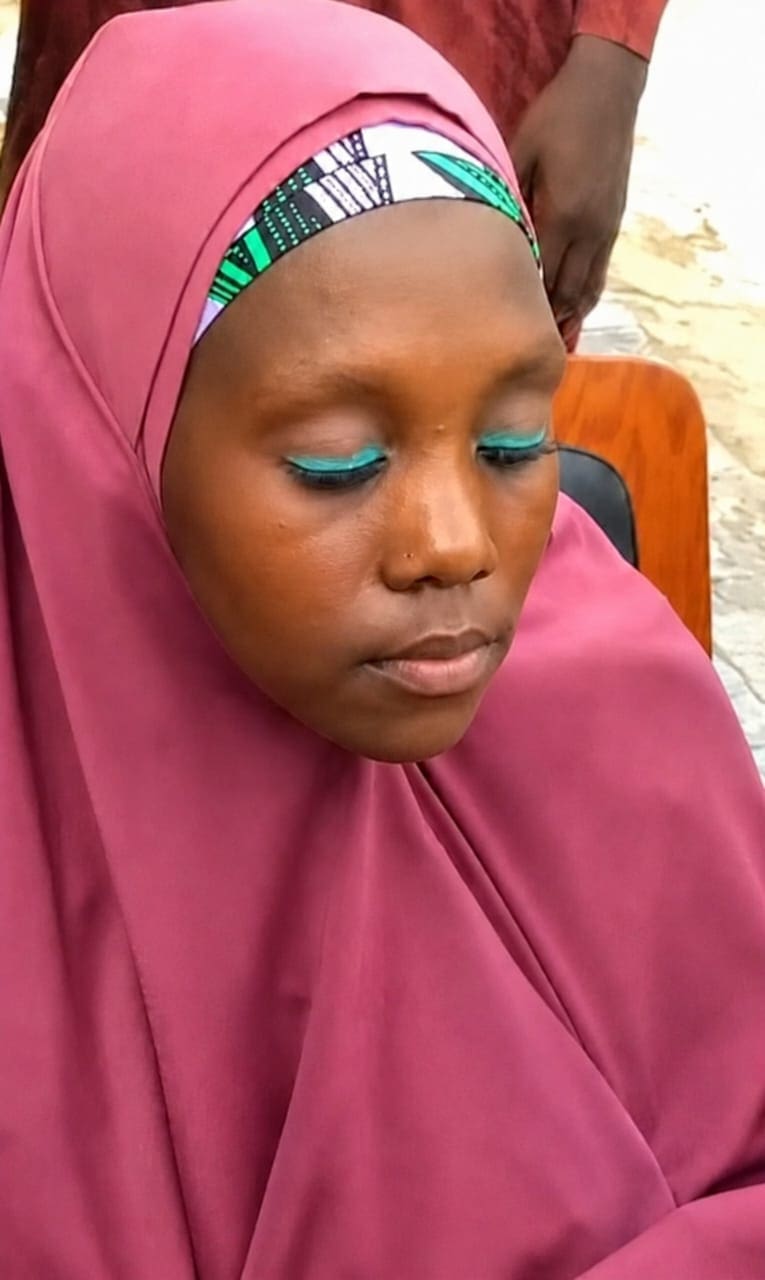
Jinkai Yama regained her freedom after spending 12 horrible years in a Boko Haram den.
The developments have brought contrasting stories of survival, recovery and new beginnings into focus, highlighting the different paths taken by some of the schoolgirls whose lives were disrupted by the abduction.
According to human rights lawyer Emmanuel Ogebe, who facilitated the relocation of some Chibok survivors to the United States, Jinkai’s emergence after more than 12 years in captivity represents a triumph of hope and the human spirit over terrorism.
Ogebe, in a statement celebrating the latest reported returns, said he was particularly delighted by the development, which coincided with his recent medical mission to north-eastern Nigeria.
He disclosed that Jinkai told journalists she had been married to eight Boko Haram fighters during her captivity and had two children fathered by different insurgent commanders.
Her desperate search for an opportunity to escape captivity.
According to a report by TruthNigeria’s Suleman Ayuba, Jinkai identified her last captor as Usman, a suspected Boko Haram commander operating around Gava village in Gwoza Local Government Area of Borno State.
In an interview after her return, Jinkai reportedly explained that her acceptance of the marriages was connected to her desperate search for an opportunity to escape captivity.
Although she said nobody physically forced her into the marriages, she explained that she accepted them because she was looking for a way out of the insurgents’ stronghold.
Her account has renewed concerns about the sexual exploitation, coercion and psychological trauma experienced by women held by Boko Haram, particularly those who spent years in insurgent-controlled territories.
Deborah’s wedding offers a contrasting story
While Jinkai’s return has drawn attention to the brutal realities of captivity, Deborah’s wedding in the United States represents another chapter in the long journey of Chibok survivors rebuilding their lives.
Ogebe disclosed that Deborah was among the two Chibok girls who made history in 2017 as the first from the group to graduate from an American high school with their diplomas.
She reportedly graduated with multiple honours and awards from an international high school in the Washington, D.C., metropolitan region.
Her wedding brings to four the number of Chibok survivors relocated to the United States through Ogebe’s efforts who have married.
Four have completed university degrees, with some obtaining master’s qualifications, while two have become mothers.
He identified the others as Joy Bishara, who married in 2024, Patience Bulus and Lydia Pogu, who also married in 2026.
According to him, all four have completed university degrees, with some obtaining master’s qualifications, while two have become mothers.
Ogebe contrasted their experiences with Jinkai’s account of eight marriages during captivity, arguing that the difference illustrates the devastating circumstances under which the latter lived and the absence of meaningful freedom to make personal choices.
The latest developments have also revived attention on the 12-year timeline of the Chibok abduction, one of the most notorious school mass kidnappings in modern history.
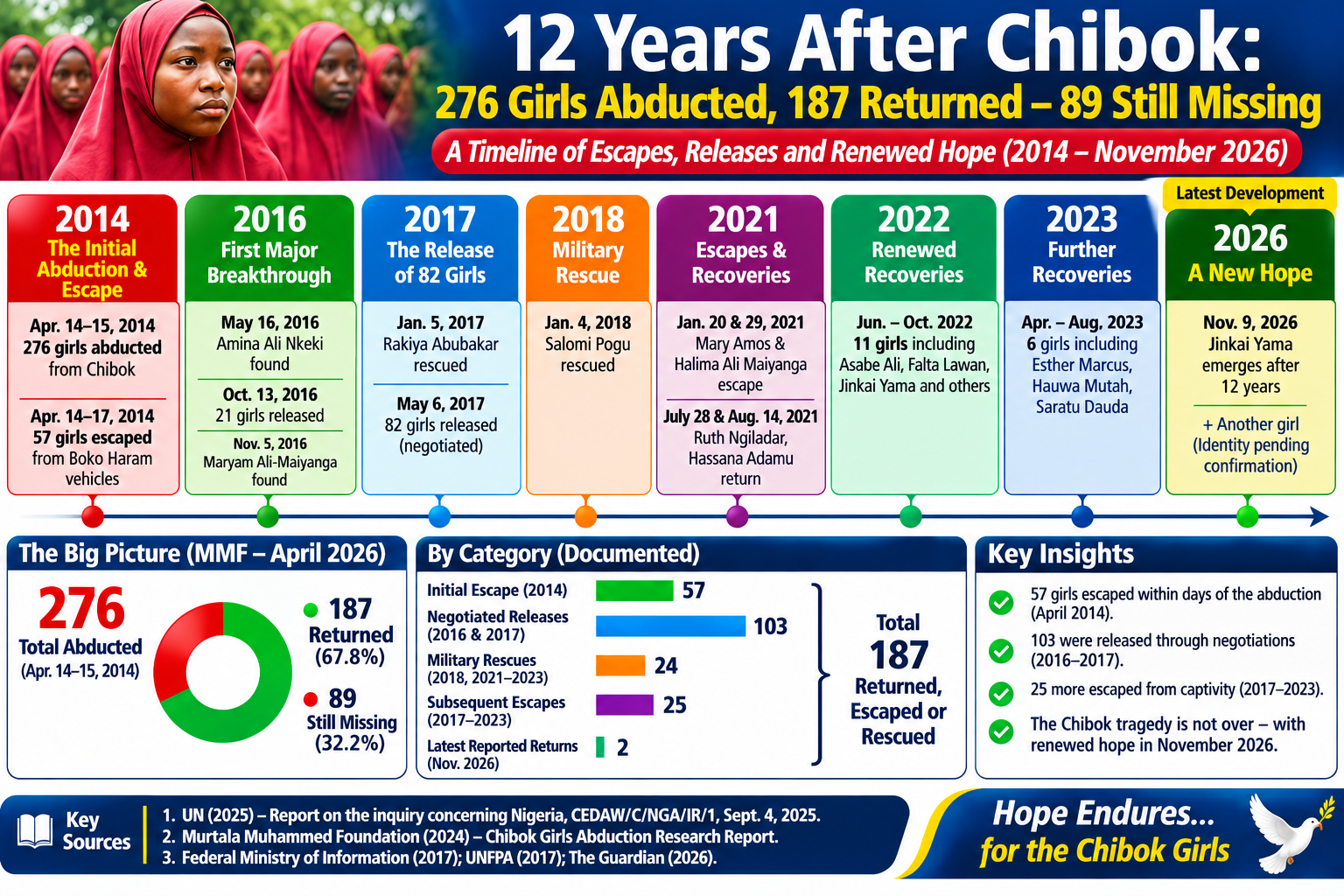
On the night of April 14–15, 2014, Boko Haram abducted 276 schoolgirls from Government Secondary School, Chibok, in Borno State.
Fifty-seven girls escaped shortly after the abduction by jumping from the vehicles transporting them. Their escape marked the first major breakthrough in the tragedy.
In May 2016, Amina Ali Nkeki was found near the Sambisa Forest with a baby and a suspected Boko Haram fighter.
On October 13, 2016, another 21 girls were released following negotiations involving the Nigerian Government, the Swiss Government and the International Committee of the Red Cross.
In November 2016, Maryam Ali-Maiyanga was also found by Nigerian soldiers.
The following year brought another significant development when Rakiya Abubakar was rescued in January 2017 with her child.
On May 6, 2017, 82 additional girls were released following negotiations between the Federal Government and Boko Haram, facilitated by international intermediaries.
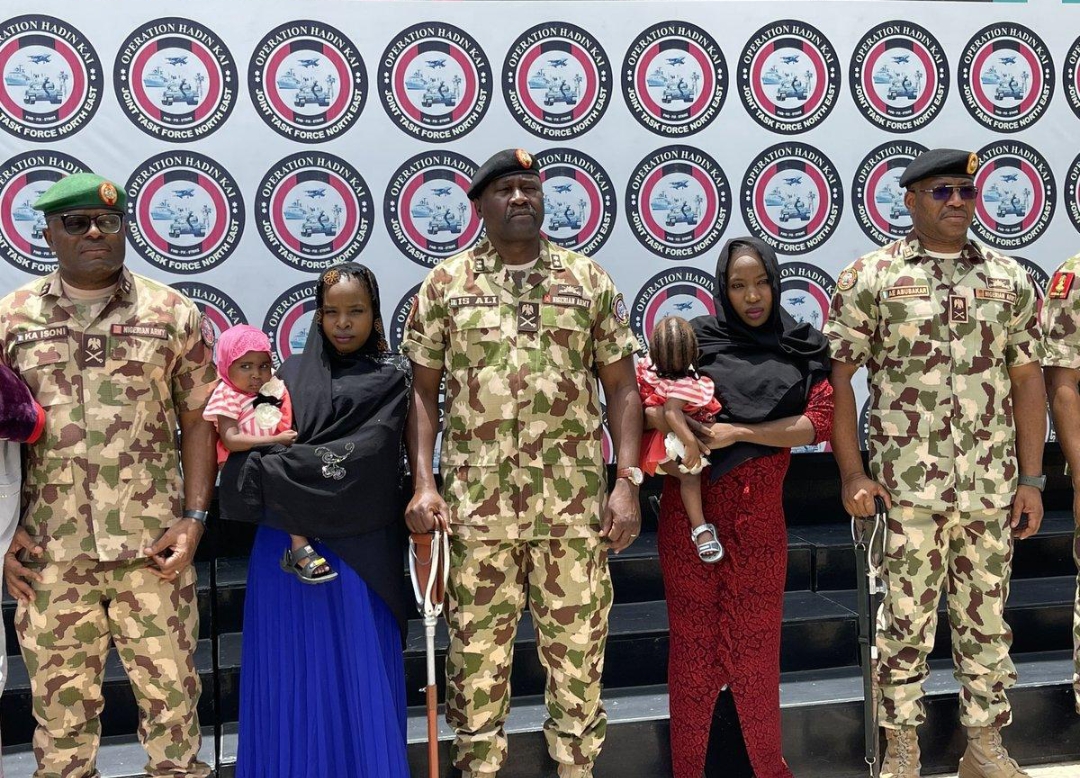
File photo: Freed Chibok schoolgirls with their babies and army chiefs
In January 2018, Salomi Pogu was rescued by Nigerian troops, while further escapes and military recoveries followed in 2021.
Among those who returned that year were Mary Amos, Halima Ali Maiyanga, Ruth Ngiladar (Pogu) and Hassana Adamu.
The recovery efforts continued in 2022, with several women emerging from insurgent-controlled territories, including Mary Dauda Yahi, Hauwa Joseph, Serah Luka, Hannatu Musa, Aisha Grema, Asabe Ali, Falta Lawan, Ruth Bitrus, Yana Pogu and Rejoice Sanki.
Further recoveries were reported in 2023, including Esther Marcus, Hauwa Mutah, Saratu Dauda, Mary Nkeki and Rebecca Kabu, who was found in Cameroon.
The Murtala Muhammed Foundation’s research has documented many of these individual returns and the circumstances surrounding the girls’ release, escape or rescue.
A September 2025 United Nations investigation also documented 57 initial escapees, 25 subsequent escapes between 2017 and 2023, and 103 girls released through negotiations in 2016 and 2017.
The Foundation’s April 2026 update put the number of girls who had returned at 187, leaving 89 unaccounted for out of the original 276.
The reported November 2026 emergence of Jinkai and another Chibok woman has further renewed hope among families and campaigners still seeking answers about those whose whereabouts remain unknown.
Ogebe questions claims that some girls did not want to return
Beyond celebrating the latest escapes, Ogebe argued that Jinkai’s return challenges claims that some of the abducted girls were unwilling to leave Boko Haram captivity.
He specifically questioned accounts in the 2023 book, The Sisterhood: The Secret History of Women at the CIA, written by Liza Mundy, which alleged that American intelligence operatives working with British and French counterparts had conducted a rescue operation involving some of the Chibok girls.
According to the account in the book, some of the girls were reportedly reluctant or unable to leave because they had been married to insurgents and had children.
Some of the girls were reportedly reluctant or unable to leave because they had been married to insurgents and had children.
Ogebe disputed the account, arguing that the documented releases of 21 girls in 2016 and 82 in 2017 did not support the suggestion that 30 girls had been rescued in a separate CIA operation.
He said he had previously written to the author to challenge what he considered an inaccurate impression that some girls had chosen to remain in captivity.
For Ogebe, the continued emergence of survivors more than a decade after the abduction demonstrates why the search for the remaining girls must not be abandoned.
He also questioned why Gwoza, which he described as a longstanding Boko Haram stronghold, had not been fully secured to allow displaced residents to return to their communities.
Jinkai’s reported return has also raised questions about the support available to survivors after escaping captivity.
Ogebe said Jinkai had expressed concern about her family, explaining that she had not spoken to them and did not know whether they were still alive.
He urged the Nigerian Government and relevant authorities to prioritise reconnecting her with her parents and relatives, including through telephone communication, while providing the necessary support for her recovery.
He noted that Jinkai had expressed a desire to seek her family’s guidance on whether to return to school, stressing that family reunification was important to her emotional recovery and future.
Meanwhile, community voices have continued to express concerns about the treatment of survivors after their return.
Ishaku Bitrus, a Chibok community member, told TruthNigeria that the prolonged captivity had destroyed the educational ambitions and future plans of many of the girls.
Reverend Musa Kallamu Dikwa also raised concerns about rehabilitation arrangements involving former captives and repentant Boko Haram members.
He alleged that some survivors had been encouraged to marry former insurgents under rehabilitation arrangements supervised by the Borno State Government, rather than being prioritised for reunification with their families and original communities.
Dikwa described the situation as unacceptable and called for greater protection of the survivors’ rights.
These allegations reflect concerns among some community leaders about whether existing rehabilitation programmes adequately address survivors’ freedom of choice, religious identity, family relationships and long-term welfare.
Despite the devastating impact of the abduction, some survivors have achieved significant academic milestones, particularly those who received educational opportunities outside Nigeria.
According to Ogebe, Deborah Ishaya and Amina Thlawur became the first Chibok girls to obtain American high school diplomas in 2017.
Read Also: ‘How I Escaped from Terrorists Enclave’
He also listed Palmatah Mutah as the first to obtain an associate degree in the United States in 2019 and a bachelor’s degree in 2021.
Mary Katambi reportedly became the first Chibok girl to obtain a bachelor’s degree from the American University of Nigeria, Yola, in 2021.
Joy Bishara and Lydia Pogu obtained master’s degrees in the United States in 2022, while Godiya Simon reportedly became the first Chibok survivor to earn a doctorate degree in America in 2024.
In 2026, Rifkatu Solomon and 11 other Chibok survivors reportedly graduated together from the American University of Nigeria, marking another milestone in the educational recovery of the affected community.
These achievements, Ogebe noted, demonstrate that the girls’ lives can extend beyond the tragedy of their abduction when they receive opportunities, support and access to education.
Twelve years after the abduction, the Chibok tragedy remains an unresolved national and international concern.
While the return of survivors, their educational achievements and their ability to rebuild families offer reasons for hope, the experiences narrated by women such as Jinkai expose the enduring human cost of Boko Haram’s insurgency.
The latest reports have renewed calls for the Nigerian authorities to intensify efforts to locate the remaining girls, secure communities still affected by insurgency and ensure that survivors are not subjected to further coercion after their return.
Beyond military operations, campaigners and community leaders say genuine recovery must include family reunification, access to education, healthcare, psychological support, justice and the freedom of survivors to determine their own futures.
For the families still waiting, the return of every Chibok girl represents more than a rescue; it is another opportunity to restore a life interrupted by terrorism.
For those still missing, including Leah Sharibu, more than 100 schoolchildren abducted from Lassa and other Nigerians still held in captivity, the message of the #BringBackOurGirls campaign remains as urgent as ever: their search must not end, and no victim should be forgotten.
Read Also: ‘Why Chibok Schoolgirls were abducted’- by former Borno State Governor Shettima
Author

Sign up for The Insight Newsletter
Get in-depth, research and data-based interpretative reports from around Nigeria.