176 Hostages Held in Kwara, 744 Ex-Terrorists Graduate as 2027 Politics Intensifies
By Emmanuel Kwada
As another turbulent week draws to a close in Nigeria, the nation finds itself grappling with a painful paradox: while the government presses ahead with counter-insurgency efforts and rehabilitation programmes, fresh tragedies and unresolved crises continue to test the resilience of citizens and the credibility of state institutions.
In the Northeast, conflicting narratives surround the April 11 airstrike on the Jilli axis in Borno State.
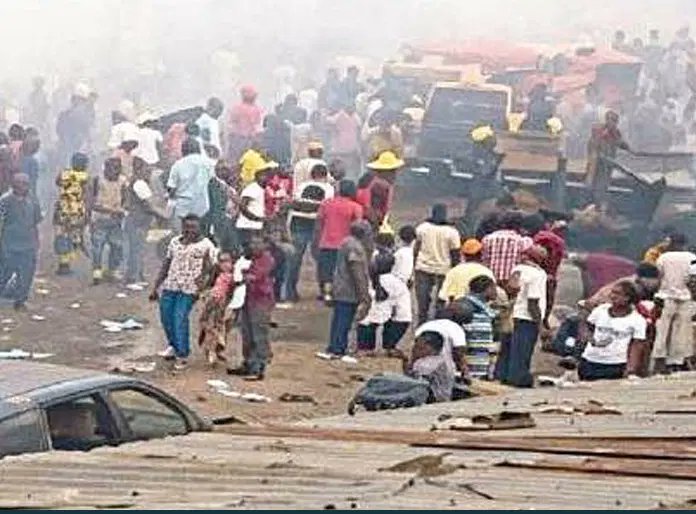
Devastating image from Jili Market after airstrike.
Local reports and survivors claim over 200 civilians many of them traders, women, and children lost their lives when bombs struck what they described as a busy market area.
Yet the Federal Government, Defence authorities, and Borno State Governor Professor Babagana Zulum have firmly denied significant civilian casualties, insisting the operation was a precise, intelligence-driven strike on a notorious terrorist logistics hub locally known as “Kasuwan Daulaye” (the terrorists’ market).
Compounding the sense of insecurity is the ongoing plight of 176 women and children abducted from Woro community in Kwara State over 71 days ago.
This comes even as the military claims success in other operations, including the reported release of worshippers in Kaduna—claims now met with skepticism by affected families as captors demand 1 billion naira for their freedom.
Tinubu cannot win a free and fair election in 2027.
In a development that has sparked heated debate on the balance between repentance and justice, the Federal Government has reintegrated 744 deradicalised former terrorists under Operation Safe Corridor.
Meanwhile, the political atmosphere is already thickening with the approach of the 2027 general elections. Former Vice President Atiku Abubakar has signalled his intention to make one final bid for the presidency, declaring that President Bola Tinubu “cannot win a free and fair election” in 2027.
Allies of the ruling APC have pushed back sharply, with accusations flying over alleged attempts to “privatise” opposition platforms and renewed debates on power rotation and zoning.
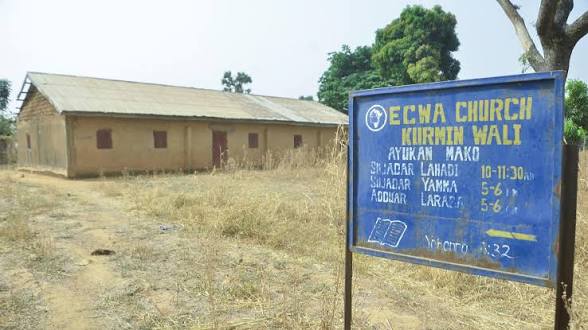
ECWA Church in Kaduna, which was attacked by terrorists.
THE INSIGHT takes you through the full details of these critical developments from eyewitness accounts and official responses in Jilli, to the desperate cries of families still waiting for their loved ones in Kwara, the controversies surrounding the reintegration of ex-terrorists, and the early fireworks in the 2027 presidential race.
Dive deeper into each report for the facts for the complete weekly roundup.
71 Days On: 176 Kwara Women, Children Still Held as Terrorists Demand N1bn for 37 Kaduna Worshippers Army Claimed Were Freed
Nigeria continues to grapple with two high-profile kidnapping crises in the North-Central region, where armed terrorists are holding dozens of vulnerable civilians hostage while issuing massive ransom demands, even as official claims of successful rescues face strong contradictions from affected communities.
In Kwara State, 71 days have passed since terrorists linked to a Boko Haram faction attacked the Woro and Kososo communities in Kaiama Local Government Area on February 4, 2026.
The assailants killed over 200 residents, burned homes, and abducted approximately 176 women and children, including pregnant women.
As of April 16, 2026, the Federal Government has yet to secure their release. The hostages are believed to be held in a fortified location inside or near Kainji National Park. No confirmed military rescue operation has been publicly announced.
Army’s account false, misleading, and propaganda.
The victims have repeatedly appealed for help through viral videos. In the latest footage circulating in early April, the women and children described themselves as critically emaciated, tattered, and ill, warning that it might be their “last opportunity” to stay alive.
They pleaded directly with Kwara State Governor AbdulRahman AbdulRazaq and the Federal Government for urgent intervention.
Reports indicate the captors initially demanded over N3 billion before reducing it to around N1 billion, with negotiations appearing stalled amid what the victims called a “final chance” warning.
Residents of Woro rejected relief materials, such as mats and buckets, sent by the Federal Government, insisting that the safe return of their loved ones and improved security must take priority over palliatives.
Youths in Kaiama LGA staged protests at the local government secretariat, demanding swift government action. Security experts and local leaders have raised concerns over the slow response, limited transparency, and the apparent difficulty in locating the hostages despite the incident’s scale.
In a separate but equally troubling development in Kaduna State, terrorists struck churches in Ariko Community, Kachia Local Government Area, on Easter Sunday, April 5, 2026. The attackers killed at least five to seven worshippers and abducted around 37 Christian faithful during services.
The bombs landed on a busy weekly market where civilians had gathered to trade.
The Nigerian Army quickly announced that troops had engaged the terrorists in a firefight, foiled the assault, and forced the gunmen to abandon 31 hostages, whom they claimed were rescued, with one injured victim receiving medical care. The military described the operation as a success in protecting civilians.
However, community leaders and the Kuturmi Development Association (KUDA) have firmly rejected the Army’s account as “false, misleading, and propaganda.”
They insist that all abducted worshippers remain in captivity, with families maintaining direct contact with the captors.
Residents have alleged that the military has been pressuring the community to publicly endorse the rescue narrative to safeguard the Army’s image.
As of April 15, 2026, the terrorists released a video showing the victims and demanded N1 billion in ransom.
According to community sources, the abductors—believed to be Fulani bandits—cited “misinformation” gathered prior to the attack and the operational difficulties they faced as justification for the high sum. Negotiations are reportedly ongoing, but the hostages have not been freed.
These parallel crises highlight the persistent security challenges across parts of North-Central Nigeria, where banditry and terrorist activities continue to terrorise rural communities, displace populations, and erode public confidence in security agencies.
In both cases, families live under immense pressure, while calls for transparent and effective rescue operations grow louder. The situations remain fluid, with operational details often shielded for strategic reasons.
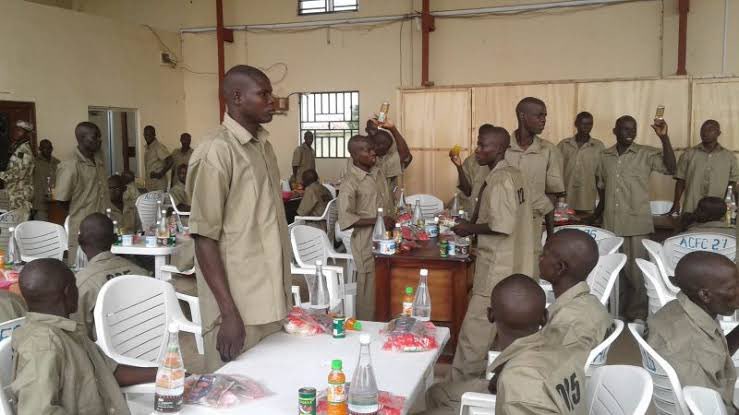
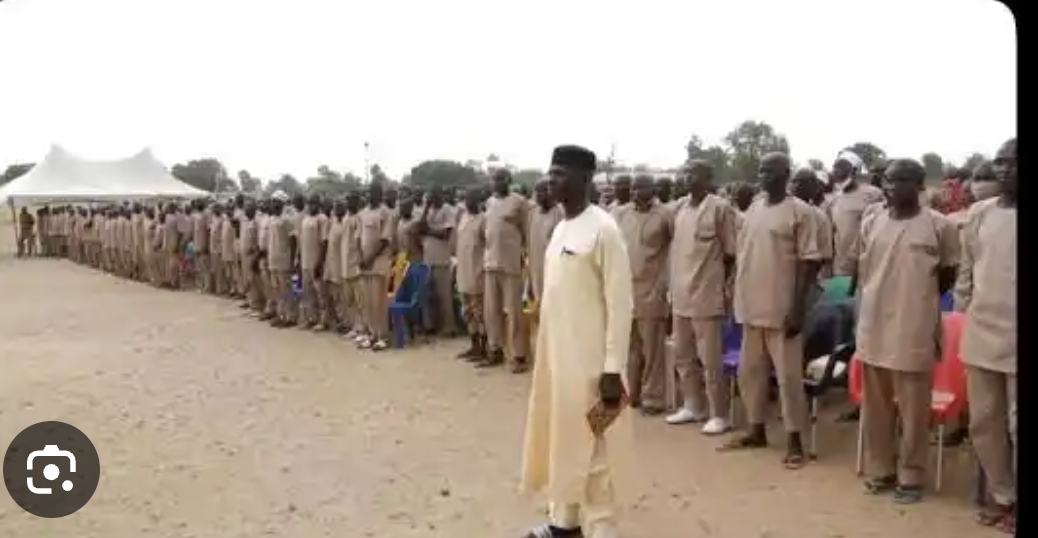
Image from one of the graduations of the repentant terrorists.
FG Reintegrates 744 Deradicalised Ex-Terrorists as Victims Remain in IDP Camps
The Federal Government on Thursday graduated 744 former terrorists and victims of violent extremism from its De-radicalisation, Rehabilitation and Reintegration (DRR) programme under Operation Safe Corridor, paving the way for their return to civilian life even as thousands of displaced victims of insurgency continue to languish in Internally Displaced Persons (IDP) camps across the North-East.
The beneficiaries, who completed months of intensive psychological counselling, religious reorientation, civic education, and vocational training in skills ranging from tailoring and agriculture to other trades, graduated at a ceremony held in Gombe State.
A breakdown of the participants shows that the majority — 597 — hail from Borno State, with others drawn from Yobe (58), Kano (15), Bauchi (12), Adamawa (10), and several other states, including a small number from southern states.
The group also includes foreign nationals from Burkina Faso, Cameroon, Chad, and Niger Republic. Of the 744 graduates, 733 are Muslims while 11 are Christians.
The Coordinator of Operation Safe Corridor, Yusuf Ali, and military authorities described the programme as a strategic non-kinetic approach to counter-insurgency.
597 — hail from Borno State, with others drawn from Yobe (58), Kano (15), Bauchi (12), Adamawa (10).
According to government officials, the primary objective is to encourage defections from terrorist groups by offering repentant fighters a structured pathway back into society, thereby weakening the ranks of insurgents such as Boko Haram and its splinter factions.
Participants underwent a comprehensive rehabilitation process designed to address ideological indoctrination, equip them with sustainable livelihoods, and prepare them for peaceful coexistence with their communities.
The Federal Government maintains that the initiative has contributed to reducing active fighting in parts of the North-East by persuading low-risk members to surrender.
However, the development has reignited public debate and concern, particularly among victims of terrorism and residents of IDP camps.
Many displaced persons, who fled their homes due to attacks by the same groups these ex-fighters once belonged to, remain in protracted camps with limited access to basic amenities, education, and healthcare.
Critics argue that prioritising the reintegration of former terrorists while victims continue to suffer hardship raises questions of equity and justice.
Some security experts and retired military personnel have previously warned that inadequate monitoring after reintegration could pose fresh security risks to already traumatised communities.
The graduation comes amid ongoing security challenges in the region, where banditry, kidnapping, and sporadic terrorist activities persist despite military operations.
The programme targets only low-risk individuals.
While the government emphasises that the programme targets only low-risk individuals who have genuinely renounced violence, scepticism remains high among affected populations who demand greater support for victims and stricter safeguards in the reintegration process.
Operation Safe Corridor, which has processed thousands of participants since its inception, continues to form a key pillar of Nigeria’s multi-pronged strategy to end the long-running insurgency through both military pressure and soft-power interventions.
The reintegration of this latest batch of 744 individuals is expected to proceed under close supervision by relevant agencies and state governments.
Over 200 Feared Dead in Jilli Bombing as FG, Defence, Zulum Deny Civilian Casualties
Conflicting accounts continue to emerge over the Nigerian Air Force airstrike on April 11, 2026, at the Jilli market area along the Borno-Yobe border, with local leaders and residents claiming over 200 people — mostly traders, women, and children — were killed, while the Federal Government, Defence Minister, and Borno Governor insist the operation targeted only terrorist elements and that no innocent civilians died.
The strike, part of Operation Hadin Kai, hit what the military described as a known insurgent logistics hub near the abandoned village of Jilli in Gubio Local Government Area of Borno State.
Residents, however, say the bombs landed on a busy weekly market where civilians had gathered to trade.
Over 200 people — mostly traders.
Yobe State officials and local councillors reported heavy casualties among marketers from Geidam and surrounding communities who crossed into the area.
One local leader told Reuters: “It’s a very devastating incident at Jilli market. As I’m speaking to you, over 200 people have lost their lives from the air strike at the market.”
Survivors painted a grim picture of the chaos. One eyewitness, who identified himself only as a trader from the area, recounted: “I was with about 30 people and we all fell down after being struck.”
Fires raged across the market as people fled in panic, according to multiple accounts from villagers and health workers.
Defence Minister: “No Innocent Victims”
Defence Minister General Christopher Musa (rtd) firmly rejected claims of civilian deaths, insisting those killed were actively supporting insurgents.
“Jilli airstrike: No innocent victims,” he stated, defending the operation as necessary to degrade terrorist capabilities in a long-identified insurgent corridor.
It’s a very devastating incident at Jilli market.
The minister maintained that the area, locally known as “Kasu Daulaye” (the terrorists’ market), had functioned as an enclave for Boko Haram and ISWAP fighters and their collaborators.
Federal Government and Presidency Position
The Federal Government, through the Minister of Information and National Orientation Mohammed Idris, described the strike as “a deliberate, intelligence-led operation, not an indiscriminate attack.”
In an official statement, the government said: “The 11 April strike followed weeks of surveillance in response to escalating threats. After a rigorous targeting process, the Nigerian Air Force, working with the Nigerian Army, confirmed the presence of terrorist elements and executed the strike to disrupt supply lines and degrade insurgent capacity.”
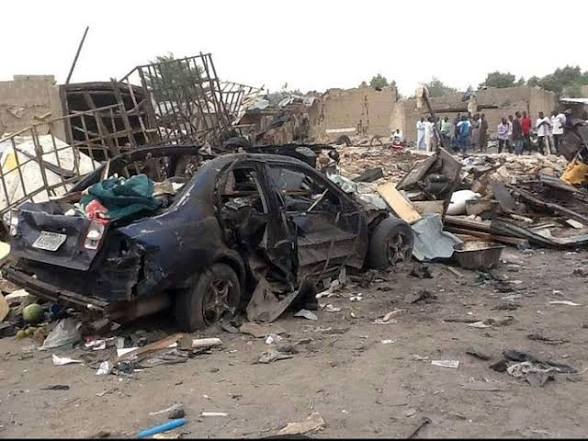
Damages caused by the airstrike
The Presidency has ordered a full and independent investigation into the incident to review intelligence gathering, targeting procedures, and operational execution, promising accountability where necessary.
Governor Zulum Backs Military, Warns Against Aiding Insurgents
Borno State Governor Professor Babagana Zulum strongly supported the military action, revealing that the state government had closed both Jilli and Gazabure markets five years ago because of their use by insurgents.
Let me state categorically that the Borno State Government closed Jilli and Gazabure markets five years ago.
“Let me state categorically that the Borno State Government closed Jilli and Gazabure markets five years ago,” Governor Zulum said. He described the area as “a notorious hub allegedly used by insurgents and their logistics suppliers” and warned residents: “We urge all citizens to desist from aiding, harbouring, or providing any form of logistical support to Boko Haram and ISWAP terrorists.”
The governor said he remains in constant touch with military authorities and the Yobe State Government while calling for greater community cooperation with security forces.
Atiku Abubakar Condemns Incident as “Devastating Failure”
Former Vice President Atiku Abubakar expressed outrage over the reported deaths, describing the strike as a tragic failure that demands accountability.

Former Vice President Atiku Abubakar
“The Jilli market airstrike that killed scores of innocent traders is not just tragic, but a devastating failure that must outrage every conscience,” Atiku stated.
“While targeting insurgents, innocent Nigerians were once again reduced to collateral damage. How long will citizens remain unsafe both from terrorists and from the very operations meant to protect them? At home, we must ask: what is the value of Nigerian lives?”
This will be my last shot.
He called for an urgent review of operational procedures and stronger safeguards to prevent future incidents.
Amnesty International and other rights groups have also raised concerns, estimating that more than 100 civilians may have been killed and demanding a transparent probe.
Hospitals in Maiduguri and Yobe State have received injured survivors, though exact casualty figures remain disputed amid the ongoing investigation.
The Nigerian Air Force has launched its own internal review of the operation. As families mourn and communities grieve, the Jilli incident has reignited national debate over the human cost of counter-insurgency operations in the Northeast, where the fight against Boko Haram and ISWAP has claimed thousands of lives over more than 15 years.
The Federal Government has assured affected families of support and vowed that lessons from the investigation will strengthen future operations to better protect civilian lives while relentlessly pursuing terrorists.
You cannot beat the master at his own game.
Atiku, Tinubu Allies Trade Words Over 2027 Presidency as Political Temperature Rises
A fresh war of words has erupted between the camps of former Vice President Atiku Abubakar and President Bola Tinubu, as early manoeuvring for the 2027 general elections intensifies.
The latest exchange was triggered by comments from Minister of Aviation and Aerospace Development, Festus Keyamo, who praised President Tinubu’s political experience and strategic depth.
Keyamo stated: “You cannot beat the master at his own game; you cannot outfox the man who taught almost all of us how to play opposition politics; he is 100 steps ahead of all of them.”
In response, an aide to Atiku Abubakar, Phrank Shaibu, countered sharply, questioning the Tinubu administration’s governance record and shifting the debate from political strategy to the lived realities of Nigerians, including economic hardship and insecurity.
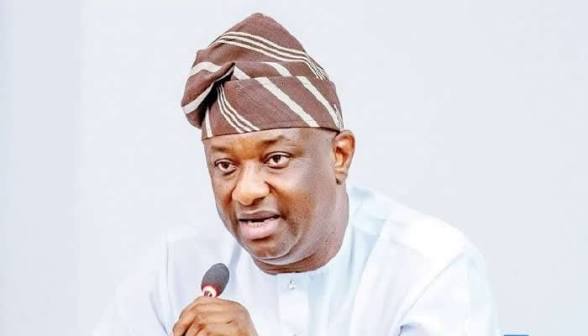
Festus Keyamo, Honorable Minister of Aviation and Aerospace Development.
Atiku himself has been blunt in his assessment of the current administration. In a recent interview on Arise TV, the African Democratic Congress (ADC) chieftain described President Tinubu’s performance as “a disappointment,” adding: “Bola has been a bad president. I will be honest with you. I didn’t expect that from him. In the way he governs the country, whether economically or otherwise, it is a disappointment.”
He further declared that President Tinubu “cannot win a free and fair election in 2027” and described a united opposition coalition candidate as one that would render Tinubu “dead on arrival” at the polls.
Atiku stated: “With a coalition candidate facing Bola Tinubu, Bola Tinubu is dead on arrival. This is not a slogan.”
Atiku also confirmed that 2027 would be his final attempt at the presidency, saying: “This (2027) will be my last shot. The stakes are higher, because I believe that would be my last chance.” He added: “2027 will be my last outing.”
He is 100 steps ahead of all of them.
The Presidency has hit back strongly through its spokesman. Presidential Special Adviser on Information and Strategy, Bayo Onanuga, accused Atiku of advancing self-serving arguments on power rotation.
Onanuga insisted that President Tinubu deserves to complete two terms in line with Nigeria’s informal North-South arrangement, stating: “Since Buhari completed his eight years, Tinubu too must complete his own. All Atiku needs to do is to bury the thought of running again, as it is still the South’s turn in the 2027 election.”
Onanuga further remarked: “This Atiku will never learn. Once again, Abubakar Atiku has put forward a self-serving argument to justify his attempt to disrupt Nigeria’s power rotation arrangement.”
Atiku’s camp fired back again, with an aide stating that “presidents aren’t crowned” and emphasising that Nigerians, not any individual or group, will decide the outcome of the 2027 election.
The former Vice President has also warned that reliance on palliatives such as rice and spaghetti distributions will not secure legitimacy or victory for the ruling party.
The war of words has shifted focus from campaign rhetoric to the administration’s handling of the economy, insecurity, and public service delivery.
Presidents aren’t crowned.
Atiku’s supporters argue that the Tinubu government has no credible achievements to defend, while loyalists of the President point to ongoing reforms and Tinubu’s vast political experience as reasons he remains the man to beat.
Read Also: CHRICED Condemns Tinubu’s ₦135.22b Allocation for Election Litigation
Author

Sign up for The Insight Newsletter
Get in-depth, research and data-based interpretative reports from around Nigeria.