
“Democracy Must Put Food on the Table” — Prof. Pate Urges Focus on Security, Welfare and Public Trust
By Emmanuel Kwada
Renowned communication scholar and former Vice-Chancellor of the Federal University Kashere, Professor Umaru Pate, has warned that Nigeria’s democratic future cannot be secured through elections alone, insisting that security, public trust, accountability, and citizens’ welfare are the real measures of democratic success.
Pate made the remarks during the 18th Wole Soyinka Centre for Investigative Journalism (WSCIJ) Media Lecture Series held at The Providence, Ikeja GRA, Lagos, under the theme: “Beyond the Ballot: Measuring Democracy Through Security, Welfare, Accountability and Public Trust.”
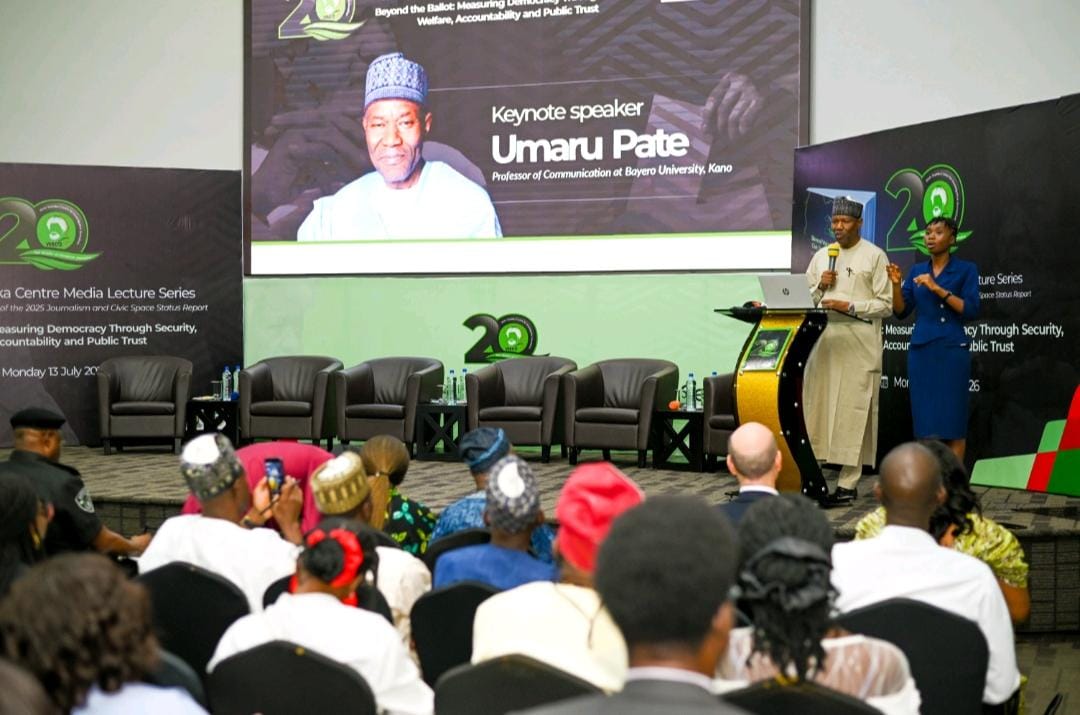
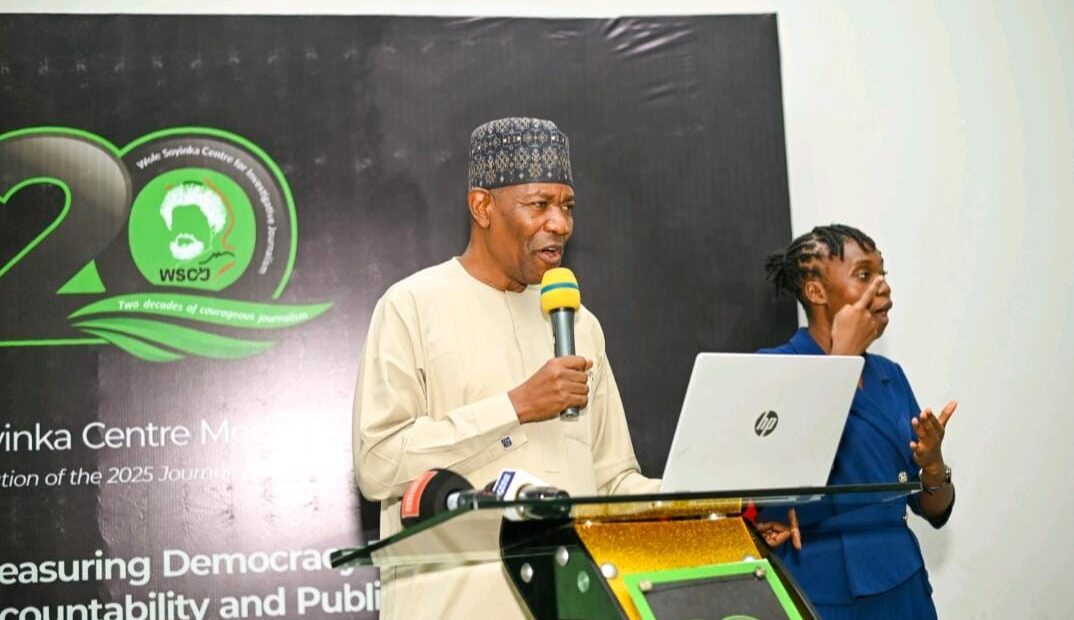
Prof. Pate on the Podium Speaking at the Event.
The event, which coincided with the 92nd birthday of Nobel Laureate and WSCIJ Grand Patron, Professor Wole Soyinka, brought together journalists, academics, policymakers, civil society actors, development partners, and government officials to reflect on the state of Nigeria’s democracy and the role of institutions in strengthening public trust and accountability.
Opening the programme, the immediate past Board Chair of WSCIJ, Professor Repo Sopokoni, observed that there could hardly be a more appropriate time to examine what democracy delivers beyond elections as Nigeria gradually prepares for another electoral cycle.
Without security, public trust and accountability, there will be no free and fair elections.
Delivering the keynote address, Professor Pate described the gathering as a continuation of WSCIJ’s longstanding commitment to strengthening democracy and investigative journalism, stressing that the country must periodically assess whether governance is meeting the expectations of its citizens.
“Without security, public trust and accountability, there will be no free and fair elections,” Pate declared.
He challenged participants with a fundamental question:
“Can a nation be considered democratic simply because elections are conducted periodically?”
According to him, democracy must go beyond electoral procedures and focus on substantive outcomes that improve the quality of life of citizens.
Drawing a distinction between procedural democracy and substantive democracy, the Bayero University Kano professor argued that elections alone cannot define democratic success.
“Citizens will evaluate democracy not through constitutional provisions, but through their lived experiences. What am I feeling? Can I find employment as a Nigerian in a democratic context? Can I feed my family? Can I access healthcare? Our democracy should be able to reduce poverty,” he said.
Pate noted that while elections remain essential to democratic governance, ordinary citizens are more concerned about practical outcomes such as economic opportunities, security, healthcare, education, and social welfare.
His remarks underscored the theme of the lecture: that democracy must ultimately improve the daily lives of citizens if it is to retain legitimacy and public confidence.
The communication scholar also raised concerns about the information ecosystem and its implications for democratic participation.
Can a nation be considered democratic simply because elections are conducted periodically?
“Today, the problem is not about the absence of information in our democracy, but rather the abundance of information—mostly wrong information—and the scarcity of attention,” he observed.
He emphasized the need for responsible communication, stronger media literacy, and credible information systems capable of building public trust and supporting informed civic engagement.
Professor Pate urged policymakers, political leaders, and citizens to focus on strengthening institutions that can deliver transparency, justice, security, and effective public service.
Experts Debate Democracy Beyond Elections
The event featured the Democracy Delivery Conversation, a panel discussion examining what democracy should deliver beyond the ballot box.
Moderated by Deji Badmus, Founder and Editor-in-Chief of TV360 Nigeria, the session brought together experts from journalism, election management, law enforcement, media, and public policy.
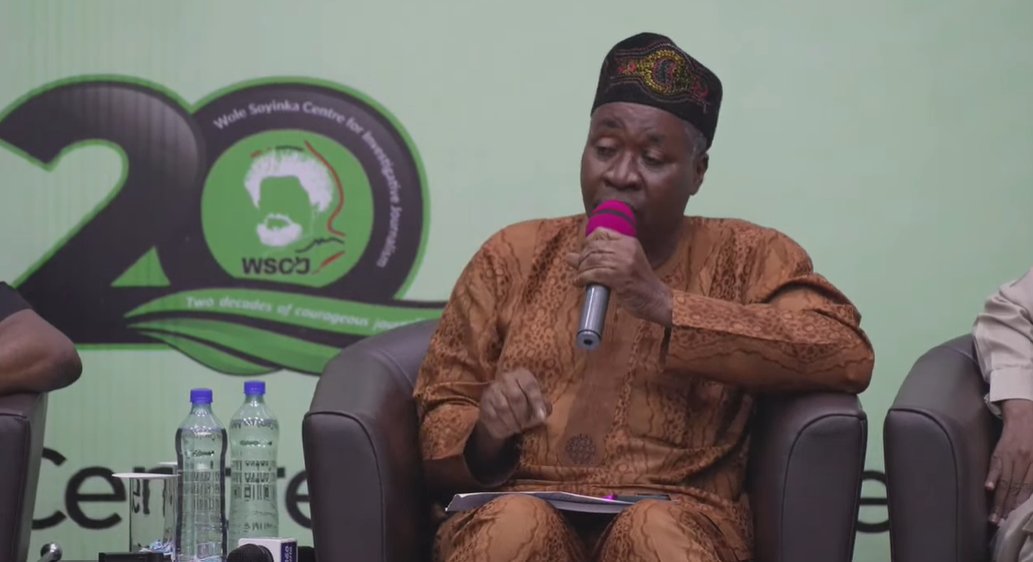
Taiwo Gbadegesin, Deputy Director and Head of the Department of Voter Education, Publicity, Gender and Civil Society, INEC Lagos State.
Panelists included Professor Umaru Pate; Taiwo Gbadegesin, Deputy Director and Head of the Department of Voter Education, Publicity, Gender and Civil Society at INEC Lagos State; Nabila Usman, General Manager of RadioNow 95.3FM; public affairs commentator and sustainable development practitioner Uplift Nuggets; and DCP Anthony Placid, Deputy Commissioner of Police, Department of Finance and Administration, representing the Inspector-General of Police.
During the discussion, Gbadegesin stressed that democratic progress depends significantly on the commitment of political actors to civic education and voter enlightenment.
“The bulk of the challenge lies with the political class. The press has been playing its role, and the Commission continues to promote voter awareness. However, if the political class does not actively support efforts to educate and enlighten citizens, the ultimate beneficiaries of the electoral process, we cannot get it right,” he said.
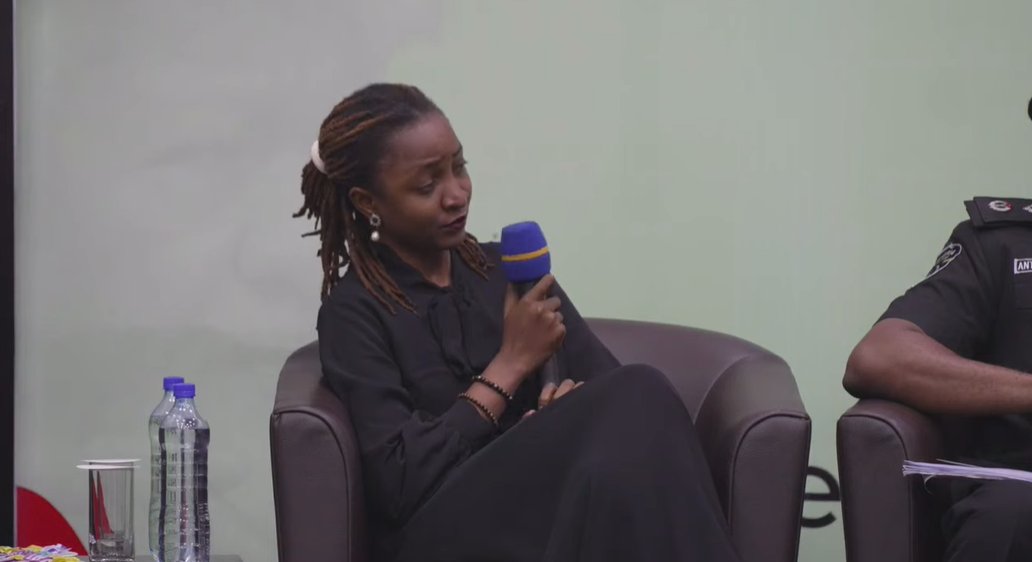
Nabila Usman, General Manager, Radio Now 95.3 FM, at the Democracy Delivery Conversation.
On her part, Nabila Usman highlighted the importance of editorial responsibility in combating misinformation and protecting public trust.
“Editorial oversight is probably the most important safeguard. Decisions cannot be taken independently, especially on issues that affect public safety. When you weigh the consequences of publishing false information, the repercussions are far greater,” she stated.
Also speaking, DCP Anthony Placid emphasized the importance of ethical communication and respect for the rule of law.
“Nobody is above the law. There is a need to embrace responsible and ethical practices, particularly when communicating information that affects the public,” he said.
Nobody is above the law. There is a need to embrace responsible and ethical practices.
Report Reveals Persistent Civic Space Challenges
A major highlight of the event was the presentation of the 2025 Journalism and Civic Space Status Report, reviewed by Professor Ayodele Atsenuwa of the University of Lagos.
The report documented 245 civic space incidents across 570 media reports published by 54 media organisations between January and December 2025, highlighting persistent restrictions on freedom of expression, access to information, peaceful assembly, association, and broader civic participation.
According to the findings, 219 incidents, representing 89.4 per cent of all documented cases, involved state actors, while the Nigeria Police Force was linked to 118 incidents, accounting for 53.9 per cent of state-related violations recorded during the period.
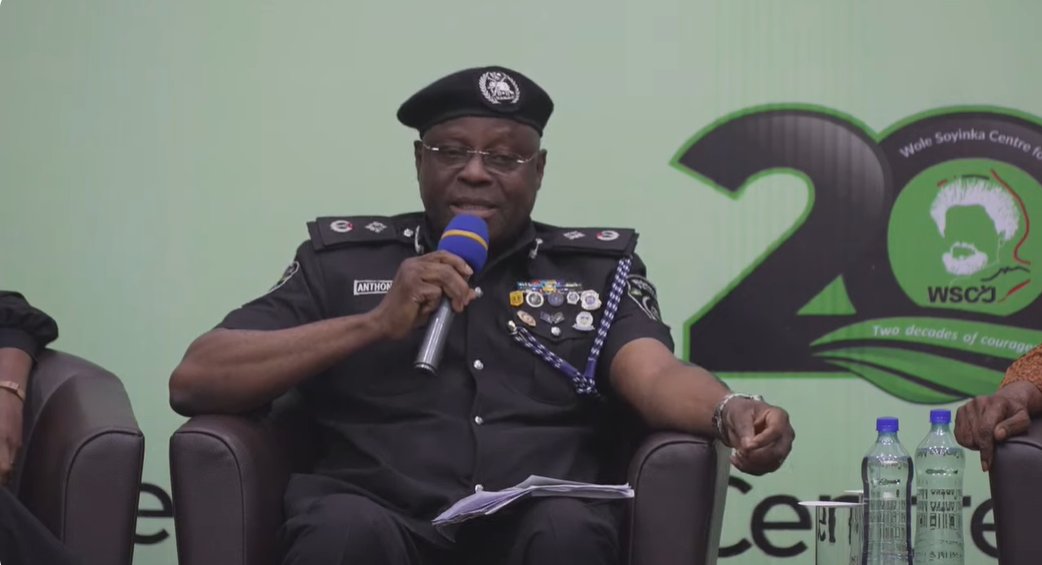
DCP Anthony Placid, Deputy Commissioner of Police, Department of Finance and Administration, representing the Commissioner of Police.
The report reinforced concerns raised by participants about shrinking civic space and the need for stronger democratic safeguards.
Celebrating Partnerships for Democratic Accountability
The programme also featured a farewell fireside chat between Motunrayo Alaka, Executive Director and CEO of WSCIJ, and Michel Deelen, Consul General of the Kingdom of the Netherlands in Nigeria.
Having spent more than 14 years in Nigeria, Deelen reflected on the country’s democratic evolution and the importance of sustained partnerships in promoting accountability and strengthening democratic institutions.
In recognition of his longstanding support for investigative journalism and democratic governance, Deelen was honoured with an award by the Wole Soyinka Centre.
For nearly two decades, the WSCIJ Media Lecture Series has served as a platform for national conversations on governance, accountability, journalism, and civic participation.
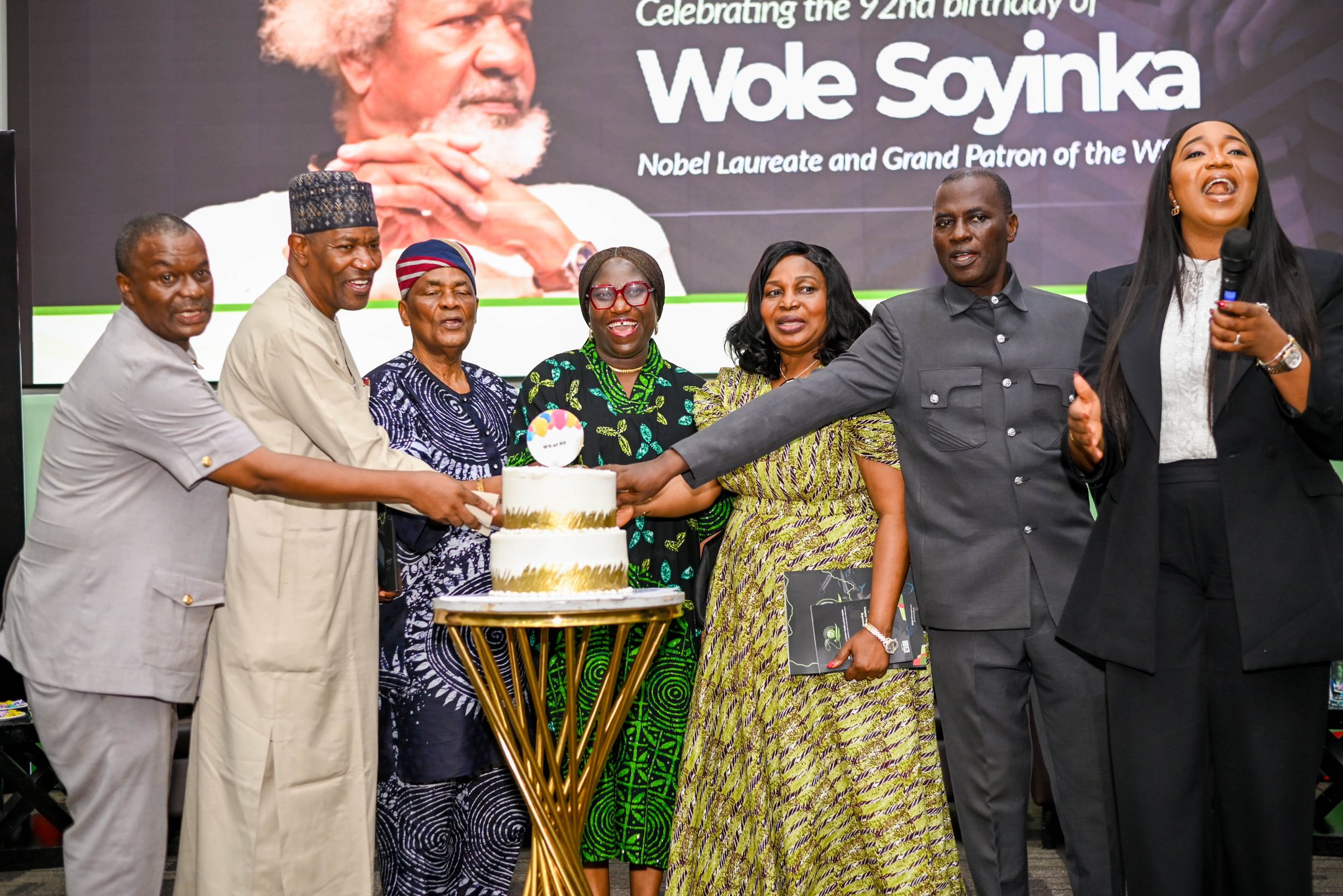
The 92nd birthday of Professor Wole Soyinka, Nobel Laureate and Grand Patron of the Wole Soyinka Centre, was marked with a cake-cutting ceremony in honour of his remarkable life and enduring legacy.
As Nigeria moves closer to another electoral cycle, Professor Pate’s message resonated strongly throughout the event: democracy cannot be judged merely by ballots cast or elections won. Its true value lies in whether it delivers security, opportunity, welfare, accountability, and hope to ordinary citizens.
In the final analysis, participants agreed that democracy must do more than conduct elections—it must put food on the table, reduce poverty, inspire trust, and improve the quality of life for the people it exists to serve.
Read Also: A pilgrimage to Soyinka’s home in Ijesha forest
Author

Sign up for The Insight Newsletter
Get in-depth, research and data-based interpretative reports from around Nigeria.