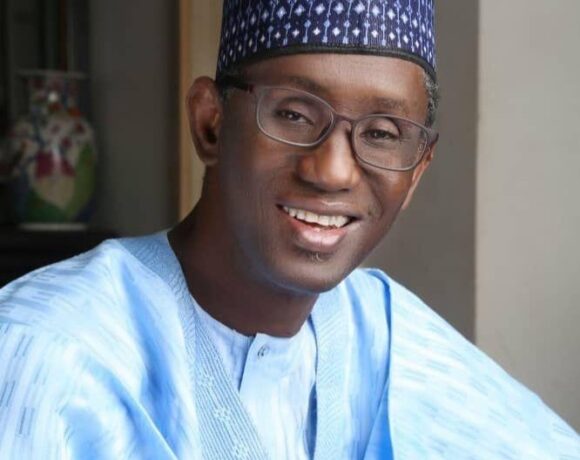
Weekly Brief: Xenophobe-Returnees from South Africa tell plane-load of sad tales
By Emmanuel Kwada
Xenophobic attacks on Nigerians abroad escalated, with returnees recounting harrowing ordeals. On Democracy Day, Atiku Abubakar lamented widespread hunger as Femi Falana led protests. In Borno, 720 repentant Boko Haram members were reintegrated amid fresh security concerns.
Then, the past week blended global excitement with Nigeria’s pressing realities. The 2026 World Cup burst into life as co-hosts shone: Mexico topped Group A with a 2-0 win over South Africa despite three red cards, South Korea claimed a 2-1 comeback, Canada earned a 1-1 draw, and the United States cruised to victory in Group D. This weekly brief reflects a world of parallel stories — where sporting glory inspires unity on one hand, while urgent socio-political and security issues demand attention on the other.
Xenophobe: Returnees Recount Harrowing Ordeal
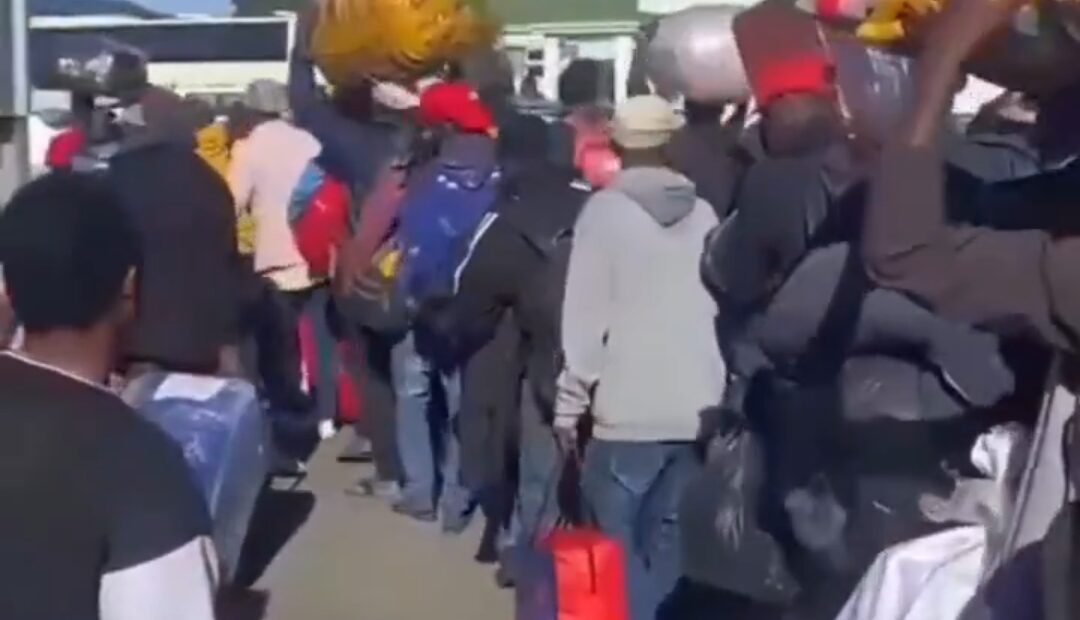
Emotional scenes unfolded at the Murtala Muhammed International Airport in Lagos on Thursday as the first batch of 268 Nigerians evacuated from South Africa arrived home, fleeing a fresh wave of xenophobic violence that has gripped Africa’s most industrialized nation.
The returnees, transported aboard an Air Peace flight arranged by the Federal Government, narrated painful experiences of intimidation, extortion, harassment, and fear that forced them to abandon their lives and livelihoods in South Africa.
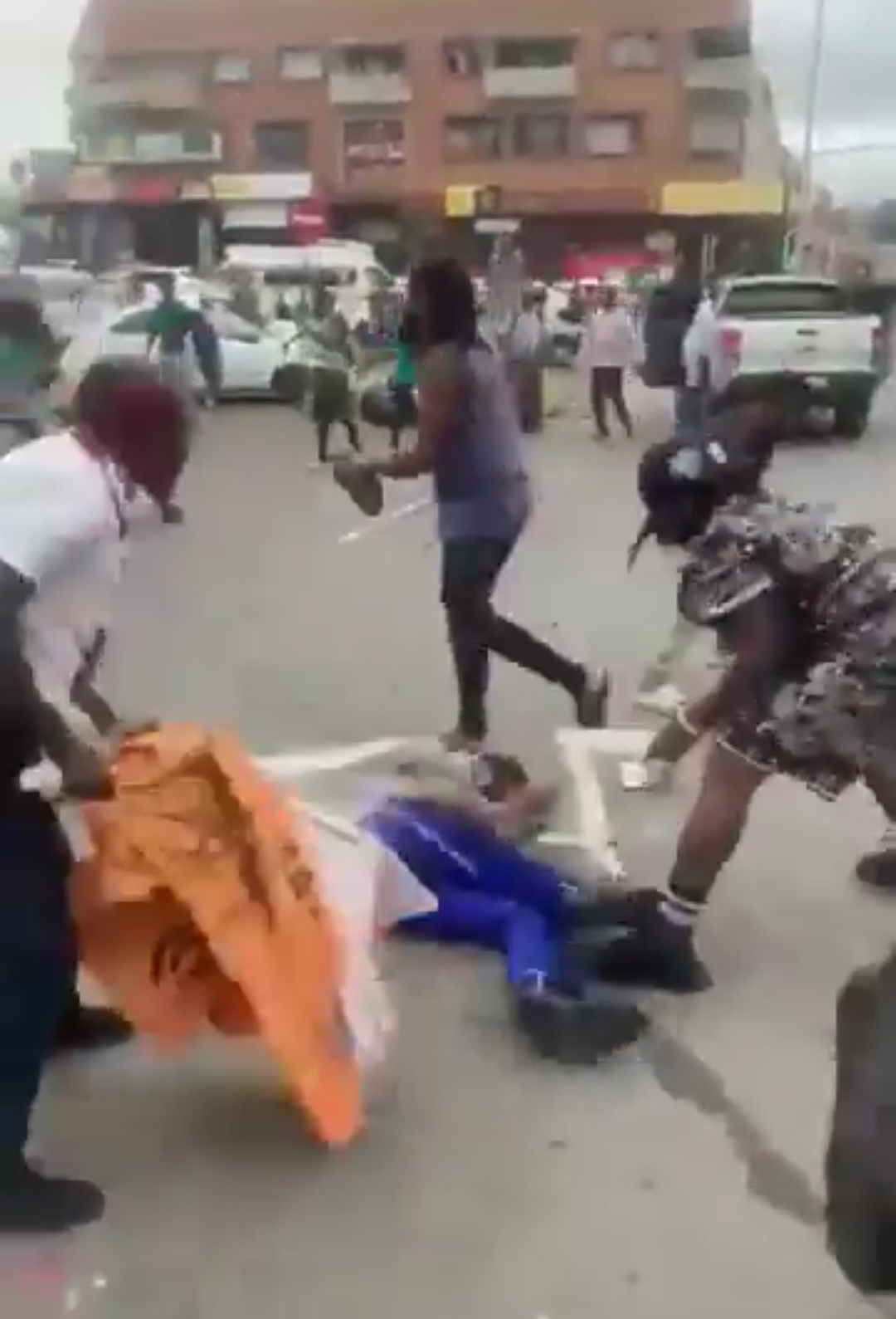
South Africans beat a Nigerian until he fainted.
Their arrival marks the beginning of a large-scale repatriation exercise expected to bring back more than 1,000 Nigerians who have registered to leave the country following renewed attacks on foreign nationals.
“No Place Like Home”
Many of the returnees expressed relief at being back in Nigeria despite uncertainties about their future.
One of them, Chukwuemeka Chris Okeke, described the conditions in South Africa as unbearable.
“There is no place like home. We were passing through a lot in South Africa,” he said.
Okeke thanked President Bola Tinubu and government officials who facilitated their return.
“I really appreciate our president and everyone who supported bringing us back. May God bless Nigerians,” he added.
No Place Like Home.
For Emmanuel Nwachukwu, who spent a decade in South Africa, the situation had become increasingly dangerous for Nigerians and other African migrants.
According to him, foreigners were living under constant fear following threats allegedly issued by anti-immigrant groups.
“They said they would start shooting people who refuse to leave,” he claimed.
Allegations of Harassment and Extortion
Nwachukwu alleged that Nigerian migrants were routinely targeted by law enforcement officials and subjected to extortion.
“Once they know you are Nigerian, the police and security agencies come after you for money. It happens every day,” he alleged.
He further claimed that immigration authorities often failed to provide documentation to migrants seeking legal status, only to later label them illegal immigrants.
“They say we are staying illegally, but they are not giving us documents. How can you refuse to document people and then call them illegal?” he asked.
According to him, many migrants became trapped in a cycle of fear, detention, and financial exploitation.
“They know many people don’t have papers because renewals are delayed. So they use that to frustrate and extort them,” he said.
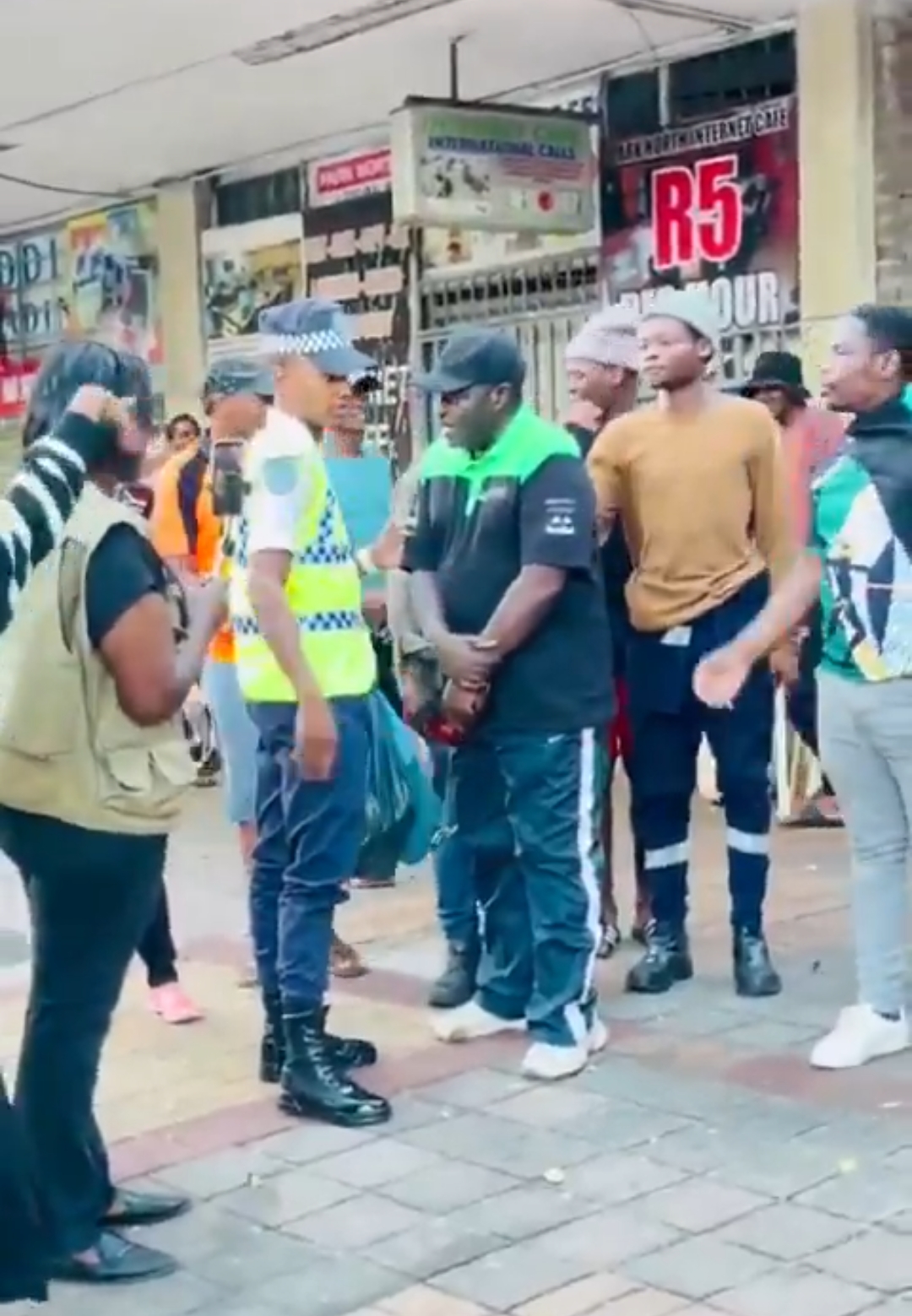
South Africans harassed Nigerians in the presence of a security officer despite his having a passport and visa.
Nwachukwu also accused immigration officials of frustrating voluntary departures.
“When you decide to return home, they still create obstacles. They tell you your documents are incomplete and sometimes send people back to detention facilities,” he alleged.
He urged Nigerians still residing in South Africa to overcome fear and pride and return home before conditions worsen.
“Many people don’t want to come back because they are ashamed after spending years there without success. But no place is better than home,” he said.
The violence prompted governments across Africa, including Nigeria, Ghana, Kenya, Zimbabwe, Malawi, and Mozambique, to issue travel advisories and begin evacuation arrangements for their citizens.
The attacks have revived painful memories of previous xenophobic outbreaks in 2008, 2015, and 2019, which left dozens dead and resulted in widespread destruction of foreign-owned businesses.
Federal Government Launches Evacuation Effort
Nigeria’s evacuation plan gained momentum after reports emerged that two Nigerians, Amaramiro Emmanuel and Ekpenyong Andrew, were allegedly killed during the unrest.
The Nigerian High Commission in Pretoria coordinated registrations for voluntary evacuation in partnership with South Africa’s Department of Home Affairs.
The next batch will arrive on June 15. The third batch will return on June 18, the fourth on June 22, and the final batch on June 24.
Although the operation faced initial logistical and documentation challenges, presidential approval was eventually secured for five evacuation flights after registrations exceeded 1,000 people.
Speaking during the arrival of the first batch, Nigeria’s Acting High Commissioner to South Africa, Ambassador Temitope Ajayi, announced that additional evacuation flights had already been scheduled.
“The next batch will arrive on June 15. The third batch will return on June 18, the fourth on June 22, and the final batch on June 24,” he disclosed.
Tinubu Resisted International Pressure
Ajayi revealed that President Tinubu remained committed to the evacuation despite diplomatic pressure from several international leaders, including South African authorities.
According to him, concerns were raised after Nigeria publicly announced plans to repatriate its citizens.
“Mr. President was put under tremendous pressure by world leaders and even by the President of South Africa to suspend the action,” Ajayi said.
“But he remained firm and said any attack on Nigerians in South Africa was an attack on him, and that his people must be brought home.”
We are here to say goodbye to Nigerians.
Meanwhile, leaders of South Africa’s anti-foreigner movement have remained unapologetic about their campaign.
The president of the Inizwe Nathi Party, Thabile Sibeko, stirred controversy after publicly bidding farewell to departing Nigerians.
In a viral television interview, Sibeko accused some Nigerians of contributing to crime and drug-related problems in South Africa.
“We are here to say goodbye to Nigerians. Thank you for what you contributed, but we did not appreciate the wrongs that were done,” she said.
Sibeko alleged that criminal activities involving a few foreigners had fueled resentment among South Africans, though she acknowledged that not all migrants were responsible for such actions.
Her comments have generated widespread debate across social media platforms and among diplomatic observers.
Returnees Receive Financial Support
The Chairman of the Nigerians in Diaspora Commission (NiDCOM), Abike Dabiri-Erewa, announced a package of support measures for the returnees.
She stated that telecommunications company MTN Nigeria provided each evacuee with ₦100,000, in addition to ₦50,000 airtime and starter packs.
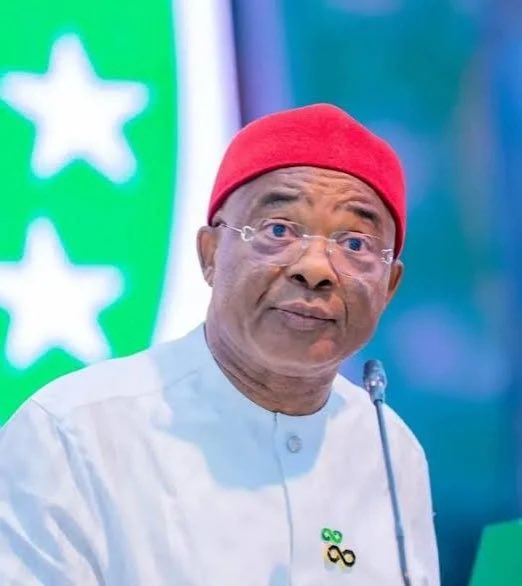
Hope Uzodinma, Chairman of the Progressive Governors Forum
According to her, Governor Hope Uzodimma also donated ₦1 million each to returnees from Imo State.
The National Emergency Management Agency assisted with transportation arrangements, while the National Identity Management Commission helped returning citizens obtain identity documentation.
Dabiri-Erewa emphasized that none of the returnees had committed crimes.
“The only offence many of them committed was the colour of their skin. They are migrants who became victims of xenophobia,” she said.
She called on state governments to support their citizens returning from South Africa and pledged continued engagement aimed at helping returnees rebuild their lives and reintegrate into society.
Inside 24 Hours at the 2026 World Cup
The 2026 FIFA World Cup exploded into action over its first full day of competition, delivering a whirlwind of goals, red-card drama, and stirring comebacks that have already captivated fans across North America and beyond. With co-hosts Mexico, Canada, and the United States all taking the field, the expanded 48-team tournament wasted no time showing why this edition promises to be one of the most memorable in history.
It all began in electric fashion at Mexico City’s legendary Estadio Azteca, where host nation Mexico took on South Africa. What started as a confident opening for El Tri soon turned chaotic as three red cards disrupted the flow, forcing both teams to adapt on the fly amid heightened tensions and crunching challenges. Despite the numerical imbalances, Mexico stayed in control and claimed a solid 2-0 victory.

Mexican footballer Raúl Jiménez celebrates his first-ever World Cup goal.
Julián Quiñones and Raúl Jiménez found the net, giving their side an ideal start and sending Mexican fans into raptures. The result placed Mexico at the top of Group A, though the red cards served as an early reminder of just how physically intense this tournament is going to be.
That same day in Guadalajara, South Korea produced one of the first thrilling comebacks of the competition. Trailing early against Czechia, the Koreans refused to panic and fought their way to a 2-1 win.
Hwang In-beom and Oh Hyeon-gyu struck at key moments to turn the game around, showcasing the resilience that has long defined Asian sides on the world stage. With Mexico and South Korea both collecting three points after one match, Group A already looks competitive and unpredictable.
North of the border in Toronto, co-host Canada faced Bosnia and Herzegovina in a tense Group B clash. Bosnia drew first blood through a well-executed set-piece header, briefly silencing the passionate home crowd. But Canada responded with character. Cyle Larin rose to the occasion in the second half, heading home a deserved equalizer to secure a 1-1 draw.
Mexico currently leads Group A thanks to their 2-0 win and superior goal difference.
Alphonso Davies and Jonathan David provided constant threat on the flanks, while the defense showed growing confidence after the early setback. The point was hard-earned and keeps Canadian hopes very much alive as they navigate a tough group.
As Saturday morning arrived, attention shifted to Los Angeles, where the United States made an emphatic statement in their Group D opener against Paraguay. Playing in front of a raucous home crowd at SoFi Stadium, the USMNT surged into an early lead and never looked back.
An own goal by Paraguay’s Damián Bobadilla opened the scoring before Folarin Balogun and others added to the tally, helping the Americans cruise to a commanding victory. Christian Pulisic and the attacking players looked sharp and creative under coach Mauricio Pochettino, blending flair with clinical finishing. The strong result has positioned the United States as early leaders in their group and boosted national excitement for what lies ahead.
These opening matches have painted a clear early picture. Mexico currently leads Group A thanks to their 2-0 win and superior goal difference, while South Korea sits right behind them on points. Canada has a valuable point on the board in Group B, and the United States has taken full control of Group D with an impressive opening performance. The co-hosts have every reason to feel optimistic, though plenty of tough tests remain.
Beyond the results, the first 24 hours highlighted the unique scale and intensity of this World Cup. The expanded format means more matches and more opportunities for surprises, while the travel across three host nations and the demanding schedule will test squad depth like never before. Red cards, late equalizers, and clinical finishing have already shown that heart, tactics, and discipline will be just as important as talent.

Massive protest in Nyanya Karu Bridge in Abuja against insecurity, banditry and kidnapping of school children in Oyo and other places led by VeryDarkman.
June 12: Nigerians Have Become Accustomed to Hunger, Atiku Laments as Falana, Others Lead Democracy Day Protests
Former Vice President and presidential candidate of the African Democratic Congress (ADC), Atiku Abubakar, has expressed concern over the state of Nigeria’s democracy, saying the dividends of democratic governance have failed to translate into improved living conditions for millions of citizens.
Speaking on Friday at the Democracy Day Dialogue organised by the Coalition Political Action Committee (COPAC) in Abuja, Atiku said worsening economic hardship, insecurity and declining public confidence in democratic institutions have left many Nigerians struggling to survive.
His remarks came as human rights lawyer Femi Falana, activist Omoyele Sowore, musician and social commentator Falz, and social media activist Martins Vincent Otse joined Democracy Day protests across Abuja, Lagos and Ibadan, demanding improved governance, accountability, security and economic reforms.
Food insecurity has become synonymous with our daily reality.
In his keynote address, Atiku lamented the rising cost of living, describing it as an unbearable burden on ordinary families across the country.
According to him, basic necessities such as food, transportation and healthcare have become increasingly unaffordable for many Nigerians.
“Food insecurity has become synonymous with our daily reality. The statistics are staggering, and the warnings of impending hardship now haunt millions. Farms lie fallow, markets stand empty, and too many of our people have grown accustomed to going to bed hungry in a country that cannot even guarantee their safety,” he said.
The former vice president argued that while Nigeria has sustained democratic rule for over two decades, many citizens have lost faith in the electoral process and democratic institutions.
“We hold elections periodically, but seventy per cent of Nigerians do not believe those exercises reflect their wishes or allow them to vote out bad governments. We possess democratic institutions, yet too many of them appear weaponised against the very people they were created to protect,” he stated.
Atiku further accused political leaders of betraying the sacrifices of pro-democracy activists who fought for the nation’s democratic freedoms.
According to him, governance has been overshadowed by politics, while constitutional checks and accountability mechanisms are increasingly being weakened.
“We celebrate democracy, while a hollowed-out version is served to us daily, marked by constitutional overreach and a stubborn refusal to submit to the checks of accountability,” he said.
The ADC presidential candidate also decried what he described as widespread corruption and growing divisions fuelled by narrow political interests.
“Our democratic structures, systems and institutions are suffering an erosion whose malignancy has spread to every segment of our bleeding society,” he added.
Insecurity has turned parts of our country into lands of terror, bloodletting and mourning. Our citizens are cut down daily.
On the security situation, Atiku said many parts of the country have become theatres of violence, with citizens living in fear amid persistent attacks by criminal groups and insurgents.
“Insecurity has turned parts of our country into lands of terror, bloodletting and mourning. Our citizens are cut down daily in this senseless tide of violence,” he said.
He commended members of the armed forces and security agencies for their efforts but noted that they require stronger policy support, adequate resources and complementary non-military strategies to effectively address the crisis.
Protesters Demand Accountability
Across major cities, Democracy Day protests drew civil society groups, labour activists, youth organisations and concerned citizens who expressed frustration over worsening insecurity and economic hardship.
In Abuja, protesters led by Sowore, Falana and VeryDarkMan marched through parts of the Federal Capital Territory, calling for urgent action to address insecurity, unemployment and the rising cost of living. The demonstration attracted significant youth participation and members of several pro-democracy organisations.
In Lagos, Falana and Falz joined demonstrators who criticised the government’s handling of insecurity, kidnappings and economic challenges. Protesters carried placards demanding reforms and greater accountability from elected officials.
Similar demonstrations were held in Ibadan, Oyo State, where civil society organisations, labour activists and residents staged solidarity protests, highlighting concerns over insecurity and recent incidents of abduction affecting schools and communities.

Massive crowd protests in Abuja over insecurity and hardship.
The nationwide demonstrations were coordinated by a coalition of civil society organisations, labour groups and pro-democracy movements advocating reforms aimed at strengthening democratic institutions and improving citizens’ welfare.
The Democracy Day dialogue and protests formed part of activities marking Nigeria’s 27 years of uninterrupted democratic governance. While government officials celebrated the nation’s democratic journey, protesters and opposition figures used the occasion to highlight what they described as the widening gap between democratic ideals and the realities faced by millions of Nigerians struggling with poverty, insecurity and economic uncertainty.
Borno Reintegrates 720 Repentant Boko Haram Members Amid Renewed Security Concerns
The Borno State Government has reintegrated 720 repentant Boko Haram members into their communities despite growing concerns over worsening insecurity in parts of the North-East.
The former insurgents, alongside 992 women and 2,050 children, completed a rehabilitation and deradicalisation programme under the state’s “Borno Model” before being formally returned to society.
The programme has facilitated the reintegration of more than 9,600 former insurgents.
Speaking during the reintegration ceremony in Maiduguri, Special Adviser to Governor Babagana Umara Zulum on Security, Brig.-Gen. Abdullahi Ishaq (Rtd), said the beneficiaries voluntarily surrendered to military authorities and underwent extensive disarmament, demobilisation, rehabilitation and skills acquisition training.
According to him, the programme has facilitated the reintegration of more than 9,600 former insurgents since its inception, contributing to efforts aimed at ending the insurgency through non-kinetic measures.
The reintegrated individuals were drawn from several local government areas across the state and were screened by community leaders and members of the Civilian Joint Task Force before approval for reintegration.
The development comes amid persistent security challenges in the region, including recent attacks by insurgents and concerns over the resurgence of terrorist activities in some communities. Authorities, however, maintain that rehabilitation and reintegration remain critical components of long-term peacebuilding and stability in the state.
Read Also: June 12: Surrender Now or Face Full Force of the State, Tinubu Tells Bandits
Author

Sign up for The Insight Newsletter
Get in-depth, research and data-based interpretative reports from around Nigeria.