Weekly Roundup: Supreme Court Restores Light in ADC; Leaves PDP in Darkness
By Emmanuel Kwada
Nigeria experienced another consequential week defined by landmark judicial decisions, escalating security concerns, industrial action in the education sector, and key public health developments.
In this edition of THE INSIGHT, we present a comprehensive roundup of the major stories shaping the nation. Read on for full details.
Supreme Court Doubles Down on Court of Appeal Over ADC Leadership
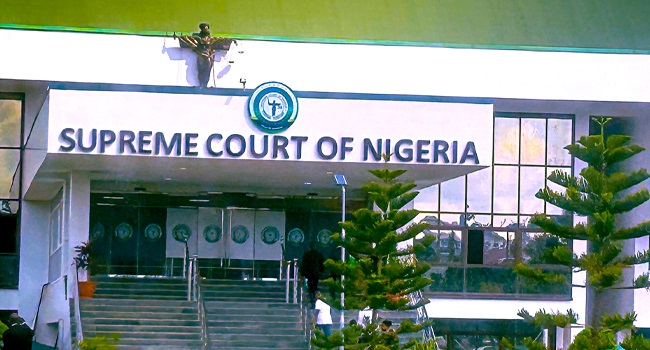
The Supreme Court of Nigeria delivered significant judgments affecting two major opposition parties. The apex court voided the controversial PDP national convention held in Ibadan, Oyo State, in November 2025, while simultaneously setting aside the Court of Appeal’s “status quo ante bellum” order in the ongoing leadership crisis within the African Democratic Congress (ADC).
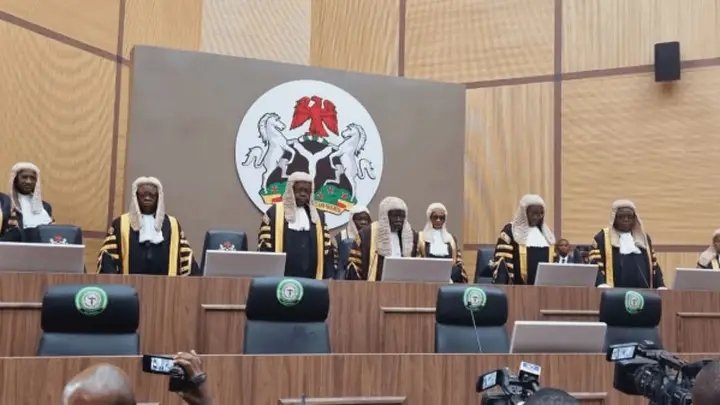
Supreme Court judges getting ready for sitting
The judgments were delivered by a five-member panel of the Supreme Court. In the ADC matter, the panel headed by Justice Mohammed Garba unanimously faulted the Court of Appeal for issuing preservatory orders after dismissing an appeal.
The court directed parties in the ADC suit to return to the Federal High Court in Abuja for the hearing and determination of the substantive leadership dispute.
“Giving such an order in an appeal it had already dismissed was unnecessary, unwarranted and improper,” Justice Garba held.
In a split decision (3-2), the Supreme Court upheld the nullification of the Peoples Democratic Party’s (PDP) national convention held in Ibadan on November 15 and 16, 2025. The convention, organized by the Tanimu Turaki-led faction, had been challenged in lower courts.
PDP now faces renewed uncertainty.
The apex court, in its lead judgment read by Justice Stephen Adah, strongly condemned what it described as disobedience of court orders by the Turaki camp.
The ruling deals a major blow to the Turaki-led executive and has deepened the leadership crisis within the PDP, particularly between factions aligned with different power blocs, including that loyal to FCT Minister Nyesom Wike.
This decision effectively invalidates the outcomes of the Ibadan convention, including any executive positions or decisions taken there. The PDP now faces renewed uncertainty as it prepares for future political activities ahead of the 2027 general elections.
With the judgement, the PDP will be grappling with an unprecedented leadership vacuum as the Court, also, upheld the suspension of the Wike-backed National Working Committee (NWC), effectively dismantling both major factions within the party. This dual blow has left the PDP without a recognized national chairman or functioning NWC, creating a structural void at the very heart of its organization.
In response to this crisis, the PDP Board of Trustees (BoT), led by Senator Adolphus Wabara, announced its decision to assume interim control of the party. The BoT invoked Section 32(5) of the PDP Constitution, which empowers it to step in during periods of instability, and pledged to convene an emergency National Executive Committee (NEC) meeting to appoint an interim NWC. While this move is aimed at preventing total collapse, the BoT’s role is traditionally advisory rather than executive, raising questions about its ability to provide the strong leadership needed to stabilize the party ahead of the 2027 general elections.
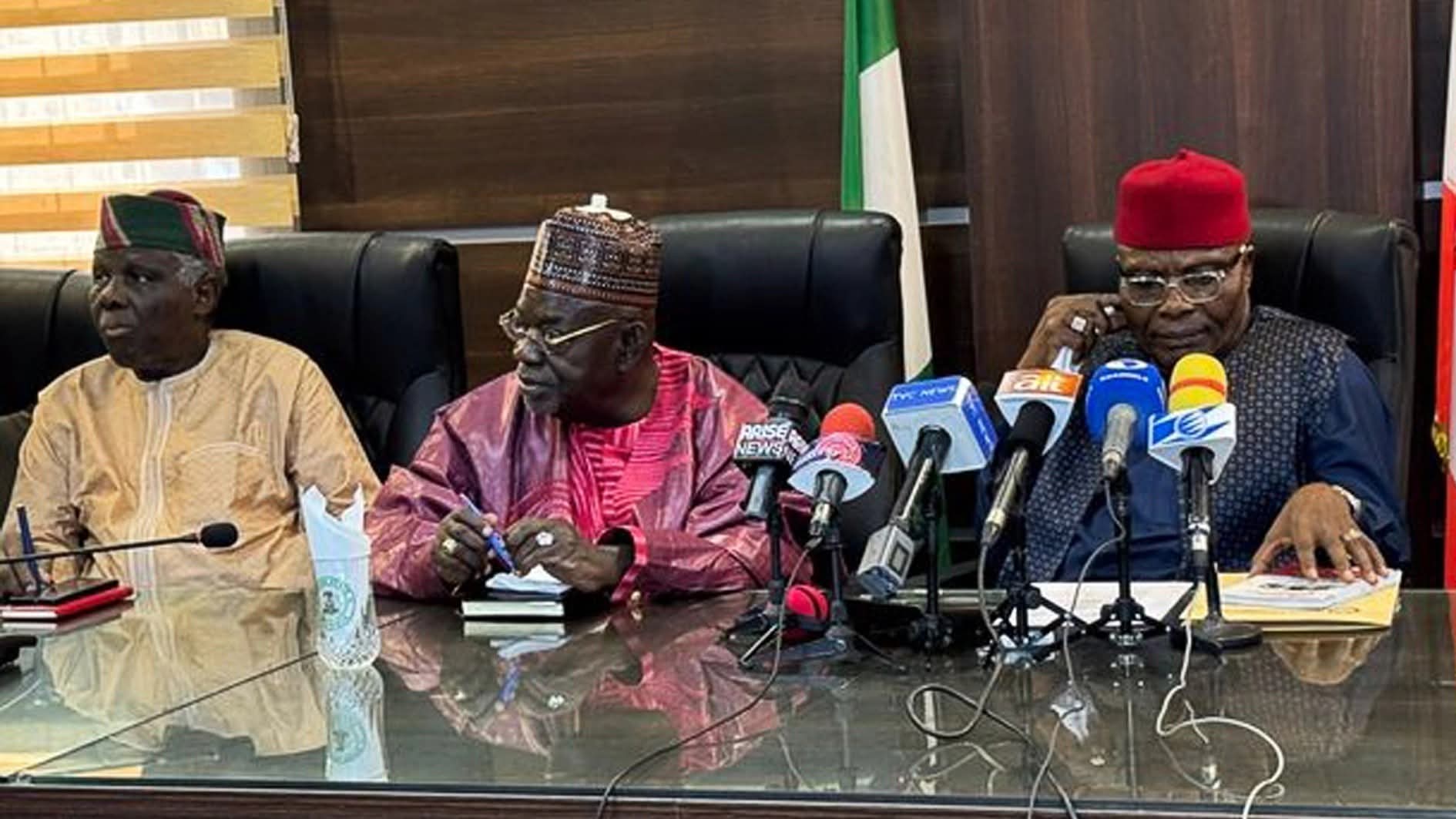
Wabara- led BoT steps in to lead PDP after the Supreme Court judgement.
The leadership vacuum has significant political implications. Without a legitimate national chairman or NWC, the PDP lacks the capacity to coordinate nationwide activities, enforce discipline, or present a unified front against rival parties. Factional leaders may exploit the uncertainty to consolidate personal influence, deepening internal divisions.
This instability risks alienating grassroots supporters and weakening the party’s ability to mobilize effectively. Moreover, the absence of a clear leadership structure undermines the PDP’s credibility in negotiations with other political actors, including potential allies in coalition-building.
Looking ahead to the 2027 elections, the PDP faces a critical test of survival. If the BoT succeeds in quickly restoring order and establishing a credible interim leadership, the party may yet recover and mount a serious challenge.
However, prolonged infighting or failure to resolve the crisis could lead to fragmentation, defections, and diminished electoral relevance. Once Nigeria’s dominant political force, the PDP now stands at a crossroads: either it rebuilds unity and credibility under the BoT’s stewardship, or it risks sliding into irrelevance in the face of stronger, more organized competitors.

Combo photo of Senator David Mark and Nafiu Bala Gombe
The ADC portion of the ruling stemmed from an appeal filed by Senator David Mark, National Chairman of the ADC faction, challenging the March 12, 2026 decision of the Court of Appeal.
The crisis originated from a suit filed on September 2, 2025, by Nafiu Bala, a former National Vice Chairman of the ADC, at the Federal High Court, Abuja (suit no: FHC/ABJ/CS/1819/2025).
Bala sued the ADC, Senator David Mark (National Chairman), Rauf Aregbesola (National Secretary), the Independent National Electoral Commission (INEC), and Ralph Nwosu (party founder and former National Chairman).
He argued that he never resigned his position as National Vice Chairman and was entitled to assume leadership in accordance with the party’s constitution after Nwosu’s exit. Bala later declared himself Acting National Chairman.
He sought orders restraining the Mark-led executive from parading themselves as national officers, restraining INEC from recognizing them, and compelling recognition of himself as Acting National Chairman.
He also filed motions to halt party meetings, congresses, or conventions pending the suit’s determination.
On September 4, 2025, Justice Emeka Nwite directed that the respondents be put on notice regarding the ex parte motion, without granting any substantive interim orders at that stage.
No appealable decision existed from the trial court, as only a notice order had been issued.
Senator David Mark approached the Court of Appeal, challenging the Federal High Court’s jurisdiction and the proceedings. On March 12, 2026, a three-member panel led by Justice Uchechukwu Onyemenam dismissed Mark’s appeal as incompetent and unmeritorious.
The appellate court ruled that no appealable decision existed from the trial court, as only a notice order had been issued. It further held that the appeal was premature and that leave was required for an interlocutory appeal.
Despite dismissing the appeal, the Court of Appeal issued preservatory orders directing parties to maintain the status quo ante bellum (the position before the dispute) and refrain from actions that could undermine the substantive suit. It also ordered accelerated hearing and awarded N2 million costs against Mark.
Senator Mark appealed to the Supreme Court, arguing that the Court of Appeal exceeded its jurisdiction by issuing the status quo order after dismissing the appeal.
In Thursday’s unanimous judgment, the Supreme Court agreed, voided the preservatory orders, and remitted the matter back to the Federal High Court for proper determination of the substantive issues, including jurisdiction and the leadership question.
The Federal High Court is expected to resume hearing of the ADC substantive suit soon, while the PDP factions may need to explore further legal or political options following the nullification of their Ibadan convention.
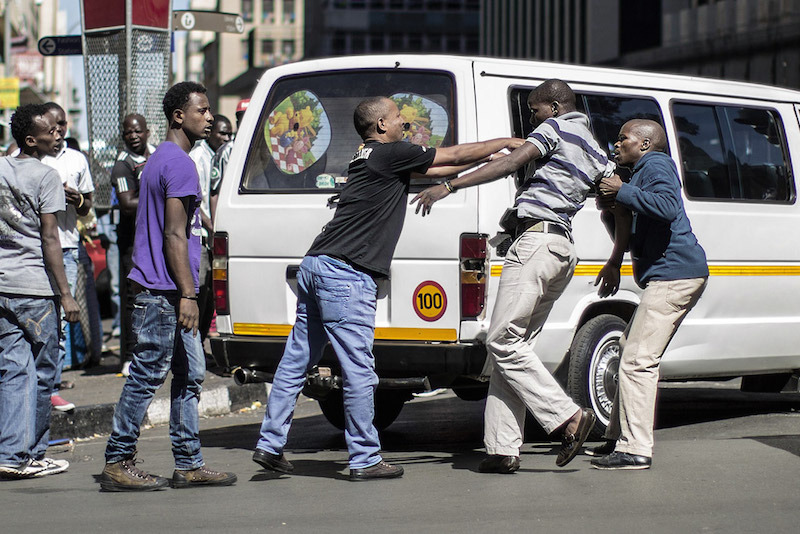
Nigerians are being maltreated in South Africa
Xenophobia: Nigerians Face Unabated Threats in South Africa
Nigerians living in South Africa are facing renewed and escalating threats of xenophobic violence, prompting urgent calls on the Federal Government to take stronger diplomatic action to protect its citizens abroad, as anti-foreigner sentiments continue to fuel attacks, looting, intimidation, and the killing of at least two Nigerian nationals in recent days.
The latest wave of xenophobia has manifested through protests and mob actions in several South African cities and provinces, including Pretoria, Johannesburg (particularly areas like Gemiston in the east), East London (Buffalo City in the Eastern Cape), Cape Town, Durban, and parts of KwaZulu-Natal, this is according to reports on social media and videos in circulation.
Groups such as Operation Dudula and other anti-immigration movements have been linked to demonstrations demanding the expulsion of “illegal migrants,” with many protests turning violent and specifically targeting African foreigners, including Nigerians, who are often accused of taking jobs, businesses, and opportunities from locals.
In the past 72 hours, community leaders have documented fresh incidents of violence and harassment. Nigerian business owners have been forced to shut down shops out of fear of targeted looting and destruction, while parents of Nigerian descent have kept their children away from school due to safety concerns.
National being harassed and told to sack the Nigerians.
Viral videos circulating on social media have shown mobs confronting foreign nationals, demanding proof of legal status, issuing threats, and in some cases physically assaulting individuals.
One widely shared incident involved a Ghanaian national being harassed and told to “sack the Nigerians” in his country, highlighting the spillover of anti-foreigner rhetoric across African migrant communities.
The situation took a tragic turn with the confirmed deaths of two Nigerians; Amaramiro Emmanuel and Ekpenyong Andrew — in separate incidents linked to the rising anti-foreigner tensions.
The Nigerian Consulate General in Johannesburg verified the killings, which have triggered widespread fear and panic within the Nigerian diaspora.
These deaths are part of a pattern of periodic xenophobic outbursts that have historically targeted black African migrants, with Nigerians frequently among the most affected due to their visible presence in trading, small businesses, and other sectors.
The Nigerians in Diaspora Commission (NiDCOM), led by Chairman Abike Dabiri-Erewa, has described the situation as “deteriorating” and issued a strong call on the South African government to urgently protect Nigerians and other black immigrants.
NiDCOM emphasised that crime has no nationality and urged South African authorities to uphold their obligations under international law and African Union protocols to safeguard foreign nationals.
The commission advised Nigerians in South Africa to exercise extreme caution, close businesses where necessary, and maintain a low profile to avoid confrontations.
National Assembly, and African leaders to intervene with “urgency, firmness, and strategic diplomacy.
The Nigerian Citizens Association in South Africa (NICASA), through its president Rev. Frank Onyekwelu, has appealed directly to President Bola Ahmed Tinubu, the Minister of Foreign Affairs, the National Assembly, and African leaders to intervene with “urgency, firmness, and strategic diplomacy.”
The group condemned the persistent harassment, intimidation, and targeted aggression, stressing that protecting Nigerians abroad is both a constitutional and moral duty of the Federal Government.
The National Association of Nigerian Students (NANS) has equally urged the Federal Government to take concrete steps to protect Nigerian students studying in South Africa, many of whom now live in fear amid the hostile environment.
The Federal Government has formally demanded that South African authorities ensure the safety and protection of Nigerians and other foreign nationals.
South African authorities, including the police ministry, have pledged to crack down on perpetrators of xenophobic acts, vowing to identify, apprehend, and prosecute those inciting or participating in violence. However, community leaders on the ground report that the situation remains tense, with protests continuing and migrants exercising “heightened vigilance.”

A victim identified as 28-year-old Mene Ogidi in Effurun by ASP Nuhu Usman
Outrage in Delta Over Police Brutality; IGP Orders Dismissal of Officers Involved
Widespread outrage has erupted across Delta State following the alleged extra-judicial killing of 28-year-old Mene Ogidi by police officers in Effurun, prompting the Inspector-General of Police, IGP Olatunji Rilwan Disu, to order the immediate dismissal and criminal prosecution of Assistant Superintendent of Police (ASP) Nuhu Usman and four other officers involved in the incident.
The tragic event occurred on April 26, 2026, during a police operation in Effurun, a bustling area in Uvwie Local Government Area of Delta State.
A viral video that circulated rapidly on social media showed the young man, reportedly an upcoming musician, seated on the ground and pleading for his life before he was fatally shot by ASP Usman in what many described as a clear case of excessive and unlawful use of force.
The graphic footage ignited immediate public anger, with residents and civil society groups condemning the incident as another example of police brutality and abuse of power.
According to the Nigeria Police Force, the officers were acting on intelligence that linked Mene Ogidi to a parcel suspected to contain a firearm and ammunition.
The dismissed personnel are to be handed over to relevant judicial authorities for prosecution on charges of unlawful homicide.
However, the manner of the operation and the shooting, captured on video, sparked accusations that the victim was executed while possibly restrained or in a non-threatening position, violating established police rules on the use of firearms.
In a swift response, the IGP directed that all officers connected to the incident be immediately withdrawn from the Delta State Police Command and transferred to Force Headquarters in Abuja for expedited disciplinary proceedings.
The Force Disciplinary Committee (FDC) reviewed the matter and established that ASP Nuhu Usman and the other officers acted in gross violation of Force Order 237 and other extant regulations governing the use of firearms by police personnel.
IGP Disu approved the committee’s recommendations for the immediate dismissal of the implicated officers from the Nigeria Police Force.
The dismissed personnel are to be handed over to relevant judicial authorities for prosecution on charges of unlawful homicide. The IGP’s action has been forwarded to the Police Service Commission for ratification in line with due process.
The Force Public Relations Officer, DCP Anthony Okon Placid, in a statement, reiterated the Nigeria Police Force’s zero-tolerance policy towards abuse of power, extra-judicial killings, and misconduct.
He extended condolences to the family of the deceased and assured Nigerians that the Force remains committed to upholding human rights and professional standards.
Residents of Delta State, particularly in Effurun and surrounding communities, expressed deep anger and distrust towards the police, with some organising protests and demanding justice for Mene Ogidi.

416 Abducted Women and Children in Borno
The development has also drawn comparisons to previous high-profile cases of alleged police misconduct across the country.
“You May Never See Them Again”: Boko Haram says about 416 Borno Hostages
A faction of Boko Haram, identifying as Jama’atu Ahlis Sunna Lidda’awati wal-Jihad (JAS) under the leadership of Imam Abu (also referred to as Imam Abu Mu’min al-Muhajir), has escalated its threats against 416 abducted residents of Ngoshe community in Gwoza Local Government Area, declaring that their 72-hour ultimatum to the Nigerian government has expired.
We are Jama’atu Ahlis Sunna Lidda’awati wal-Jihad under Imam Abu.
In a video circulated on April 30 via Sahara Reporters and other platforms, the group’s spokesperson issued a chilling follow-up message, reiterating demands for a ₦5 billion ransom and warning of dire consequences for the hostages predominantly women and children if their conditions are not met.
The faction also specifically warned Senator Ali Ndume, who had earlier called on the Senate floor for intensified efforts to rescue the victims.
In the initial ultimatum video released around April 19, 2026, the masked spokesperson addressed both the Borno South Youth Alliance (BOSYA) and the Nigerian government, which the group explicitly rejected as “not our government.”
He stated: “We are Jama’atu Ahlis Sunna Lidda’awati wal-Jihad under Imam Abu. Today being 19th April 2026, we are giving out a new message to the Borno South Youth Alliance (BOSYA) and also to the Nigerian government, who are not our government.”
Describing the message as their “first and final” warning, the speaker issued the 72-hour deadline: “This is our first and last message. We are giving you 72 hours. If you do not meet our demands, we will share out (or disperse/move) the women and children to different locations. All of them.”
You have made your decision, and we have made ours. We instruct you, in the name of Allah, not to exceed the given time.
He added: “You have made your decision, and we have made ours. We instruct you, in the name of Allah, not to exceed the given time.”
The group warned that failure to comply could mean the hostages “may never be seen again” or face execution. They explicitly cautioned against any military rescue operation, claiming it would endanger the lives of the captives and lead to worse outcomes.
The militants asserted they were battle-ready and prepared to confront any forceful attempt by security forces.
In the latest April 30 video, the faction declared the 72-hour period had lapsed without a positive response from the government or mediators.
The speaker reiterated threats to execute or further disperse the hostages, emphasizing their readiness for confrontation. Reports indicate the group directly warned Senator Ali Ndume over his public calls in the Senate for more decisive action to rescue the victims.
The 416 captives were taken during a large-scale attack in early March 2026 when insurgents overran a military base in Ngoshe, Gwoza LGA, killing several people, burning structures, and abducting residents.
Mediation efforts led by the Borno South Youth Alliance (BOSYA) had been ongoing, during which the group initially released proof-of-life videos at the request of mediators. Some reports suggest around 12 captives have since escaped, but the fate of the majority remains uncertain.

The ransom demand of ₦5 billion was communicated during mediation talks. The terrorists have positioned the demand as non-negotiable, threatening mass execution or relocation of the hostages to unknown locations if unmet.
University Workers Begin Indefinite Strike
Operations in federal universities and inter-university centres across Nigeria will be disrupted from Friday, May 1, 2026, as the Non-Academic Staff Union of Educational and Associated Institutions (NASU) and the Senior Staff Association of Nigerian Universities (SSANU) commence an indefinite nationwide strike.
The Joint Action Committee (JAC) of the two unions announced the strike in a letter dated April 30, 2026, and addressed to the Minister of Education, Tunji Alausa.
In the letter signed by NASU General Secretary, Peters Adeyemi, and SSANU President, Mohammed Ibrahim, the unions cited the Federal Government’s failure to conclude the ongoing renegotiation of their conditions of service and present a fresh offer on allowances.
No alternative proposal has been made to replace the withdrawn allowance.
The unions acknowledged the Minister’s withdrawal of a contentious circular on a 30 per cent increase in the Consolidated Non-Teaching Tools Allowance, but noted that the withdrawal did not resolve the core issues in dispute.
“No alternative proposal has been made to replace the withdrawn allowance,” the letter stated.
The union leaders added that members had given the leadership a mandate to embark on strike action if the government failed to conclude negotiations by April 30, 2026.
“As a result of the failure of Government to avert the strike by positively acceding to our demands, all members will commence total and comprehensive strike action by 12am on Friday, May 1, 2026,” the letter read.
The industrial action is expected to ground administrative and support services in all federal tertiary institutions, raising fresh concerns about prolonged disruptions in Nigeria’s university system, which has been repeatedly affected by industrial actions in recent years.
The strike takes effect at midnight on Thursday, April 30, 2026.
FG Working to Restock COVID-19 Vaccines – Health Official Reveals
A senior health official has revealed that the Federal Government is actively working to restock COVID-19 vaccines amid dwindling supplies in the national cold chain system.

Executive Director of the National Primary Healthcare Development Agency, Faisal Shuaib.
The disclosure comes as Nigeria continues routine immunisation efforts while transitioning toward greater domestic financing of vaccines.
The official assured that once the new consignment arrives, the public will regain full access to the vaccines at designated health facilities across the country.
This development addresses growing concerns over vaccine availability following the massive rollout that reached over 100 million Nigerians in recent campaigns.
The government currently maintains approximately 600,000 doses in storage, but replenishment is necessary to sustain coverage and respond to any potential resurgence.
Federal Government spends about $150 million annually on vaccine procurement.
Health authorities emphasised that infection prevention measures remain in place and urged citizens to continue observing basic hygiene protocols.
The Federal Government spends about $150 million annually on vaccine procurement, supported by partners like Gavi, though donor funding is declining.
The move underscores ongoing efforts to strengthen Nigeria’s immunisation programme and safeguard public health against COVID-19 and other vaccine-preventable diseases.
Read Also: Persecution: Alex Barbir, a Misunderstood Humanitarian
Author

Sign up for The Insight Newsletter
Get in-depth, research and data-based interpretative reports from around Nigeria.