World Environment Day 2026: ‘53 Years After, Nigeria’s Environment Is Worse – ₦1.1 Trillion Lost Yearly,’ Experts Warn
Key Points:
- Nigeria loses ₦1.1 trillion yearly to land degradation
- 2.35 million Nigerians face acute food insecurity now
- Climate crisis fuels insecurity, poverty, health collapse
- Vote4Climate 2027 campaign launched ahead of elections
- Experts demand issue-based politics over ethnicity, religion
- Nature-Based Solutions and Collective Responsibility
By Emmanuel Kwada
Fifty-three years after the first World Environment Day was observed in 1973, environmental experts have declared Nigeria’s environmental situation significantly worse, warning that unchecked degradation is costing the nation ₦1.1 trillion annually while accelerating food insecurity, poverty, health crises, and conflict across the country.
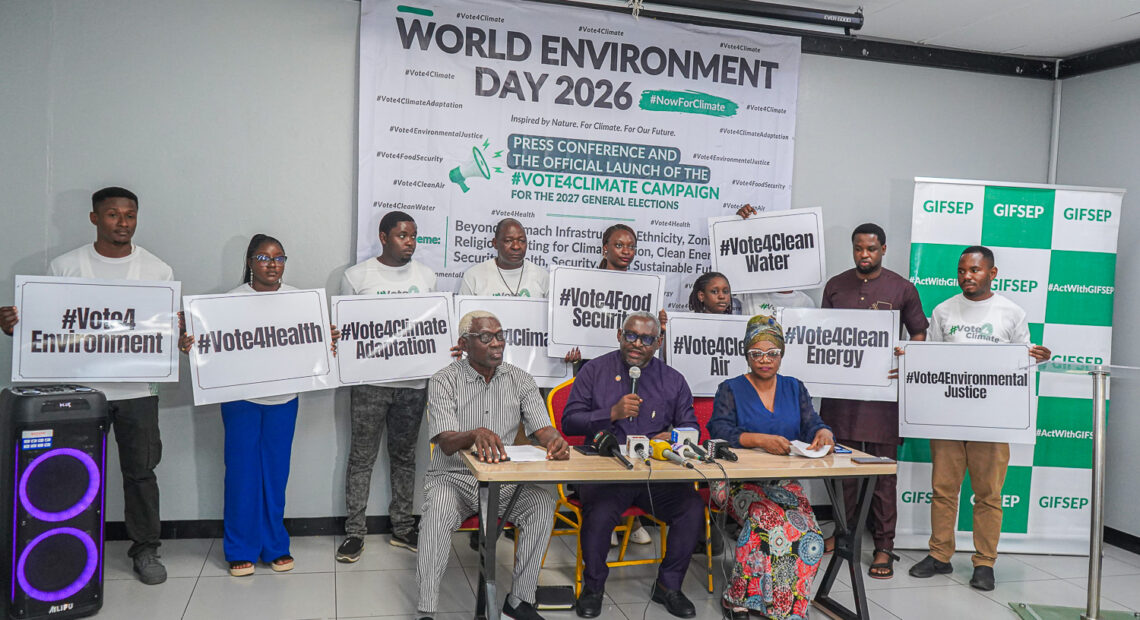
Speaking at a press conference in the capital to mark World Environment Day 2026, leaders of the Global Initiative for Food Security and Ecosystem Preservation (GIFSEP) and allied organisations painted a sobering picture of a nation losing ground — literally and economically — to desertification, erosion, pollution, and climate shocks.
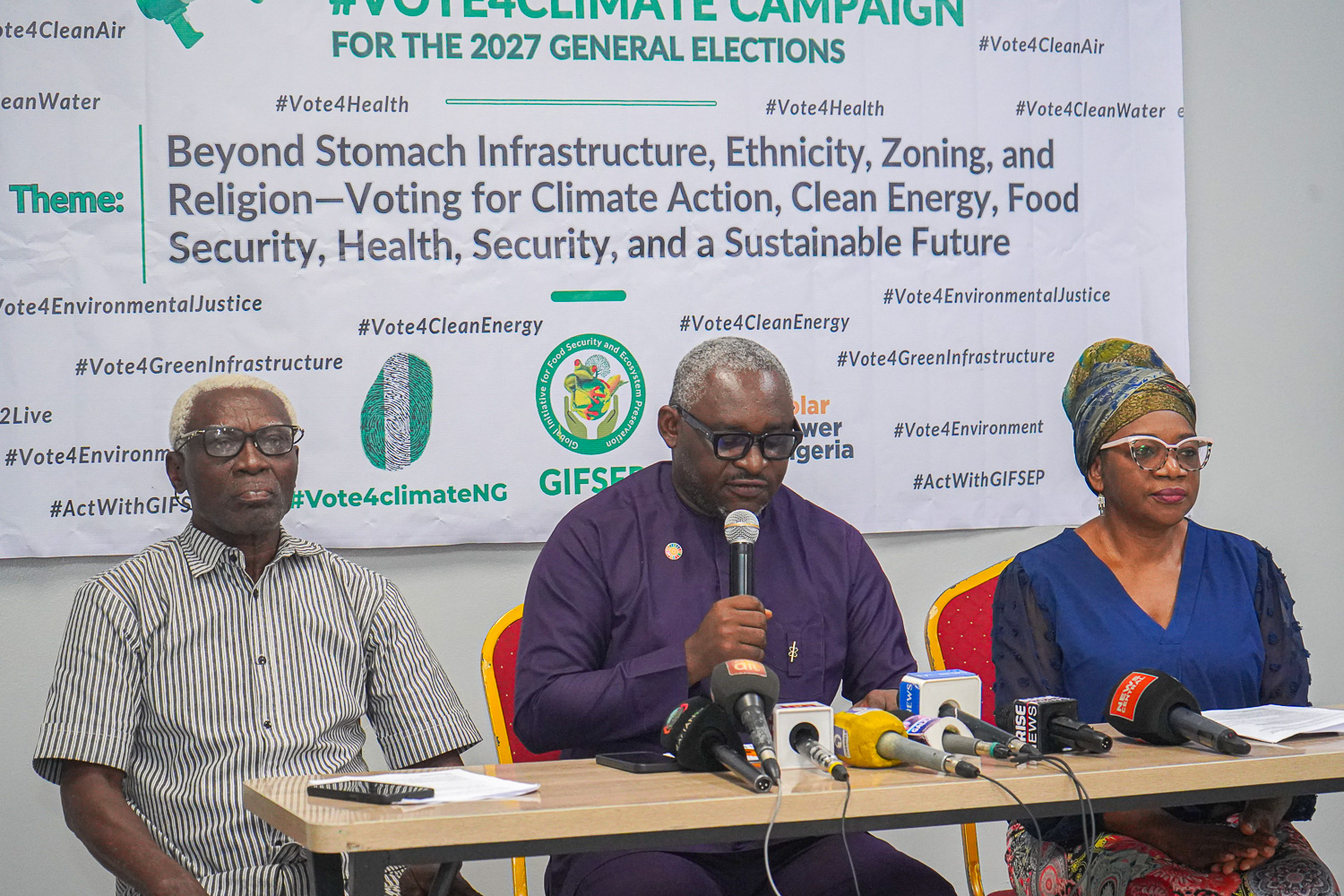
From Laft:Mr. Richard Nzekwu, Consultant on Land Degradation Neutrality for Nigeria under the UNCCD and GIFSEP Board Member, Dr. Michael Terungwa David, Executive Director of GIFSEP and Mrs. Gloria Agema, GIFSEP Board Member and Executive Director of GeeFoundation for Social Justice and Development.
They simultaneously launched the Vote4Climate 2027 campaign, urging Nigerians to make environmental sustainability and climate action central issues in the forthcoming general elections.
“World Environment Day is not a ceremonial occasion; it is a call to accountability,” said Dr. Michael Terungwa David, Executive Director of GIFSEP.
“Fifty-three years after the first observance, Nigeria’s environment is worse. Climate change is no longer a future threat — it is a present reality shaping the lives of millions of our citizens.”
Fifty-three years after the first observance, Nigeria’s environment is worse
₦1.1 Trillion Annual Loss and Mounting Ecological Crisis
Central to the experts’ warning is the staggering economic toll of environmental degradation. Nigeria loses an estimated ₦1.1 trillion every year due to land degradation alone, a figure that represents nearly 10 percent of the country’s Gross Domestic Product.
With over 70 percent of Nigerians depending on land and natural resources for food and income, the cost of inaction is already visible in shrinking arable land, declining agricultural productivity, and deepening poverty.
Desertification is advancing rapidly in the northern states, consuming hundreds of thousands of hectares annually.
In the south, coastal erosion and rising sea levels threaten communities in Bayelsa, Lagos, Delta, and Rivers states. The experts recalled the catastrophic 2022 floods, which killed more than 600 people, displaced over 1.4 million, and destroyed vast swathes of farmland across 33 states.
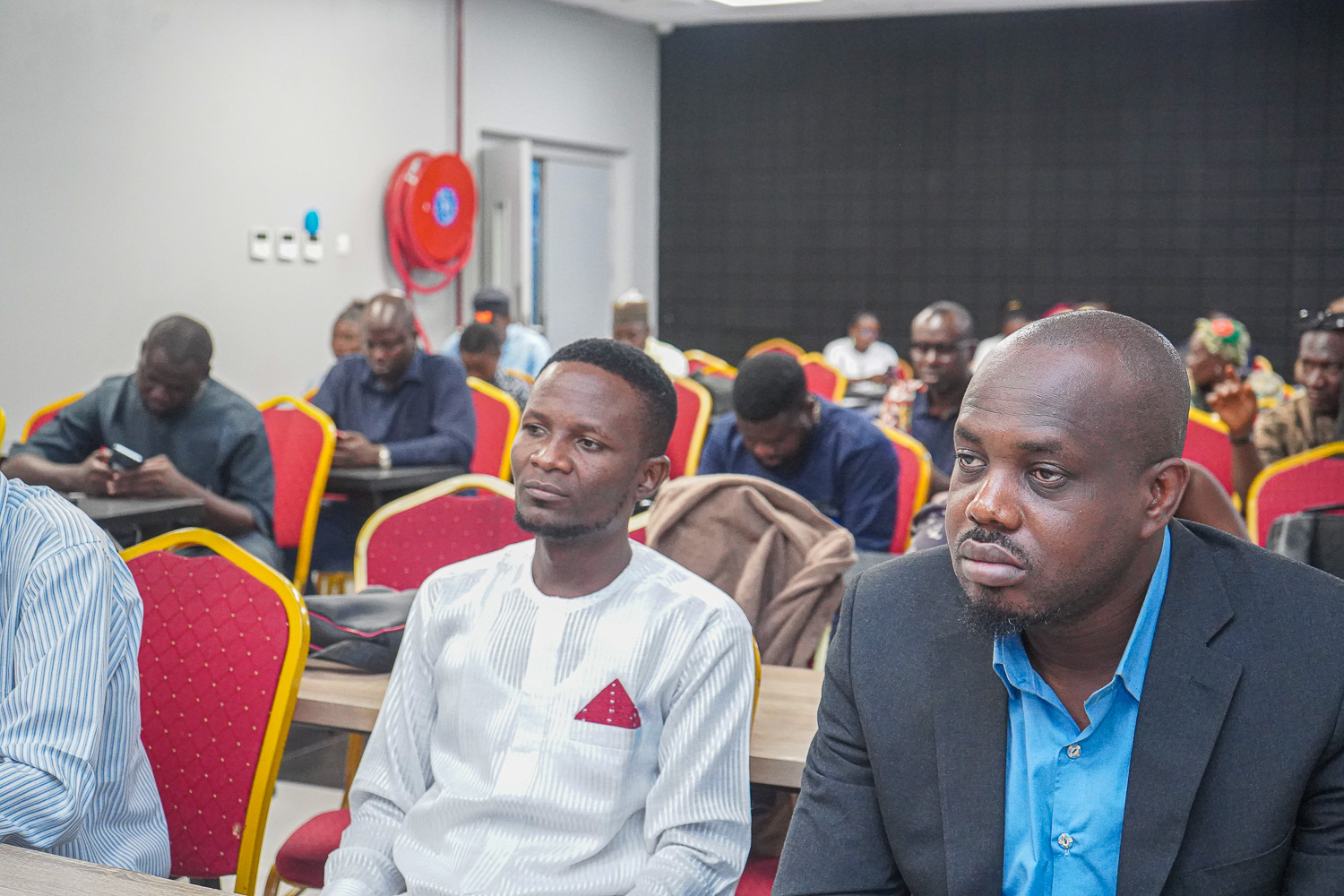
Participants at World Environment Day 2026 and the Official GIFSEP Launch: Vote4Climate
Air pollution from gas flaring, waste burning, and other sources continues to undermine public health, while unsustainable mining practices degrade landscapes and fuel rural insecurity.
35 Million Facing Acute Food Insecurity
The environmental crisis is directly linked to Nigeria’s worsening food security situation. Experts cited a recent UN report indicating that 35 million Nigerians currently face acute food insecurity.
Climate shocks — including droughts, floods, and pest infestations — are already reducing national crop yields, with projections warning of declines of up to 50 percent by 2050 if current trends continue.
If Nigeria loses control of its indigenous seeds, what will happen to our food system in the next 20 to 30 years?
Cheap food imports, high costs of farm inputs (fertilisers, pesticides, and agrochemicals), and declining seed sovereignty further undermine local farmers.
Mr. Richard Nzekwu, Consultant on Land Degradation Neutrality for Nigeria under the UNCCD and GIFSEP Board Member, warned: “When imported food floods the market, local farmers cannot compete… If Nigeria loses control of its indigenous seeds, what will happen to our food system in the next 20 to 30 years?”
Climate Crisis Fueling Insecurity, Poverty, and Health Collapse
The experts repeatedly connected environmental degradation to broader national challenges. Competition over shrinking resources — arable land, water, and grazing areas — is intensifying farmer-herder conflicts and other forms of insecurity.
Dr. David described a “climate-blind government” as one that is “manufacturing insecurity.”
Read Also: One Healthy Meal Eats 66% of Minimum Wage; Ekiti Worst Hit: 90% of Wage Gone on Food
Health impacts are equally severe. Nigeria bears a disproportionate share of global malaria cases, while millions continue to rely on polluting fossil fuel alternatives due to limited access to clean energy.
Environmental degradation exacerbates poverty, malnutrition, and vulnerability, particularly among women, children, and rural populations.
Mrs. Gloria Agema, GIFSEP Board Member and Executive Director of GeeFoundation for Social Justice and Development, stressed that women are disproportionately affected and must be placed at the centre of solutions.
“Environment is everybody’s business in Nigeria,” she said, calling for greater inclusion of women in decision-making and access to climate financing.
We must move beyond divisive politics. The 2027 elections must be about choosing between a livable future and an uninhabitable one.
Launch of Vote4Climate 2027 Campaign
Against this backdrop, the organisations formally launched the Vote4Climate 2027 campaign — a nationwide citizens’ movement aimed at shifting Nigeria’s political discourse from ethnicity, religion, zoning, and short-term “stomach infrastructure” to issue-based politics centred on climate action, clean energy, food security, environmental governance, and sustainable development.
Dr. David challenged voters, journalists, civil society, and youths to demand clear commitments from political candidates on climate adaptation and resilience, investment in renewable energy and a just transition, sustainable agriculture and food sovereignty, regulation of mining and extractive industries, protection of forests, water resources, and ecosystems, pollution control and improved air quality, creation of green jobs with inclusive environmental governance, and support for vulnerable communities through women-led solutions.
“As Nigerians prepare for 2027, we must move beyond divisive politics,” he said. “The 2027 elections must be about choosing between a livable future and an uninhabitable one.”
The future is on the ballot.
The campaign positions every Nigerian who breathes air, drinks water, eats food, or cares about future generations as a “green voter.” Organisers called on citizens to obtain their Permanent Voter Cards (PVCs) and participate actively, while urging journalists to hold politicians accountable through rigorous questioning.
Nature-Based Solutions and Collective Responsibility
Speakers emphasised the need for nature-based solutions, youth and women empowerment in land restoration, stronger inter-governmental coordination, and regulated yet supportive policies for solar energy adoption.
Nzekwu cautioned against premature bans on solar panel imports, noting the current lack of local manufacturing capacity despite widespread grassroots adoption.
The experts concluded with a unified message of urgency: after 53 years, business as usual is no longer sustainable. Nigeria’s fixed landmass continues to shrink in productivity, posing an existential threat that demands immediate, coordinated, and politically prioritised action.
“The future is on the ballot,” Dr. David declared. “What Nigerians choose in 2027 will determine the survival, security, and prosperity of the nation.”
Read Also: Data Shows 89% Reject Abrupt Solar Ban; Stakeholders Push 5-Year Local Plan
Author

Sign up for The Insight Newsletter
Get in-depth, research and data-based interpretative reports from around Nigeria.