
Analysis: Why N5.08tn Remains Outside Nigeria’s Banking System
By The Insight Team
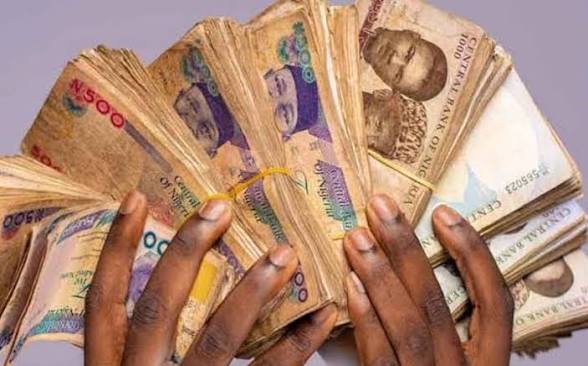
Nigeria’s cash-based economy continues to defy years of financial inclusion campaigns and cashless policy initiatives, with a staggering N5.08tn remaining outside the banking system as of April 2026.
Latest data from the Central Bank of Nigeria shows that out of N5.65tn in currency circulating across the country, only N562.71bn was held within banks, leaving 90.07 per cent of total cash in circulation outside the formal financial system.
The figures underscore a persistent challenge for policymakers seeking to deepen financial inclusion, expand digital payments, improve monetary policy transmission and curb illicit financial flows.
Despite significant investments in banking infrastructure, mobile payments and cashless reforms over the past two decades, the proportion of cash outside banks remains among the highest in Nigeria’s recent history.
An analysis of historical currency data reveals that the trend has endured across successive administrations, although with varying degrees of intensity.
When former President Chief Olusegun Obasanjo assumed office in 1999, N146.95bn of the N169.90bn in circulation was outside banks, representing 86.49 per cent. By the end of his administration in May 2007, the proportion had declined to 79.5 per cent, marking a reduction of about 6.3 percentage points and the most significant improvement recorded among Nigeria’s democratic administrations.
Politicians everywhere are holding back cash because they know if they take this money through the bank they would be traced
Under the late President Umaru Musa Yar’Adua, however, the trend reversed. The share of currency outside banks rose from 73 per cent in June 2007 to 77.8 per cent by May 2010, an increase of 4.8 percentage points despite efforts to strengthen the financial sector.
The situation remained largely unchanged during the administration of former President Goodluck Jonathan. Between June 2010 and May 2015, the percentage of cash outside banks increased from 75 per cent to 78 per cent, reflecting the continued dominance of cash transactions despite growing adoption of electronic banking channels.
The most dramatic shift occurred during the administration of former President Muhammadu Buhari. In June 2015, 75.64 per cent of currency in circulation was outside banks. By May 2023, shortly before Buhari left office, the figure had surged to 96.44 per cent, meaning almost all cash circulating in the economy was outside the formal banking system.
Analysts partly attribute the spike to the fallout from the naira redesign and cash swap policy introduced in the final months of the Buhari administration.
While the policy initially forced cash back into banks, subsequent court rulings and the reintroduction of old notes led to a rapid increase in currency outside the banking system.
Generally, the Nigerian economy still has a much bigger informal sector than the formal sector
President Bola Tinubu inherited a situation where 86.92 per cent of cash in circulation was outside banks in June 2023. Although the figure initially represented an improvement from the 96.44 per cent recorded at the end of the previous administration, the trend has since moved upward again, reaching 90.07 per cent by April 2026.
In nominal terms, the increase has been even more pronounced. Currency outside banks rose from N2.26tn in June 2023 to N5.08tn in April 2026, an increase of over N2.82tn within less than three years.
Economists say the persistence of cash hoarding reflects deeper structural issues within Nigeria’s economy rather than merely individual preferences.
Former Chief Economist of Zenith Bank Plc, Dr. Marcel Okeke, said election-related spending remains one of the major drivers of cash accumulation outside the banking system.
According to him, politicians often prefer holding large volumes of cash because banking channels create transaction trails that could expose the source and destination of funds.
”Politicians everywhere are holding back cash because they know if they take this money through the bank they would be traced,” he said, noting that cash remains the dominant medium for distributing funds during political mobilisation and campaigns.
Beyond politics, Okeke pointed to the large informal sector, including traditional savings schemes popularly known as “ajo” or “susu”, where millions of Nigerians save and transact largely outside regulated financial institutions.
Cash transactions remain more acceptable in many places than digital payments
He also blamed growing public frustration with banking charges, saying many customers prefer to keep money at home rather than face multiple deductions from their accounts.
”And these guys feel why not keep my money at home instead of taking them to the bank and then the banks are deducting charges year and year,” he said.
Development economist Shedrach Israel identified Nigeria’s vast informal economy as perhaps the biggest factor behind the high volume of cash outside banks.
According to him, a significant share of economic activity still occurs outside the formal sector, where transactions are conducted primarily with physical cash and rarely pass through banking channels.
”Generally, the Nigerian economy still has a much bigger informal sector than the formal sector. The informal sector involves more cash transactions and less involvement in the banking system,” he said.
Israel also cited declining public confidence in banking services. He noted that transaction failures, network disruptions, service downtimes and recurring account charges have discouraged many Nigerians from relying entirely on banks.
He argued that some customers now consider cash holdings safer and more reliable than keeping funds in accounts where they may face unsuccessful transfers or unexplained deductions.
Another factor, he said, is Nigeria’s enduring cash culture. Despite the growth of digital payments, many markets and small businesses still prefer physical cash, making it difficult to fully transition to a cashless economy.
”There are still people who won’t sell to you if you don’t have cash. Cash transactions remain more acceptable in many places than digital payments,” he said.
Financial infrastructure gaps also continue to play a role. Many rural communities still lack adequate banking services, reliable internet connectivity and payment terminals, making cash the easiest and sometimes only means of conducting transactions.
According to Israel, some local government areas have only a handful of bank branches, forcing residents to rely heavily on physical cash for everyday transactions.
He further observed that worsening economic conditions and rising inflation have encouraged Nigerians to deploy their funds into informal businesses and investments rather than leave them idle in bank accounts.
”People feel their money is just sitting in the bank doing nothing for them. They would rather use it for business transactions and other activities outside the banking system,” he said.
Public sentiment appears to support many of these concerns. Reactions gathered from Nigerians indicate widespread dissatisfaction with bank charges, transfer failures, taxation policies and declining trust in both financial institutions and government.
Several social media users blamed excessive account deductions, while others cited poor network services and concerns over government oversight of personal finances. Some also linked the trend to growing distrust of public institutions and fears about economic uncertainty.
People feel their money is just sitting in the bank doing nothing for them.
A Facebook user, Chukwuma Okoli, attributed the trend to “Tinubu’s taxes and bank charges,” while Ibrahim Saddo complained about “too much debit without the consent of account owners.”
Another user, Abdulrazak Abubakar Yaro, said “many Nigerians no longer trust either the government or the banking system, while Marzuq Muh’d Adam argued that taxes on deposits and withdrawals discourage people from keeping funds in banks.”
The implications of the growing cash stock outside banks extend beyond the financial sector. High levels of unbanked currency can weaken the effectiveness of monetary policy, reduce deposit mobilisation by banks, constrain lending to businesses and make it more difficult for regulators to track illicit financial flows.
It also poses challenges for Nigeria’s financial inclusion agenda. Although the country has recorded significant growth in mobile money, fintech adoption and digital banking over the last decade, the latest figures suggest that millions of Nigerians still operate largely outside the formal financial system.
With more than N5tn now circulating beyond the reach of banks, the data highlights a paradox at the heart of Nigeria’s financial landscape: digital payments may be expanding rapidly, but cash remains king.
Until concerns around trust, transaction costs, infrastructure deficits and the size of the informal economy are addressed, experts say a substantial share of the nation’s money is likely to remain outside the banking system.
Author

Sign up for The Insight Newsletter
Get in-depth, research and data-based interpretative reports from around Nigeria.

