
Over 8,000 Migrants Died or Went Missing on Perilous Routes in 2025, Most from Africa – UN Agency

By Emmanuel Kwada
At least 8,000 people died or disappeared while attempting dangerous irregular migration journeys worldwide in 2025, according to the International Organization for Migration (IOM)’s Missing Migrants Project.
The figure, released on February 26, 2026, equates to roughly 21 deaths or missing persons per day. However, the true toll is believed to be significantly higher due to major funding cuts that have hampered data collection, search-and-rescue operations, and humanitarian access.
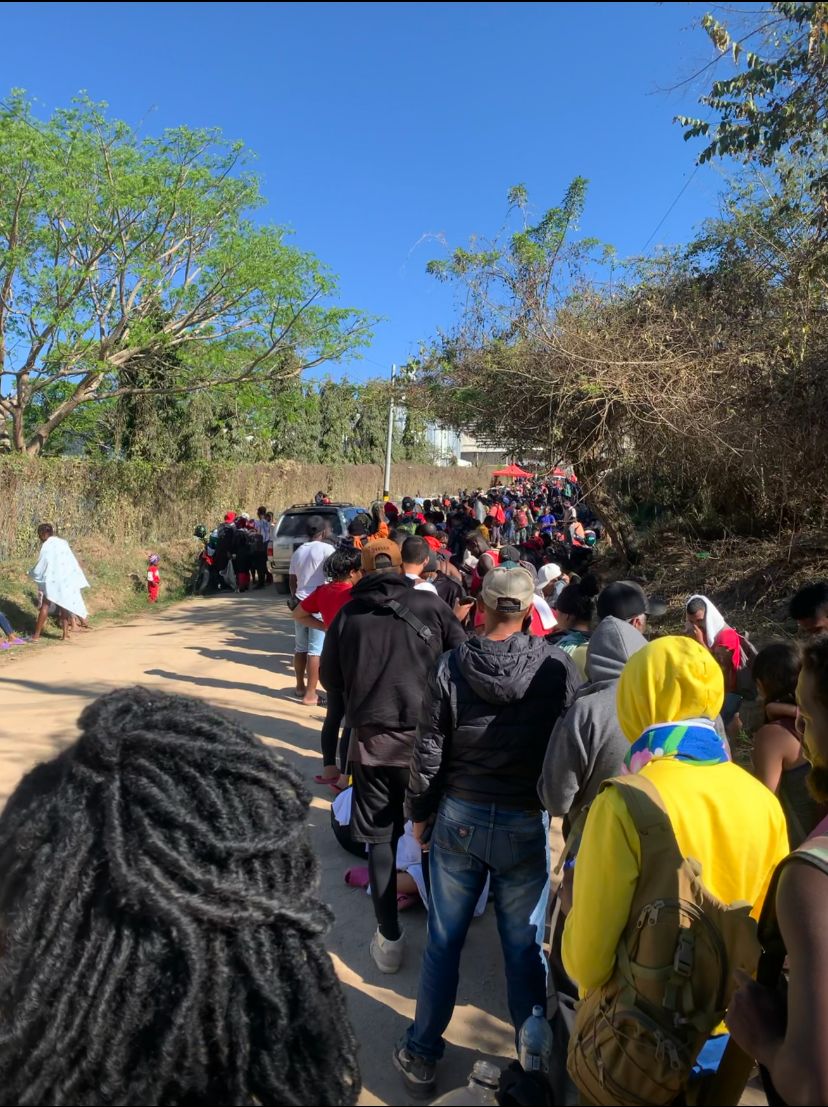
Honduras. Thousands of Cameroonian immigrants who just arrived from Nicaragua are waiting to get a pass to enable them to travel by bus across the country into Guatemala
IOM Director General Amy Pope described the ongoing loss of life as “a global failure we cannot accept as normal.”
In a stark statement, she added: “These deaths are not inevitable. When safe pathways are out of reach, people are forced into dangerous journeys and into the hands of smugglers and traffickers. We must act now to expand safe and regular routes and ensure people in need can be protected, regardless of their status.”
The 2025 total marked a decline from nearly 9,200 recorded deaths in 2024, largely because fewer people attempted the most hazardous crossings, particularly in the Americas.
Yet IOM officials stressed that the drop also reflects reduced monitoring capacity rather than genuine safety improvements.
Many Nigerians, frequently traverse the Sahara Desert en route to Libya or other North African.
U.S. funding cuts and broader donor retrenchment have forced the Geneva-based agency to scale back or close programs, severely limiting its ability to track fatalities and assist migrants.
Africa featured prominently in the grim statistics, with sea and desert crossings remaining among the world’s most lethal. Sea routes alone claimed thousands of lives.
Mediterranean Sea: At least 2,185 people died or went missing in 2025. This remains one of the deadliest corridors, particularly the Central Mediterranean route from Libya and Tunisia to Italy.
Early 2026 has already seen a surge, with 606 deaths recorded by February 24 — far exceeding the same period in 2025.
Western Africa Atlantic Route to Spain’s Canary Islands: Around 1,214 migrants perished or vanished, with many departing from West African coasts (including Senegal, Mauritania, and sometimes further south).
Economic hardship, youth unemployment, insecurity in regions like the Northeast and Northwest, and the lingering effects of conflict drive many young people.
Drowning was the leading cause, followed by dehydration and exposure during overland legs through the Sahara.
West and Central African migrants, including many Nigerians, frequently traverse the Sahara Desert en route to Libya or other North African departure points before attempting the Mediterranean or Atlantic crossings.
Between January and June 2025 alone, IOM’s Displacement Tracking Matrix (DTM) recorded 1,063 deaths or disappearances along routes from West and Central Africa to Europe, highlighting the compounded risks of desert treks and sea voyages.
In Nigeria, economic hardship, youth unemployment, insecurity in regions like the Northeast and Northwest, and the lingering effects of conflict drive many young people, often men in their 20s and 30s to seek opportunities in Europe.
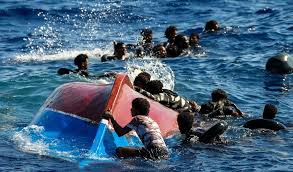
Migrants seen struggling for their lives as a boat capsized in the Mediterranean sea
Smugglers exploit these aspirations, charging exorbitant fees for journeys that frequently end in tragedy. Nigerian authorities and civil society groups have repeatedly warned of the dangers, yet the “japa” (emigration) phenomenon persists amid limited local prospects.
Families often sell assets or take loans to fund these trips, only to face devastating news of shipwrecks or desert deaths.
The Horn of Africa route also worsened dramatically. Some 922 migrants died or went missing while crossing from Yemen to the Gulf States (or en route), a sharp increase from previous years.
Almost all were Ethiopians, with many perishing in mass shipwrecks in the Gulf of Aden. Incidents included a major capsizing in August 2025 off Yemen’s Abyan coast that killed at least 68 (with dozens more missing), and multiple wrecks in March claiming around 180 lives.
IOM data for the full Eastern Route showed 922 fatalities for the year, nearly double the 558 recorded in 2024, making 2025 the deadliest on record for this corridor.
Broader African land and sea routes contributed to a regional total of 1,890 deaths or missing persons in 2025 (up from some prior years in certain sub-routes), part of Africa’s cumulative 18,773 recorded since IOM began systematic tracking.
Restrictive policies have funneled migrants into ever more perilous paths, including overloaded boats.
For context, Asia recorded around 3,000 deaths, with more than half involving Afghans fleeing instability. The Americas saw the sharpest drop, with only 409 fatalities — the lowest since 2014 — attributed to fewer irregular attempts amid stricter enforcement.
Pope and IOM experts attribute the persistent tragedies to a global tightening of legal migration options.
As Europe, the United States, and other destinations ramp up border enforcement and deterrence measures, more desperate individuals turn to smugglers.
Funding shortfalls have compounded the problem: at least 1,500 additional sea deaths in 2025 could not be fully verified due to limited search-and-rescue data.
In Africa, push factors include conflict, climate-induced displacement, poverty, and governance challenges. Pull factors remain the promise of better jobs and security abroad.
Read Also: Migration is not the West’s problem, it is Africa’s
However, restrictive policies have funneled migrants into ever more perilous paths, including overloaded boats and unmarked desert trails.
The human cost extends beyond the dead and missing. Survivors often endure exploitation, sexual and gender-based violence (particularly affecting women and girls, who comprise a significant portion of some routes), kidnapping for ransom, and detention in harsh conditions in transit countries like Libya.
IOM has urged governments to crack down on smuggling networks while simultaneously expanding safe, regular migration pathways — including labor mobility schemes, family reunification, and humanitarian visas — that match skills with destination needs.
“Expanding safe routes is not just a moral imperative; it is the most effective way to reduce irregular migration and the deaths it causes,” Pope emphasized.
Read Also: Where exit is the biggest cash cow
As of early 2026, the Mediterranean trend is worsening, raising fears of another deadly year. Funding constraints continue to bite, with IOM warning of deeper impacts in 2026 from U.S. and other donor cuts.
Nigerian officials have collaborated with IOM on awareness campaigns and assisted voluntary returns, but advocates argue that addressing root causes at home is essential.
Read Also: How Middle East Crisis is Affecting Livelihoods In Nigeria, While Govt Gains
Author

Sign up for The Insight Newsletter
Get in-depth, research and data-based interpretative reports from around Nigeria.