
Yes, to state police; but let’s first stop them from doing just one thing


June 2022 stands out in my life like a dark stain on a spotless white garment. It remains etched in my memory alongside other defining dates — my birthday, my wedding day, the day I wrote my final undergraduate exam, and, most painfully, the day death stole my father away. That month, my family endured a torment that felt endless: my sibling was abducted in Kogi State by foul-mouthed, cold-hearted kidnappers whose cruelty seemed to stretch time itself. Though the ordeal lasted only six days in the physical realm, it felt like a century. The minute-by-minute, hour-by-hour, and day-by-day encounters we had with the kidnappers could fill a volume of narrative non-fiction. In this column, however, I will confine myself to examining the suspicious roles the police played during those dreadful days.
One of them roared back, his voice like a blade: “We are businessmen! Bring N10 million, or you will never hear your brother’s voice again. We’ll slaughter him now…
Each time the criminals put a call through to me about their ransom demand, I summoned every rhetorical weapon I had ever learned in my undergraduate Rhetoric class, wielding tropes and strategies like arrows aimed at their hardened hearts. I invoked the name of God with trembling urgency; I swore upon our poverty, declaring we had no means to pay their ransom; I pleaded in the name of their own parents and loved ones; I pointed to the frailty of my brother’s failing health; I offered prayers for their souls; I unleashed words crafted to pierce through whatever conscience remained within them. Yet my appeals did not merely falter—they collapsed into dust. One of them roared back, his voice like a blade: “We are businessmen! Bring N10 million, or you will never hear your brother’s voice again. We’ll slaughter him now…”
It dawned on me that we could not escape the curse—the curse of coughing out money to feed the criminals, or else watch our worst fears come true. For four agonizing days, I worked my mobile phone like a lifeline, calling anyone who might help: those who had once bargained with kidnappers, hoping to learn from their scars; security operatives I thought I could trust; community leaders in Kogi State, to see if their vigilantes could intervene; church leaders, to lift prayers; Miyetti Allah, to plead with Fulani elders in that axis; socio-cultural organizations, to beg for solidarity. I knocked on every door, desperate for a crack of mercy.
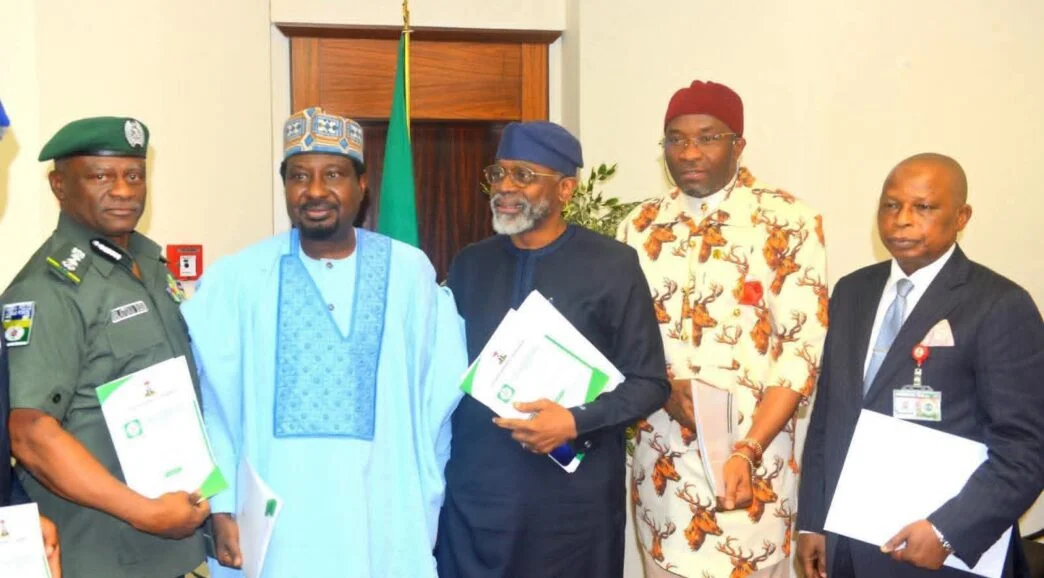
All working toward crafting the Bill for State Police in Nigeria
At last, I spotted a spark of luck when someone offered to speak with the Divisional Police Officer in the town where my brother was held. Perhaps, I told myself, the senior officer could help. But the feedback I received weakened me to the bone—the police already knew everything. They were up-to-date on our back-and-forth with the kidnappers: the ransom demanded; my confession that if I sold my car I would still fall short of their demand; the kidnappers’ plan to release other captives was delayed only because I refused to meet their price. How did the police know such intimate details? Their knowledge was too precise, too synchronised with the criminals’ threats. It was as if they were listening in from the same room.
And then, just when heaven and earth had scraped together coins for my beggar’s bowl and we were rushing to the drop point where my brother would be dumped, another security agency called. They knew exactly how much the kidnappers had extorted from me. They demanded I tell them the colour of the car carrying the ransom. Again, how did they know? The line between law and crime blurred before my eyes, and I felt the sickening weight of betrayal: the police were not standing against the kidnappers—they were lying in bed with them.
Over time, the testimonies of victims, like my sibling’s, have piled up, exposing how the police have oiled the wheels of kidnapping rather than dismantled them.
The police are meant to be embedded with criminals for one purpose only: to gather intelligence, to anticipate their moves, and to thwart their evil enterprises before they strike. That is the theory. But in practice, what I witnessed left me with a muddy suspicion that the roles had been swapped. Instead of standing guard against bandits and terrorists, some elements in the police appeared to provide cover for them—ensuring their success in humiliating, brutalizing, killing, and impoverishing ordinary citizens. It was a grotesque inversion of duty, a satanic wealth transfer from the pockets of the crowd into the coffers of kidnappers—and, it seemed, their police accomplices. Over time, the testimonies of victims, like my sibling’s, have piled up, exposing how the police have oiled the wheels of kidnapping rather than dismantled them.
My experience dispels every cloud of doubt that the Nigeria Police officers possess the intelligence and capacity to track kidnappers and their accomplices in criminal enterprises, and to arrest them in ways that disrupt their schemes. The police maintain a nationwide network that is difficult to penetrate, stretching from district posts to divisional stations in every local government, and state headquarters across the federation. Officers at district posts know the petty thieves, thugs, robbers, and cultists in their areas because they work closely with community leaders, vigilantes, transport unions, market women, and local youths.
With proper focus, the Nigeria Police Force could maintain a comprehensive database of such criminals, mapping the nature of crimes across Nigeria and identifying the individuals driving them. Police officers also know all Fulani settlements within their jurisdictions, as most of them register their presence at police posts. When Fulani individuals engage in criminal activity, the police have the means to identify and apprehend them. Unfortunately, this powerful network is often misused for selfish purposes. Officers hide behind excuses—poor pay, inadequate weapons, insufficient numbers, lack of proper training, or the military encroaching on their duties—rather than fully deploying the resources and intelligence at their disposal to protect Nigerians.
The recent arrest of the kidnappers of the sister of former Minister of Power, Adebayo Adelabu, in Oyo State stands as a powerful testament to the capacity of the Nigerian Police Force to tackle criminality with precision and effectiveness. Acting swiftly on intelligence, the police deployed tactical units that tracked, intercepted, and apprehended the suspects, ensuring the victim’s safe release.
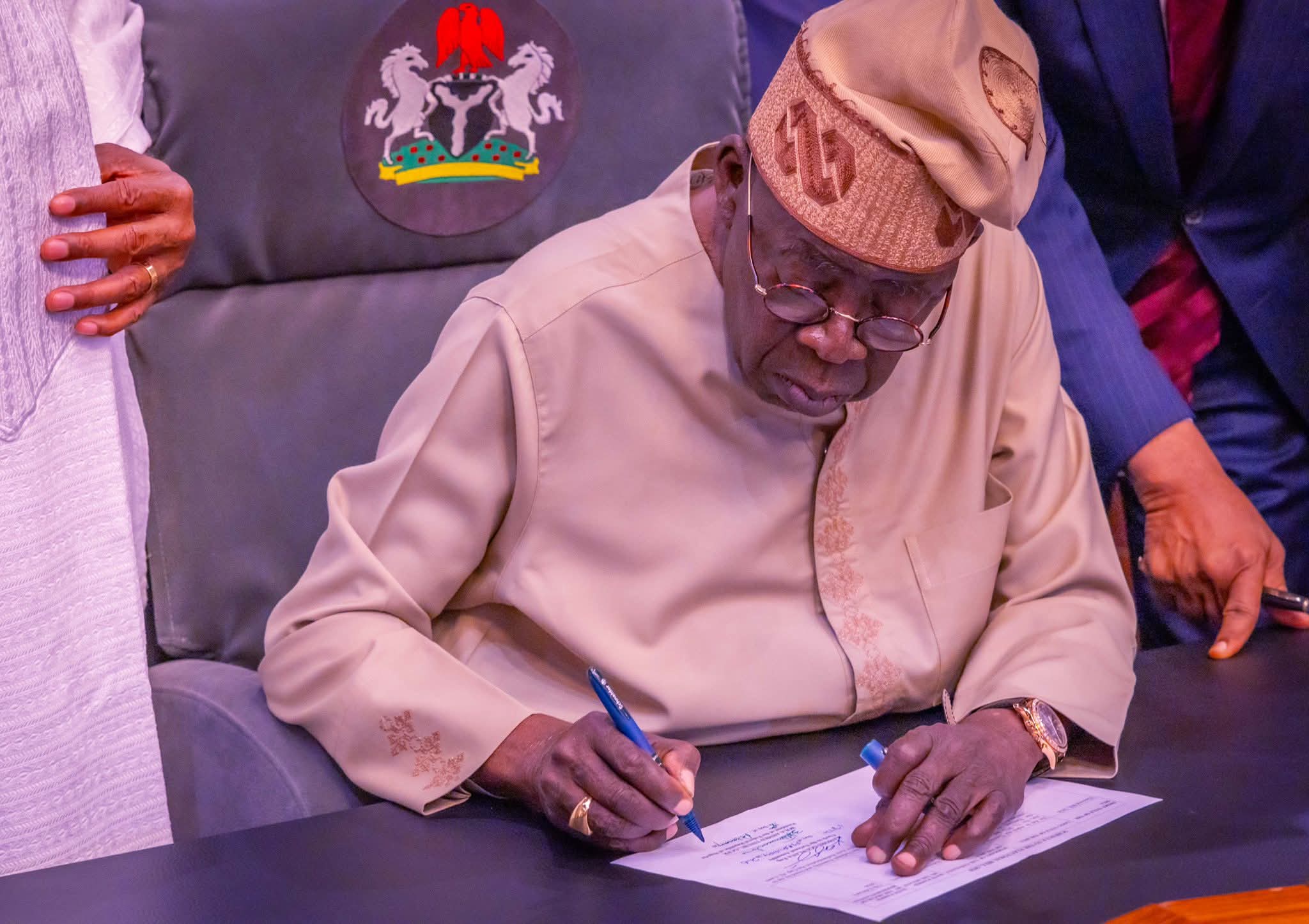
President Bola Ahmed Tinubu Signing the Bill into Law.
Actually, the misuse of police powers in Nigeria has become a disturbing. If it is curbed, insecurity will not escalate; it will come under control. Some officers allegedly accept bribes from bandits or their sponsors, deliberately turning a blind eye to attacks and kidnappings. This practice creates safe corridors for criminals to operate without fear of arrest, undermining public trust in law enforcement. In addition, there are disturbing reports of police insiders leaking intelligence to bandits. By sharing operational plans or security movements, these officers enable criminals to evade raids and continue their activities unchecked, effectively sabotaging the very system they are sworn to uphold.
Another major concern is the failure of police to respond promptly to distress calls. Communities often complain that officers delay or outright refuse to intervene during attacks, leaving citizens vulnerable and emboldening bandits. Instead of offering protection, some officers exploit locals by extorting “security fees,” a practice that mirrors the taxes imposed by bandits themselves. This betrayal of duty not only impoverishes communities but also erodes confidence in the police as a legitimate force for safety. Compounding this problem is the diversion of arms. Weapons meant for law enforcement sometimes end up in the hands of bandits through theft, black-market sales, or deliberate diversion, strengthening criminal groups and weakening state authority.
The complicity of police with political elites further entrenches insecurity. Corrupt politicians allegedly use their connections to shield bandit leaders who serve their interests, weakening enforcement and perpetuating violence. Investigations into kidnapping and banditry cases are often poorly handled, with suspects quickly released due to weak prosecution or bribery. This cycle of impunity emboldens criminals and discourages victims from seeking justice. Moreover, local vigilante groups formed to defend communities are frequently harassed or arrested by police, leaving villages exposed to attacks. Instead of collaborating with these grassroots defenders, the police undermine them, creating a vacuum that bandits exploit.
The inspiration for state police sounds revolutionary and is often presented as a solution to Nigeria’s insecurity, and while it has merits, it is not the ultimate answer. Decentralising policing could improve local intelligence gathering and community trust, but the deeper problem lies within the character and conduct of the police institution itself. The force must be purged of inherent turn-coating, where officers betray their oath by colluding with criminals. Too often, police complicity with bandits and kidnappers undermines national security, as officers misuse their powers to perpetuate the very crimes they are meant to fight.
The rot is evident in the way some officers sell their honour and integrity for money, accepting bribes to shield criminals or to look the other way during attacks. This betrayal erodes public confidence and emboldens criminal networks. Without addressing this culture of corruption, simply creating state police would replicate the same failures at a local level.
True reform requires rooting out officers who are not fully committed to the cause for which they have been called. Policing is a sacred duty, not a business venture. Unless the institution is rebuilt on integrity, accountability, and genuine service, insecurity will persist regardless of structure.
Therefore, while state police may enhance reach and responsiveness, it cannot substitute for the urgent moral and institutional cleansing needed to restore the Nigerian Police Force as a trustworthy guardian of peace and justice.
In any locality where kidnapping occurs and the perpetrators are not arrested within three days, the top policemen in charge should be sacked without delay.
I suggest that the first step toward reducing police complicity in criminality in Nigeria is to enforce strict accountability at the leadership level. In any locality where kidnapping occurs and the perpetrators are not arrested within three days, the top policemen in charge should be sacked immediately. This measure would send a strong signal that negligence, collusion, or indifference will not be tolerated. Leadership must bear responsibility for failures, and swift removal of compromised officers would deter others from complacency.
Similarly, commissioners of police in states where kidnapping and banditry are rampant should be dismissed. Their inability to curb insecurity reflects either incompetence or complicity, and retaining them only perpetuates the cycle of violence. By holding senior officers accountable, the system would force the police to prioritise the safety of citizens over personal gain or political patronage.
If such decisive actions are not taken, criminality will persist because the police will continue to hide behind excuses—poor funding, inadequate weapons, or lack of manpower. These justifications have become shields for corruption and betrayal of duty. Nigeria cannot afford a police force that sells its integrity for money or turns a blind eye to crime. Without purging compromised leadership, insecurity will remain entrenched, and citizens will continue to suffer under the weight of banditry and kidnapping.
By holding senior officers accountable, the system would force the police to prioritise the safety of citizens over personal gain or political patronage
Author

Sign up for The Insight Newsletter
Get in-depth, research and data-based interpretative reports from around Nigeria.


