
RCCG Makes History as Nigeria Records West Africa’s First Tele-Robotic Surgery
By Emmanuel Kwada
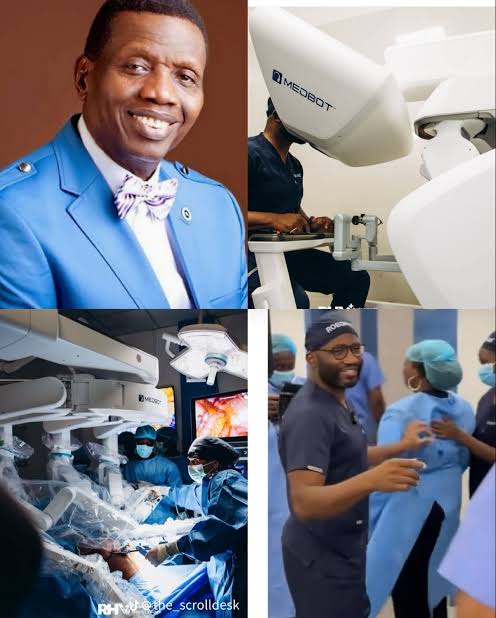
Nigeria has taken a major leap in advanced healthcare technology following the successful completion of what the institutions involved described as West Africa’s first tele-robotic surgery, with a specialist surgeon operating remotely from Ogun State on a patient undergoing treatment in Abuja.
The landmark procedure was carried out by Redeemer’s Health Village (RHV), in collaboration with RoboMed Global and Nisa Premier Hospital, Abuja.

Obi Davies Ekwenna, M.D. FACS
Professor & Vice-Chair @ University of Toledo Department of Urology| Robotic Surgeon| Transplant & Urologic Surgeon
UC Berkeley
Prof. Obi Ekwenna-Davis, a Professor of Urology and Transplantation and co-founder of RoboMed Global, led the operation from a robotic console at Redeemer’s Health Village in Mowe, Ogun State, while the patient was at Nisa Premier Hospital in Abuja.
The operation was a robot-assisted right radical nephrectomy, involving the removal of a kidney affected by a cancerous tumour. The procedure was conducted in real time using a Toumai robotic surgical system, demonstrating how specialist surgical expertise can potentially be delivered across significant geographical distances.
This achievement has also drawn attention to the growing contribution of Churches beyond its religious activities, particularly in healthcare, education, technology and human-capacity development.
The establishment of Redeemer’s Health Village represents another major dimension of the church’s institutional investment.
The facility has begun deploying robotic technology for complex surgical procedures, with specialties including urology, general surgery, gynaecology, colorectal surgery, thoracic surgery and hepatobiliary surgery, according to information from the facility.
The establishment of Redeemer’s Health Village represents another major dimension of the church’s institutional investment.
RHV and its technology partners have said robotic surgery can improve surgical precision and visualisation, while potentially reducing tissue damage, postoperative discomfort and hospitalisation time.
The latest tele-robotic procedure takes the development a step further: rather than simply using a robot in the same operating theatre as the surgeon, the surgeon was physically separated from the patient and controlled the robotic system remotely.
For Nigeria, where specialist medical expertise is often concentrated in a few urban centres and many patients travel long distances for advanced treatment, the technology could have significant implications if it can be deployed safely, reliably and affordably at scale.
The investment also comes against the backdrop of Nigeria’s longstanding challenge of medical tourism, with Nigerians travelling abroad for specialised procedures that are not readily available or accessible locally.
The RHV project is intended to strengthen domestic capacity by combining advanced surgical technology with specialist training, potentially reducing the need for patients to seek certain complex procedures outside the country.
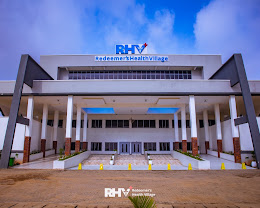
Redeemer’s Health Village, Ogun state
Training at the facility is scheduled to commence on October 22, 2026, according to information provided about the project.
The institution has also announced plans to use the robotic platforms not only for patient care but for developing the skills of Nigerian medical professionals.
The significance of the latest operation therefore extends beyond the successful treatment of one patient. It demonstrates a possible model in which a specialist surgeon could provide expertise to patients in another Nigerian city without being physically present in the same operating theatre.
For a country seeking to expand access to specialised healthcare while developing home-grown expertise, the successful procedure offers a striking example of how medicine, telecommunications, robotics and professional training can converge.
It also places the spotlight on the broader role of Churches in Nigeria’s social development, particularly where investments in schools, universities, technical education, healthcare infrastructure and professional capacity-building complement government efforts.
The RHV milestone, however, will ultimately be judged not only by the novelty of the technology but by its ability to translate into safe, affordable and sustainable access to advanced medical care for Nigerians.
Sources: RHV, RoboMed Global, Nisa Premier Hospital.
Read Also: RCCG rounds off 74th Annual Convention, ordains 2,820 pastors, 11,830 deacons, deaconesses
Author

Sign up for The Insight Newsletter
Get in-depth, research and data-based interpretative reports from around Nigeria.


