WEEKLY ROUNDUP: Coup rumour and presidential fury
By Emmanuel Kwada
In a week that tested the nerves of Nigeria’s democracy and economy, President Bola Tinubu unleashed a seismic shake-up in national security, sacking top service chiefs amid whispers of coup plots and the detention of high-ranking officers, only to swiftly swear in replacements in a bid to restore order.
This dramatic purge came as Emir Muhammadu Sanusi II dropped a bombshell, revealing how Boko Haram’s chilling threats once derailed Goodluck Jonathan’s fuel subsidy removal, a haunting parallel to today’s subsidy ghosts fuelling insecurity.
Compassion took a backseat when Tinubu yanked convicted killer Maryam Sanda and notorious kidnappers from the prerogative of mercy list, just weeks after the initial list ignited a firestorm of public backlash.
I have to give President Jonathan credit – he was determined to do it
On the fiscal front, the House greenlit a staggering ₦1.84 trillion external loan to plug the 2025 budget hole, while Tinubu slapped a 15% import duty on petrol and diesel, igniting debates on affordability amid rising costs.
Nnamdi Kanu’s trial hit another snag as he cited missing files from ex-counsel, stalling his defense. Amid academic wins, the NUC nodded to 13 fresh degree programs for universities, a glimmer of progress. But political knives sharpened as Nyesom Wike thundered at PDP governors: “Bury the party at your peril if you sideline me.” From barracks to ballots, this week encapsulated Nigeria’s resilient chaos—dive into the full report for the unvarnished details that shaped our nation’s pulse.

Ex-CDS Gen Christopher Musa
Who is imagining coup in today’s Nigeria?
In a dramatic escalation of Nigeria’s simmering security tensions, President Bola Tinubu on Friday sacked the nation’s top military brass and swore in fresh appointments, just weeks after whispers of a coup plot sent shockwaves through the corridors of power.
The move, announced via a terse presidential statement, has ignited fierce debate: is it a pre-emptive strike against disloyalty, or a bold reset for a battered security apparatus?
The casualties included Chief of Defence Staff General Christopher Musa, Chief of Naval Staff Vice Admiral Emmanuel Ogalla, and Chief of Air Staff Air Marshal Hasan Abubakar—veterans thrust into the hot seat amid escalating insurgencies and banditry.
In their stead, Tinubu elevated Lieutenant General Olufemi Oluyede, erstwhile Army Chief, to head the defence staff. Brigadier General S.K. Saidu takes the naval helm, while Air Vice Marshal A.M. Umar steps up for the air force. Major-General E.A.P. Undiendeye remains as Chief of Defence Intelligence, a nod to continuity in the shadows.
Presidential spokesperson Sunday Dare framed the overhaul as “furtherance of efforts to strengthen Nigeria’s national security architecture,” urging the new appointees to embody “professionalism, vigilance, and comradeship.” Tinubu himself, in a closed-door huddle with the quartet on Monday at Aso Rock, reportedly emphasised unity against existential threats. But the timing reeks of urgency.
Barely a fortnight earlier, on October 17, the Defence Headquarters admitted detaining 16 senior officers for “indiscipline and breach of regulations”— a routine purge, had they insisted.
Local media, however, painted a darker picture: a foiled coup d’état targeting Tinubu, with arrests swelling to 46 in unverified reports, including whispers of foreign-backed agitators. The abrupt cancellation of the October 1 Independence Day military parade only fanned the flames, evoking memories of Nigeria’s coup-riddled past since 1966.
The presidency, through Special Adviser Bayo Onanuga, flatly denied any coup nexus, calling it a “leadership refresh” akin to Buhari’s 2021 shake-up. Yet, analysts aren’t buying the spin.
The implications ripple far beyond barracks. For Tinubu’s administration, already grappling with economic woes and Boko Haram’s northeast rampage, this risks eroding military morale at a time when banditry ravages the northwest and IPOB stirs the southeast.
A destabilised force could embolden insurgents, hike oil theft in the Niger Delta, or even fracture federal cohesion. On the flip side, if the new chiefs deliver—bolstering maritime patrols under Saidu or aerial strikes via Umar—it could restore public faith and fortify Tinubu’s 2027 re-election bid.
As rumours morph into midnight murmurs on social media, one thing’s clear: Nigeria’s democracy, fragile as it is, just dodged, or danced with another shadow of authoritarianism. The jury’s out on whether this purge purges threats or plants seeds of deeper unrest. For now, Aso Rock breathes easier, but the nation’s pulse races on.

Maryam Sanda and her late Husband
From presidential pardon to presidential furry
President Bola Tinubu has revoked the controversial pardons for high-profile convict Maryam Sanda and several individuals linked to kidnapping, drug trafficking, and other grave offenses, just weeks after the initial list ignited a firestorm of public backlash.
The decision, announced late Tuesday, trims the original roster of 175 beneficiaries down to 120, signalling a rare concession to citizen outrage in a nation where executive clemency often stirs deep suspicions of favouritism and impunity.
The Prerogative of Mercy, enshrined in Section 175 of Nigeria’s 1999 Constitution, empowers the president to grant pardons, commute sentences, or offer clemency as a tool for rehabilitation and mercy. But this year’s exercise, approved during the National Council of State meeting on October 9, quickly unravelled into a public relations debacle.
Pardoning kidnappers while families still pay ransoms in blood money? This isn’t mercy; it’s mockery
At the center was Maryam Sanda, a 37-year-old former beauty queen whose 2020 death sentence for the gruesome stabbing of her husband, Bilyaminu Bello – son of a prominent Peoples Democratic Party chieftain – had long symbolized the perils of intimate partner violence.
Sanda, who claimed self-defence in the 2017 altercation fuelled by infidelity suspicions, spent over six years in Suleja Medium Security Prison before her name surfaced on the pardon list, prompting visceral condemnation from Bello’s family and women’s rights advocates who decried it as a betrayal of justice for victims of gender-based violence.
The uproar didn’t stop there. Social media erupted as Nigerians highlighted the inclusion of convicted kidnappers – whose abductions have terrorized communities in the northwest and southeast – alongside drug traffickers and fraudsters whose crimes have eroded public trust in institutions.
“Pardoning kidnappers while families still pay ransoms in blood money? This isn’t mercy; it’s mockery,” tweeted activist Segun Awosanya, whose post garnered over 50,000 engagements. Opposition leader Atiku Abubakar piled on, accusing the administration of “moral slumber” and reactive governance that endangers the nation’s 200 million souls.
If Nigerians had allowed the Jonathan government to remove the subsidy in 2011, inflation would have risen from 11% to maybe 13% – painful, but manageable.
By Wednesday, the Presidency in a statement from Special Adviser on Information Bayo Onanuga, Tinubu formalized the revocations, explicitly barring offenders in categories like kidnapping, human trafficking, fraud, drug offenses, and illegal arms dealing from future considerations. Sanda’s full pardon was nullified, with her case reverted to a commuted sentence pending further review.
Other notorious names, such as cocaine trafficker Abiodun Elemero and kidnapper Kelvin Oniarah (whose term was initially slashed from 20 to 13 years), were excised entirely. The revised list now focuses on lesser offenses, with 15 death sentences commuted to life imprisonment and others granted outright release after rigorous vetting.
How Boko Haram influenced critical economic decision – Sanusi
The Emir of Kano, Muhammadu Sanusi II, has revealed that former President Goodluck Jonathan’s administration abandoned full removal of fuel subsidy in 2012 primarily for fear that Boko Haram could exploit nationwide protests to wreak havoc in Nigeria.
Speaking at the Oxford Global Think Tank Leadership Conference under the theme “Better Leaders for a Better Nigeria,” Sanusi, who was then the Governor of the Central Bank of Nigeria (CBN), said the government feared that mass demonstrations could be hijacked by terrorists, leading to deadly attacks.

Former President Goodluck Ebele Jonathan
“The only reason the government compromised and did 50 percent instead of 100 percent was Boko Haram,” Sanusi disclosed. “There were thousands of Nigerians on the streets in Lagos, Kano, Kaduna. We had suicide bombers in the country. If one of them had detonated a bomb in a crowd and you had 200 corpses, it would no longer be about subsidy.”
The 2012 subsidy removal attempt triggered the Occupy Nigeria protests, with massive rallies in major cities forcing the government to partially reverse its decision. What began as an economic policy debate quickly escalated into a national crisis.
Sanusi, a key architect of the subsidy reform push, described the policy not as a traditional subsidy but as a “naked hedge” – an open-ended financial commitment that exposed the government to unlimited risk.
We went from using revenue to pay subsidies, to borrowing to pay subsidies, to borrowing to pay interest on those loans.
“You tell 200 million Nigerians: you will never pay more than X naira per litre, no matter what happens to global oil prices, exchange rates, or interest rates,” he explained. “When crude moved from $40 to $140, the government paid the difference. When the naira fell from ₦155 to ₦300, the government paid. We went from using revenue to pay subsidies, to borrowing to pay subsidies, to borrowing to pay interest on those loans. We had become bankrupt.”
He warned that delaying the reform in 2011–2012 had catastrophic long-term consequences.
“If Nigerians had allowed the Jonathan government to remove the subsidy in 2011, inflation would have risen from 11% to maybe 13% – painful, but manageable,” Sanusi said. “I put my credibility on the line at the CBN and said I would bring it down. Today, we’re facing over 30% inflation. That’s the real cost of inaction.”
Despite the backlash, Sanusi gave Jonathan credit for his political courage.
“I have to give President Jonathan credit – he was determined to do it,” he said. “But security concerns overrode economic logic.”
Why would an accomplished, educated man become a praise-singer?
The former CBN governor also used the platform to critique Nigeria’s leadership class, calling the country “essentially classless” in governance quality.
“Go to the Senate, the House of Representatives – pick 109 random Nigerians without election, put them in those chambers, and the results may not be different,” he said. “You have highly educated people in government who live like illiterates. They abandon their education the moment they take office.”
He condemned the culture of sycophancy and self-enrichment in public office.
“Why would an accomplished, educated man become a praise-singer?” Sanusi asked. “Why can’t he tell his boss the truth? And why can’t a leader listen to criticism? By the time you’re a governor, you should be beyond chasing personal wealth. You’re responsible for millions of lives – education, healthcare, infrastructure. Yet all some think about is building a house. Are you that cheap?”

Emir of Kano, Sanusi Lamido Sanusi
Sanusi’s remarks have reignited debate over Nigeria’s perennial fuel subsidy dilemma, with many analysts agreeing that political and security fears continue to overshadow much-needed economic reforms.
As Nigeria grapples with soaring inflation and fiscal pressures, the Emir’s candid assessment serves as both a historical lesson and a urgent call for bolder, more principled leadership.
Polio in Kano?
In a jarring reminder that victory over polio remains fragile, health authorities in Kano State on Wednesday confirmed four new circulating vaccine-derived poliovirus (cVDPV) variants—mere days after the World Health Organization certified Africa free of wild poliovirus.
The announcement, made during a World Polio Day town hall, has jolted Nigeria’s public health community and underscored the razor-thin margin between eradication and resurgence.
Why can’t he tell his boss the truth? And why can’t a leader listen to criticism?
Professor Salisu Ahmad, speaking for the Kano State Primary Health Care Management Board (KSPHCMB), revealed that two cases were detected in unvaccinated children in rural communities, while two others surfaced in contaminated urban water sources.
A fifth suspected case awaits lab confirmation. “Kano was once the epicentre between 2013 and 2015,” Ahmad noted. “We beat wild polio through relentless vaccination, but these new variants prove the job isn’t finished.”
State Immunisation Officer Hajia Saadatu Ibrahim stressed that environmental sanitation alone won’t suffice. “Routine immunisation is non-negotiable,” she said, citing the global drop from 350,000 cases in 1988 to near-zero through sustained campaigns. Nigeria interrupted wild polio transmission in 2020, a milestone that enabled Africa’s historic certification last week.
Yet vaccine-derived strains—mutated from the oral vaccine in under-immunised pockets—now pose the gravest threat. Kano’s porous borders, refugee influx from Niger, and lingering vaccine hesitancy in hard-to-reach areas create perfect storm conditions. A single missed child can spark an outbreak.
The implications are stark, as failure to contain these variants risks reversing a decade of gains, triggering costly emergency responses and eroding donor confidence. For parents, it’s a wake-up call: skipping drops invites paralysis. Nationally, it pressures the federal government to boost outreach in northern states, where coverage hovers below 70% in some LGAs.
We beat wild polio through relentless vaccination, but these new variants prove the job isn’t finished
Partners like WHO and UNICEF have pledged surge teams, but locals must own the fight. As one community leader put it: “We celebrated too soon. The virus never sleeps—neither should we.”
Tinubu’s unhindered borrowing continues
Nigeria’s National Assembly on Wednesday rubber-stamped President Bola Tinubu’s request to borrow $2.35 billion externally and float a $500 million maiden sovereign sukuk, moves aimed at financing a yawning 2025 budget deficit without tipping into default.
The approvals, passed separately by the Senate and House after debt committee reviews, underscore the administration’s tightrope walk between fiscal stimulus and debt sustainability.
Tinubu’s October letter framed the borrowing as essential to activate N9.28 trillion in deficit financing baked into the 2025 Appropriation Act. Of that, N1.84 trillion ($1.229 billion) is fresh external debt; another $1.118 billion refinances a 2018 Eurobond maturing November 21. The sukuk—Sharia-compliant bonds—will fund roads, rails, and power projects while diversifying funding sources beyond conventional loans.
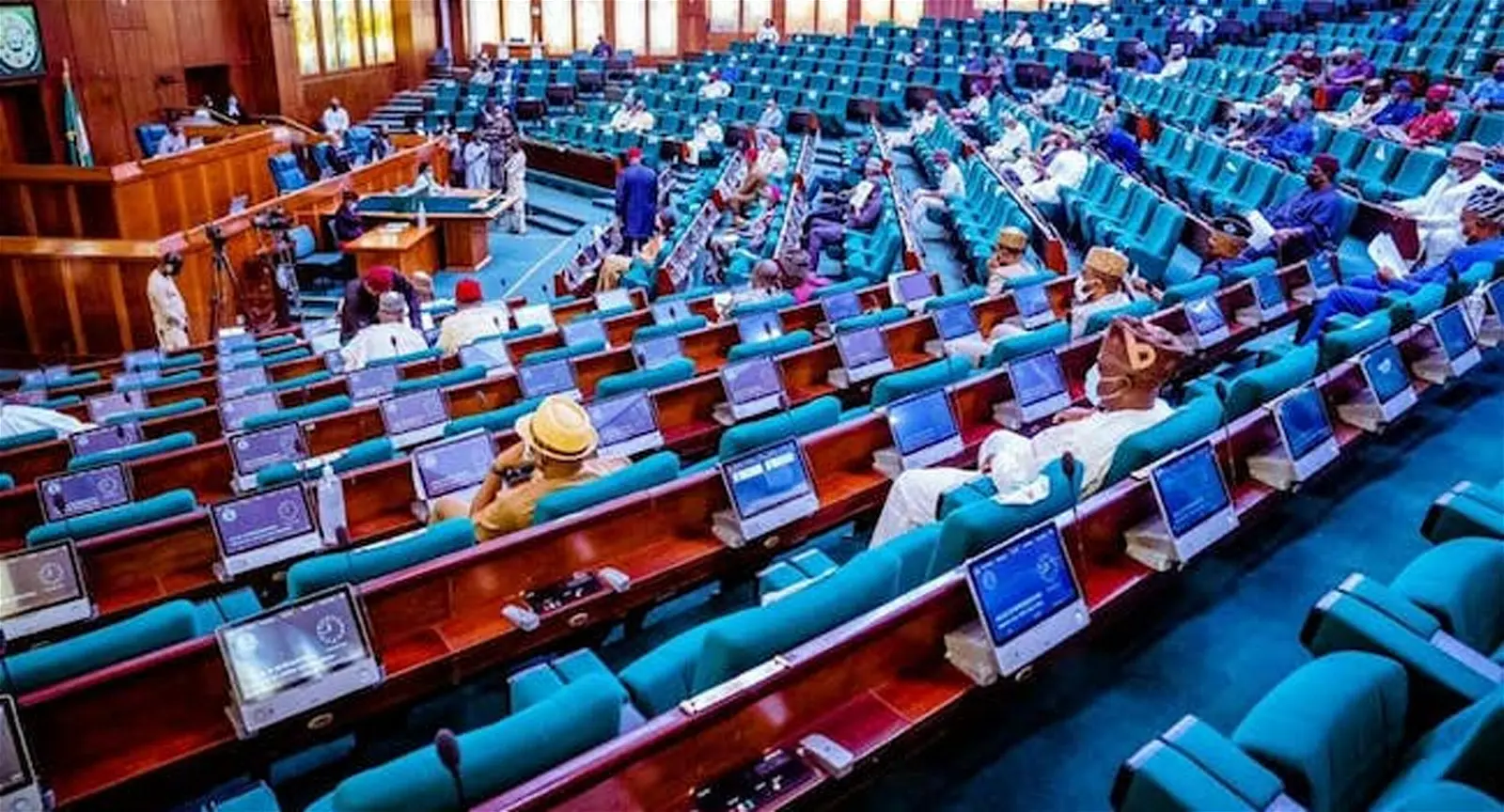
National Assembly in session
Lawmakers hailed the sukuk as innovative, tapping Islamic finance pools and potentially lowering Nigeria’s 5.7% average borrowing cost. Yet critics, including PDP senators, warned the debt stock—already 43% of GDP—risks crowding out social spending. A single Eurobond default could spike yields by 200 basis points, analysts estimate.
Infrastructure gains versus higher debt service (projected at N11.8 trillion in 2025). For markets, it signals proactive liability management; for citizens, higher taxes or inflation if naira weakens further. Tinubu’s team insists growth from projects will outpace interest. The real test: execution without the leakages that plagued past loans.
Nnamdi Kanu’s judicial confusion
Nnamdi Kanu, the detained leader of the outlawed Indigenous People of Biafra (IPOB), on Friday stalled the opening of his defence in his long-running terrorism trial at the Federal High Court, citing his former legal team’s refusal to release critical case files. The development has cast fresh uncertainty over a case already marred by delays and procedural drama.

Nnamdi Kanu
Kanu had dramatically sacked his lead counsel, former Attorney-General Kanu Agabi (SAN), on Thursday, prompting a one-day adjournment. Returning Friday, he informed Justice James Omotosho that without the files, still held by his ex-lawyers he could not proceed.
He requested access to international witnesses from the UK, US, Kenya, and Ethiopia, and sought weekend visitation rights at the DSS facility.
Prosecutor Adegboyega Awomolo (SAN) raised no objection. The judge ordered the DSS to grant weekend access but firmly warned that Kanu’s six-day defence window, starting October 23, would not be extended. The trial resumes Monday, October 27.
The delay underscores persistent friction between Kanu and his legal representatives, potentially weakening his defence strategy. Legal analysts say failure to meet the deadline could lead to closure of evidence, strengthening the prosecution’s hand.
For Kanu’s supporters, it fuels narratives of systemic obstruction; for the government, another tactic to prolong a case symbolising the crackdown on separatist agitation.
Tinubu Approves 15% Import Duty on Petrol and Diesel
President Tinubu has quietly signed off on a 15% import duty on petrol and diesel, effective immediately, aiming to level the playing field between imported fuels and locally refined products. The policy, detailed in an October 21 letter, seeks to protect the Dangote Refinery and emerging modular plants by making foreign fuel less competitive.
For motorists, this could translate to pump prices creeping past ₦1,200 per litre in coming weeks, piling pressure on transport costs and inflation already hovering near 34%.
Businesses dependent on diesel generators—virtually every factory outside Lagos—face another margin squeeze. The government insists the duty will boost local refining capacity and conserve forex, but skeptics fear it’s a backdoor subsidy removal that hits the poor hardest.
With Nigeria still importing despite Dangote’s 650,000 bpd plant, the duty exposes the gap between policy ambition and refining reality. Long-term, it might spur investment in domestic capacity; short-term, it’s another blow to household budgets already battered by food and power costs.
Read Also: 5 Things Nigeria Must Do to Heal – Prophet El-Buba Warns of God’s Wrath
Author

Sign up for The Insight Newsletter
Get in-depth, research and data-based interpretative reports from around Nigeria.