
Ondo Crash Claims 25 Lives; 1992 Disaster That Killed 159 Remains Deadliest in NAF History
Key Points:
- Ondo ATR-42 crash kills 25, no survivors reported.
- Aircraft NAF 931 was traveling Benin to Lagos.
- Air Chief orders high-level panel to investigate crash.
- Swampy Igbokoda terrain complicates wreckage recovery operations.
- Black boxes crucial to determining cause of crash.
- 1992 C-130 crash that killed 159 remains deadliest.
By Emmanuel Kwada
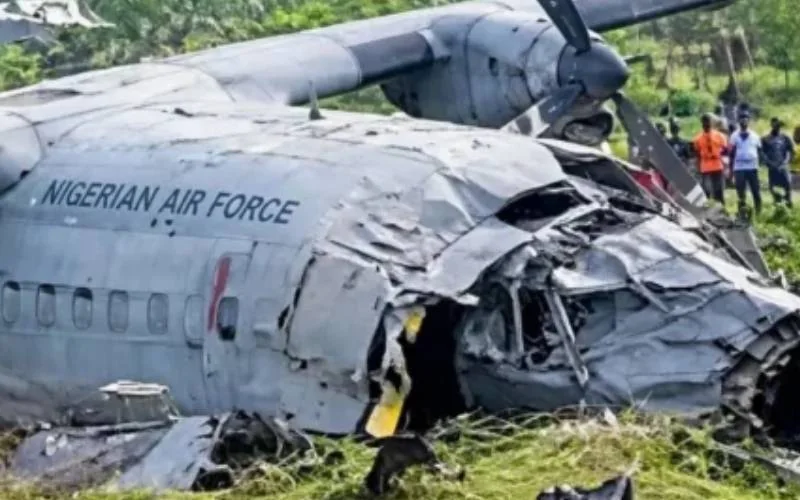
The Nigerian Air Force (NAF) has launched a high-level investigation into the October 5, 2026, crash of an ATR-42 aircraft in Igbokoda, Ondo State, which claimed the lives of all 25 people on board.
The tragedy has renewed attention on Nigeria’s history of military aviation disasters, particularly the September 26, 1992, crash of a C-130 Hercules aircraft that killed 159 people, remaining the deadliest single aviation disaster in the history of the Nigerian Air Force.
The latest crash occurred near a naval base in Igbokoda, headquarters of Ilaje Local Government Area of Ondo State, while the aircraft was reportedly travelling from Benin City to Lagos.
All 25 occupants died in the crash, with no survivors reported.
The aircraft, identified as NAF 931, was a twin-engine turboprop configured for maritime patrol and intelligence, surveillance and reconnaissance operations.
It had five crew members and 20 passengers on board. All 25 occupants died in the crash, with no survivors reported.
Following the incident, President Bola Ahmed Tinubu ordered a thorough investigation, while the Chief of the Air Staff, Air Marshal Sunday Kelvin Aneke, subsequently directed the establishment of a high-level panel to determine the circumstances surrounding the disaster.
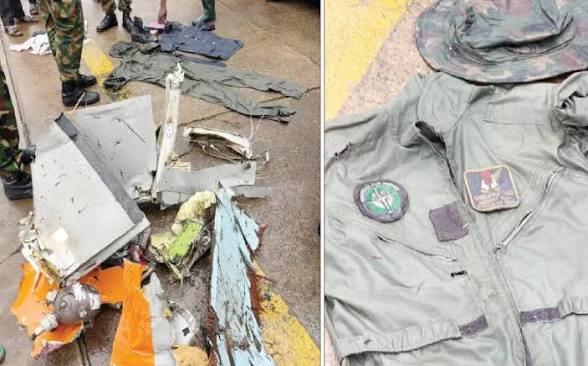
Military uniform and some wreckage found at the scene of the crash in Ondo State
Air Marshal Aneke ordered the investigation during a visit to the crash site on Thursday, October 8, 2026.
He directed the Superintendent of Safety and Evaluation to constitute a panel with the responsibility of establishing the circumstances that led to the aircraft’s crash.
The investigation is expected to examine all relevant evidence and identify the factors that may have contributed to the tragedy.
The panel comprises military and civilian aviation safety experts, including representatives of the Nigerian Safety Investigation Bureau (NSIB), emergency management authorities, retired senior military officers and experienced NAF personnel.
The involvement of specialists from different institutions is intended to bring technical expertise and a comprehensive approach to the investigation.
The Air Chief has urged the public to avoid speculation, stressing that conclusions must be based on evidence and professional assessment rather than unverified reports.
Recovery and investigative operations have continued at the crash site, where the swampy terrain has presented significant challenges to personnel.
The crash site has been secured to protect the integrity of the investigation and prevent the loss or contamination of evidence.
The main fuselage remained difficult to extract days after the incident, requiring specialised equipment and coordinated recovery efforts.
The recovery team, led by Air Vice Marshal E.O.E. Ebiowe, the Superintendent of Safety and Standards, is coordinating efforts to retrieve the wreckage and preserve evidence for technical examination.
Among the critical items investigators are seeking are the Flight Data Recorder and Cockpit Voice Recorder, commonly referred to as the aircraft’s black boxes.
These devices can provide important information about the aircraft’s performance, flight parameters and cockpit communications before the crash.
Investigators are also expected to examine recovered components, maintenance records, operational procedures and other relevant evidence.
The crash site has been secured to protect the integrity of the investigation and prevent the loss or contamination of evidence.
A Board of Inquiry has also been activated in line with the Nigerian Air Force’s internal procedures for investigating aviation accidents.
Although recovery operations are an immediate priority, the evidence gathered will form an important part of the broader investigation into the incident.
The Nigerian Safety Investigation Bureau has indicated its willingness to provide technical assistance to the Nigerian Air Force in investigating the crash.
The bureau explained that military aircraft accidents fall under military investigative authority but said it could support the process, including through laboratory analysis of flight recorders, if formally invited.
The inclusion of NSIB representatives in the high-level panel is expected to strengthen technical collaboration and provide access to specialised aviation safety expertise.
However, officials have yet to announce a definitive cause of the crash.
Possible factors, including mechanical failure, maintenance issues, weather conditions, operational procedures and human factors, may be examined as part of the investigation.

The scene of the crash
Until the relevant evidence has been recovered and analysed, none of these possibilities can be treated as the established cause.
Air Marshal Aneke has expressed condolences to the families of the deceased, describing the incident as a painful loss to the Nigerian Air Force and the nation.
He assured the bereaved families that the Nigerian Armed Forces and the Air Force would provide necessary welfare and support during the difficult period.
The tragedy has also raised questions about aviation safety, the challenges associated with military aircraft operations and the importance of learning from previous accidents.
The Air Chief has reiterated the need for patience as investigators work to establish the facts surrounding the incident.
The Air Force has also pledged to conduct the investigation professionally, with emphasis on accountability and evidence-based findings.
Despite the scale of the Ondo tragedy, it does not surpass the deadliest aviation disaster in the history of the Nigerian Air Force.
That distinction remains with the September 26, 1992, crash of a Nigerian Air Force Lockheed C-130H Hercules aircraft, which killed 159 people shortly after take-off from Lagos.
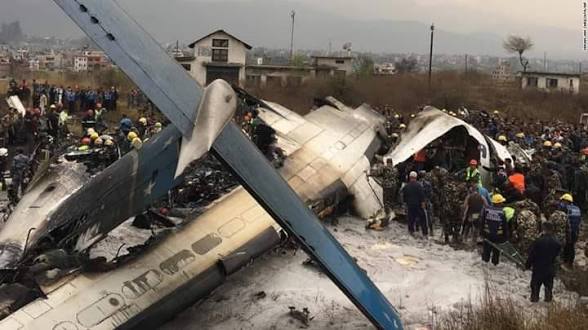
Wreckage from the 1992 NAF crash
The aircraft, identified as NAF 911, crashed into a swamp in the Ejigbo/Oke-Afa area of Lagos shortly after departing from Murtala Muhammed International Airport.
The victims included military officers, personnel associated with the Armed Forces Command and Staff College, and officers returning from peacekeeping operations in Liberia under the Economic Community of West African States Monitoring Group (ECOMOG).
Foreign military officers from several African countries were also among those killed.
The disaster, in which all 159 occupants died, remains one of the most devastating military aviation tragedies in Africa and the deadliest crash involving a C-130 aircraft.
The scale of the 1992 disaster continues to distinguish it from subsequent fatal Nigerian Air Force crashes.
Other Major NAF Aviation Disasters
The Nigerian Air Force has experienced several other fatal aviation accidents over the decades.
On May 26, 1980, a Fokker F27 aircraft crashed near Forcados in present-day Delta State while reportedly travelling from Lagos to São Tomé. All 30 people on board died.
The aircraft was carrying a Nigerian delegation that included government officials, military officers and journalists. Severe weather was reported as a major factor in the accident.
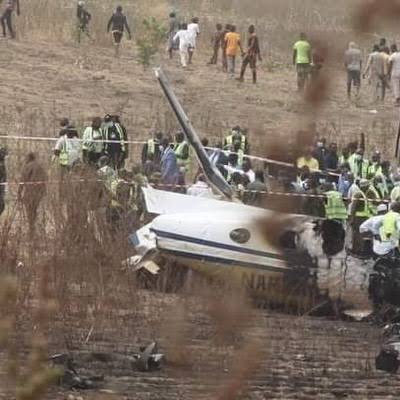
Wreckage from the 2006 NAF crash
In September 2006, a Dornier 228 aircraft crashed near Vandeikya in Benue State while carrying military personnel. Reports on the death toll have varied, with estimates placing the number of fatalities between 13 and 15.
Another major tragedy occurred on May 21, 2021, when a Beechcraft King Air 350 aircraft crashed near Kaduna International Airport, killing all 11 people on board.
Among the victims was the then-Chief of Army Staff, Lieutenant General Ibrahim Attahiru, alongside other senior military officers and crew members.
Earlier that year, on February 21, a Beechcraft King Air B350i crashed in the Abuja area, killing seven people.
Other fatal incidents involving NAF aircraft have occurred in different parts of the country, including Kaduna, Warri and the North-East.
Ondo Crash Ranks Among the Deadliest Recent Incidents.
Although the circumstances and causes of these accidents differ, they remain significant episodes in the history of Nigerian military aviation.
Ondo Crash Ranks Among the Deadliest Recent Incidents
With 25 fatalities, the October 2026 ATR-42 crash is among the most significant recent losses involving a Nigerian Air Force aircraft.
Its death toll is lower than those recorded in the 1992 C-130 disaster and the 1980 Fokker F27 crash but higher than several other notable incidents in the country’s military aviation history.
Beyond the immediate loss of life, the tragedy highlights the importance of effective accident investigation, evidence preservation, aircraft maintenance and the implementation of safety recommendations.
A comprehensive investigation could help establish what happened during the flight and identify measures needed to prevent similar incidents.
For the families of the 25 victims, however, the immediate reality is the loss of their loved ones, while the nation awaits answers about the circumstances surrounding the crash.
As recovery operations and investigations continue, the Nigerian Air Force has yet to release an official determination of the cause.
The findings of the high-level panel and the Board of Inquiry are expected to provide further clarity once the relevant evidence has been examined.
Read Also: Revelations from co-authoring Brigadier Musa Usman’s biography
Author

Sign up for The Insight Newsletter
Get in-depth, research and data-based interpretative reports from around Nigeria.