
FG Drops Solar Import Ban That Could Have Cost Economy $700m Annually
By Emmanuel Kwada
Nigerians who depend on solar energy have received a major relief following the Federal Government’s decision not to impose an immediate ban on solar panel imports, a policy that could have increased electricity costs for households and businesses and undermined the country’s transition to renewable energy.
The Minister of Innovation, Science and Technology, Dr Kingsley Udeh, in an exclusive interview with NTA, said the government would prioritise developing local solar manufacturing capacity before considering restrictions on imported panels.
The decision follows concerns raised by businesses, renewable energy advocates and consumers who feared that restricting imports before local manufacturers could meet demand would make solar systems more expensive and limit access to reliable electricity.

Credit: Online
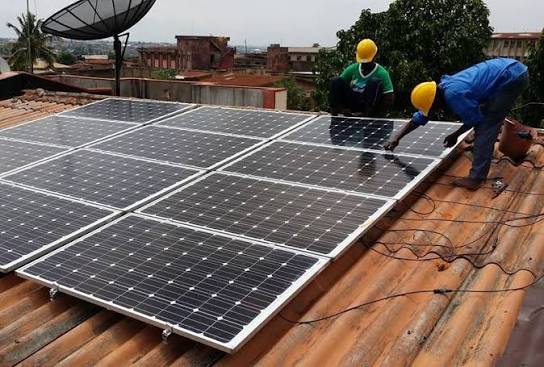
For millions of Nigerians struggling with unreliable power supply, solar energy has become more than an alternative to the national grid. It powers homes, pharmacies, hospitals, schools, farms and small businesses, particularly in communities with limited or no access to electricity.
The proposed restriction, first introduced in March 2025 by Udeh’s predecessor, Uche Nnaji, had raised fears that consumers could be forced to rely more heavily on petrol and diesel generators if affordable solar panels became difficult to obtain.
In announcing the proposed ban on March 26, Nigeria’s Minister of Science and Technology Uche Nnaji said the country has sufficient capacity to meet local solar energy demands through private firms as well as the National Agency for Science and Engineering Infrastructure, a Nigerian agency that’s been developing solar technologies.
Nnaji left office in October 2025, but the absence of a formal withdrawal of the proposal continued to create uncertainty in the solar market.
Banning imports without sufficient domestic manufacturing capacity would be counterproductive.
Speaking on the government’s position, Udeh said Nigeria could not achieve its renewable energy ambitions through imported solar panels alone but acknowledged that banning imports without sufficient domestic manufacturing capacity would be counterproductive.
He said the government was working with international manufacturers to attract investment and establish more solar production facilities in Nigeria.
According to the minister, he recently travelled to Turkey as part of efforts to facilitate partnerships that would strengthen local manufacturing and expand the country’s renewable energy industry.
The government’s position is that Nigeria must develop the capacity to manufacture solar panels locally while maintaining access to imported products until domestic production can adequately meet national demand.
Udeh also said the government wanted to ensure that solar panels available in the Nigerian market met established quality standards, whether manufactured locally or imported from reliable sources.
Beyond the immediate relief for consumers, the decision could have significant economic implications, particularly as Nigerians seek alternatives to increasingly expensive conventional electricity generation.
Figures provided in the supporting research indicate that China exported approximately 2.4 gigawatts of solar panels to Nigeria in the 12 months to August 2026, reflecting the country’s heavy dependence on imported solar equipment.
The panels reportedly cost about $269 million, while generating an equivalent amount of electricity using diesel generators would cost approximately $980 million annually at the cited diesel price of $1.36 per litre.
Solar could save Nigerians more than $700 million in a year.
The comparison suggests that solar could save Nigerians more than $700 million in a year when the electricity generated by the imported panels directly replaces diesel-powered generation.
However, the projected savings depend on factors including how much solar electricity actually displaces generator use, installation costs, system performance and prevailing fuel prices.
Research by energy think tank Ember has also indicated that solar panels can pay for themselves in approximately three months under favourable conditions where all their electricity output replaces diesel generation.
Because solar panels can operate for more than 25 years, the long-term savings can be substantial, making continued access to affordable equipment important for households and businesses.
An import ban introduced before local manufacturers could supply the market at competitive prices could therefore have increased the cost of adopting solar energy and slowed investment in renewable power.
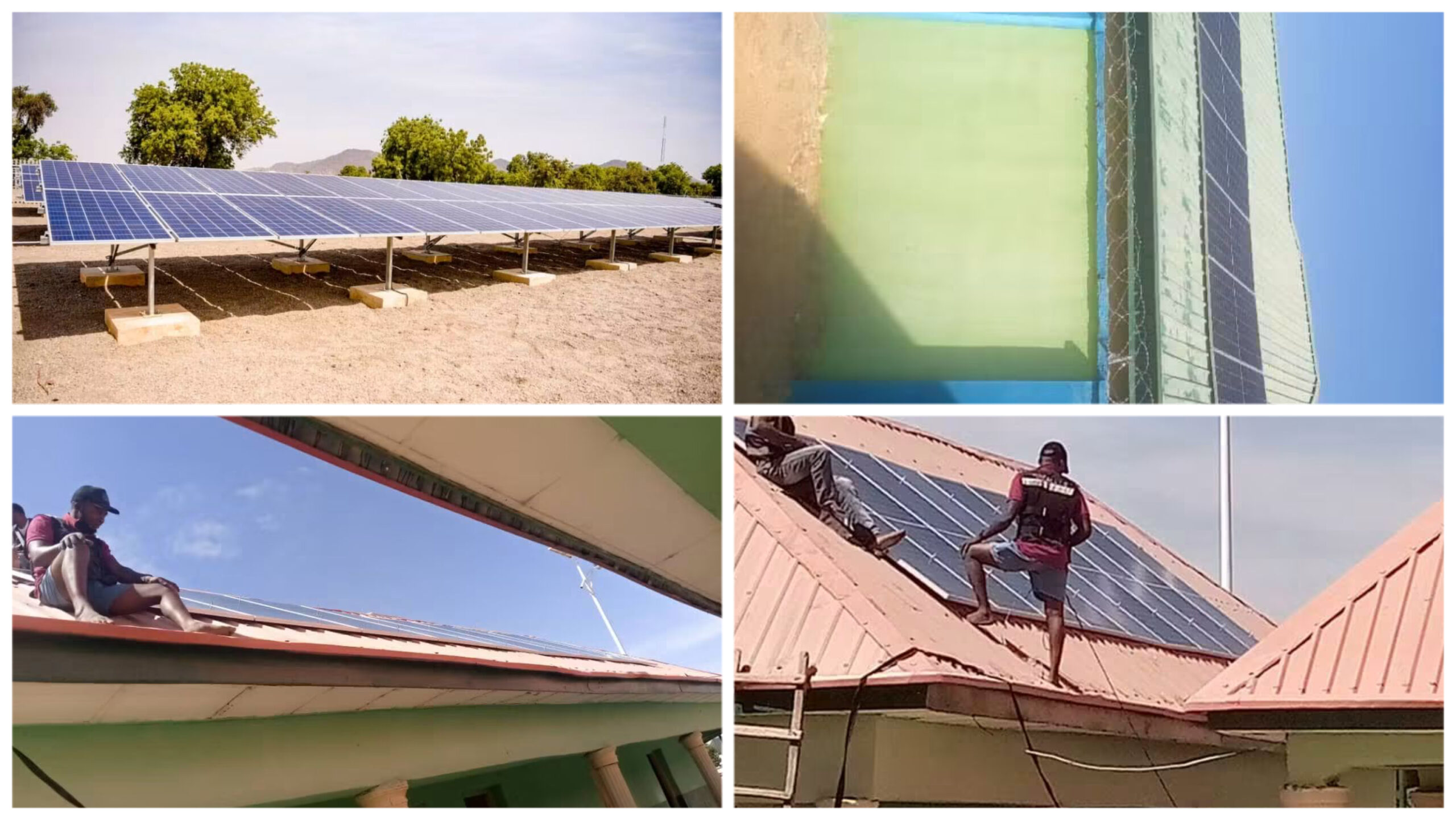
Solar power was installed in Madagali and Michika.
Nigeria’s electricity access challenge makes the issue particularly important. An estimated 86.8 million Nigerians still lack access to electricity, strengthening the case for policies that expand affordable energy options while supporting domestic industrial development.
For ordinary Nigerians, the government’s decision has immediate practical implications.
A pharmacist in Nyanya, Abuja, Mrs Utomi, said reliable electricity was essential to her business because some medicines and vaccines required refrigeration.
“Light is life for my pharmacy. I store vaccines and medicines that must stay cold. NEPA can take light anytime, but my solar never fails. If they had banned solar imports, my shop would have closed. This decision is a relief for all of us,” she said.
She added that access to dependable electricity was crucial to protecting medicines and maintaining uninterrupted business operations.
This is good news for our work. Since last year, customers have been scared, asking if solar will become too expensive.
A solar installer in Abuja, Jamiu Abdulsalam, also welcomed the decision, saying uncertainty over the proposed restriction had affected customers’ confidence.
“This is good news for our work. Since last year, customers have been scared, asking if solar will become too expensive. Now we can breathe. Government should build local factories, yes, but let imports continue until Nigerian factories can truly meet demand,” he said.
For solar panel sellers, the decision is equally significant.
Ruben Okwonkwo, a solar equipment dealer, said the uncertainty surrounding the proposed ban had created anxiety in the market.
“I sell solar panels, and business was shaking because of the ban talk. How can you ban what you don’t produce enough? Customers need affordable panels now. This ‘build first’ approach is the right way. Build the factories, train the people, then talk about restriction,” he said.
Mallam Usman, a wholesale wrapper seller at Mararaba Market who operates five shops powered by solar energy, said the decision would help protect small businesses from rising operating costs.
He explained that switching all five shops to diesel generators would significantly reduce his profits.
“I have five shops and all run on solar. If I use diesel for all five, my profit will finish on fuel. Solar saves me more than N150,000 every month. Banning solar would have killed small businesses like mine. Let government support local production, but don’t punish us while we wait,” he said.
Let government support local production, but don’t punish us while we wait.
Their experiences highlight the growing role of solar energy in helping businesses manage electricity costs, maintain operations and reduce dependence on fuel-powered generators.
Renewable Energy Industry Calls for Clear Roadmap
The Renewable Energy Association of Nigeria (REAN) welcomed the government’s decision but stressed that developing domestic manufacturing should remain a priority.
Its president, Ayo Ademilua, said industry members supported the ambition to manufacture solar panels locally, noting that some companies were already investing in local assembly and production.
However, he warned that domestic capacity was not yet sufficient to meet the country’s demand in terms of volume and affordability.
“Our members share the Minister’s dream of a Nigeria that makes its own solar panels. Many of us are already investing in local assembly and manufacturing, and we want that industry to grow. But we have to be honest about where we are,” Ademilua said.
He described solar energy as a lifeline for millions of Nigerians who depend on it to power homes, hospitals, schools, farms and small businesses beyond the reach of the national grid.
According to him, imposing restrictions prematurely could increase costs, delay projects and threaten progress made in expanding access to renewable energy.

Dr David Michael, Executive Director of the Global Initiative for Food Security and Ecosystem Preservation (GIFSEP).
Ademilua called for policies that would allow local manufacturers to grow without depriving consumers of affordable solar equipment.
Similarly, the Executive Director of the Global Initiative for Food Security and Ecosystem Preservation (GIFSEP), Dr David Michael, said Nigeria should not have to choose between developing its domestic solar industry and making clean energy accessible to its citizens.
He described the government’s decision as a recognition that both objectives could be pursued together.
“The priority now is a clear, long-term plan that attracts investment in local manufacturing while ensuring millions of Nigerians can access the affordable, reliable electricity they urgently need,” Michael said.
Joseph Ibrahim, Nigeria Campaign Director of the Secure Energy Project, also welcomed the decision, describing continued access to affordable solar panels as a national priority.
He said the government needed to develop a long-term strategy that would support domestic manufacturers, attract investment and protect consumers from unnecessary increases in energy costs.
Ibrahim added that cooperation among government agencies, industry players and civil society organisations would be essential to achieving a sustainable energy transition.
Lessons From Pakistan’s Solar Expansion
The debate also reflects wider developments in countries where access to affordable solar equipment has helped households and businesses reduce dependence on conventional electricity sources.
Muhammad Mustafa Amjad, Programme Director of Renewables First in Pakistan, said Nigeria could benefit from lessons drawn from Pakistan’s solar expansion.
He argued that affordable solar imports could help Nigerians take advantage of the country’s abundant sunshine, entrepreneurial population and heavy reliance on expensive diesel generators.
The priority now is a clear, long-term plan that attracts investment in local manufacturing while ensuring millions of Nigerians can access the affordable, reliable electricity they urgently need.
Keeping imported panels available, he said, would allow households and businesses to invest in solar systems while Nigeria gradually develops its own manufacturing industry.
Although the decision has eased immediate concerns among consumers and businesses, questions remain about how quickly Nigeria can develop a competitive domestic solar manufacturing industry.
Local production could create jobs, strengthen technical skills, reduce dependence on foreign supply chains and support the growth of renewable energy businesses.
However, achieving these benefits will require investment in manufacturing facilities, reliable electricity for factories, access to finance, technology transfer, skilled labour and policies that enable locally produced panels to compete on quality and price.
The newly commissioned Barefoot Renewable Energy College is expected to contribute to this effort by training artisans in solar installation and manufacturing-related skills.
The initiative is intended to expand the pool of Nigerians capable of supporting the country’s renewable energy industry, from installing solar systems to developing technical expertise for local production.
Industry stakeholders are now calling on the Federal Government to publish a clear implementation plan, provide incentives for local manufacturers and establish measurable targets for expanding domestic production.
They have also advocated a phased transition over three to five years, arguing that any future import restrictions should be tied to demonstrable improvements in local manufacturing capacity, product quality and affordability.
For now, the government’s decision to keep solar panel imports open offers relief to consumers who depend on solar power to cope with Nigeria’s electricity challenges.
The broader test will be whether the government can translate its ambition for local manufacturing into a sustainable industry without making clean energy more expensive for the people who need it most.
Read Also: Data Shows 89% Reject Abrupt Solar Ban; Stakeholders Push 5-Year Local Plan
Author

Sign up for The Insight Newsletter
Get in-depth, research and data-based interpretative reports from around Nigeria.