
Nigeria, Six Others Account for 90% of Global Cholera Deaths — WHO

By Emmanuel Kwada
Nigeria and six other countries accounted for about 90 per cent of reported cholera cases and deaths globally in 2025, the World Health Organisation has said.
The WHO disclosed this in a statement on Tuesday, September 29, 2026, in a WHO news release published on its official website titled “WHO reports latest global trends in cholera, meningitis and plague.” The statement warned that the global cholera burden remained a major public health concern despite the disease being preventable and treatable.
According to the organisation, 47 countries reported cholera cases and deaths in 2025, although it cautioned that surveillance figures do not capture the full extent of the disease worldwide.
Nigeria recorded 24,354 cases and 548 deaths.
The WHO said reported cholera deaths increased by 30 per cent in 2025 to 7,870, the highest annual death toll recorded since 1999. Nigeria recorded 24,354 cases and 548 deaths as a total of 451,499 cases were reported to the organisation during the year.
The seven countries responsible for about 90 per cent of the reported global burden were Angola, Bangladesh, the Democratic Republic of the Congo, Nigeria, South Sudan, Sudan and Yemen.
The situation was particularly severe in Africa, where the WHO African Region recorded a 34 per cent increase in cholera cases and a 58 per cent rise in deaths compared with 2024.
The WHO Executive Director of the Health Emergencies Programme, Dr Chikwe Ihekweazu, said the figures demonstrated the urgent need for greater investment in basic public health infrastructure.

WHO DG, Dr Tedros
He identified safe drinking water, sanitation and hygiene as key areas requiring sustained investment, alongside stronger disease surveillance, vaccination, community engagement and access to quality healthcare.
Cholera is an acute diarrhoeal infection caused by the bacterium Vibrio cholerae. It is commonly transmitted through food or water contaminated with faeces, particularly in communities where access to clean water and adequate sanitation is limited.
Ihekweazu stressed that cholera can be prevented and treated, but severe dehydration can become fatal if affected persons do not receive timely medical attention.
The WHO said more than one in five reported cholera deaths occurred outside health facilities in 2025. Among patients treated in healthcare facilities globally, the fatality rate remained below one per cent.
However, the organisation said 12 countries recorded facility-based cholera fatality rates above one per cent, pointing to continuing gaps in early diagnosis, treatment and access to effective healthcare.
The WHO also reported a major increase in the global production of oral cholera vaccines.
According to Ihekweazu, annual production more than doubled from approximately 30 million doses in 2022 to about 80 million doses in 2025.
The International Coordinating Group approved 71 million vaccine doses for countries affected by cholera outbreaks in 2025, including 20 million doses for preventive vaccination.
The WHO said preventive cholera vaccination resumed in 2025 after a suspension lasting more than three years, reflecting improved vaccine supply.
The WHO also provided an update on meningitis across Africa, particularly countries within the continent’s meningitis belt.
24 of 26 countries in the region reported 21,526 suspected meningitis cases and 971 deaths in 2025.
It said 24 of 26 countries in the region reported 21,526 suspected meningitis cases and 971 deaths in 2025, representing a case fatality rate of 4.5 per cent.
However, meningitis cases declined by 5.9 per cent among countries that submitted comparable data for both 2024 and 2025.
The WHO attributed part of the progress to vaccination, noting that cases caused by meningococcal serogroup A have fallen by more than 99 per cent among vaccinated populations since the introduction of the meningococcal A conjugate vaccine in 2010.
A five-serogroup meningococcal vaccine, known as Men5CV/MMCV, is also being introduced for outbreak response and preventive campaigns. Niger conducted the first nationwide campaign using the vaccine in 2025.
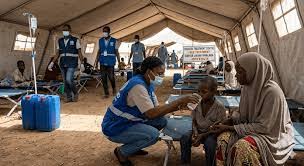
Doctors attending to Cholera patients in Maiduguri IDPs camp
The WHO further disclosed that 10 countries reported suspected human plague cases between 2019 and 2025, with six reporting confirmed infections.
A total of 3,847 suspected cases and 423 deaths were reported during the period, representing an 11 per cent case fatality rate. Most of the reported cases came from the Republic of the Congo and Madagascar.
Ihekweazu said continued surveillance of rodents and other animal populations, combined with rapid outbreak response, remained critical to detecting plague early and preventing wider transmission.
The WHO’s latest figures underline the continuing importance of strengthening public health systems, particularly access to clean water, sanitation, vaccination and timely medical care, to reduce preventable deaths from infectious diseases.
Author

Sign up for The Insight Newsletter
Get in-depth, research and data-based interpretative reports from around Nigeria.


