
Ruto to UN: You Can’t Call Yourselves ‘United Nations’ While Punishing 54 Countries for Being African
Key Points:
- Africa provides the largest UN peacekeeping contingents and bears the heaviest cost of instability.
- Africa remains the only continent without a permanent seat on the UN Security Council, despite having 54 member states.
- African nations borrow at 2-4 times higher rates than developed economies due to subjective credit ratings.
- Two Veto Powers or Nothing: Ruto’s Blunt Demand for Africa at the UN Security Council.
- Reforming the Security Council is not a favour to Africa, but a necessity for the UN’s own survival and credibility.
- Ruto Tells UN Its Relevance Depends on Africa.
By Emmanuel Kwada
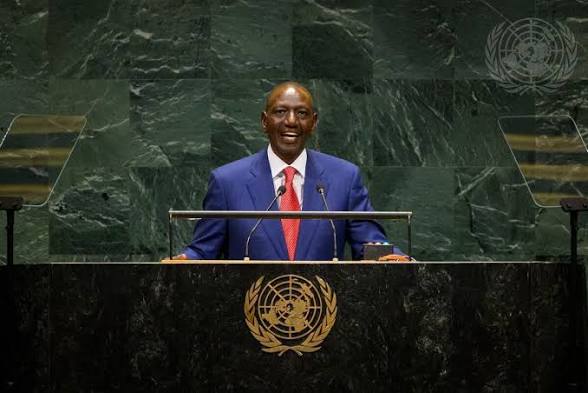
Kenyan President William Samoei Ruto has delivered a forceful defence of Africa’s place in global governance, demanding fundamental reforms of the United Nations Security Council and a fairer international financial system for developing countries.
Speaking at the 81st United Nations General Assembly in New York on Wednesday, September 23, 2026, Ruto argued that the continued exclusion of Africa from permanent membership of the Security Council represents a major contradiction in an organisation founded on the principle of sovereign equality.
You cannot claim to be the United Nations.
The Kenyan president said Africa, with its 54 UN member states and central role in international peacekeeping and conflict management, could no longer remain without a permanent voice at the institution where some of the world’s most consequential decisions are made.
Ruto’s intervention came as world leaders gathered under the theme of the 81st session, “Restoring Trust, Managing Transformation: A United Nations That Delivers for All.” The UN’s General Assembly schedule confirms that the general debate is taking place from September 22 to 26 and September 28, 2026.
‘You cannot claim to be the United Nations’
Ruto’s argument was direct.

81st United Nations General Assembly in New York
He maintained that the United Nations cannot credibly describe itself as a representative global institution while Africa remains excluded from permanent representation on the Security Council.
According to the Kenyan leader, Africa should no longer be expected to accept a system in which decisions affecting the continent’s peace, security and development are made without permanent African participation.
He argued that Africa’s exclusion is not merely a question of representation but one that affects the credibility and legitimacy of the UN itself.
Ruto’s position echoes a longstanding African Union demand for Security Council reform. The African common position, articulated through the Ezulwini Consensus and Sirte Declaration, seeks at least two permanent African seats with the same rights and privileges, including veto power, and five non-permanent seats.
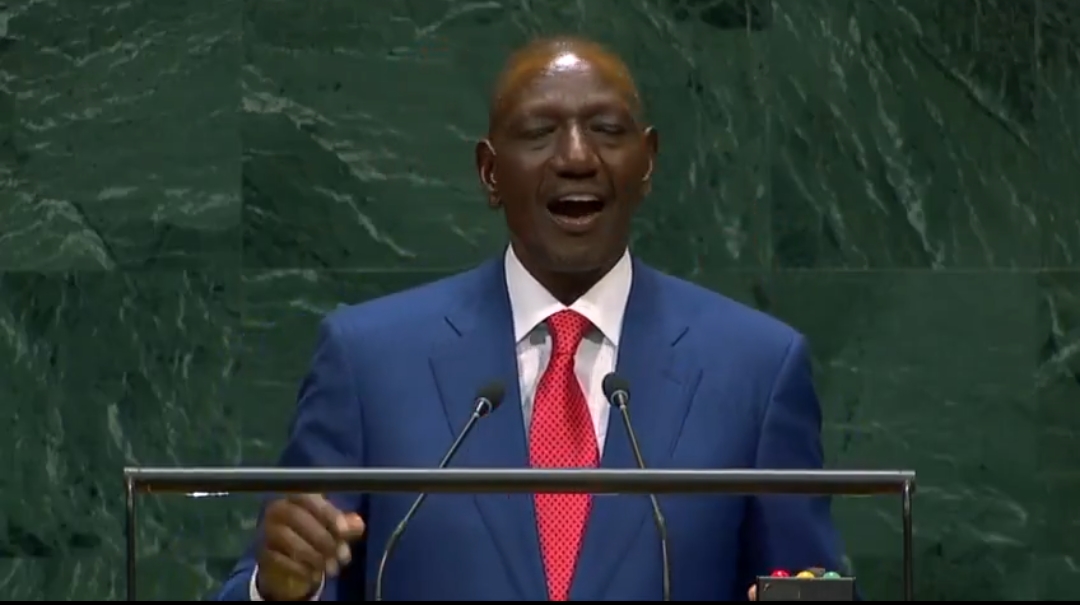
Kenyan President William Samoei Ruto speaking at the 81st United Nations General Assembly in New York
Kenya has repeatedly supported that position.
‘Africa bears the cost of instability’
Ruto linked Africa’s demand for permanent representation directly to the continent’s role in maintaining international peace and security.
He argued that African countries are heavily represented among countries affected by conflicts on the Security Council’s agenda and provide substantial personnel for UN peacekeeping operations.
Yet, he noted, the continent does not have a permanent seat on the body where those security decisions are ultimately made.
The argument is not new, but Ruto used the UNGA81 platform to place it at the centre of his broader appeal for a reformed multilateral system.
The President of the UN General Assembly, Khalilur Rahman, has similarly said Africa remains underrepresented despite being the largest regional group by number of member states and a major focus of UN peacekeeping. He described ending that underrepresentation as an issue of fairness, justice and the credibility of the organisation.
Reform is not a favour to Africa
UN Secretary-General António Guterres has also renewed calls for Security Council reform, describing Africa’s continued absence from permanent representation as “indefensible” and urging changes that reflect contemporary geopolitical realities.
Two permanent seats — with veto power
Ruto did not stop at calling for African representation.
He demanded two permanent African seats with full rights, including veto power, alongside additional non-permanent seats.
That position places Kenya firmly within the established African Union reform framework.
The demand for veto power is particularly significant because the five existing permanent members — China, France, Russia, the United Kingdom and the United States — possess veto authority over substantive Security Council decisions.
Ruto’s argument is that if permanent African membership is created without comparable rights, the reform could leave the continent permanently disadvantaged within a body that is supposed to represent the international community.
For Kenya, therefore, the issue is not simply obtaining a seat but ensuring that the seat carries meaningful decision-making authority.
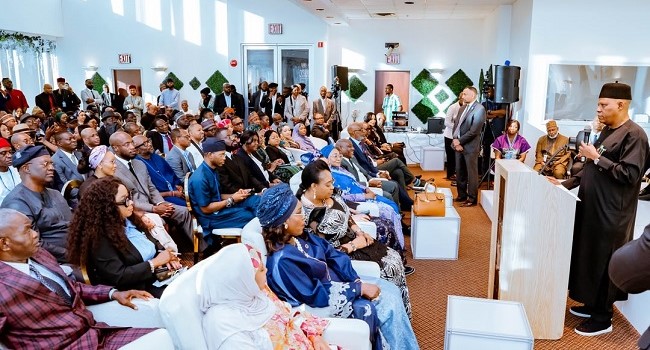
Nigerian vice President Kashim Shettima speaking at the 81st United Nations General Assembly in New York
‘Reform is not a favour to Africa’
One of the central themes of Ruto’s intervention was that Security Council reform should not be treated as a concession granted to Africa by existing powers.
He argued that reform is necessary for the UN itself if the organisation is to maintain relevance and credibility in the 21st century.
The argument reflects the changing composition of the international system since 1945, when the present permanent-member structure was created after the Second World War.
Ruto’s position is that the geopolitical realities of 2026 are fundamentally different from those of 1945 and that the institutions created at the end of the Second World War must therefore evolve.
Kenya has previously described the current configuration as an outdated arrangement that does not adequately reflect Africa’s demographic, economic and political importance.
Ruto’s case for Africa did not end with Security Council reform.
He also turned attention to the international financial system and the high cost of borrowing faced by developing countries.
Africa must become a producer, not merely a supplier.
He argued that expensive capital remains one of the structural barriers preventing African countries from accelerating investment in infrastructure, health, education, technology and other areas required for sustainable development.
His broader position is that developing countries need access to affordable, predictable and long-term financing rather than being trapped in cycles where high debt-servicing costs consume resources that could otherwise be invested in development.
The concern has also been highlighted by senior UN officials. Guterres has repeatedly linked Africa’s development constraints to debt burdens, high borrowing costs and limited access to long-term finance, while calling for reform of the international financial architecture.
Ruto further questioned the way international markets assess risk in African economies.
He argued that perceptions of risk can contribute to higher borrowing costs for developing countries, making it more difficult for African governments and businesses to secure financing on competitive terms.
The issue is particularly important for countries seeking to fund long-term infrastructure projects, energy transition, industrialisation and social development.
Ruto’s broader argument is that Africa should not be defined solely by risk assessments but should be viewed in terms of its economic potential, natural resources, growing markets and youthful population.
Africa must become a producer, not merely a supplier
The Kenyan president also linked Africa’s political demands to its economic transformation.
He has argued that the continent must move beyond exporting raw materials and develop the industrial capacity to process its natural resources locally.
Africa’s critical minerals, renewable-energy resources and expanding consumer markets have become increasingly important as the global economy moves towards clean energy, electric mobility and digital technologies.
For Ruto, the challenge is therefore not simply attracting foreign investment but ensuring that investment contributes to value addition, employment, technology transfer and long-term economic transformation.
Ruto has also advocated greater mobilisation of African capital to finance the continent’s development.
That includes pension funds, institutional investors, domestic savings and other sources of long-term capital.
The argument is that Africa should strengthen its capacity to finance infrastructure and development from within while continuing to attract international investment.
Africa faces significant energy-access challenges but also possesses substantial renewable-energy potential.
Kenya has also promoted stronger African institutions, implementation of the African Continental Free Trade Area and increased financing for continental initiatives.
Climate, clean energy and technology
Ruto’s wider UNGA81 agenda also places development within the context of climate change and technological transformation.
Africa faces significant energy-access challenges but also possesses substantial renewable-energy potential.
Kenya has increasingly positioned clean cooking, renewable energy and climate investment as areas where development and environmental objectives can be pursued simultaneously.
The continent’s young population also provides an opportunity for Africa to participate more actively in emerging areas such as artificial intelligence, digital services and technology-driven industries.
Ruto’s broader message is that Africa should not simply become a market for technologies developed elsewhere but should develop the skills, infrastructure and institutions necessary to participate in creating them.
Ruto’s UNGA81 intervention therefore brought together two dimensions of Africa’s international agenda: political representation and economic agency.
On the political side, he demanded permanent African representation on the Security Council with meaningful powers.
On the economic side, he called attention to the cost of capital, international financial structures and the need for Africa to mobilise more of its own resources.
His argument was ultimately about who gets to shape the rules of the international system.
Africa, he argued, should not remain a continent whose people experience the consequences of decisions made elsewhere while having limited influence over the institutions making those decisions.
As the UN begins discussions about the future of multilateralism, Ruto’s intervention places African representation at the centre of the debate over whether the international system can adapt to the realities of the 21st century.
The UN General Assembly itself has identified Security Council reform and fairer representation for underrepresented regions as important issues, while the UN Secretary-General has renewed his call for permanent African representation.
Read Also:RCCG Makes History as Nigeria Records West Africa’s First Tele-Robotic Surgery
Author

Sign up for The Insight Newsletter
Get in-depth, research and data-based interpretative reports from around Nigeria.


