
The Gown and the Garment of Shame and Nigerian Academic’s Betrayed Calling?
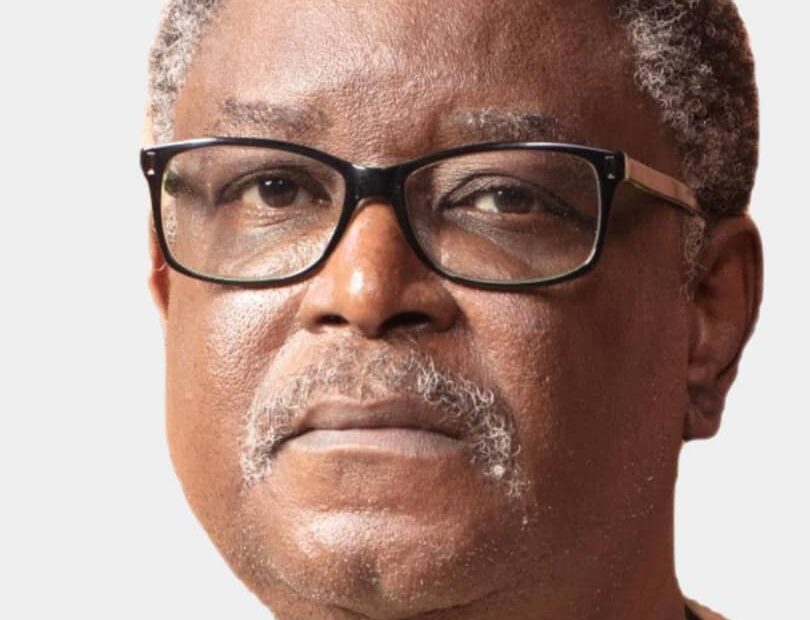
By Omadachi Oklobia, PhD.
Picture a senior common room in Ibadan in 1962. The ceiling fans turn slowly over cane chairs. A young lecturer, newly returned from London with his doctorate still warm, pours tea and argues with a colleague about whether the new nation should take its history from the archive or from the griot. Outside, the lawns are cut. In the faculty car park sits a Peugeot, bought on a loan the university arranged. His salary compares respectably with what his contemporaries earn at Oxford. Nobody in that room doubts what he is for. He is the mind of a nation in the act of being born. In those early years of independence, the university was seen as a builder of the country’s future. The era was not perfect. Its universities were elite and far smaller than today’s, but they had something that has steadily weakened: a widely shared belief that scholarship mattered to the national project.
Now move the camera sixty years forward to a different campus, in a different season. It is 2022, and the lecture halls have been emptying for eight months. Goats graze where students should be sitting. A professor of thirty years’ standing, a man who has supervised more doctorates than he can recall, is driving a commercial taxi in the evenings to pay his children’s school fees. His students have gone home to their villages, to petty trade, to Instagram, or to the long queue at the visa office. When the strike finally ends, he will return to a laboratory without reagents, a library without current journals, and an office where the only reliable instrument is the ceiling fan, when there is power to turn it.
Between these two scenes lies the question this essay faces directly. Did the Nigerian academic betray a calling, or was the calling betrayed out from under it? Before this can be answered, it is important to ask the question almost never asked: what exactly was the calling anyway?
The Three Vows
Every profession has a creed it recites and actually lives. The academic profession everywhere takes three vows.
The first is a vow to truth: to find out what is so, by method and evidence, whatever power prefers to hear. The second is a vow to the student: to take the raw promise of a nineteen-year-old and return, four years later, a mind that can think without permission. The third, sharper in a postcolonial state than anywhere else, is a vow to the polity: to serve as the nation’s conscience, its critic, its memory, and its imagination.
The first generation of Nigerian academics took all three vows with the fervour of converts. Kenneth Dike and the Ibadan School set out to prove that Africa had a history worth the name and to write it from African sources. At Zaria, Yusufu Bala Usman taught a generation to distrust official narratives and to read power for its interests. Claude Ake, writing from Port Harcourt, told the continent that development had never really been on its agenda, and that its rulers had always been more interested in surviving than in transforming. These were not men and women hiding in ivory towers. They wrote the white papers, sat on the commissions, drafted the curricula, and argued in the newspapers. The university was the nation thinking aloud.
Here is the puzzle, though. A profession that began this way, with such clarity of purpose, is now routinely accused of having lost its soul. How does an institution travel from conscience to suspect within a single lifetime?
The Slow Strangulation
The easy answer, the one heard in staff rooms from Nsukka to Sokoto, is that the state strangled the university. That answer is largely true, and it deserves to be said plainly.
The strangulation came in stages. The oil boom of the 1970s brought expansion without foresight: new universities built as political rewards, with buildings rising faster than the libraries could be stocked. Then came the military, which regarded the critical intellectual as an inconvenience at best and a subversive at worst. Under Babangida, the Structural Adjustment Programme devalued the naira and, with it, the professor. A salary that once bought a car began to buy a bicycle, and later barely bought the fuel to get to work. When ASUU resisted, the regime banned it. Lecturers were sacked, detained and hounded. The brightest left in the first great exodus of the late 1980s for Botswana, South Africa, Saudi Arabia and America, where African scholarship was welcomed by universities that knew what they were getting.
Democracy in 1999 was supposed to end the siege. It changed its weapons instead. The Federal Government signed agreements with the union and then forgot them. The 2009 agreement became a liturgy, recited at every strike and honoured at none. The state invented payment platforms that treated a professor of nuclear physics as a line item to be audited rather than a mind to be kept. Funding for education stayed in the single digits as a share of the national budget, year after year, while the political class sent its own children to Ghana, Britain and Canada and saw nothing contradictory in doing so.
In many ways, outcomes we blame on individuals are often the products of systems. The Nigerian academic was placed inside a system built to fail him. You cannot ask a man to light a torch in a room you keep flooding.
The Uncomfortable Second Half
Stopping there would be comfortable, and comfort is the enemy of honesty. The academic who blames only the state is telling half a story, and half a story is a kind of lie.
Consider the returning officer. Since the restoration of democracy, Nigeria has asked its professors to guard the ballot, on the theory that the gown confers integrity. Many served with distinction. Attahiru Jega, a former ASUU president, presided over the 2011 and 2015 elections and became, for a moment, a symbol of what the academy could offer the republic. Yet in 2019 a federal court in Akwa Ibom sent a professor to prison for falsifying election results. He was not alone in facing such accusations. When the nation went looking for incorruptible men, it found that the gown could be bought like any other garment.
Consider the classroom itself. The BBC’s 2019 investigation into sexual harassment in West African universities did not reveal anything students did not already know. It only put on camera what had been whispered in hostels for decades: grades traded for bodies, marks for money, the lecturer’s red pen used as an instrument of extortion. Consider the forced sale of handouts, the “settle me” culture of project supervision, and the scripts that sit unmarked for a semester while results are invented. Consider the predatory journals, the pay-to-publish outlets where promotion files are fattened with articles nobody reads and no serious reviewer would pass. Consider the professorial title pursued as a social rank rather than as evidence of contribution, and the departmental feuds fought with the ferocity of village land disputes. Consider the ethnic and religious arithmetic that so often decides who becomes vice-chancellor, as though the university were a ward caucus rather than a republic of letters.
None of this was forced on the academic by Abuja. The state impoverished him, but impoverishment explains corruption without excusing it. Thousands of his colleagues, equally poor and equally insulted, marked their scripts honestly, published in real journals, and kept their hands off their students. The calling was hard. For some it was abandoned.
The Contradiction at the Heart
So, which is it, betrayal or being betrayed? I want to suggest that the question, asked that way, is a trap, and that the deeper truth is stranger.
The Nigerian academic has been asked to perform two incompatible roles at the same time. He is supposed to be the nation’s critic and also its servant, the voice outside the palace and also the minister inside it. He is the union militant who shuts down the university to save it, and the parent whose own children lose a year each time he does. He is a public employee paid by the very state he is meant to hold to account. Every strike is an act of loyalty to the calling and a betrayal of the student in the same breath. Every appointment to government is a chance to apply knowledge and an invitation to be captured by power. The Nigerian professor is a man standing with one foot in the lecture hall and one in the queue for political patronage, and the ground between them is splitting.
That is why the strike has become the defining ritual of Nigerian academic life. The strike has become the academy’s most visible weapon, and like all such weapons it wounds the one who uses it. In fighting for the university, the union has taught a generation of students that the university is a place that closes. In fighting the state, it has given the state an alibi: the private universities, many owned by politicians and pastors, advertise themselves to parents with a single unspoken promise, that here, the lecturers will not strike.
Meanwhile the japa exodus continues, quieter and more devastating than any strike. Today’s departing scholar does not leave in protest. He leaves in resignation. He goes to Leeds, Calgary or Texas, publishes in the journals his Nigerian colleagues cannot afford to read, and sends money home. His calling survives, but it has emigrated. Nigeria trains the mind, and someone else harvests it.
What Remains
So, what is the calling of the Nigerian academic now, in 2026, in a country where the professor earns less than a mid-level customs officer and the student borrows from a federal loan fund to sit in a lecture hall that may close at any moment?
It is, I believe, the same calling as in 1962, but stripped of its illusions. The Ibadan generation thought the state would be a partner in building knowledge. That faith has died. What remains is harder and perhaps purer: to tell the truth without the state’s applause, to teach honestly when nobody is checking, and to refuse the small corruptions that poverty makes tempting. It is to be the conscience of a country that has stopped listening, and to keep speaking anyway, because conscience was never a matter of being heard.
The Nigerian academic was let down. That is the indictment of the state, and history will deliver it. But being let down does not release anyone from a vow. The calling was never a contract with the government. It was a covenant with truth, with the student, and with the republic still to be built. The state broke its promises.
The question each academic must answer alone, at the end of a long day in a hot office, is whether he will break his.
Author

Sign up for The Insight Newsletter
Get in-depth, research and data-based interpretative reports from around Nigeria.


