How Boko Haram Drained Over ₦18 Trillion from Nigeria

Key points:
- Nigeria’s defense budget has skyrocketed to ₦18 trillion in 10 years, diverting funds from essential sectors like healthcare, education, and infrastructure.
- Despite increased defense spending, insecurity persists, with over 716,471 deaths recorded from 2010 to 2025, and the economy suffers, with GDP shrinking from $405 billion in 2016 to $188.3 billion in 2025.
- Insecurity disrupts agriculture, business, and trade, causing food shortages, displacing people, and scaring away foreign investors.
- Experts suggest a multifaceted approach to address insecurity, including intelligence gathering, technology, community involvement, job creation, and swift justice, to balance security with economic growth
By Emmanuel Kwada
Nigeria, once seen as a shining star of Africa’s economy, is now struggling under a growing wave of insecurity. Problems like attacks by groups such as Boko Haram, banditry, kidnappings, and clashes between farmers and herders are hurting the country’s finances.

New data charts, drawn from sources like the Budget Office, BudgiT, International Monetary Fund (IMF), World Economic Outlook (WEO), National Bureau of Statistics (Nigeria), and Amnesty International, show a worrying trend: the government is spending more and more on defense, while the country’s overall wealth—its Gross Domestic Product (GDP)—is shrinking.
Over the past 15 years, from 2010 to 2025, this has cost lives and taken money away from things that could help the economy grow, like healthcare, education, and new businesses.

The first chart tracks Nigeria’s defense budget, which includes only the Nigeria Police Force, Nigerian Army, Navy, and Air Force, from 2016 to 2025, measured in billions of naira. This budget excludes other security services like the Department of State Services (DSS), National Intelligence Agency (NIA), Nigeria Security and Civil Defence Corps (NSCDC), Immigration Service, Fire Service, and Correctional Centers.
The government is spending more money to fight insecurity, using funds that could have been used to build roads, schools, or hospitals
The budget started at about N459.2 billion in 2016 and stayed between N832.03 billion and N2 trillion until 2023. Then, it kept growing, reaching around N3.97 trillion in 2024, and jumped to a huge N4.67 trillion in 2025.
This big increase shows the government is spending more money to fight insecurity, using funds that could have been used to build roads, schools, or hospitals. Since this budget only covers the police and the Ministry of Defence, and other security forces are not included, the total cost of security is likely much higher.

The Second chart compares this defense spending to Nigeria’s GDP, which is the total value of goods and services the country produces, measured in dollars.
In 2016, the GDP was around $405 billion, fell the next year to $375.8 billion, and kept falling until it reached just $188.3 billion by 2025. At the same time, the defense budget in naira has risen sharply to a huge sum of N4.67 trillion.
Read Also: Sultan Abubakar’s Burden and the Herdsmen Crisis
This means that as the country spends more to fight insecurity, there is less money left to grow the economy. The cash that could have built factories, supported farmers, or improved healthcare is instead going to police and soldiers, leaving the economy weaker.
The country spends more to fight insecurity, there is less money left to grow the economy
The insecurity has also led to a heartbreaking loss of life. The pie chart shows that from 2010 to 2025, at least 716,471 people have died due to violence. The North-East (NE) region, hit hard by Boko Haram, saw 274,492 deaths, while the North-West (NW) had 253,086, North-Central (NC) 80,100, South-East (SE) 30,000, South-South (SS) 44,000, and South-West (SW) 34793. The biggest chunk, 267,249, might include deaths that weren’t fully reported.

“People who died only in Borno, Yobe, and Adamawa tripled this figure. I just don’t want to talk about the killings in Nigeria because it is pathetic,” said a retired soldier who identified himself as Baba Samson.
“Only the Nigerian Army killed during this period is close to this figure, plus the Nigerian police who were slaughtered like rams in Borno, Yobe, and Adamawa,” he reiterated.
Read Also: Forgotten Futures: The Plight of Taraba’s Children in IDP Camps
The third chart tracking deaths over 10 years shows a rise from 2010, a peak around 2014–2015, a steady period from 2016 to 2022, and a sharp jump in 2024 to over 512739 deaths (with an NBS report claiming 614,937, which might be an overestimate). This spike ties to more kidnappings—13 people taken daily in 2021, rising to over 100 cases in 2024—spreading fear across the country.
Poverty is high because farmers can’t work safely
This violence is draining Nigeria’s economy in simple ways. In the north, where farming and livestock are key, insecurity stops people from working.
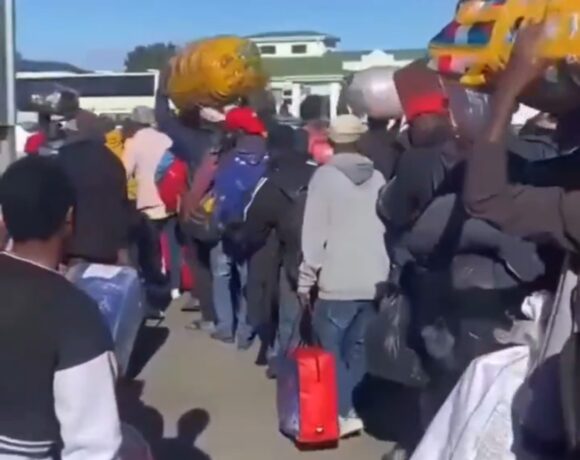
Farmers can’t go to their fields because of attack fears, leaving over 500,000 people displaced in the northern states who should be on the fields providing food to feed the nation but instead wait and hope aimlessly in IDP camps to be fed by the federal and state governments with the little resources left to run the country, causing food shortages.
Bandits also steal cattle, disrupting the meat and dairy supply, which hurts herders and markets. Businesses close or move to safer countries, and travel between states becomes risky, slowing down trade.

A leader, Mallam Yusuf Bala in Yobe State noted, “Poverty is high because farmers can’t work safely.”
Nationally, the fear of kidnappings and attacks scares away foreign investors and tourists. Companies that stay operate with fewer workers, and the money lost from closed shops and stalled transport adds up. The Nigerian Institute of Social and Economic Research (NISER) warns that insecurity is a main cause of poverty, as people can’t earn a living.
Let’s imagine how much money has been spent on defense over these years that could have built a better Nigeria. From 2016 to 2023, the budget averaged around 500 to 832.03 billion naira yearly. In 2025 alone, it’s over N4 trillion. Over 15 years, if we estimate an average per year (factoring in the recent spike), that’s N18 trillion (or about $12 billion, depending on exchange rates).
Faster trials and stronger punishment for criminals like bandits and kidnappers might scare them off too.
This huge sum could have funded schools for millions of children, built hospitals to save lives, or started companies to create jobs. Instead, it’s going to police and defense, leaving healthcare short of doctors and medicines, education lacking classrooms, and businesses struggling without support.
The government is trying to fight back, as seen with the 2025 budget jump, but this focus on security is stretching the country’s money thin. To fix this, they could set up a smart system to gather information on criminals, use technology to track them, and work with local communities for help.

An illustration of Nigerian troops battling Boko Haram in the bush.
Building security posts in rural areas and training local people to assist police could also make a difference, says Baba Samson, the retired combatant who recommended. “To boost the economy, creating jobs for young graduates—many of whom are skilled but unemployed—could reduce unrest. Faster trials and stronger punishment for criminals like bandits and kidnappers might scare them off too.
“But the issue is the Nigerian government has trivialized and politicized everything. Imagine a state governor, in the case of Zamfara State, lamenting that ‘they have contacts in Abuja; they get released if we arrest them after confessing to killing our people and send them to be arraigned in court but got released.’ So it’s frustrating.
Seeing the federal and state governments giving better treatment to ‘repentant’ terrorists while innocent citizens, against whom the crimes were perpetrated, languish in IDP camps
“Seeing the federal and state governments giving better treatment to ‘repentant’ terrorists while innocent citizens, against whom the crimes were perpetrated, languish in camps without schools, proper food, and good hygiene, we must change our mindset and treat terrorists as terrorists, citizens as citizens.
“When they are caught, they should be sent to their ancestors, not awarded with scholarships or crowns to rub it in the face of their victims, whom we could not remove from the IDP camps,” he said.

IDPs
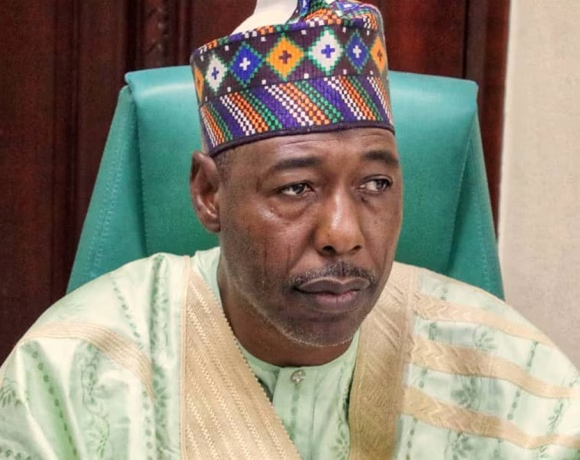
“Another issue is our politicians; they should behave like comrades and be compatriots. No! When your party is in power, you seem to hide everything and turn it into politics and propaganda, and keep blaming those who are telling you the truth, like in the case of the Governor of Borno State, Prof. Babagana Umara Zulum, whom the Minister of Information wanted to crucify because he stated the facts.
“Instead of the Tinubu-led government jumping into action to prevent further escalation, they jumped on the microphone to ask for Zulum’s head. It’s a serious concern; we behave as if we have another country aside from this,” Baba Samson said.
Read Also: Father Alia ‘Under Siege’
“I suffered for over 25 years on the frontline, but there’s no ease in the country’s insecurity; it’s either increasing. What a sorrowful thing to recall how Nigerian security forces are toiling without proper leadership and political will from our leaders to tackle these menaces,” he concluded.
I suffered for over 25 years on the frontline, but there’s no ease in the country’s insecurity; it’s either increasing
As of today, June 11, 2025, Nigeria is at a big crossroads. The growing defense budget, shrinking GDP, and rising number of deaths show a country struggling to move forward. The trillion naira spent on security over 15 years could have changed lives by building schools, hospitals, and businesses, but instead, it’s being used to fight a problem that just keeps getting worse.
Without a smart plan to balance security with growing the economy—putting money into education, healthcare, and jobs along with the police—the human suffering and financial losses will keep increasing. Nigeria’s hope of becoming a leading African economy is at stake, and the choices made now will determine if it can bounce back or fall deeper into hardship.

An illustration of Nigerians demanding for peace
Nigeria’s National Security Adviser (NSA), Mallam Nuhu Ribadu, recently claimed that the country has achieved over 90% improvement in security under President Bola Ahmed Tinubu’s administration.
He made this assertion in Jos, Plateau State, during a press briefing following a strategic meeting with the commander of Operation Safe Haven, Major General Folusho Oyinlola. The meeting was convened in response to a deadly gunmen attack on the Bokkos community, which tragically claimed the lives of hundreds of residents.
However, it is essential to examine Ribadu’s claim objectively, grounded in verifiable data and realistic context. Security issues are too critical to be reduced to rhetoric; they must be measured by tangible outcomes that impact the lives of everyday Nigerians. As violence and attacks continue to escalate, and the defense budget continues to grow, Nigerians are increasingly concerned about the lack of relief from the persistent hardship caused by over a decade of insecurity in the country.
Author

Sign up for The Insight Newsletter
Get in-depth, research and data-based interpretative reports from around Nigeria.