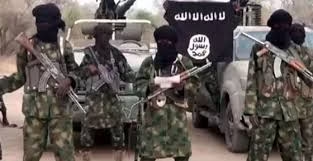
Data: Now, herdsmen shed more blood than bandits and terrorists
Key Points:
- Over 800 Killed, Scores Injured, Many Kidnapped in 48 Days
- North-Central is epicenter of killings
- Governors lament; no solution in sight
By Emmanuel Kwada
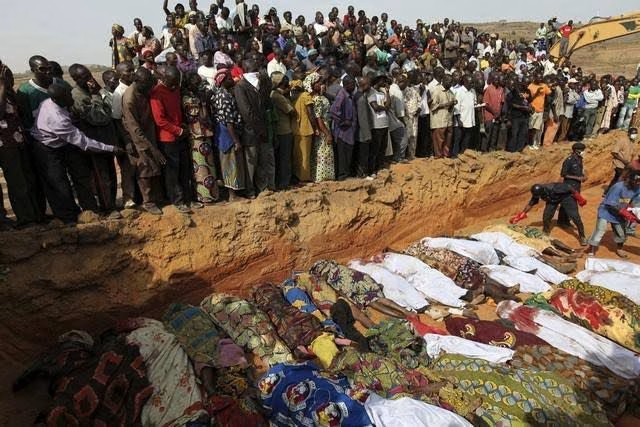
Nigeria is grappling with an alarming surge in violence, with no fewer than 872 persons killed, hundreds injured, and over 350 abducted across multiple states in the last 48 days.
The relentless attacks were carried out, mainly by Fulani herdsmen, Boko Haram insurgents, and other armed groups. They have left communities devastated, homes destroyed, and families displaced.
The violence has spread across Nigeria’s northern, central, eastern, and southern regions, underscoring the deepening security crisis in Africa’s most populous nation.
This is according to data from HumAngle, Zagazola, an online platform run by a security expert, and Bakatsine, a Katsina-based real-time reporting platform on X, as well as HRW, the United States Department of State, and the Global Centre for the Responsibility to Protect, which indicates that the killing has soared to an alarming rate.
Herdsmen attacks claiming 137 lives in Plateau State alone
The North-Central region has borne the brunt of the violence, with herdsmen attacks claiming 137 lives in Plateau State alone. In addition to the fatalities, many residents sustained injuries, and over 150 houses were razed by suspected Fulani herdsmen. Benue State recorded 222 deaths, with scores of others injured and widespread destruction of property. Niger, Kogi, and Nasarawa states also reported significant casualties, contributing to the region’s grim toll.
Benue state governor, Hyacinth Iormem Alia, has expressed deep sorrow over the coordinated attacks on communities in state, describing the killings as a “serious carnage.”
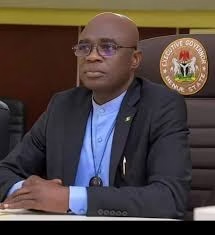
Benue State Governor, Alia Hyacinth
He described the incident as a calculated and targeted assault, urging the federal government to act swiftly to assist the state in addressing the escalating crisis.
“I know the federal government has offered substantial support and our security personnel are working tirelessly, yet this happened. Something more strategic and drastic must be done. I’m calling on the federal government to come to our aid urgently,” he said.
Declare killers as terrorists
The attacks in Plateau and Benue have followed a familiar pattern, with armed herdsmen targeting rural communities, burning homes, and displacing thousands.
Meanwhile the former Senate President, David Mark calls on the federal government to declare killers as terrorists.
Mark who made the call in his goodwill message to commemorate this year’s Easter, also called for more proactive actions from the federal government in its efforts to tackle the menace of violent crimes across the country like kidnapping , banditry and armed herdsmen.
We must not shy away from the truth. If they are not terrorists, why are they killing people?
He specifically bemoaned the unabating violent crimes especially in the North Central states of Plateau and Benue that have claimed dozens of lives and properties.
“We must not shy away from the truth. If they are not terrorists, why are they killing people? Why are they destroying communities? Why are they chasing people away from their ancestral homes?” he queried.
Terrorism have deprived us of the riches of the land
He decried the unending activities of armed herdsmen suspected to be behind killings and kidnappings stressing that “their activities are unacceptable and should not only be condemned but be prohibited in entirety as nobody has the right to take anybody’s life”.
The Acting Vice Chancellor of Plateau University, Prof. Shadrak Best, lamented the killing at the Haske Satumari Foundation’s 2025 Annual Colloquium in Abuja on Saturday 22 March, 2025, saying, “We’re not fighting each other; the numerous tribes in Plateau State are not fighting each other. It’s the window that our disunity gives to our common enemies from outside to come and fight us.” He emphasized that outsiders are fighting them.
Every community must defend itself
Reacting to the killing, the Plateau State Governor Caleb Mutfwang says he believes “every community must defend itself” in response to the mass killings in the state by suspected armed herders.
“Immediately we assumed office, we took decisive steps and invested heavily in technology just to end these security challenges facing us,” the News Agency of Nigeria (NAN) quotes him as saying during the visit.

VC, Plateau State University Prof Shadrak
“Insurgency and terrorism have deprived us of the riches of the land; our developmental strides on the Plateau have been slow because of insecurity.
“There is no reason for us to be where we are; our people cannot go to their farms and engage in any economic venture.
“But as a government, we are doing everything possible to end these circles of attacks and killings,” he said.
Our people are being slaughtered like animals, and no one is coming to our rescue
Local leaders have decried the lack of adequate security presence, accusing federal authorities of failing to curb the violence. “Our people are being slaughtered like animals, and no one is coming to our rescue,” said a community leader in Mangu, Plateau State, who requested anonymity for fear of reprisals.
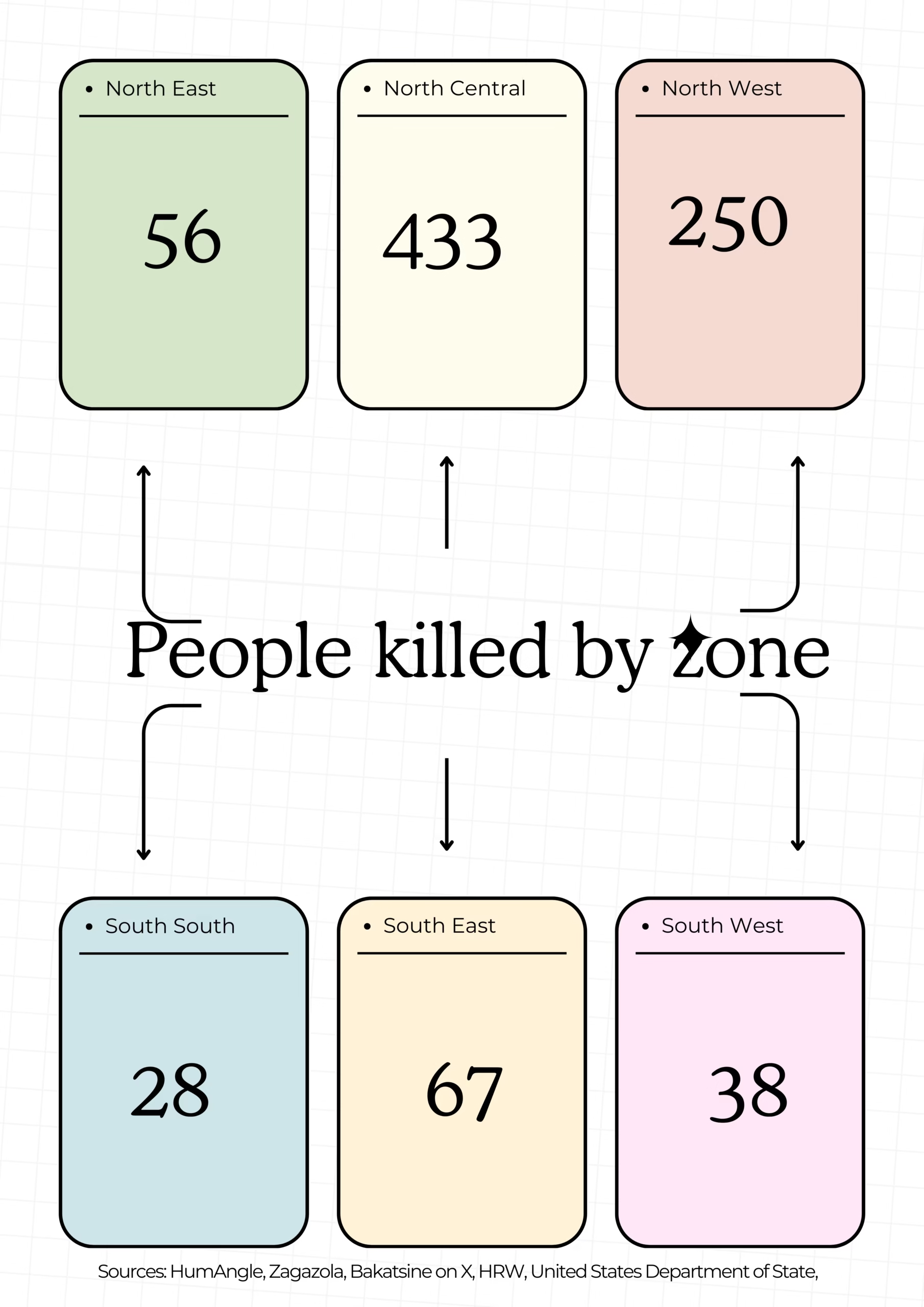
In the North-West, banditry and kidnapping have surged, with 250 persons killed across Zamfara (62), Kaduna (67), Katsina (47), Sokoto (31), and Kebbi (34). Over 342 people, including women and children, were abducted during this period, with Kaduna and Zamfara recording the highest numbers of kidnappings. Additionally, more than 50 individuals sustained injuries in these attacks.

Bandits
The bandits, operating in large groups, have targeted villages, schools, and highways, extorting ransoms and instilling fear. A recent attack in Zamfara saw 12 community protection guards and vigilantes killed, while in Kaduna, an armed group abducted ten people in Kajuru. The Nigerian military has conducted operations against bandit enclaves, but the groups continue to operate with impunity, exploiting the region’s vast ungoverned spaces.
In the South-East, Enugu State recorded over 51 deaths, with houses and farms destroyed by suspected Fulani herdsmen. Ebonyi reported six fatalities, while Anambra recorded three, Abia and Imo each recorded one death, bringing the region’s total to 67 lives lost. The violence in Enugu has heightened tensions, with local communities accusing security forces of complicity or inaction.
East, Enugu State recorded over 51 deaths
In the South-South, Edo State saw 19 deaths, including 16 people burned to death in a single incident. Rivers State reported three fatalities, and Akwa Ibom recorded five. The region, traditionally less affected by herdsmen violence, has seen an uptick in criminal activities, including cult clashes and communal disputes.
Boko Haram Resurgence in the North-East: Adamawa, Borno, Yobe, and Taraba
The North-East, long plagued by Boko Haram and its splinter faction, the Islamic State West Africa Province (ISWAP), reported 56 deaths.
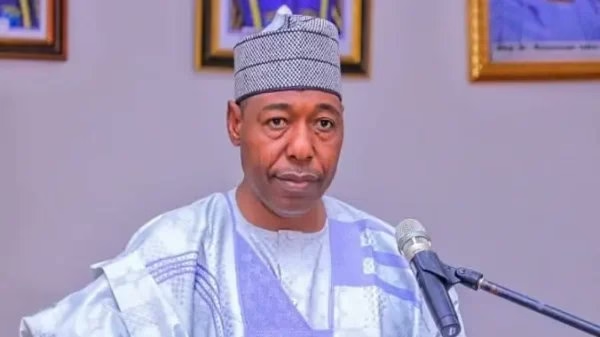
Borno State Governor, Prof Babagana Umaru Zulum
Borno State, the epicenter of the insurgency, recorded 36 killings, while Adamawa saw ten deaths, and Yobe and Taraba each reported one. Over 20 people were kidnapped in Borno, where insurgents have intensified attacks on farmers and fishermen accused of collaborating with the military.
A devastating attack on the Damboa-Maiduguri road, killed over 8 travellers, highlighting the insurgents’ continued capacity for large-scale violence. The military’s counterterrorism operations have been criticized for human rights violations, including extrajudicial killings and a reported secret abortion program targeting women rescued from Boko Haram captivity, allegations the military has denied.
Governor Babagana Zulum has voiced deep concern over the recent resurgence of Boko Haram attacks and kidnappings across Borno State, warning that the state is beginning to lose ground in the fight against terrorism.
Speaking on Tuesday, April 8, during a Special Expanded Security Meeting held at the Government House in Maiduguri, Zulum said the frequency of assaults on communities without adequate military resistance is alarming and signals a dangerous shift.
The South-West region recorded 38 deaths, with Ondo (20) and Ogun (16), Osun (1) affected. The relatively lower casualty figures are attributed to the efforts of the Western Nigeria Security Network, known as Amotekun, a regional security outfit established to combat insecurity.

Fulani Herdsmen with AK47
However, concerns have been raised about Amotekun’s operations, with allegations of extrajudicial killings, including two deaths in Ondo in May 2024, one of which involved a child.
The devastating reality of Nigeria’s crisis is laid bare in these numbers. Lives lost, families shattered, and communities torn apart.
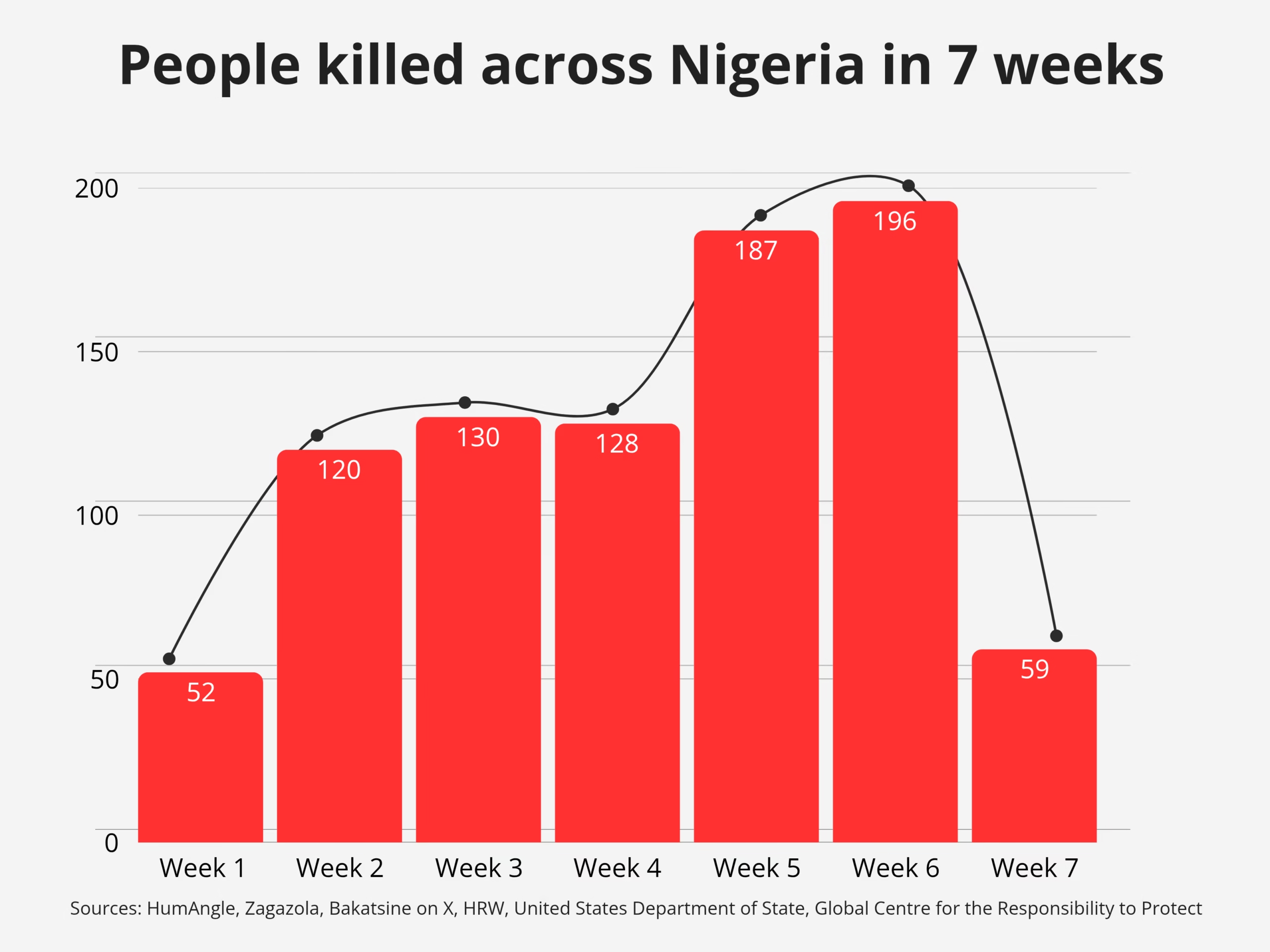
The weekly death toll paints a grim picture: 52 innocent lives lost in the first week of March, escalating to a heart-wrenching 196 in the sixth week, before slightly dropping to 59 in the final week of this harrowing seven-week period.
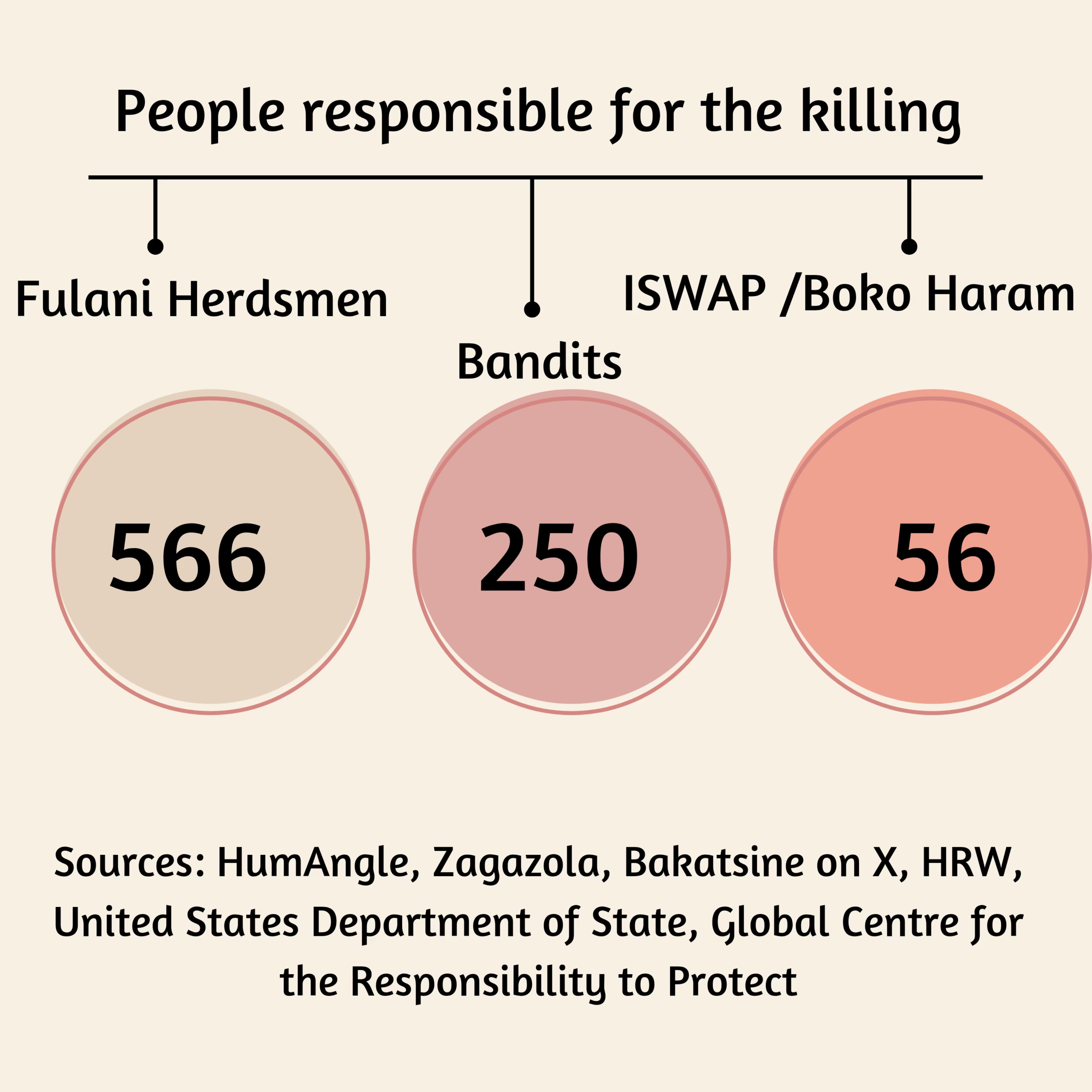
The pain is compounded by the fact that these lives were taken by fellow humans, driven by violence and hatred. Fulani herdsmen, bandits, and ISWAP/Boko Haram have left a trail of destruction, claiming hundreds of lives. The numbers are staggering: 566 lives lost to Fulani herdsmen, 250 to bandits, and 56 to ISWAP/Boko Haram.
566 lives lost to Fulani herdsmen, 250 to bandits, and 56 to ISWAP/Boko Haram
As Nigeria mourns the tragic loss of 872 lives in just 48 days, the nation stands at a critical crossroads. The unrelenting violence, fueled by deep-seated ethnic tensions, crippling economic despair, and weak governance, demands a comprehensive strategy that tackles the root causes of these atrocities while ensuring the protection of vulnerable communities.
when will this cycle of violence end?
The numbers paint a grim picture: lives cut short, families shattered, and communities forever changed. The pain of the victims’ families still echoes through the land, their anguish palpable. The question lingers: when will this cycle of violence end?
Without urgent action, Nigeria risks further descent into chaos, with devastating consequences not only for its people but also for the entire region. The nation must come together to demand change, to advocate for peace, and to protect its citizens. Only through collective effort can Nigeria break this cycle of violence and forge a path toward a more peaceful and prosperous future.
Author

Sign up for The Insight Newsletter
Get in-depth, research and data-based interpretative reports from around Nigeria.