Five Days to 2027 Campaigns: How Prepared Are Nigerians for the Battle Ahead?

Key points:
- Campaigns begin Aug 19, 2026; elections Jan and Feb 2027.
- New voters added, but final register and PVC figures pending.
- Presidential turnout fell from 53.7% in 2011 to 26.7%.
- Osun has 385 flashpoints, raising national election security concerns.
- 2027 success depends on credible polls, peace, and voter trust.
By Emmanuel Kwada
Five days from now, Nigeria’s political atmosphere will formally enter a new phase.
On August 19, 2026, political parties will be permitted to commence public campaigns for the presidential and National Assembly elections ahead of the 2027 general elections. Campaigns for governorship and State Houses of Assembly elections will begin later, on September 9.
The countdown is therefore no longer theoretical. Nigeria is moving from the era of political consultations, defections, endorsements and party primaries into the full campaign season.
But as politicians prepare their convoys, rallies, manifestos and mobilisation structures, a more important question is confronting the electorate:
How prepared are Nigerians themselves for the 2027 election?
And perhaps even more urgently: Are Nigerians willing to vote, and do they still believe their votes will count?
Across different parts of the country, the answer is far from straightforward.
I have my PVC, but I’m not going to waste my time on that day because our votes don’t count.
While some citizens are determined to vote and defend their ballots, others say they have lost faith in the electoral process, while a third group is staying away because of fears of political violence and insecurity.
‘I Have My PVC, But I Won’t Waste My Time’
For some voters, the biggest obstacle is no longer voter registration or collection of the Permanent Voter’s Card (PVC), but confidence in the electoral process itself.
Mr Rasheed Abdulrahman from Edo State said he has his PVC but has no intention of voting in 2027 because he believes the outcome may not reflect the votes cast at polling units.
“I have my PVC, but I’m not going to waste my time on that day because our votes don’t count,” Abdulrahman said.
He recalled his experience during the Edo State governorship election, claiming that what voters witnessed at polling units did not correspond with the eventual outcome.
“I witnessed it with my own eyes where votes were being cast and counted, but we saw different things during the Edo State governorship election,” he said.
His position reflects a broader sentiment among some Nigerians who are registered but increasingly sceptical about whether participation translates into political influence.
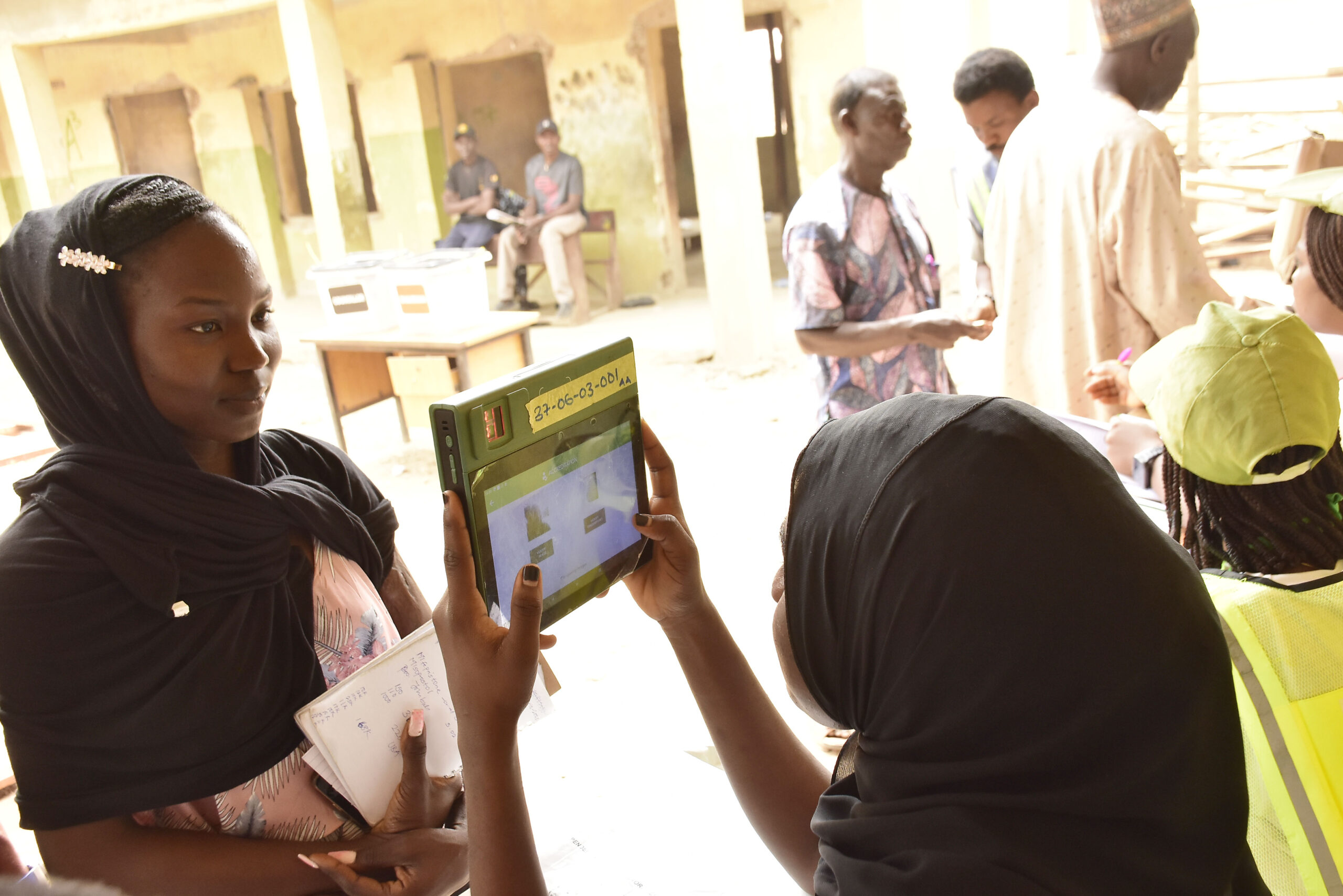
File photo: A voter going through capturing and verification with the Bimodal Voter Accreditation System (BVAS) by an Independent National Electoral Commission (INEC) ad-hoc staff at a polling unit in Kubasa ward, during the 2023 general elections.
‘2019 Was the Last Time I Voted’
In Madagali, Adamawa State, Mr Bitrus Emmanuel said he has effectively abandoned voting despite retaining his voter card.
Emmanuel said 2019 was the last time he participated in an election.
“2019 was the last time I voted,” he said, explaining that his voter’s card has since become useful to him mainly for identification purposes, including banking and other activities.
“For me, the card is now mainly for bank or other activities, not for voting,” he said.
His experience illustrates one of the biggest challenges facing Nigeria’s democracy: having registered voters does not necessarily mean having active voters.
Fear of Violence Is Keeping Some Away
For others, the problem is not whether their votes will count, but whether they will be safe enough to cast them.
Ademola Ajayi said he is afraid of participating because, in his view, Nigerians are increasingly losing their lives simply for attempting to exercise their democratic rights.
I am afraid because people are losing their lives just because they want to exercise their right.
He pointed to the political tension and violence reported in Osun State as a warning.
“I am afraid because people are losing their lives just because they want to exercise their right,” Ajayi said.
He cited the situation in Osun, saying the violence and deaths being reported even before Election Day had deepened his fears about what could happen when campaigns intensify.
His concern comes at a particularly sensitive time, with security agencies already identifying political flashpoints in Osun and stepping up preparations ahead of the state’s governorship contest.
But Some Nigerians Say They Will Vote Regardless
Not everyone shares the pessimism.
For some voters, the possibility that politicians or political actors may attempt to manipulate the electoral process is precisely why citizens must participate.
Mr Samuel Lukas, a resident of the Federal Capital Territory, said he intends to vote.
“I’m going to vote that day. If our votes are not important, they will not buy it,” Lukas said.
His position captures a different philosophy: rather than abandoning the process because of distrust, citizens should participate and defend the value of their ballots.
I have my PVC and I’m going to vote and wait for my vote to be counted.
Another voter, identified as Prince Samson, a resident of Karu, also said he has his PVC and intends to vote.
“I have my PVC and I’m going to vote and wait for my vote to be counted,” Samson said.
For him, participation remains an essential part of democratic responsibility.
‘My Issue Is Security’
For Madam Abigail Bitrus, a resident of Mararaba in Nasarawa State, the decision to vote is conditional on security.
“My issue is security. If the security will be tight, why not? I’m going to vote,” she said.
Her comment captures a crucial concern shared by many Nigerians: voters may be willing to participate, but their confidence depends heavily on whether security agencies can guarantee a safe environment before, during and after voting.
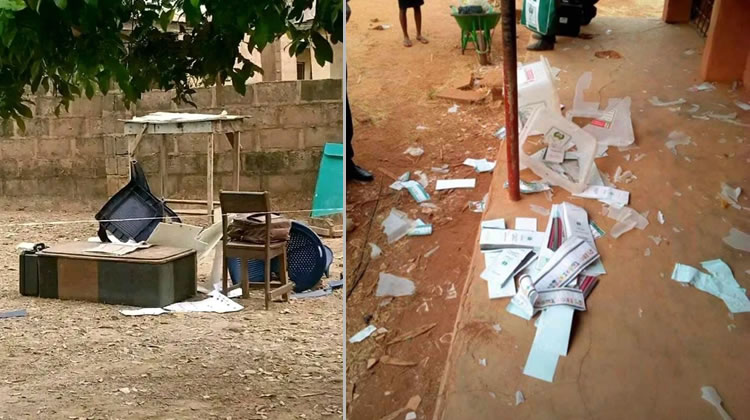
File photo: Some of the polling units where voting was disrupted in Kogi East during 2024 governoship election.
However, while political parties are already mobilising across the region, concerns over insecurity, economic hardship, distrust in politicians and the credibility of elections could influence whether voters actually turn out.
These voices, once independently interviewed and verified, would provide a stronger picture of voter apathy in the region.
The contrast is striking: Nigerians may be deeply concerned about insecurity and the credibility of the electoral process, yet many still believe abandoning the ballot would amount to surrendering their democratic power.
INEC revised the 2027 timetable following the enactment of the Electoral Act 2026, moving the presidential and National Assembly elections from the earlier February 20 date to Saturday, January 16, 2027, while the governorship and State Assembly elections are scheduled for Saturday, February 6, 2027.
The commission has also made clear that campaigns must end 24 hours before Election Day.
This means that from next week, the country will begin witnessing a sustained campaign season across television, radio, newspapers, social media, town halls, rallies and grassroots meetings.
Nigeria May Have More Registered Voters — But Will They Turn Out?
Nigeria had 93,469,008 registered voters for the 2023 general election. INEC has since undertaken a new Continuous Voter Registration exercise in preparation for 2027.
The exercise recorded millions of new registrations. The second phase alone produced 3,748,704 completed registrations, while figures released during the final phase indicated that more than nine million eligible Nigerians could have been added across the three phases before the exercise ended.
That potentially puts the 2027 electorate substantially above the 2023 figure.
But there is an important caveat.
There is not yet a final, publicly released national 2027 voters’ register showing the definitive number of eligible voters and the number of PVCs collected nationwide.
INEC’s registration and subsequent cleaning process is important because the commission has repeatedly raised concerns about duplicate registrations, underage voters, deceased persons, non-citizens and inaccurate records.
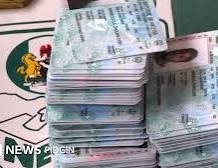
Permanent Voter’s Cards
So, while millions of Nigerians have newly registered, the critical question is no longer simply: How many people registered?
It is: How many will actually vote?
The PVC Question
For the 2023 election, INEC recorded 87,394,106 collected PVCs out of 93,469,008 registered voters, according to the commission’s 2023 election report.
For 2027, however, the picture is more complicated because millions of new voters have been registered, while existing voters have also transferred, updated or replaced their voting information.
INEC has yet to publish a definitive nationwide 2027 PVC collection figure that can responsibly be described as the final national total.
That information will matter enormously.
A citizen may register, collect a PVC and express strong political preferences online, but unless that voter is properly captured in the final register and can safely reach the polling unit, the registration cannot translate into a ballot.
The Bigger Problem: Voter Apathy
There is another warning sign that should concern political parties and civil society organisations.
INEC Chairman Professor Joash Amupitan has highlighted Nigeria’s declining presidential-election turnout.
INEC recorded 87,394,106 collected PVCs out of 93,469,008 registered voters, according to the commission’s 2023 election report.
According to INEC, turnout fell from 53.7 per cent in 2011 to 43.6 per cent in 2015, 34.7 per cent in 2019 and only 26.7 per cent in 2023.
The figures reveal the scale of Nigeria’s democratic participation problem.
The challenge is no longer simply registering citizens. It is convincing registered Nigerians that their participation matters enough to leave their homes, overcome logistical difficulties, withstand security concerns and actually cast their ballots.
The 2027 election therefore presents a paradox.
Nigeria could have more registered voters than ever before, yet still experience disappointing turnout if voter apathy, insecurity, economic hardship or distrust discourages citizens from voting.
Osun Is the Warning Bell
If Nigeria wants to understand what could happen when political competition becomes intense, it does not have to look far.
Osun State is already providing a troubling preview.
The state has experienced political tension and reported attacks ahead of its governorship election, forcing security authorities to intervene.
In June, Deputy Inspector-General of Police Adegoke Fayoade visited the state following the Inspector-General of Police’s directive to address political killings and violence.
Governor Ademola Adeleke subsequently called for the arrest and prosecution of political thugs and perpetrators of violence.
The police leadership later warned that political violence would not be tolerated, with IGP Tunji Disu reportedly stressing that “this is an election, not a war.”
But the most disturbing figure came from INEC itself.
The commission said it had identified 385 security flashpoints across Osun State and approximately 200 difficult terrains that could pose challenges to election operations.
INEC said its risk assessment covered all 30 local government areas and that the findings had been shared with security agencies.
If one state preparing for a governorship election can have hundreds of locations classified as security flashpoints, what happens when presidential, senatorial, House of Representatives, governorship and State Assembly contests are taking place across the entire country?
Is the Security Architecture Ready?
Security agencies have demonstrated that they understand the threat.
But understanding the threat is not the same as neutralising it.
Osun has already seen political killings and gun attacks become part of the pre-election conversation.
The response has included high-level police intervention, security meetings, risk assessments and directives to clamp down on political criminals and their sponsors.
Author

Sign up for The Insight Newsletter
Get in-depth, research and data-based interpretative reports from around Nigeria.