Osun Decides in 12 Hours: What Voters Need to Know Before the Ballot Opens
By Emmanuel Kwada
With barely 12 hours to the opening of polling units across Osun State, the political contest for the Government House in Osogbo has entered its most consequential stage.
On Saturday, August 15, 2026, millions of registered voters will have the opportunity to decide who governs the State of the Living Spring for the next four years.
The campaigns are over. The rallies have stopped. The political messages, endorsements and counter-accusations have given way to a quieter but more decisive phase: the voter’s choice.
Across the state, security personnel have stepped up patrols while the Independent National Electoral Commission (INEC) says it is ready for the exercise. The election will be conducted in 30 local government areas, 332 registration areas and 3,763 polling units.
But beneath the statistics lies a much bigger question: will Osun voters be able to cast their ballots freely, and will their votes be protected from the polling unit to the final declaration?
2.34 Million Registered Voters, But Turnout Will Decide the Election
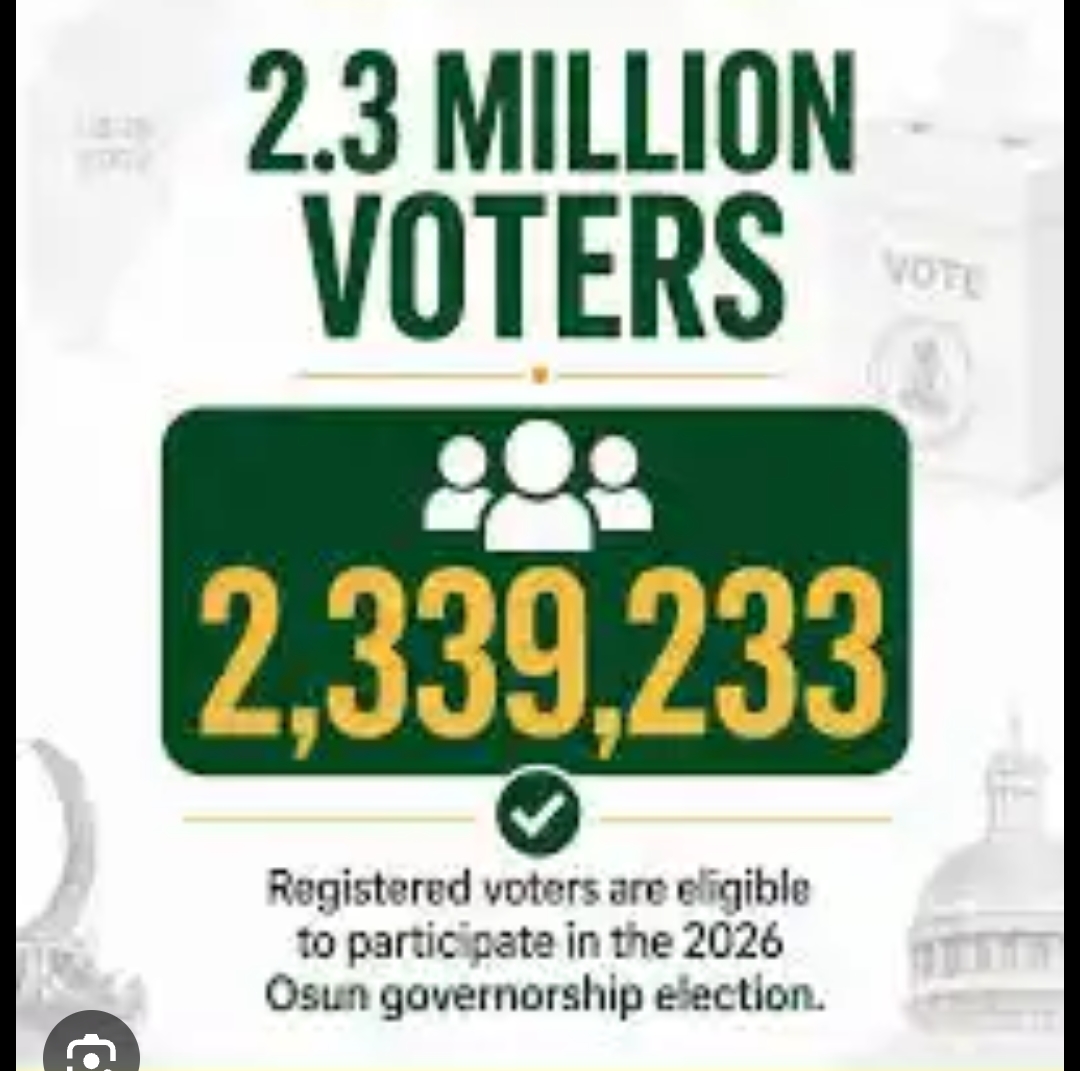
INEC’s final register contains 2,339,233 registered voters in Osun State.
The figure represents a substantial increase from the 1,954,800 voters recorded for the 2023 general elections, with the growth attributed largely to the 2025/2026 Continuous Voter Registration exercise and voter transfers.
The electorate is spread across the state’s 30 local government areas, 332 wards and 3,763 polling units.
The important distinction, however, is that registration is not the same as turnout.
The election will ultimately be decided by voters who actually appear at their polling units, are successfully accredited and cast their ballots.
That makes youth participation, women’s turnout, movement restrictions, security conditions and voters’ confidence in the process particularly important.
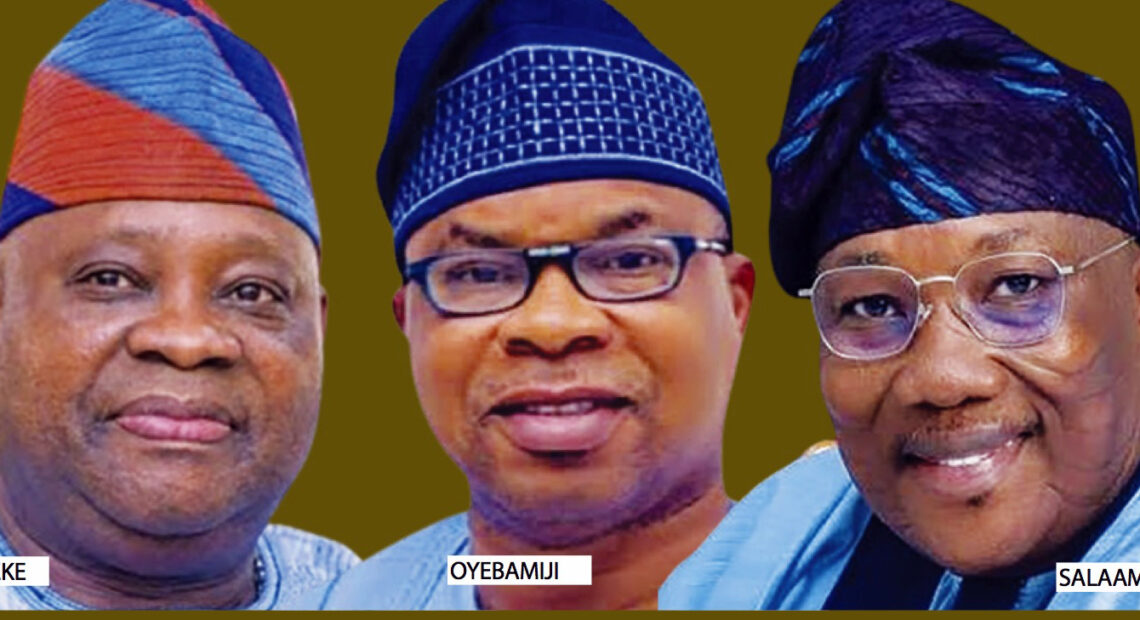
Governor Ademola Adeleke of the Accord Party is seeking another term in office.
The 2026 register also reflects a changing electorate, with young voters forming a significant portion of the voting population.
The Race Has Become a Three-Horse Contest
Although several political parties are participating, the political battle has largely narrowed to three leading candidates.
Governor Ademola Adeleke of the Accord Party is seeking another term in office. The incumbent enters the contest with the advantage of occupying the Government House, a recognisable political brand and a record that his campaign has presented as evidence of performance.
His strongest argument is continuity.
For Adeleke, Saturday is not simply an election but a referendum on his administration and his ability to convert incumbency and grassroots support into another electoral victory.
His opponents, however, are asking voters to look beyond political popularity and assess the administration on issues such as infrastructure, employment, economic opportunity, public services and governance.
Bola Oyebamiji, popularly known as AMBO, is the APC candidate.
The former commissioner is relying heavily on the organisational strength of the APC, its extensive grassroots structure and the support of influential political figures from the federal.
Oyebamiji has campaigned on economic development, agriculture, infrastructure and a more even distribution of government resources. He has also sought to convince voters that the APC’s national structure can provide stronger political coordination between Osun and the Federal Government.
Oyebamiji has campaigned on economic development, agriculture, infrastructure and a more even distribution of government resources.
The third major contender is Najeem Salaam of the African Democratic Congress (ADC), a former Speaker of the Osun State House of Assembly.
Salaam brings considerable political experience and an established network to the contest. His presence makes the election more difficult to reduce to a simple incumbent-versus-APC battle.
The outcome could therefore depend not only on who has the largest core support, but also on which candidate succeeds in attracting voters who are undecided or dissatisfied with the two dominant political camps.
Salaam brings considerable political experience and an established network to the contest.
The PDP and Labour Party Absence Changes the Political Equation
One of the unusual features of this election is the absence of the Peoples Democratic Party and Labour Party as major contenders.
This is particularly significant because the PDP was the platform on which Adeleke won the 2022 election.
His movement to Accord has therefore fundamentally altered the traditional party calculations.
Rather than fighting under the same platform that delivered victory in 2022, Adeleke is seeking a second mandate under a different political identity.
That creates an important test: was Adeleke’s 2022 victory primarily about the PDP, or about Adeleke himself?
Saturday’s result will provide one of the clearest answers.
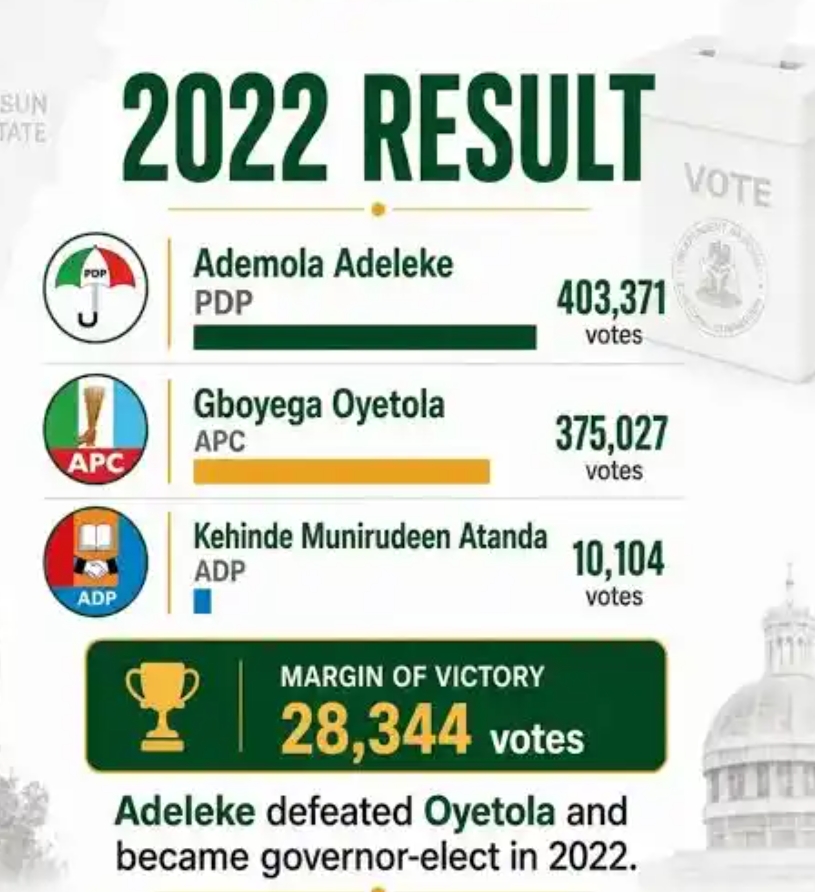
What Happened in 2022?
The 2022 election remains the most important political reference point for understanding Saturday’s contest.
Adeleke, then the PDP candidate, defeated the incumbent APC governor, Gboyega Oyetola.
The PDP won 17 of the state’s 30 local government areas, while the APC secured 13.
Adeleke’s victories included Ede North, Ede South, Ifelodun, Boluwaduro, Egbedore, Odo-Otin, Osogbo, Ila, Atakunmosa West, Olorunda, Ilesa West, Obokun, Oriade, Orolu, Ife North, Irepodun and Ejigbo.
The APC prevailed in Boripe, Ilesa East, Ayedire, Ifedayo, Ife Central, Ayedaade, Iwo, Ola-Oluwa, Isokan, Atakunmosa East, Irewole, Ife South and Ife East.
Adeleke eventually polled about 403,000 votes, against Oyetola’s roughly 375,000, in an election that generated considerable legal controversy.
But 2026 is not 2022.
The political parties have changed. Alliances have shifted. New voters have entered the register. Adeleke is no longer running as the PDP candidate, while the APC has presented a new candidate.
The old electoral map may therefore provide clues, but it cannot automatically predict Saturday’s result.
The Real Battlefield: The Polling Unit
The most important political arena on Saturday will not be the campaign podium.
It will be the 3,763 polling units.
This is where political promises become votes.
It is also where concerns about voter intimidation, vote buying, malfunctioning technology, late arrival of materials, accreditation problems and interference by political actors could affect the process.
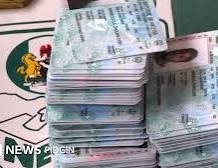
Permanent Voter’s Cards
INEC has emphasised the use of the Bimodal Voter Accreditation System (BVAS) and electronic transmission of polling-unit results through the IReV platform. The commission has said its technological systems are intended to strengthen accreditation and improve transparency in results management.
For voters, the practical message is simple: arrive at the correct polling unit, follow the instructions of election officials and protect the secrecy of the ballot.
For party agents, observers and journalists, the responsibility is equally significant: document irregularities properly, avoid confrontation and use established complaint and collation procedures.
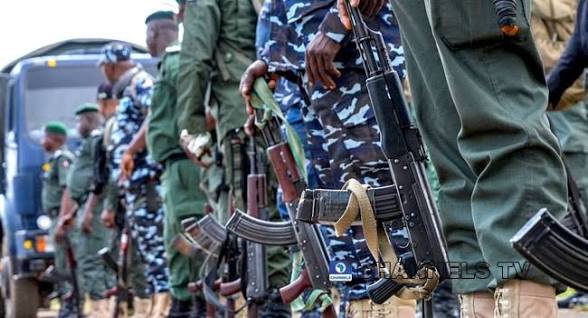
Security Becomes the Biggest Test
If there is one issue capable of overshadowing every political calculation, it is security.
The period leading to the election has been marked by concerns over political violence and clashes involving supporters of rival political interests.
Earlier in the campaign season, the police were forced to suspend planned political activities in Oriade Local Government Area after receiving intelligence about possible security threats.
Political parties and civil society groups have also raised concerns about electoral integrity and violence ahead of the poll.
Security on Saturday must not only be visible; it must also be neutral, professional and confidence-building.
Now, as the election approaches, security agencies have intensified joint patrols across the state.
The operation is designed to secure strategic locations, major roads, critical infrastructure and identified flashpoints while protecting voters, electoral officials, election materials and observers.
The intensified patrols are particularly important because fear can suppress turnout just as effectively as physical violence.
A voter who believes a polling unit is unsafe may simply stay at home.
That is why security on Saturday must not only be visible; it must also be neutral, professional and confidence-building.
Security personnel must protect voters without being perceived as instruments of political intimidation.
The Danger After Voting
Another crucial moment will come after the ballots are cast.
Historically, election-related tension often increases during counting, collation and the announcement of results.
This is where political parties and their supporters will be tested.
A candidate who believes the process has been compromised has legal avenues to challenge the outcome. What must be avoided is the temptation to replace legal procedures with street confrontation.
The integrity of the election will therefore depend on three connected stages:
voting, counting and acceptance of legitimate results.
An election cannot be described as peaceful merely because voters cast their ballots without violence. The credibility of the process must survive the entire journey to the declaration.
Why IReV and Results Transmission Matter
One of the most closely watched aspects of Saturday’s election will be the electronic transmission of results.
INEC’s experience with Osun in 2022 demonstrated that the state can successfully transmit polling-unit results electronically. INEC’s own election-management documentation records that all 3,763 polling units in the 2022 Osun governorship election uploaded results to IReV.
The technology, however, is not a substitute for vigilance.
This time, voters and observers will again be watching to see whether the technology works smoothly.
The technology, however, is not a substitute for vigilance.
A result uploaded from a polling unit must correspond with the result recorded and signed at that polling unit.
That is why party agents, observers and citizens have a crucial role in monitoring the process.
The Election Could Be Won on Turnout
The biggest unknown is not necessarily which candidate has the strongest campaign.
It is who can get supporters to the polling units.
Osun has a large electorate, but previous elections demonstrate that registered voters do not automatically translate into ballots cast.
This means a candidate with an apparently enormous support base could still lose if supporters fail to turn out.
Weather, transportation, security fears, voter fatigue, political disillusionment and confidence in the electoral process can all influence turnout.
The final result could therefore be determined by a relatively small proportion of the registered electorate.
Women and Young Voters Could Be Decisive
The expanded voter register has added another layer to the contest.
Women account for more than half of registered voters, while young people constitute a substantial share of the electorate.
This demographic reality makes young voters and women more than a campaign slogan.
They represent a potentially decisive voting bloc.
The candidate capable of converting online popularity, campaign enthusiasm and grassroots mobilisation into actual polling-unit turnout could gain a significant advantage.
What Voters Should Expect on Saturday
Voters should expect a process in which accreditation and voting are conducted at designated polling units, with election officials responsible for maintaining order and party agents monitoring the exercise.
The safest approach for voters is to:
- Confirm their polling unit before election day.
- Arrive early.
- Follow INEC officials’ instructions.
- Avoid confrontations with supporters of other parties.
- Keep their ballot choice private.
- Report suspected irregularities through lawful channels.
- Leave the polling area peacefully after voting where instructed.
Most importantly, voters should remember that a political argument is never worth risking a life.
Osun is the last major off-cycle governorship election before the 2027 general elections. Its outcome will therefore be closely studied by political parties across Nigeria.
In that sense, Osun is not merely choosing a governor.
It is becoming a political laboratory for incumbency, defections, opposition realignment, grassroots mobilisation and the changing behaviour of Nigerian voters ahead of 2027.
The Final 12 Hours
As Osun enters the final hours before polling begins, the political noise is gradually giving way to anticipation.
The candidates have made their promises.
The parties have mobilised their supporters.
INEC says its preparations are complete, while security agencies have increased their presence across the state.
Now the decision belongs to the voters.
The central question is no longer who held the biggest rally, who attracted the loudest crowd or who received the most endorsements.
It is who can translate political support into legitimate votes — and whose votes can survive the entire electoral process.
By this time tomorrow, Osun will begin to tell its story through the ballot.
The real winner, however, must be the voter whose choice is freely made, accurately counted and peacefully respected.
Read Also: Five Days to 2027 Campaigns: How Prepared Are Nigerians for the Battle Ahead?
Author

Sign up for The Insight Newsletter
Get in-depth, research and data-based interpretative reports from around Nigeria.