
‘Why the family commissioned this book of Brigadier Musa Usman’
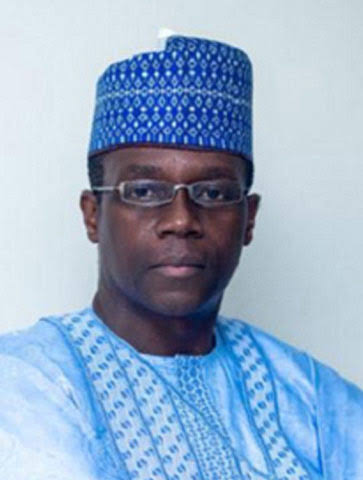
An address by Hassan Musa Usman, FCA, at the launch of the book: Brigadier Musa Usman (1940-1991): Service & Impact, on Monday, 14th September 2026 at the NAF Conference Center and Suites, Kado, Abuja
Bismillahi Rahmanir Rahim.
Your Excellencies, Your Royal Highnesses, distinguished guests — all protocols duly observed.
We give thanks to Almighty Allah SWT, who has made this day possible. We thank each and every one of you here today for taking the time from your busy schedules to honour our father. In particular, we express our deepest appreciation to His Excellency, Vice President Kashim Shettima, represented by Dr Aliyu Modibbo; to His Excellency Governor Babagana Zulum; to His Royal Highness the Shehu of Borno, Alhaji Abubakar Ibn Umar Garbai El-Kanemi and his delegation, in whose domain our father once served and whose forebears he held in the deepest respect; His Royal Highness the Ejeh of Ankpa, Alhaji Abubakar Sadiq Ahmed Yakubu II, and all our Royal Highnesses here present; Major General I.B.M. Haruna, Brigadier Musa Usman’s childhood friend, school mate, course mate, and lifelong friend; Major General (Senator) Ike Nwachukwu; Ambassador Babagana Kingibe; and Ambassador Usman Sarki, for their support and encouragement in making this day a reality. Thank you very much.
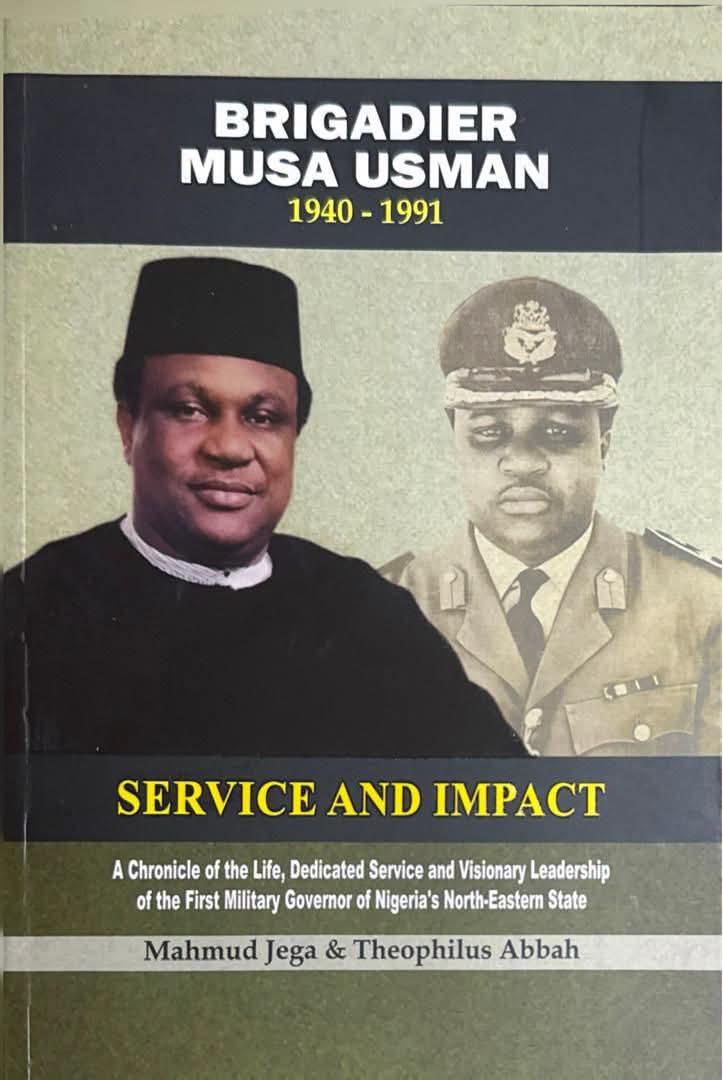
We wrote this book to document not just Musa Usman’s career, but also his vision and his legacy.
On behalf of the Musa Usman family, I must also acknowledge three men whose influence shaped our father profoundly: General (Dr) Yakubu Gowon, who entrusted him with the governorship at a very young age; Brigadier Zakariya Maimalari; and Colonel Kur Mohammed, his superiors and mentors, who were tragically killed in the January 1966 coup. Their imprint on his life runs through every page of this book.
This gathering — this assemblage of personalities — is itself a tribute. The idea for this book came from our mother, Hajiya Chioma Jummai Usman, who felt it was important to document Brigadier Musa Usman’s life.
This book was her idea. She was ably assisted in that effort by our late sister, Hajiya Ramatu Ali, whose commitment and indefatigable efforts made this book possible — and who passed on just a year ago, before she could hold the finished book in her hands. We complete her work today, in her honour, and in his.
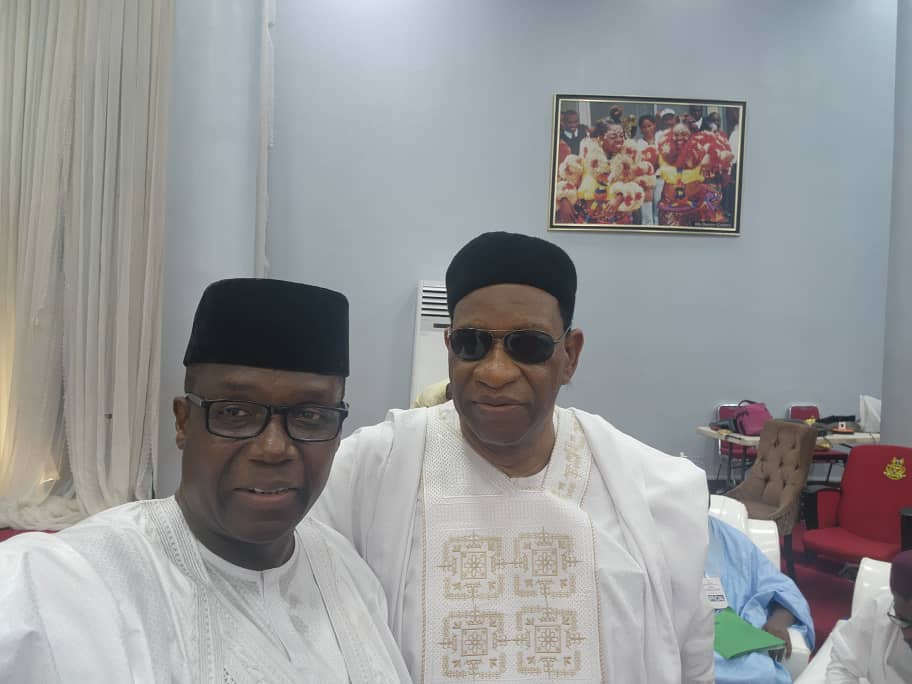
Hassan Musa Usman with Col Maimalari (rtd)
We wrote this book to document not just Musa Usman’s career, but also his vision and his legacy. And that legacy is remarkable at the best of times — but more so when you consider his age and his experience at the time he became a governor. He set out to be a soldier, not a statesman. Yet at the age of 27, he found himself Governor of the North Eastern State — the largest sub-national landmass in the country — for eight years, learning on the job, holding together six states, with immense diversity, inhabited by over 100 ethnic nationalities, and forging them into unity.
Brigadier Musa Usman was a pioneer who exhibited leadership qualities long before he was a governor: he was the first Boy Sergeant Major, or Head Boy, of the Nigerian Military School, Zaria; the first base commander in the history of the Nigerian Air Force, when he commanded the Air Force base in Kaduna — at the time, the only Air Force base in the country; and part of the first
set of officers Nigeria sent on a UN peacekeeping mission, when Nigerian troops deployed to the Congo at the height of its crisis in 1962.
Musa Usman was a visionary. He built schools — amongst others, the North East College of Arts and Science, founded in 1974, which became the University of Maiduguri in 1976, and Ramat Polytechnic, originally established as the Government Technical College in 1973.
He built hospitals — the Maiduguri specialist hospital his administration started in 1974, which grew into the University of Maiduguri Teaching Hospital, and fourteen General Hospitals developed across all six states of the region between 1967 and 1975.
He built industry — the Savannah Sugar Company in Numan, Adamawa State, later acquired by the Dangote Group; the Nguru Oil Mills in Yobe State, established in 1971; Ashaka Cement in Gombe State, conceived in 1974; the NEITAL shoe factory in Maiduguri; and the Bauchi Meat Company, first conceived by Sir Abubakar Tafawa Balewa in 1964 and brought into operation by his government in 1968.
Read Also: Service & Impact of Brigadier Musa Usman: A Book Revıew
He built for tomorrow — tea plantations on the Mambilla Plateau, developed in partnership with the Kenyan government; Sanda Kyarimi Park in Maiduguri; the expansion of the Yankari game reserve and its tourist chalets; and cultural and student exchanges with the Midwestern and East Central State Governments — present-day Edo, Delta, and the South Eastern states — forged with Brigadier Samuel Ogbemudia and Mr Ukpabi Asika in the difficult years after the civil war.
But beyond the office, he was a man of deep friendships — his closest friends included the late Brigadier Mobolaji Johnson; the late Major John Obienu, whose son Ike became his godson; his best man at his wedding, the late Major General John Obada; and his virtual twin, Brigadier Abba Kyari, whom he met as a child in the early 1950s, and remained close to until his death. Rank could make him a commander. It was his humanity that made him a friend to so many, for so long.
He was shaped by the Northeast, the North Central, the Northwest, and the Southeast alike. Perhaps that is no accident. A man shaped by every corner of this country was always going to be the right man to govern one of its most diverse states.
After office, he rebuilt his life from scratch through the support of family and the generosity of friends and became a businessman – establishing a Peugeot car dealership, a construction company, and an aviation logistics business alongside Brigadier Abba Kyari.
Today marks exactly thirty-five years since he passed on. And yet, fifty years since he left office, you are all here. That, more than anything we could write, is the truest measure of his impact. This assemblage of personalities that opened today’s programme is itself the final chapter of his story — proof, thirty-five years on, that the man endures.
Then which of the favours of your Lord will you both deny?
In keeping with the spirit of everything he built, the Musa Usman family has decided that all proceeds from the sale of this book will be donated to the Musa Usman Foundation, now being established to support the education of indigent students. It is fitting: the same commitment that built NECAS, Ramat Polytechnic, and schools across the region will now open doors for children who could not otherwise afford one.
To everyone who contributed articles, interviews, and memories to this book, and to its authors, Mahmud Jega and Dr. Theophilus Abbah — our deepest thanks. May Allah SWT reward you all immensely. We also express a special thank you to the late Wazirin Fika, Alhaji Adamu Fika for his consistent counsel and insistence that Musa Usman’s legacy must be documented, and his frequent articles in the media extolling Musa Usman’s achievements, especially the establishment of the School of Basic Studies in Zaria. May Allah swt grant him aljannah Firdaus.
Fabi ayyi ala’i Rabbikuma tukadhdhiban.
“Then which of the favours of your Lord will you both deny?”
Hassan Musa Usman, FCA
For and on behalf of the Musa Usman Family
Read Also: Two words defined the life of Brigadier Musa Usman, says Senator (General) Ike Nwachukwu
Author

Sign up for The Insight Newsletter
Get in-depth, research and data-based interpretative reports from around Nigeria.