
Service & Impact of Brigadier Musa Usman: A Book Revıew
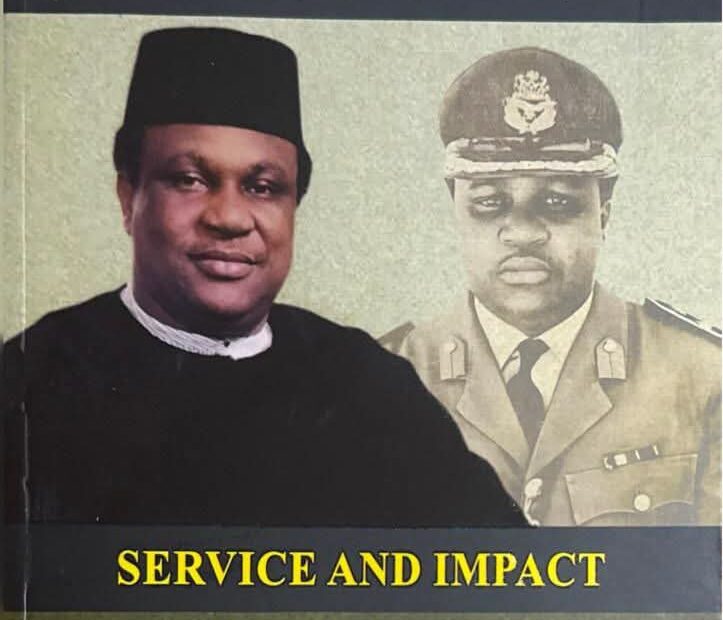
Tıtle: Brıgadıer Musa Usman (1940 – 1991) Servıce and Impact (A chronicle of the Lıfe, Dedıcated Servıce and Vısıonary Leadershıp of the Fırst Mılıtary Governor of Nıgerıa’s North Eastern State)
Authors: Mahmoud Jega & Theophılus Abbah
Publıshers: Madol Press Limited
Reviewer: Abubakar Sıddıque Mohammed
Centre for Democratıc Development Research and Traınıng
Zango – Shanu, Zaria
Introduction
When Lt. Colonel Maimalari first called to ask me to review this book, I readily agreed. On several occasions when we had met in Kano, our conversations had centred on Nigeria—particularly the major events of the military era and the imperative of documenting how far our country has come, the challenges it has encountered, and the contributions of individuals who, at critical moments in our history, helped to shape its trajectory.
I also understood his interest and passion for a project lıke thıs, given his family background. He is the son of one of the most illustrious sons of this country and a gallant military officer who was murdered in cold blood by misguided officers in the January 1966 coup that overthrew Nigeria’s first democratically elected post-independence government. That coup plunged the country into a profound political and constitutional crisis and set in motion events that would fundamentally alter the course of Nigerian history. Lt. Colonel Maimalari himself subsequently served as the last military governor of Jigawa State. He has also documented the life and service of his distinguished military officer father. His interest in this project is therefore not simply an academic exercise; it is also an engagement with a history to which his family has been intimately connected.
My interest in the subject was not merely prompted by the request to review the book.
Following our discussion, Hassan Tanımu Musa Usman, the son of the late Brigadier also called to make the same request. I told him that such a book was long overdue. My interest in the subject was not merely prompted by the request to review the book. I had, in a sense, encountered the legacy of the political and administrative order established in the former Northern Region and, more specifically, the former North-Eastern State Brigadier Musa Usman.
I was a member of the Okurounmu Committee constituted to collate the views of Nigerians on the modalities for organising a national conference, which the Jonathan administration eventually decided to convene after an earlier hesitation on the issue. As part of our assignment, the Committee undertook a tour of the country to conduct public hearings and receive memoranda from groups and communities across the federation.
Our visit to Maiduguri and Bauchi was particularly significant. Both cities were in the former North Eastern State, which was governed by Brigadier Musa Usman from 1967 until 1975. It was during those public hearings that I came to appreciate, more closely, the quality of leadership and the enduring significance of the administration of the late Brigadier Musa Usman.
The sessions in the Northeast provided a stark reminder of both the complexity and the extraordinary diversity of Nigeria. The time allocated to the region proved grossly inadequate to accommodate the number of groups that wished to make oral presentations. They kept coming. In Bauchi, after many hours of proceedings, we were advised by the security agencies to bring the sitting to an end because, even after about twenty-one hours, we had not heard from half of the groups waiting to present their views. We eventually had to collect their written submissions for the Committee’s consideration.
That experience brought home to me, in a very practical way, the enormous challenge of governing a territory as vast and diverse as the former North-Eastern State. It also made me reflect more deeply on the leadership of Brigadier Musa Usman. The relative tranquility and social cohesion that characterised much of the former North-Eastern State during his tenure assumed greater significance when contrasted with the ethnic tensions and communal conflicts that emerged in neighbouring areas, particularly in the former Benue-Plateau State.
The contrast was striking. The two areas shared borders, peoples, economic interests and many of the complexities associated with Nigeria’s extraordinary ethnic and cultural diversity. Yet their political and social trajectories were markedly different. The experience compelled me to ask an important question: what did Brigadier Musa Usman and the administration he led do differently?
It is this question, among others, that makes this book important. The life of Brigadier Musa Usman should not be viewed merely as the biography of a military officer who happened to become the first Military Governor of the former North-Eastern State. His story provides an opportunity to examine an important but insufficiently explored period in Nigeria’s political and administrative history. It invites us to reflect on leadership, institution-building, inter-ethnic relations, regional development and the management of diversity at a particularly formative stage in the evolution of the Nigerian state.
The book is therefore timely. At a moment when questions of leadership, national cohesion, equitable development and the management of Nigeria’s diversity remain as urgent as ever, revisiting the career and legacy of Brigadier Musa Usman offers an opportunity not merely to remember the past but also to interrogate what lessons it may hold for the present.
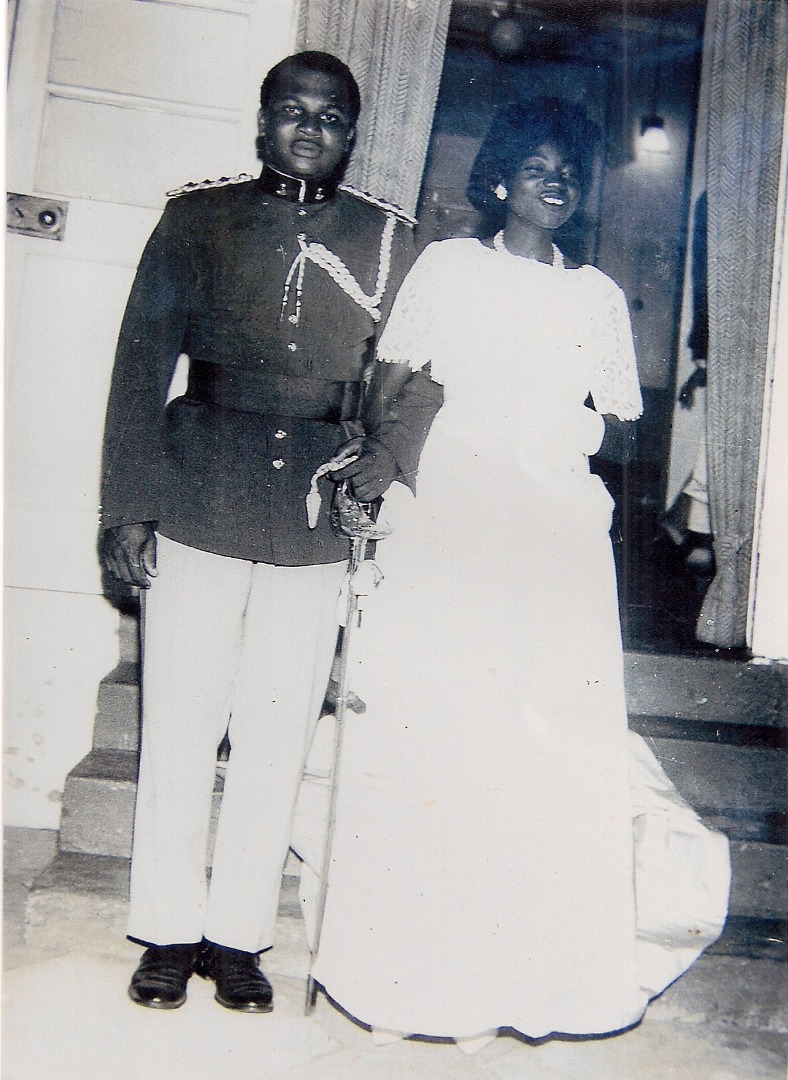
Brigadier Musa Usman and his wife Chioma
Few writers are better placed to undertake this work than Mahmud Jega and his journalist colleague, Theophilus Abbah. Jega brings to the task not only considerable journalistic experience but also an exceptional intellectual capacity and an unusually retentive memory. I have often referred to him as a “human encyclopaedia,” because of his remarkable ability to recall events, personalities and details that many others would have long forgotten. His widely read columns frequently draw upon this extraordinary reservoir of memory, moving effortlessly between major episodes in Nigeria’s political and social history and developments beyond the country. For me, his writings often have the additional quality of personal recollection: they evoke events and experiences that form part of my own engagement with Nigeria’s history. Even seemingly minor episodes rarely escape his attention. This quality of historical recall gives his contribution to this biography particular value.
The 363-page biography is structured into four distinct parts, each contributing differently to the reconstruction and interpretation of Brigadier Musa Usman’s life and public career. Part One, “Life and Times,” provides the biographical foundation, tracing the circumstances, experiences and formative influences that shaped his life. Part Two turns more directly to governance, examining his leadership, his exercise of political authority and the principal features of his administration. It is in this section that the reader encounters Brigadier Musa Usman not merely as an individual but as a political and administrative actor operating within the complex circumstances of post-independence Nigeria.
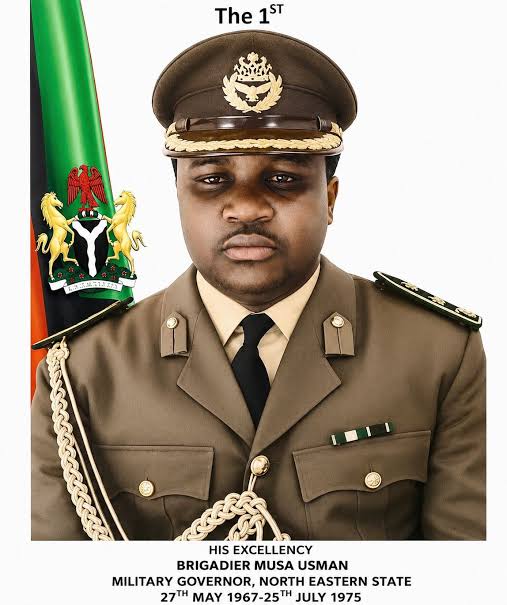
Brıgadıer Musa Usman (1940 – 1991). Credit: Online.
Part Three may appropriately be described as the book’s commemorative or hagiographical section. It brings together tributes, recollections and reflections from colleagues, friends, associates and members of his immediate and extended family. Such contributions inevitably contain an element of idealisation, particularly when written in memory of a deceased public figure. Nevertheless, they are valuable historical sources. Collectively, they illuminate the personal qualities, relationships, reputation and influence of Brigadier Musa Usman, while also revealing how he has been remembered by those who knew him most closely.
Part Four is, in some respects, the most significant section of the book. It effectively restores Brigadier Musa Usman’s own voice to the historical record. The section reproduces interviews he granted during his lifetime, thereby allowing the reader to engage directly with his views rather than encountering him exclusively through the recollections and interpretations of others. These interviews are particularly important because they provide insight into his intellectual outlook, his understanding of Nigeria’s political and developmental challenges, and, most importantly, his conception of the country’s future.
Chapter one: Ancestry and Early Life
This chapter traces the ancestry and early life of Brigadier Musa Usman, placing his formative years within the complex historical, cultural and social environment of northern Nigeria in the late colonial period.
Musa Usman’s father, Usman Kakagida, was the son of Musa Mohammed, who was himself the son of Mohammed Dewani, the Banu Sultan of Farsha. Musa Mohammed moved first from Farsha to Chikina and subsequently to Fort Lamy, present-day N’Djamena in Chad. These places were historically situated within, or closely connected to, the vast geographical and cultural sphere of the Kanem-Borno Empire, one of the great political formations of the Central Sudanic region. The empire encompassed a remarkable diversity of peoples, languages, landscapes, economic activities and cultural traditions.
Musa Mohammed eventually moved to Maiduguri, where he married Rakiya and settled in Shehuri Quarters. Although he had several children, only three survived to adulthood: Usman Kakagida, who later retired as a Warrant Officer; Hajiya Asta; and Lieutenant Baba Saleh, who also retired from military service. Usman Kakagida was therefore raised in Shehuri Quarters, Maiduguri, within a distinctly Kanuri cultural environment. By ancestry and upbringing, he belonged to the Kanuri world associated with the historic Kanem-Borno tradition, and Kanuri was his principal language.
Intermarriage among Hausa, Fulani and Igala families was not uncommon.
Usman Kakagida subsequently joined the colonial army as an infantry soldier in the Nigerian Regiment of the 1st Royal West African Frontier Force (WAFF). His military career began during the final years of colonial rule, when the British colonial administration recruited soldiers from across its West African territories for both local and overseas service. As a young recruit, Kakagida was posted to the military barracks at Ankpa. It was there that he met Hadiza Abdullahi, a young woman from nearby Ojoku, whom he married in 1938. Hadiza subsequently moved into the military barracks with her husband.
Their marriage was by no means unusual in the social environment of Ankpa at the time. The area had long been a meeting point for different ethnic, linguistic and religious communities, and intermarriage among Hausa, Fulani and Igala families was not uncommon. Ankpa had also attracted traders, Islamic scholars and migrants from places as far apart as Sokoto, Kano and Maiduguri. It had consequently developed a cosmopolitan character in which different cultural traditions interacted and, in many cases, became closely intertwined.
Hadiza Abdullahi was the daughter of Chief Abdullahi Ekelebaku, the Adokanya of Ojoku District. Through her father’s lineage, she belonged to an established Igala traditional family whose genealogy was traced to Onu Ankpa Atiyele, identified as a son of Attah Igala Idoko, traditionally regarded as the founder of Ankpa. Her marriage to Usman Kakagida thus brought together two distinct but historically interconnected cultural worlds: the Kanuri heritage of the Kanem-Borno region and the Igala traditions of the Ankpa-Ojoku area.
Following their marriage, the couple moved to Enugu, where Musa Usman was born on 3 February 1940. His birth coincided with one of the most turbulent periods in twentieth-century history. The Second World War had begun only months earlier, and the British Empire was mobilising its colonial territories and armed forces for the global conflict. Not long after Musa’s birth, his father was deployed by the British colonial administration to Burma with the West African Brigade, where African troops fought alongside British forces against the Japanese. His deployment was part of the wider mobilisation of soldiers from across the British Empire for service in the Second World War.
With her husband away at the war front, Hadiza returned with the infant Musa to her family’s home in Ojoku, where they lived under the care and protection of her father, Chief Abdullahi Ekelebaku. Musa’s earliest years were therefore spent largely in his mother’s ancestral environment, while his father was serving thousands of miles away in one of the most dangerous theatres of the war.
This circumstance gave Musa’s childhood an unusual historical setting. His early life was shaped simultaneously by the uncertainties of global war and by the stability of an extended
family and traditional community. His father was absent on military service; his mother assumed the immediate responsibility for his upbringing; and his maternal family provided the social, cultural and material environment in which he spent his formative years.
Ojoku consequently became an important part of Musa’s early socialisation. It exposed him from childhood to the traditions of his mother’s Igala community, while his paternal ancestry connected him to the wider Kanuri and Kanem-Borno heritage. His background was therefore neither culturally nor geographically confined to a single community. It was formed at the intersection of two historical traditions and within a society characterised by considerable movement, interaction and intermarriage.
These formative circumstances are significant in understanding the life that Musa Usman would subsequently lead. His childhood was marked by military service through his father’s experience, traditional authority through his maternal family, and the cultural diversity of the communities in which his parents lived. Although it would be too simplistic to attribute his later character and career directly to these childhood experiences, they constituted the social and historical foundations upon which his personality, outlook and eventual military vocation developed.
Chapter Two: Early Education
Usman Kakagida returned from the war alive and was reunited with his seven-year-old son, Musa. After spending a few days with his in-laws in Ojoku, he returned with his family to Makola, Ibadan, where the 4th Battalion was based. The reunion brought Musa back into the military environment that would shape his early life and, ultimately, his career.
In 1947, Usman enrolled Musa in the primary school within the barracks, now known as Commander Children School. Musa studied there from Primary One to Primary Four, until 1950. He subsequently attended Goodwill Primary School, Makola; St. Michael’s Primary School; and Army Barracks Primary School, all in Ibadan.
At the same time, his father was undergoing training at the Oyo Native Administration Farm School, established in 1947 to prepare returning veterans and their wives for civilian life. The colonial administration had chosen not to absorb African ex-servicemen into the post-war British Army establishment. Veterans were instead encouraged to return to civilian life, often relying on newly acquired agricultural and vocational skills.
Musa was admitted into the Boys Company, where he was recorded as Serial No. 16 in the first platoon intake and assigned the regimental number NA/1818151026.
Usman Kakagida chose a different path. After leaving the West African Frontier Force (WAFF), he reapplied for military service in the emerging Royal Nigerian Army. He was enlisted and posted to the Nigeria Regiment Training Centre (NRTC) at Chindits Barracks, Zaria. Musa moved with him and continued his education at the Army School in the barracks.
At Zaria, Musa also developed a reputation as a talented footballer. His ability on the field brought him to the attention of an officer whose intervention would alter the course of his life.
Enter Lieutenant Maimalari
One evening in 1953, Second Lieutenant Zakariya Maimalari visited the football pitch at the Nigeria Regiment Training Centre, Zaria. Maimalari was part of the group of officers involved in developing the emerging Nigerian military establishment. He was also responsible for the selection of boys for the first intake of the Boys Company, a junior military institution modelled on the British Army tradition.
On the pitch, Maimalari noticed thirteen-year-old Musa Usman. Impressed by his footballing ability, particularly his skill and confidence in dribbling past opponents, he encouraged Musa to sit for the entrance examination to the Boys Company.
Musa excelled in the examination. His performance attracted the attention of Maimalari and other senior officers, including George Kurubo and Major Greenley, then Commandant of the Military School, Zaria.
From the Boys Company to Sandhurst and the Congo
In 1954, Musa was admitted into the Boys Company, where he was recorded as Serial No. 16 in the first platoon intake and assigned the regimental number NA/1818151026. He entered the institution as a “boy soldier,” beginning a military education that would eventually lead him to the highest levels of command in the Nigerian Army. Among his platoon mates were Ibrahim (Bata Malgwi) Haruna, Emmanuel Ikuwe, Godwin Ally, Abubakar Dangaji and Isa Bukar, among others.
The Boys Company subsequently evolved into the Nigerian Military School (NMS), with an expanded syllabus modelled partly on the British military educational tradition. What had originally been established primarily as a training institution for junior soldiers gradually developed into an institution combining military instruction with formal academic education.
According to General Haruna, members of Musa’s cohort sat for the Overseas Armed Forces General Certificate of Education (OAFGCE). Because they were not regarded strictly as
secondary-school students, they also sat for the General Certificate of Education (GCE). Musa distinguished himself academically and graduated with distinction. His performance and leadership qualities were already sufficiently evident that, at the passing-out parade in 1958, he was selected to command the parade—a significant honour for a young military trainee.
From the NMS, Musa proceeded to the Regular Officers ’Special Training School (ROSTS), Teshie, Ghana, as a potential officer cadet for the Royal Military Academy Sandhurst in Britain. Teshie was an important preparatory institution in the military training systems of the newly independent West African states. A number of officers trained there would later occupy prominent military and political positions in Ghana and elsewhere in the region.
Following his training at Teshie, Musa proceeded to Sandhurst, where he completed his officer cadet training. On 12 December 1961, he received his Regular Combatant Commission in the Royal Nigerian Army as a Second Lieutenant, with Service Number N222. He was posted to the 5th Battalion in Kaduna, then regarded as one of the Nigerian Army’s elite formations.
Musa had barely settled into his new assignment when he was deployed to the Democratic Republic of the Congo, then in the throes of a violent and complicated post-independence crisis. He was among 86 Nigerian soldiers sent on a United Nations peacekeeping mission to the Congo.
The situation confronting the young officer was extraordinarily complex. Political parties and factions were locked in intense struggles for power, while the Congolese army itself became fragmented along political and regional lines. The Katanga secession, military mutinies and coups, foreign intervention, political assassinations and the struggle over the country’s enormous mineral resources combined to produce one of the most turbulent episodes in post colonial African history.
At the centre of the crisis was the fate of Patrice Lumumba, the Congo’s first Prime Minister and one of the most prominent symbols of African nationalism. Lumumba served as Prime Minister from June to September 1960 before being removed from office amid the rapidly escalating crisis. He was subsequently arrested and, in January 1961, brutally assassinated in Katanga.
The circumstances surrounding Lumumba’s death were inseparable from the wider Cold War and the competing interests of Belgium and other external powers in the Congo. Belgian political and economic interests remained deeply entrenched after independence, while Lumumba’s uncompromising nationalism and his attempts to preserve the territorial integrity of the Congo brought him into conflict with powerful domestic and foreign actors. The involvement of Belgian
officials and other external actors in the events surrounding his assassination has since become one of the most contested and consequential episodes in the history of decolonisation.
Combo photo of Nigerian Army personnel on parade and the logo of the Nigerian Military School for demonstration purposes.
It was into this volatile environment that the young Second Lieutenant Musa Usman entered as a peacekeeper. His Congo experience would expose him at an early stage of his career to the realities of military intervention, political instability, fractured armed forces and the difficult relationship between military power and national sovereignty. These experiences would later form an important part of the professional and historical context in which his subsequent career unfolded.
From the Army to the Nigerian Air Force
When Musa returned from the Congo in 1962, he was posted to Apapa. The following year, he was promoted to the rank of Captain and transferred to the 5th Battalion in Kaduna. There, he began to assume increasing administrative responsibilities, assisting the Commanding Officer with human-resource management and other aspects of unit administration.
In 1964, the 5th Battalion, under Lieutenant Colonel Odumegwu Ojukwu, was moved to Kano. Ojukwu would later emerge as the leader of the unsuccessful secessionist bid that resulted in the creation of Biafra and the Nigerian Civil War.
Musa was promoted to the rank of Major in 1965. Shortly afterwards, he was transferred from the Army to the newly established Nigerian Air Force and appointed Commandant of the Nigerian Air Force Base in Kaduna. His posting to the Air Force marked an important turning point in his military career and placed him in an institution that was still in the early stages of development.
The Nigerian Air Force had been established in 1964 and was the youngest of Nigeria’s armed services. Its officer corps was small, and the institution was still heavily dependent on foreign assistance, particularly from German military personnel who were involved in training and developing its early cadres. The situation was further complicated by the loss and disruption of military personnel following the coup of 15 January 1966.
I moved Musa and a few others from the Army to the Air Force to build the Air Force leadership command.
It was against this background that Major Usman’s role became particularly significant. General Yakubu Gowon later recalled that he had deliberately moved experienced Army officers, including Musa, into the Air Force to help establish a credible leadership structure. In Gowon’s words:
“I moved Musa and a few others from the Army to the Air Force to build the Air Force leadership command.”
Musa was therefore not simply transferred to another service; he was being entrusted with the task of helping to consolidate an institution that was still finding its organisational and professional identity.
Discipline was one of the principal challenges confronting the young Air Force. According to General Abdulsalami Abubakar, the service had initially relied heavily on German instructors, who had observed shortcomings in the discipline and military bearing of some of the Nigerian personnel undergoing training. The Germans sought to maintain rigorous standards, but their position was complicated by the sensitivities surrounding the conduct of foreign personnel in a newly independent country. They were conscious of the danger of being perceived as excessively harsh or, worse, as imposing discriminatory standards on Nigerian trainees.
Major Usman consequently occupied an important intermediary position. As a Nigerian officer with experience in the Army, he could enforce military discipline while operating within the institutional framework established by the German instructors. His presence gave the disciplinary system greater legitimacy and helped bridge the gap between the foreign trainers and Nigerian personnel.
General Abdulsalami Abubakar recalled this aspect of Musa’s leadership from personal experience. He remembered being punished after a report reached Major Usman that he had been absent from his assigned duty post one night. The punishment included several days in detention and an additional week of duty. For Abdulsalami, the episode illustrated Musa’s uncompromising approach to military discipline.
Musa’s intervention appears to have had a wider institutional effect. His reputation for firmness and professional discipline gave the German instructors greater confidence to enforce the standards expected of military personnel. In this sense, he became an important stabilising influence in the formative years of the Nigerian Air Force.
His assignment to the Air Force also demonstrated the confidence that the emerging military leadership placed in him. At a time when Nigeria was attempting to transform a newly created service into a disciplined and professionally credible institution, Musa brought to the task the experience, authority and organisational discipline he had acquired in the Army. His contribution was therefore part of the broader process through which the Nigerian Air Force began to develop its own command culture and professional identity.
Chapter Three: Marriage and Family Life
A Meeting That Changed Two Lives
It was, in many respects, a case of love at first sight. In 1962, a young, handsome and brilliant army officer, recently returned from peacekeeping operations, met an equally charming, beautiful and purposeful young woman at a social gathering in Lagos. She had been invited to the occasion by her journalist brother. Neither could have known that the encounter would mark the beginning of a relationship that would endure for nearly three decades.
Their backgrounds were themselves a reflection of Nigeria’s remarkable cultural diversity. Musa was born of a Kanuri father and an Igala mother. Chioma, on the other hand, was the daughter of an Igbo father and Fatima Binta Saulawa, a Hausa-Fulani Muslim woman from Katsına. Saulawa Quarters is a historically significant traditional neighborhood located within the Katsına tradıtıonal cıty, part of Wakilin Gabas Ward. Their union therefore brought together not only two individuals but also several of Nigeria’s major ethnic and cultural traditions.
From their first meeting in Lagos in 1962, Musa and Chioma remained closely attached to one another. Their relationship deepened over the following years and culminated in marriage in 1965, just months before Nigeria’s first military coup. They remained together through the political upheavals, personal trials and demanding responsibilities that followed, until Brigadier Musa Usman’s death in 1991.
Their marriage was extraordinary not simply because of the affection that bound them together, but because of the historical circumstances in which it unfolded. They met and married at a time when Nigeria was entering one of the most turbulent periods in its political history. The country was increasingly marked by fierce political rivalries, regional competition and growing ethnic mistrust. The military coups, civil war and subsequent political crises would test the bonds that held the country together.
Musa and Chioma chose love over prejudice and companionship over the divisions.
Against this background, the marriage of Musa and Chioma acquired a significance beyond their private lives. It represented, in a deeply personal way, the possibility of a different Nigeria—one in which individuals could look beyond ethnic and regional identities and build relationships based on affection, mutual respect and a shared sense of destiny.
Musa and Chioma chose love over prejudice and companionship over the divisions that increasingly characterised public life. Their marriage demonstrated that Nigeria’s diversity need not be a source
of permanent antagonism. It could also provide the foundation for understanding, accommodation and national cohesion.
At a time when inter-ethnic marriages were less common and often required considerable courage, their decision to marry across ethnic and religious boundaries carried a quiet but powerful message. It showed that the barriers imposed by ethnicity, region and, to some extent, religion were not insurmountable. Personal relationships could transcend the categories through which Nigerians were increasingly being defined.
Their union therefore reflected a broader ideal of Nigerian nationhood: that the country’s different peoples could live together, form families together and share a common destiny without surrendering their distinct identities. In this sense, the story of Musa and Chioma was not merely a story of romance. It was also a small but meaningful expression of the Nigeria that many ordinary citizens were quietly building—often ahead of the politicians and institutions that claimed to speak in its name.
Their marriage endured from 1965 until Musa’s death in 1991, spanning some of the most consequential years in Nigeria’s post-independence history. Its story offers a reminder that, even in periods of profound national division, Nigerians were capable of forging bonds that transcended the very boundaries that threatened to tear the country apart.
Chapter Four: The January 15 Storm
Only a few months after the marriage of Major Musa Usman and Chioma Jummai Usman, Nigeria was plunged into the turmoil of its first military coup. On 15 January 1966, a group of young army officers attempted to overthrow the country’s civilian government. The events that followed not only transformed Nigeria’s political history but also cast a long shadow over the personal lives and careers of many officers, including Major Musa Usman.For Musa, the coup was both a national catastrophe and a deeply personal tragedy.
The political crisis that culminated in the coup came at precisely the moment when he and his young wife were beginning to establish a household that, in its own modest way, embodied the possibility of a Nigeria that could transcend ethnic and regional divisions. Their marriage had brought together two different backgrounds and symbolised the kind of national integration that the country desperately needed. The events of January 1966 abruptly introduced a darker reality.
Among the earliest victims was Brigadier Zakariya Maimalari, the officer who had discovered Musa as a young man playing football on a field in Zaria and had helped set him on the path to a military career. Thirteen years later, the same officer was brutally murdered in Lagos by Major Emmanuel Ifeajuna and other coup plotters. For Musa, the killing of Maimalari was not simply the death of a senior officer; it was the loss of a mentor whose intervention had profoundly influenced his life.
Other officers who had played important roles in Musa’s life and wedding only months earlier were also killed. Colonel Kur Mohammed and Lieutenant Colonel Arthur Unegbu, both of whom had been closely associated with the wedding, were among the senior officers murdered during the coup.
What might have been presented by the plotters as a national revolution was increasingly perceived by many Northern officers as a selective assault.
The political casualties were equally devastating. Prime Minister Sir Abubakar Tafawa Balewa was killed, as was Sir Ahmadu Bello, the Sardauna of Sokoto and Premier of Northern Nigeria. In the Western Region, Premier Chief Samuel Ladoke Akintola was murdered. Chief Festus Okotie-Eboh, the Federal Minister of Finance, was also killed.
The military leadership suffered an equally devastating blow. Among those murdered were Brigadier Samuel Ademulegun, Commander of the First Brigade; Brigadier Zakariya Maimalari, Commander of the Second Brigade; Colonel Abogo Largema, Commanding Officer of the Fourth Battalion; Lieutenant Colonel Yakubu Pam, Adjutant-General at Army Headquarters; and Lieutenant Colonel Arthur Unegbu, the Quartermaster-General. The scale and pattern of the killings would profoundly affect the political interpretation of the coup and the subsequent course of Nigerian history.
The coup was, in many respects, a spectacular failure of intelligence, political judgement and military leadership. Rumours and whispers of an impending military intervention had circulated within military circles for some time. The political crisis in the Western Region, the controversy surrounding the federal elections, allegations of corruption and the increasingly bitter rivalry among Nigeria’s political leaders had created an atmosphere in which many believed that military intervention was imminent.
Yet the authorities failed to anticipate the scale and character of the intervention. More significantly, the coup exposed and deepened existing ethnic, regional and institutional tensions within the Nigerian Army.
As the authors of this biography observe, the Army was already divided by tribal, ethnic and religious sentiments. The killing of the highest-ranking military officer from the North—a Kanuri officer, Brigadier Maimalari—by an Igbo officer acting in the name of a revolution inevitably generated dangerous interpretations of the events. What might have been presented by the plotters as a national revolution was increasingly perceived by many Northern officers as a selective assault on the political and military leadership of the North.
Major Musa Usman was in Lagos on official duty when the coup occurred. Because of his close relationship with the murdered Brigadier Maimalari, the coup plotters detained him for questioning. His association with Maimalari and his position within the Northern military establishment made his loyalty suspect in the eyes of the plotters. He was subsequently released after interrogation.
For officers from Northern Nigeria, particularly those who were in Lagos when the coup took place, the situation was extremely dangerous. The killings had created an atmosphere of fear and uncertainty, and many officers no longer knew whom they could trust. The military institution that was supposed to provide security for the nation had suddenly become the arena of violent political conflict.
The conduct and rhetoric of Major Chukwuma Kaduna Nzeogwu, who led the coup in Kaduna, further heightened these fears. His proclamation was uncompromising. It suspended the Constitution, dissolved the regional governments and elected assemblies, banned political, cultural, tribal and trade union activities, and warned that those whose loyalty to the revolution was considered doubtful could face imprisonment or even death.
Nzeogwu declared:
“In the name of the Supreme Council of the Revolution of the Nigerian Armed Forces, I declare martial law over the Northern Province of Nigeria. The Constitution is suspended, and regional government and elected assemblies are hereby dissolved. All political, cultural, tribal and trade union activities, together with all demonstrations and unauthorised gatherings, excluding religious worship, are banned until further notice. The Revolutionary Council aims to establish a strong, united and prosperous nation, free from corruption and internal strife.”
The proclamation contained an even more ominous warning:
“Doubtful loyalty will be penalised by imprisonment or any more severe sentence. Illegal possession or carrying of arms, smuggling or trying to escape with documents, valuables, including money or other assets vital to the running of any establishment, will be punished by death sentence. Wavering or sitting on the fence and failing to declare open loyalty with the revolution will be regarded as an act of hostility punishable by any sentence deemed suitable by the local military commander.”
In the Army, you’re taught that when you are fired upon, you take cover and return fire. We, the Northern officers, did return fire immediately.
Such language left little room for neutrality. In an army already shaken by the assassination of some of its most senior commanders, the proclamation intensified fears among officers who believed that they might themselves become targets.
The coup did not achieve its objective of establishing a new revolutionary government across Nigeria. Its failure left the country in an unprecedented constitutional and political vacuum. Major General Johnson Thomas Umunnakwe Aguiyi-Ironsi, the most senior surviving army officer, emerged as the dominant military authority. On 16 January 1966, he assumed power as Head of State and Commander-in-Chief. The regional governments were subsequently replaced by military administrations headed by military governors.
The manner in which the new military government responded to the coup plotters became a source of deep resentment among many Northern officers. They expected decisive action against those who had murdered their senior commanders and political leaders. Instead, the plotters were not immediately subjected to the kind of punishment that many Northern officers believed was warranted.
This perceived failure to act decisively became one of the most consequential developments in the months following the January coup. It contributed to the growing conviction among many Northern officers that the killings could not be understood merely as a neutral military revolution aimed at correcting political corruption. Increasingly, the events were interpreted through an ethnic and regional lens.
Lieutenant Colonel Theophilus Danjuma, who would later become one of the central figures in the July counter-coup, captured this sense of grievance in a widely cited account:
“In the Army, you’re taught that when you are fired upon, you take cover and return fire. We, the Northern officers, did return fire immediately. We gave Ironsi a chance to deal with the people who killed our seniors. He did not. We couldn’t understand. If the politicians were corrupt, why didn’t you confine yourself to killing politicians? If the Army needed to take over, why was it that this same Army should eliminate the cream of that Army and leave us with absolutely useless people like Ironsi, who was a desk clerk as Head of State? We couldn’t understand it. But we bottled it up till July, and when the opportunity came, we decided to take revenge. This is what happened.”
Danjuma’s recollection is important not merely as a personal testimony but as an indication of the mood that was developing within the Northern officer corps. Whether or not the January coup was
conceived primarily along ethnic lines, its pattern of killings and the subsequent failure to bring the perpetrators swiftly to justice created precisely that interpretation among many Northern officers.
The January coup therefore did more than overthrow Nigeria’s First Republic. It shattered confidence within the armed forces, transformed ethnic suspicion into a powerful political force, and created the conditions for a cycle of military retaliation. For Major Musa Usman, the storm of January 1966 was especially consequential. The officer who had introduced him to the possibilities of a military career was dead. Senior colleagues who had only recently participated in his wedding were dead. He himself had been detained and interrogated because of his associations and perceived loyalties.
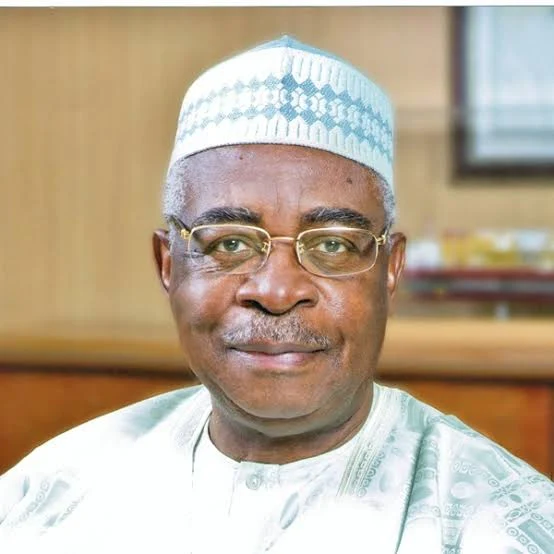
Theophilus Yakubu Danjuma. Credit: T.Y Danjuma Foundation.
The young household he had begun with Chioma was therefore established against the backdrop of a country entering one of the most turbulent periods in its history. The January coup was only the beginning. Six months later, the accumulated grievances, suspicions and fears within the military would erupt again in the counter-coup of July 1966, with consequences that would change the trajectory of Musa Usman’s career—and the history of Nigeria itself.
Chapter Fıve : The Kaduna Aırforce Base Challenge
By 1966, Major Musa Usman was firmly established at the Kaduna Air Force Base, where he had earned a reputation for professionalism, discipline and even-handed leadership. In the aftermath of the July 1966 counter-coup, he was offered the opportunity to take over the command of the Air Force establishment in Lagos following the departure of Lieutenant-Colonel George Kurubo, the first indigenous Chief of Air Staff, who had fled in the turbulent aftermath of the counter-coup. Musa Usman declined the offer and remained in Kaduna.
His decision was to prove consequential. At a time when the Nigerian military was being torn apart by ethnic suspicion, reprisals and counter-reprisals, his continued command of the Kaduna base helped prevent the violence engulfing the country from penetrating the Air Force establishment there. His professionalism, patriotism and deeply detribalised outlook enabled him to resist the pressures of ethnic mobilisation and to protect officers irrespective of their ethnic origin.
Air Commodore Dan Suleiman later recalled the extraordinary circumstances in which the Nigerian military found itself:
“The entire Nigerian military structure was largely dominated by the Igbos, with General Aguiyi Ironsi as Head of State. In July 1966, however, a counter-coup dismantled the Igbo-led government, resulting in Gowon becoming the Head of State.”
Against this turbulent background, Major Musa Usman remained the commanding officer of the Air Force Base in Kaduna.
The counter-coup itself was preceded and followed by a wave of horrific violence against Easterners, particularly Igbos, in several parts of Northern Nigeria. The massacres, which began in May 1966 and intensified dramatically in the months that followed, created an atmosphere of fear, suspicion and vengeance. Thousands of Igbos and other Easterners were killed in cities and towns stretching from Kano to Kaduna. Many others were forced to flee their homes and seek safety elsewhere.
Musa Usman refused to become part of this cycle of violence. Instead, he sought to protect those placed under his command, regardless of their ethnic identity. The testimonies of several officers presented in this chapter demonstrate how seriously he took that responsibility.
One of the most dangerous moments came when Musa received information that a group of soldiers from the Army’s 3rd Battalion intended to enter the Air Force Base in Kaduna in a Land Rover armed with machine guns. Their apparent objective was to incite the Northern Air Force officers against their Igbo colleagues and ultimately eliminate them.
Musa Usman responded firmly. Rather than allow the base to become a theatre of ethnic reprisal, he devised an ingenious security arrangement that came to be known as Operation “Look Me, I Look You.”
Under his special directives, all officers were required to spend the night in the Officers ’Mess. The purpose was simple but effective: no officer was to be left isolated or allowed to move about the base alone at a time when rumours, fear and suspicion could easily lead to violence.
Musa Usman actually saved my life. In September 1966.
The arrangement was unusual. Officers entering the mess were required to loosen their gun belts, unload their magazines, clear their chambers and place their weapons conspicuously at designated points. They would then remain together in the mess, ordering drinks and engaging in conversation— although the strained atmosphere made it clear that this was anything but an ordinary social gathering.
The tension was palpable. The officers knew that something was wrong, even though no one could be certain what might happen next. The arrangement was particularly uncomfortable for officers who did not drink, and after some time restlessness and irritation began to surface. Yet the very presence of everyone together served its purpose. It made it considerably more difficult for anyone to initiate a clandestine act of violence or for rumours to be converted into immediate action.
Musa understood, however, that such an arrangement could not be sustained indefinitely. He therefore devised a second, more permanent measure: the discreet evacuation of the officers who were considered most vulnerable, particularly his Igbo colleagues. Kaduna was still dangerously unsettled, and Jos, though by no means free from the tensions of the period, offered a relatively safer temporary refuge.
Among those whose lives Musa Usman helped to save was Lieutenant Ike Nwachukwu, who would later rise to become a General and serve Nigeria in several important capacities. Nwachukwu was also, incidentally, Musa Usman’s brother-in-law. Recalling the events many years later, he gave a striking account of how Musa intervened to save his life:
“Musa Usman actually saved my life. In September 1966 or so, Musa was at the Air Force Base in Kaduna, and I was in Kano, where Major Abba Kyari was commanding my Battalion. Soldiers went to town and started killing people in Kano.I escaped in mysterious circumstances. I had to find my way to Katsina, from where I was taken under cover to Kaduna Air Force Base. Musa quickly arranged for me to be flown to Lagos the next day. Ademola and one other officer flew me to Lagos, so Musa played a major role in saving my life. I was a full lieutenant then.”
Nwachukwu’s testimony is significant not merely because it records a personal act of courage, but because it illustrates the wider character of Musa Usman’sleadership during one of the darkest periods in Nigeria’s early post-independence history. He did not simply refrain from participating in ethnic violence; he actively placed himself in a position where he could protect those who were threatened by it.
The Kaduna Air Force Base episode therefore reveals something fundamental about Musa Usman’s character. At a moment when ethnic identity was becoming a matter of life and death, he insisted that military professionalism and human responsibility should prevail over vengeance. He understood that the uniform was a symbol of national service, not an instrument of ethnic retaliation.
His conduct during the crisis would become one of the clearest demonstrations of the principles that guided his life: loyalty to Nigeria above ethnic allegiance, discipline above passion, and the protection of human life above the pressures of the moment. In the fevered atmosphere of 1966, when reason was increasingly giving way to suspicion and revenge, Major Musa Usman chose restraint—and, in doing so, helped save lives.
Chapter Sıx: Musa Usman: From Barracks to Government House
The entire Nigerian military structure was largely dominated by the Igbos, with General Aguiyi Ironsi as Head of State.
Major Musa Usman’s lıfe was shaped by hıstory. Although he died relatively young, Brigadier Musa Usman’s life was lived against the backdrop of some of the most consequential events in Nigeria’s modern history. His personal journey intersected repeatedly with major national and international developments—from the Second World War and the final years of British colonial rule to Nigeria’s transition to independence, the Congo peacekeeping operation, the military coups of 1966, the crisis of national unity that followed, and the restructuring of the federation on the eve of the Nigerian Civil War.
Musa was born in 1940, at a time when the world was being consumed by the Second World War. The war reached deep into colonial Africa, and Nigeria, then under British rule, became an important source of military manpower for the Allied war effort. His father, Usman Kakagida, was among the Nigerian soldiers who served overseas, including in the Burma theatre, where Nigerian troops fought as part of the British imperial war effort against Japanese forces.
Thus, from the very beginning, military service was woven into the story of Musa Usman’s family. His father’s experience of the war and subsequent return to military service would eventually influence the direction of his son’s life.
When Usman Kakagida later re-enlisted in the Royal Nigerian Army, young Musa was exposed more directly to military life. In Zaria, he came under the influence of men such as Lieutenant Maimalari and, while still very young, entered the Boys Company. His admission into the military establishment was the beginning of a career that would eventually take him from the barracks in Northern Nigeria to the highest levels of military and political responsibility.
His progression was remarkably rapid. After his military training and commissioning, Musa was exposed to the wider responsibilities of the newly independent Nigerian military. In 1962, shortly after Nigeria’s independence, he participated in the United Nations peacekeeping operation in the Congo. The experience was significant for a young officer. It exposed him not only to military operations beyond Nigeria’s borders but also to the complex relationship between military force, political authority and the preservation of a fragile state.
On his return to Nigeria, his career advanced quickly. By the middle of the 1960s, he had attained the rank of Major and assumed command responsibilities at the Air Force Base in Kaduna. He was only in histwenties. The Nigerian military itself was, however, entering a period of unprecedented political turbulence.
The coup of 15 January 1966 transformed the political order. Major-General Johnson Aguiyi-Ironsi assumed power, but the political and ethnic tensions unleashed by the coup were not resolved. The counter-coup of July 1966 brought Lieutenant-Colonel Yakubu Gowon to power and marked another decisive turning point in the country’s history. Musa Usman was among the officers associated with the July counter-coup.
Yet the events of 1966 were not merely changes of government. They represented a profound crisis of confidence within the Nigerian military and a widening crisis of national cohesion. The violence against Igbos and other Easterners in parts of Northern Nigeria, followed by the mass movement of people towards the East, created conditions in which Nigeria’s survival as a single political entity became increasingly uncertain.
It was in this environment that Musa’s conduct at the Kaduna Air Force Base assumed particular historical significance. As discussed in the preceding chapter, he confronted the danger of ethnic retaliation not by abandoning military discipline but by using his authority to restrain violence and protect officers under his command.
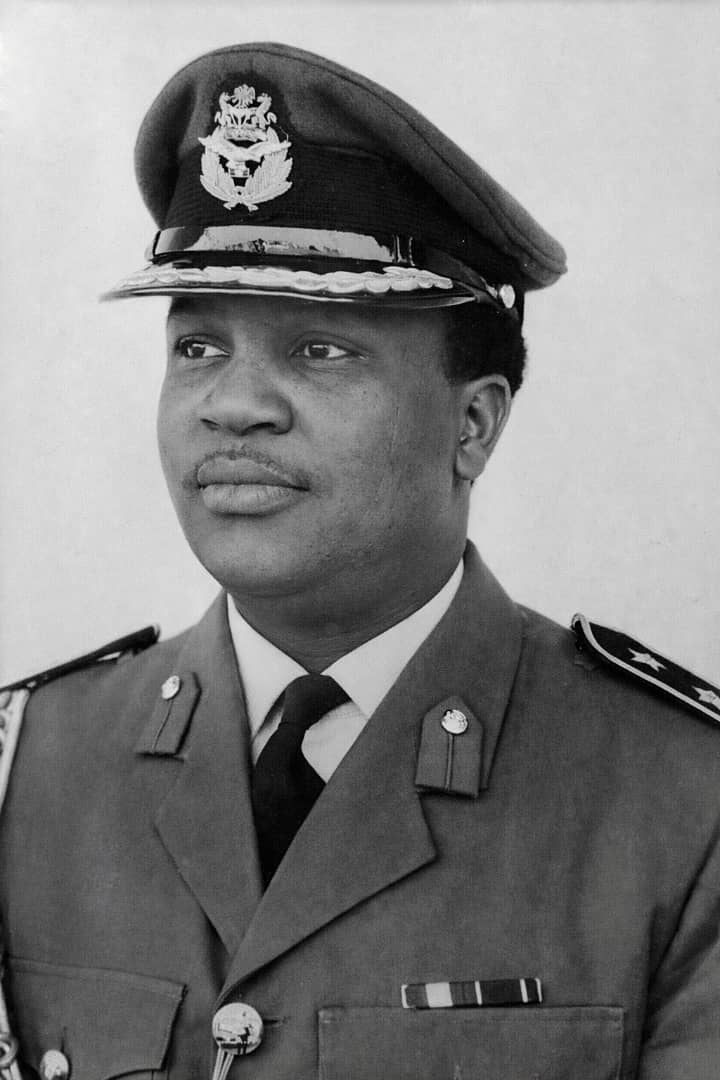
Brigadier Musa Usman
Then came another defining moment.
On 27 May 1967, General Yakubu Gowon announced the creation of twelve states out of Nigeria’s four existing regions. The measure fundamentally altered the country’s federal structure. Among the new states was the North-Eastern State, carved out of the former Northern Region, and Major Musa Usman was appointed its first Military Governor.
The timing could hardly have been more dramatic. The announcement came amid the unresolved political crisis between the Federal Military Government and the Eastern Region. The creation of states was presented by Gowon’s government partly as a response to the problem of minorities and the concentration of political power within the former regions. But in the East, the decision was viewed very differently. The Eastern military governor, Lieutenant-Colonel Chukwuemeka Odumegwu-Ojukwu, rejected the new arrangement, and within days declared the independence of the Republic of Biafra. Nigeria subsequently descended into civil war.
For Musa Usman, therefore, the transition from military officer to military governor was not an ordinary career promotion. At the age of only twenty-seven, he was entrusted with the administration of one of the largest and most strategically important of the twelve new states at precisely the moment when the Nigerian federation was fighting for its survival.
The North-Eastern State was vast, diverse and strategically sensitive. It encompassed the former provinces of Bornu, Adamawa, Bauchi and Sardauna. Its geographical position placed it close to Nigeria’s international borders with Niger, Chad and Cameroon, while its enormous territory presented formidable administrative, developmental and security challenges. The appointment consequently demanded much more than military command. Musa had to become an administrator, political manager and development strategist at an exceptionally young age.
His appointment also marked the beginning of the second major phase of his public life. The young officer who had entered military service through the Boys Company, served in the Congo and confronted the dangers of the 1966 crisis at Kaduna was now being asked to govern a territory whose political and economic future would be shaped by the outcome of the civil war.
Seen in this wider historical perspective, Musa Usman’s life was unusually compressed. Events that would ordinarily span several generations occurred within the short period of his adulthood. He was born into a colonial war, came of age during the transition to independence, became a professional soldier in the new Nigerian state, served in an international peacekeeping mission, witnessed and participated in the military upheavals of 1966, and, before reaching thirty, became the first Military Governor of the newly created North-Eastern State.
His story is therefore inseparable from the story of Nigeria itself. His life was not merely lived alongside history; it was repeatedly shaped by—and, at several critical moments, became part of—the making of Nigerian history.
Chapter Seven: Governing the North Eastern State
Building a New State: Unity, Development and Decentralisation
As Military Governor, Musa Usman recognised from the outset that the survival and prosperity of the newly created North-Eastern State depended fundamentally on the cultivation of unity among its diverse peoples. The creation of the state had brought together communities with different histories, languages, traditions and social institutions. Musa understood that these differences, if properly managed, could constitute a source of strength rather than division. His immediate challenge was therefore to build a sense of common purpose around the new political entity while respecting the cultural identities of its constituent peoples.
He was conscious that the North-Eastern State had been carved out of the former Northern Region, itself one of the most ethnically, linguistically and culturally heterogeneous political units in Nigeria. The new state inherited this diversity. It included communities with distinct traditions and historical
experiences, from the Kanuri and related peoples of the Lake Chad basin to the numerous ethnic groups of Adamawa and the communities of Bauchi and Gombe, as well as the peoples inhabiting the highlands and valleys of the state.
Musa’s approach was consequently not to impose uniformity but to promote integration through responsive administration and equitable development. He believed that people were more likely to identify with the new state if government was brought closer to them and if they could see tangible improvements in their everyday lives.
One of the early principles of his administration was therefore decentralisation. Rather than allowing the machinery of government to remain concentrated in the state capital, he sought to establish an administrative structure capable of responding to the distinctive needs of communities spread across the enormous geographical territory of the North-Eastern State. Decentralisation was intended not merely as an administrative convenience but as an instrument of inclusion. By bringing government institutions and services closer to the population, Musa hoped to make government more accessible and to create greater opportunities for citizens to participate in the affairs of their communities.
His development priorities reflected a similar understanding of state-building. From the beginning of his administration, he placed considerable emphasis on education, recognising that the long-term transformation of the new state depended upon expanding opportunities for its young population. Education was to provide the human capital required to staff the emerging institutions of government, modernise agriculture, develop commerce and support the state’s broader economic transformation.
Agriculture occupied an equally important place in his vision. The North-Eastern State possessed extensive agricultural land and a predominantly rural population whose livelihoods depended heavily on farming and livestock production. Musa therefore regarded agricultural development not simply as an economic objective but as a foundation for improving rural incomes, reducing poverty and strengthening the material basis of the new state.
Health and other social services were also identified as essential components of development. The expansion of schools, medical facilities and other public services was intended to ensure that the benefits of state creation extended beyond the administrative elite and reached ordinary citizens. In thisrespect, Musa’s development philosophy linked political legitimacy to the capacity of government to deliver practical improvements in people’s lives.
His economic vision was, however, considerably broader than the expansion of conventional social services. Musa was keenly aware that the North-Eastern State possessed substantial natural resources that could provide the foundation for industrial and commercial development.
Particular attention was directed towards the limestone deposits in the Gombe area, which offered possibilities for cement production and other mineral-based industries. He also saw economic potential in the resources of the Mambila Plateau, the Lake Chad basin and the Gongola Valley. These areas possessed different combinations of agricultural, mineral, water and ecological resources which, if properly developed, could contribute to the diversification of the state’s economy.
The emphasis on these resources reflected a broader strategic conception of development. Musa did not see the North-Eastern State merely as an administrative unit created by the Federal Military Government. He sought to establish the foundations of an economically viable state capable of exploiting its own productive potential and providing its population with opportunities for advancement.
This vision was particularly significant given the circumstances in which the state was created. The North-Eastern State came into existence in May 1967, at a moment when Nigeria was moving rapidly towards civil war. The new administration therefore had to pursue the ordinary tasks of governance while simultaneously confronting extraordinary political and security challenges. The outbreak of the civil war shortly afterwards further complicated the implementation of long-term development plans.
Nevertheless, Musa’s early programme revealed an important feature of his conception of government. Unity, in his view, was not to be achieved merely through political rhetoric. It had to be built through inclusion, accessible government, education, economic opportunity and equitable provision of public services. A diverse population would be more likely to develop a common attachment to the new state if its government recognised their differences while ensuring that no community was excluded from its benefits.
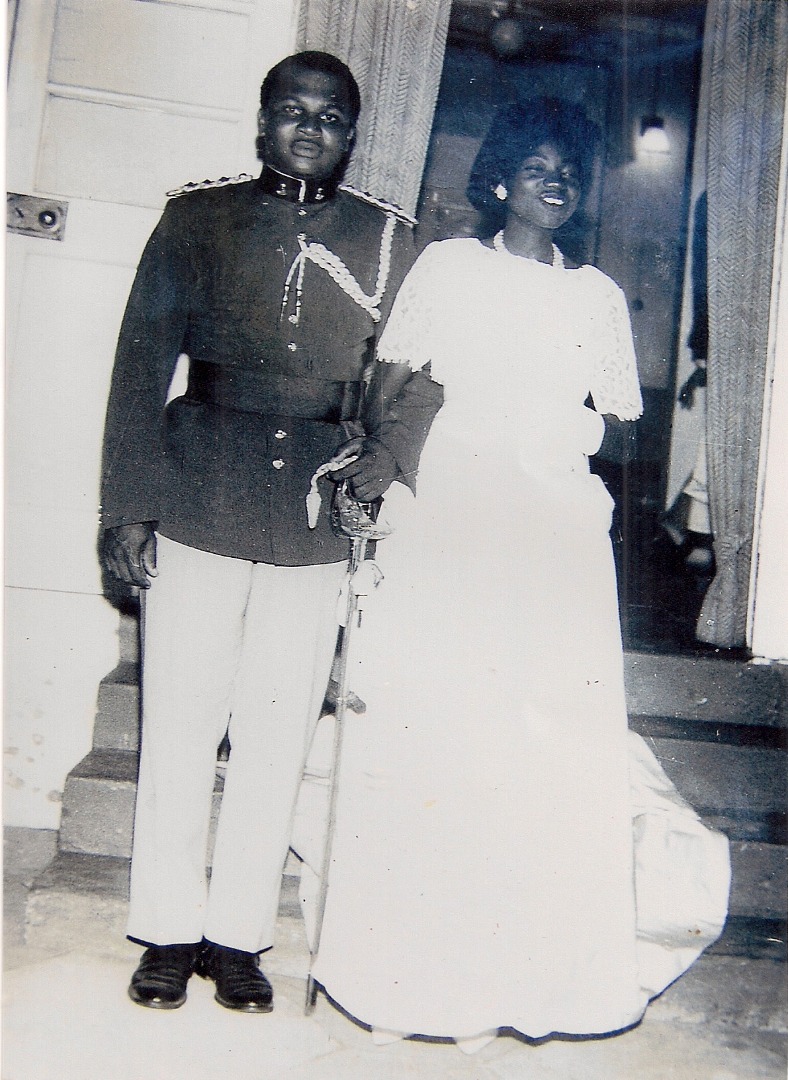
Brigadier Musa Usman and his wife Chioma
This philosophy helps explain the emphasis Musa Usman placed on decentralisation, consultation and development. For him, the creation of North-Eastern State was not an end in itself. It represented an opportunity to build a political and administrative order that could respond to the aspirations of its diverse population while mobilising the considerable human and natural resources of the territory for development. His conception of leadership therefore went beyond the exercise of military authority. He sought to establish an administration that could draw upon the experience, knowledge and influence of the people who understood the communities over which the new state was to be governed.
One of the earliest and potentially most contentious issues confronting him was the decision to move the capital from Bauchi to Maiduguri. The question was politically sensitive because the creation of a new state had generated expectations across a large and geographically diverse territory, and the location of the capital inevitably carried implications for political influence, administrative access and the distribution of development opportunities. The decision could easily have become a source of regional and local resentment at a time when the new administration was still establishing its authority.
Musa Usman appears to have understood the dangers inherent in imposing such a consequential decision without adequate consultation. His response was therefore characterised less by confrontation than by engagement. He cultivated relationships with influential traditional, political and professional figures and sought to build an administration broad enough to command confidence across the new state. This approach was reflected particularly in the calibre of the commissioners and senior officials whom he appointed. Many were experienced public servants and respected figures with substantial influence in their respective communities. Their inclusion gave the administration both administrative competence and a wider social base.
His reliance on the civil service was equally significant. Musa Usman did not regard his military position as a substitute for administrative experience. On the contrary, he recognised that the effective governance of a territory as vast as North-Eastern State required the accumulated knowledge of professional administrators who understood its geography, institutions and people. His relationship with the civil service consequently became an important feature of his administration.
Alhaji Mohammed Goni, who had close knowledge of the administration of the period, recalled that one of the means by which Musa Usman was able to cope with the enormous challenges presented by the size of the new state was his close working relationship with the civil servants. Although North Eastern State was the largest of the newly created states in terms of landmass, Musa Usman, according to Goni, facilitated its administration by working with the plans and recommendations prepared by the civil service. He described the former Military Governor as “a team player.”
The observation is revealing. It suggests that Musa Usman’s leadership style was not based simply on command, as might have been expected of a military governor, but on consultation and the effective use of institutional expertise. He appears to have understood that authority could be strengthened, rather than diminished, by listening to experienced officials and drawing them into the process of governance.
This quality was particularly important in the circumstances in which he assumed office. North Eastern State was a vast and complex administrative experiment, bringing together communities with different histories, identities and political interests. Its successful administration required not only the authority of the state but also the confidence and cooperation of those who inhabited it. Musa Usman’s willingness to consult, to rely on competent officials and to incorporate influential personalities into his government was therefore more than an administrative convenience. It was an important element of his strategy for giving institutional substance to the new state and creating a sense of shared ownership of its future.
In this respect, his approach to governance reflected a broader characteristic of his personality and career: a willingness to combine the discipline of his military training with an appreciation of civilian expertise and local realities. The result was an administrative style that placed considerable value on teamwork, consultation and practical problem-solving—qualities that would become central to his attempt to transform North-Eastern State from a newly created political unit into a functioning and developmental administration.
Chapter Eight: Infrastructure Development and Economic Growth
During the eight years of his leadership, Musa Usman sought to translate the vision and administrative priorities discussed in the preceding chapters into a coherent programme of development. At the centre of this programme were two mutually reinforcing priorities: education as the cornerstone of social transformation and infrastructure as the foundation of economic development. His approach reflected a clear understanding that the North-Eastern State could not overcome its historical developmental disadvantages without simultaneously investing in human capital and creating the physical infrastructure necessary to support economic activity.
One of the most significant industrial initiatives associated with his administration was the groundwork for the establishment of the Ashaka Cement Factory. The project was conceived within the favourable economic circumstances that followed the end of the Nigerian Civil War and the rapid expansion of public expenditure occasioned by the oil boom. The post-war reconstruction programme generated unprecedented demand for cement and other construction materials, while rising government revenues created new opportunities for investment in industrial development. Musa Usman recognised the importance of positioning the North-Eastern State to benefit from these national developments.
The agreement for the establishment of the Ashaka Cement Factory was signed in November 1974. The project subsequently became one of the most important industrial enterprises in the region and,
more than five decades later, remains a landmark of the industrial history of North-Eastern Nigeria. Its significance extends beyond the production of cement: it represented an early attempt to anchor industrial development within the region and to connect the North-East more directly to Nigeria’s expanding national economy.
Education as the Foundation of Development
If infrastructure constituted the physical foundation of Musa Usman’s development strategy, education was its intellectual and human foundation. His commitment to educational development was evident from the earliest period of his administration.
The scale of the challenge confronting the new state was considerable. In the 1969–1970 financial year, the total budget of the North-Eastern State was approximately £12 million, of which about £3 million was allocated to education, in addition to £18,300 contributed to Ahmadu Bello University. The substantial allocation reflected the priority Musa Usman attached to education at a time when the North-East was still struggling to close a profound educational gap between itself and other parts of Nigeria.
When we talk of the ever-widening gap, and the need to bridge it between North-Eastern State and other parts of Nigeria, we really mean catching up in education.
His philosophy was succinctly captured in his observation:
“When we talk of the ever-widening gap, and the need to bridge it between North-Eastern State and other parts of Nigeria, we really mean catching up in education.”
This statement is important because it reveals the developmental logic underlying his educational policy. Education was not regarded simply as another item of public expenditure. It was viewed as the principal instrument through which the region could overcome historical disadvantages, expand opportunities and participate more effectively in national development.
His immediate objective was therefore to expand the primary-school base as rapidly as possible, while simultaneously providing sufficient post-primary schools to accommodate a growing proportion of primary-school graduates. Beyond this, he sought to establish within the state the Higher School Certificate (HSC) facilities required to prepare students for university education and other forms of advanced training.
The strategy was necessarily ambitious. The North-Eastern State inherited a severe shortage of educational infrastructure and qualified personnel. Musa Usman’s response was to treat the expansion of education as a long-term investment in the region’s human capital. Resources were committed to increasing access at the primary and secondary levels, while particular attention was also given to the
education of girls. The expansion of female enrolment was an important dimension of this policy because it recognised that meaningful social development could not be achieved if educational opportunities remained disproportionately concentrated among boys.
Building Institutions for Higher Education
Musa Usman’s educational vision extended beyond the expansion of basic and secondary education. He understood that a region seeking to accelerate its development required institutions capable of producing teachers, administrators, professionals and other highly trained personnel within the region itself.
A major step in this direction was the establishment of the North-East College of Arts and Sciences (NECAS) in 1973. The college was conceived as an institution for advanced secondary education and preparation for university-level study. In subsequent years, its institutional legacy became closely associated with the development of higher education in Borno and the eventual emergence of the University of Maiduguri.
His administration also laid important foundations for the development of other tertiary institutions and professional training facilities, including the University of Maiduguri Teaching Hospital and the Ramat College of Education. These institutions helped to create an educational ecosystem within the region, reducing dependence on institutions outside the North-East and creating opportunities for the training of professionals who would increasingly serve the region itself.
Musa Usman’s influence on educational development also extended beyond the boundaries of the North-Eastern State. At the Northern regional level, through the Interim Common Services Agency, he supported initiatives that contributed to the establishment of institutions designed to address the educational deficiencies of the North. Among the most notable was the School of Basic Studies at Ahmadu Bello University, Zaria, upon which NECAS was in important respects modelled.
The significance of these initiatives should be understood within the broader educational history of Northern Nigeria. At a time when access to university education was still severely limited for many young people from the region, institutions such as the School of Basic Studies and NECAS provided pathways through which students could acquire the qualifications necessary for university admission. They consequently opened opportunities for a generation of Northern Nigerians to pursue higher education, both within Nigeria and abroad.
A Developmental Legacy
The enduring importance of Musa Usman’s educational policy lies not merely in the number of schools established or the amount of money allocated to the sector. Its deeper significance was the recognition that the transformation of the North-East required the deliberate creation of human capacity. Schools, colleges, hospitals and other institutions were therefore conceived not as isolated projects but as components of a broader strategy of social and economic transformation.
The same developmental philosophy informed his approach to infrastructure and industry. Roads, educational institutions, health facilities and industrial enterprises were intended to provide the physical and human foundations upon which a more productive regional economy could be built.
Seen in this broader context, the establishment of Ashaka Cement, the expansion of educational opportunities, the promotion of female education and the creation of institutions such as NECAS were not disconnected achievements. They formed part of a coherent developmental project: to equip the North-Eastern State with the infrastructure, institutions and human resources required to overcome its inherited disadvantages and participate more fully in the economic and political life of Nigeria.
Many decades later, the continued existence and influence of several of these institutions provide tangible evidence of the durability of that vision. They constitute an important part of Musa Usman’s developmental legacy and help explain why his years as military governor remain significant in the institutional history of the North-Eastern State.
Chapter Nine: The Coup of July 1975
The end of the Nigerian Civil War in January 1970 marked a decisive turning point in the country’s political history. With the secessionist challenge defeated and the territorial integrity of Nigeria restored, General Yakubu Gowon faced the formidable task of transforming a country emerging from three years of devastating conflict into a stable and functioning nation. One of the central questions was how and when the military would relinquish political power.
In the aftermath of the war, Gowon announced a carefully structured six-year, nine-point programme of national reconstruction, rehabilitation and reconciliation. At the heart of the programme was a commitment to return the country to democratic civilian rule. The military government envisaged October 1, 1976, as the date on which political power would be transferred to an elected civilian administration.
For several years, therefore, the 1976 handover date provided Nigeria with a broad political horizon. The expectation was that the military would gradually restore the institutions and conditions
necessary for a return to constitutional government. Yet, as the years passed, the political environment became increasingly complicated. The enormous revenues generated by the rapidly expanding petroleum sector transformed the scale of government and created new opportunities for national development. At the same time, the sudden expansion of public expenditure and the federal bureaucracy generated new avenues for patronage, competition and corruption.
The first major indication that the promised transition might not take place as originally envisaged came on October 1, 1974. In his Independence Day broadcast to the nation, Gowon announced that the October 1976 handover date had become “unrealistic.” He argued, in effect, that the country was not yet ready for a return to competitive party politics and that a premature transition could reopen political divisions that had only recently been suppressed by the end of the civil war. The announcement amounted to an indefinite postponement, since no alternative date was specified.
Several factors were invoked to justify the decision. The controversy surrounding the 1973 national census was particularly important. The census figures were fiercely contested, with profound political implications because population figures were closely connected to questions of political representation and the distribution of national resources. The controversy revived some of the regional and ethnic suspicions that had characterized Nigerian politics before the civil war.
There was also a broader argument within the military establishment that the civilian political class had not sufficiently demonstrated its capacity to govern a country as politically divided and economically transformed as Nigeria had become. Gowon and his supporters could therefore portray postponement as an attempt to consolidate national unity and prevent a premature return to the political competition that had contributed to the crises of the First Republic.
Yet there were other interpretations, and these were increasingly influential among critics of the regime. The rapid growth of oil revenues had dramatically expanded the resources available to the federal government. With this expansion came a corresponding growth in the opportunities for patronage and the accumulation of personal wealth. Allegations of corruption, administrative inefficiency and elite self-interest increasingly damaged the credibility of the military government. Critics consequently interpreted the indefinite postponement not as a dispassionate assessment of Nigeria’s readiness for democracy, but as evidence of an emerging reluctance within the military establishment to surrender power.
The military governors occupied a particularly sensitive position in this developing crisis. Most had exercised authority over their respective states since the creation of the twelve-state structure in 1967. By 1975, many of them had therefore been in office for almost eight years. They had become powerful
political and administrative actors, presiding over substantial state resources and exercising considerable influence over appointments and public policy.
Their continued tenure became a source of growing resentment within sections of the armed forces. Some officers believed that the military governors had remained in political office for too long and that the military government had become stagnant. There was also dissatisfaction with the concentration of political and economic influence in the hands of a relatively small group of senior officers and civilian associates. The expectation that the governors would eventually be replaced became an increasingly important issue within military circles.
The postponement of the transition consequently had consequences beyond the question of the date of civilian rule. It weakened confidence in Gowon’s leadership and widened the distance between the government and sections of the population. Students, organised labour and sections of the professional and political classes became increasingly critical of the regime. The government’s inability to provide a convincing new timetable for the restoration of democratic government reinforced the perception that the military intended to remain in power indefinitely.
Within the armed forces, dissatisfaction was also becoming more pronounced. Junior and middle ranking officers, in particular, complained about corruption, administrative inefficiency and the privileges enjoyed by senior officers and political appointees. The issue was not simply ideological opposition to military rule. It was also a struggle over professional hierarchy, political influence, accountability and the future direction of the armed forces.
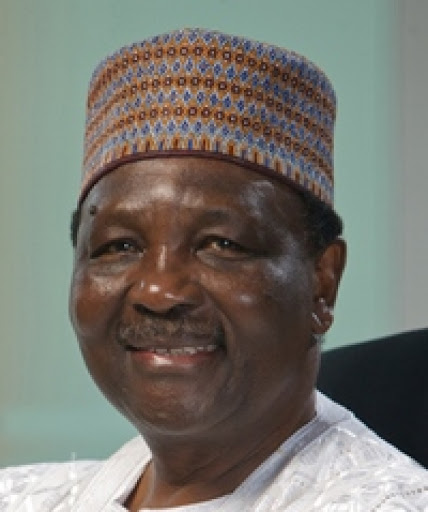
Fmr. Head of State, Gen. Yakubu Gowon
The political atmosphere was further complicated by allegations of corruption involving prominent members of the Gowon administration. Among the most publicised cases was that involving Joseph Tarka, the Federal Commissioner for Communications. Tarka, a prominent politician from the Benue Plateau area who had become a member of the federal military administration, was accused of financial impropriety. The controversy surrounding him became emblematic of the growing public suspicion that political office under military rule was increasingly being used for private enrichment.
Another prominent case concerned Joseph Gomwalk, the Military Governor of Benue-Plateau State. In August 1974, allegations of financial impropriety were made against him in an affidavit sworn by Aper Aku, then a prominent political figure from the region. The allegations attracted considerable attention and contributed to the wider perception that some military governors were accumulating wealth far beyond what could readily be explained by their official incomes.
Such allegations should, however, be treated within their historical context. Not every accusation made during this turbulent period was necessarily established as fact, and some allegations were undoubtedly connected to political rivalries and struggles for influence. Nevertheless, their political significance was considerable. The perception that senior officials and military governors were becoming wealthy while ordinary Nigerians faced economic and social difficulties seriously weakened the moral authority of the Gowon administration.
The combination of these developments created a progressively more difficult environment for the Supreme Military Council. Gowon’s decision to postpone the transition had alienated important sections of the population, while dissatisfaction within the military establishment itself was becoming increasingly difficult to contain. The regime appeared to many of its critics to have lost the dynamism and sense of purpose that had characterized the immediate post-war period.
It was against this background that the military coup of July 1975 took place.
On July 29, 1975, while General Gowon was attending an Organisation of African Unity summit in Kampala, Uganda, a group of military officers launched a bloodless coup against his government. The coup succeeded with remarkable speed. Gowon was removed from office and General Murtala Ramat Muhammed emerged as the new Head of State.
The change of government represented far more than a routine alteration in military leadership. It marked a fundamental rejection of the political direction in which the Gowon administration had been moving. One of the new government’s earliest and most consequential decisions was to announce a definite programme for the restoration of civilian government. Unlike Gowon’s indefinite postponement of the 1976 deadline, the new administration established a four-year timetable leading to a return to democratic rule in 1979.
The July 1975 coup was therefore the product of several converging forces: dissatisfaction with the indefinite continuation of military rule; resentment over the prolonged tenure of military governors; allegations of corruption and abuse of office; growing public disillusionment; and divisions within the armed forces themselves. The coup demonstrated that the military establishment, having assumed responsibility for governing Nigeria in the aftermath of the crises of the 1960s, had itself become deeply entangled in the political and economic conflicts it had originally claimed to be uniquely positioned to resolve.
For Brigadier Musa Usman, who had himself occupied the position of Military Governor of North Eastern State during this period, the events of July 1975 had a particular significance. The coup
brought to an abrupt end a political order in which he and his fellow military governors had exercised authority for almost eight years. It also raised questions about the record of the governors, the relationship between military professionalism and political administration, and the changing expectations of officers who had been drawn into governance during Nigeria’s years of crisis.
The July 1975 coup thus provides an important bridge between the period of military reconstruction after the civil war and the emergence of a new generation of military leadership under General Murtala Muhammed. For Musa Usman, it was also the beginning of a new and very different phase of his public life—one in which the experience, achievements and controversies of his years as military governor would increasingly become part of the historical assessment of his career.
Chapter Ten: Trial, Triumph and Demise
The coup that abruptly terminated his military career was not the end of Brigadier Musa Usman’s trials. Rather, it marked the beginning of another and perhaps more difficult phase of his life. Like many other military officers and senior civil servants who had served under the previous administration, he became the subject of official suspicion and punitive measures. His properties were seized by the new regime, amid allegations that they had been acquired with improperly obtained public funds.
For Musa Usman, the consequences were particularly severe. His only property in Kaduna was confiscated, leaving him and his family virtually homeless. The circumstances were made even more difficult by the fact that the property was still subject to a mortgage obligation with Union Bank. Despite losing possession of the house, he remained legally and financially responsible for the instalment payments incurred in its acquisition and construction.
Thus, when the family was compelled to leave their home on Mararona Road, Kaduna, they suddenly found themselves without a place to live. It was a deeply traumatic experience, particularly for a family that had already endured the abrupt termination of Musa’s public career and the uncertainty that followed the political upheavals of the period.
At this difficult moment, Alhaji Mahmoud Atta came to their assistance. In an act of remarkable generosity, he provided Brigadier Usman with two three-bedroom bungalows situated side by side along Ogbadu Road, Malali, Kaduna. The family moved into the houses, thereby finding temporary security at a time when their circumstances had become exceptionally precarious. Atta’s intervention was more than an act of material assistance; it was a gesture of friendship and solidarity when the Usman family was at its most vulnerable.
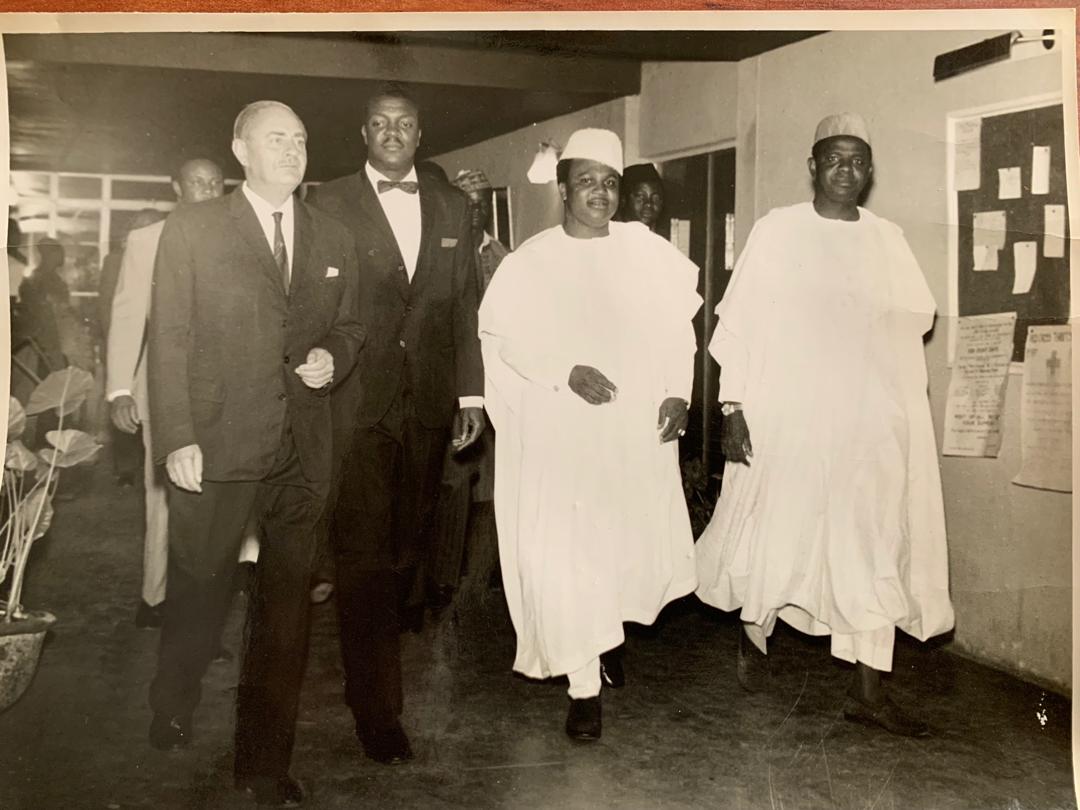
No sooner had the immediate problem of accommodation been resolved than Brigadier Usman was confronted with another grave ordeal. In the aftermath of the failed coup of February 1976 led by Lieutenant Colonel Bukar Suka Dimka, an attempt was made to implicate him in the conspiracy. The coup resulted in the assassination of Head of State General Murtala Ramat Mohammed and his aide de-camp, Lieutenant Akintunde Akinsehinwa, when their vehicle was ambushed in Ikoyi while they were on their way to Dodan Barracks.
The regime’s suspicion of Musa Usman appears to have been influenced, at least in part, by his previous relationship with General Yakubu Gowon. Several former military governors who had served under Gowon were arrested because of the assumption that officers associated with the former Head of State might have had an interest in restoring the previous order. Musa Usman, having been one of Gowon’s trusted governors, consequently fell within this wider circle of suspicion.
He was arrested and detained and eventually brought before a military tribunal. The proceedings represented one of the most serious moments in his post-governorship life, since conviction could have resulted in the ultimate penalty. Yet the tribunal found no evidence establishing his involvement in the Dimka conspiracy. He was consequently acquitted and released.
His acquittal was a decisive moment in his life. It not only restored his freedom but also cleared him of the allegations that had placed his life in jeopardy. The significance of this outcome becomes even clearer when viewed against the fate of several other officers who were convicted in connection with the coup and executed, including Lieutenant Colonel Dimka, Brigadier Iliya Bisalla and other accused persons. Musa Usman therefore emerged from the episode having survived not merely political persecution and personal loss, but a trial in which the consequences of an adverse judgment could have been fatal.
The experience profoundly altered the trajectory of his life. His military career, which had begun when he entered the Boys Company as a young soldier and had taken him through professional training, peacekeeping service, command responsibilities and ultimately eight years as military governor of the North-Eastern State, had effectively come to an end. He now had to construct a new identity outside government and the military establishment that had shaped much of his adult life.
From this point onward, Brigadier Usman transitioned into the private sector. His years in government, however, had equipped him with considerable experience that proved valuable in his new career. Public office had exposed him to complex administrative responsibilities, strategic decision-making and the management of large institutions and substantial resources. His eight years
as governor, in particular, had provided him with extensive hands-on experience in planning, administration, personnel management and the execution of large-scale development programmes.
The Courts should go to the people.
His departure from public service was therefore not simply a retreat from a distinguished military and political career. It represented the beginning of another chapter in which the qualities developed during his military and gubernatorial years—discipline, organisation, managerial competence and an understanding of public administration—could be deployed in a different environment.
In retrospect, the period following the July 1975 coup tested Musa Usman in ways that his years in uniform had scarcely prepared him for. He lost his position, his home was confiscated, his family was displaced, and his freedom was subsequently placed in jeopardy by allegations connecting him with a deadly coup. Yet he survived each of these trials. His acquittal in the Dimka proceedings marked his vindication, while his subsequent transition to the private sector demonstrated his capacity to rebuild his life after public service.
The story of Musa Usman after 1975 is therefore not merely one of political displacement. It is a story of resilience: of a man who, after losing office, property and professional identity, nevertheless found the strength and experience to begin again.
Quotes
On law and order he correctly said: “The primary function of any government is the maintenance of law and order without which there could be no stability, safety of life and property.
On the judiciary
The primary objective for the take-over of area courts from native authorities is to free – the judiciary, at all levels, from local influences. This will ensure proper administration of justice so that all are treated equally before our courts. The exiting court accommodation ın most cases are inadequate and it is the intention of my government to improve these courts buildings as soon as possible. My government believes in the saying that “The Courts should go to the people “ and intends to expand all sections of the judiciary so that in all areas people may have easier access in the courts…p284.
Read Also:
Author

Sign up for The Insight Newsletter
Get in-depth, research and data-based interpretative reports from around Nigeria.