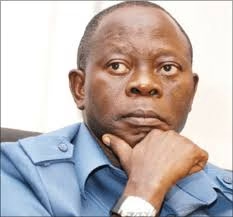
Two words defined the life of Brigadier Musa Usman, says Senator (General) Ike Nwachukwu
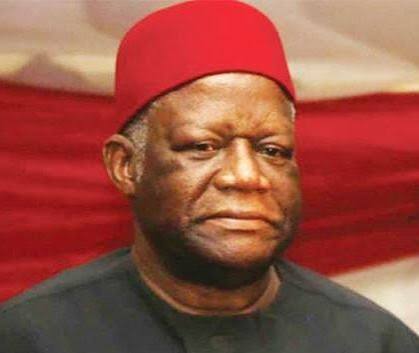
(Being Goodwill message by Senator (General) Ike Nwachukwu, titled “The Ripple Effects of Service: Echoes Beyond the Uniform” at the Presentation of the Biography of Brigadier General Musa Usman at the Nigerian Air Force Conference Centre, Abuja).
PROTOCOLS
We live in a world obsessed with measuring success. We measure them in wealth, in titles, in digital metrics, and in the tangible things we can accumulate. But those who choose the path of military service learn, very early in their career, that the most profound realities of life cannot be measured by what you gather, but by what you give away.
Today, we gather to witness how two words — service and impact — defined the life of Brigadier Musa Usman.
Musa joined the Army as a Boy Soldier. He was in the first set of children who formed the then Boys’ Company, now the Nigerian Military School, Zaria. He was the very first Boy Sergeant Major (Head Boy or Senior Prefect) of that extremely important school in Nigeria.
What can I do to protect, defend and better my country and those placed under my command and care?
So from an early age he embarked on something radical, then and even today, as we speak. He stood, raised his right hand and took an oath to serve Nigeria to the best of his ability, in loyalty, and to obey those placed in authority over him, and to protect the interests of those under his authority. He undertook this not asking, as in today’s culture, “What’s in it for me?” But rather, “What can I do to protect, defend and better my country and those placed under my command and care?”
From being a Boy Soldier, Musa went to the Royal West African Frontier Force (RWAFF) Potential Officers’ Training School, Teshie, Ghana. And from there to the Royal Military Academy, Sandhurst, where he graduated and was commissioned into the then Queen’s Own Nigeria Regiment (QONR) in the rank of Second Lieutenant. The Army transformed later into the Royal Nigerian Army (RNA) at independence in 1960, and the Nigerian Army (NA) when, in October 1963, Nigeria became a Federal Republic.
Musa underwent several military courses and passed his promotion examinations in flying colours. These earned him early recognition by his superiors and he was compensated adequately. He became Staff Officer Grade Three in 2nd Brigade Headquarters under the command of Brigadier Zakaria Maimalari.
This was the point at which we met. I was a newspaper journalist working for a Federal Government newspaper, The Morning Post, in Lagos. With him at the time were today’s Chairman, Major General Ibrahim Bata Malgwi Haruna, former Corps Commander, Nigerian Army Ordnance Corps, former GOC 2nd Division, Nigerian Army, former Federal Minister of Information; General Murtala Mohammed (former ADC to the Administrator of Western Nigeria, Corps Commander, Nigerian Army Signals, wartime GOC 2nd Division, Nigerian Army, and Head of the Military Government of Nigeria); Major General John Oroh Obada, former Air Force Base Commander, Kaduna; Major General Iliya Bisalla, former Chief of Staff (Army) and Minister of Defence; Brigadier General Godwin Ally, former Brigade
Commander, former Military Secretary, Supreme Headquarters, former Commander, Lagos Garrison Organisation, now 81 Division, Nigerian Army; and Brigadier General Abba Kyari, former Corps Commander, Nigerian Army Artillery, former Military Governor, North Central State; and my secondary school classmate, Lieutenant Robert Okafor, of the then Federal Guards (now Brigade of Guards). They were all Lieutenants in the Army at that time.
We partied together most weekends at Muktar Yola’s flat at Mulliner Road, Ikoyi. Muktar was, at the time, Private Secretary to the Federal Minister of Power and Steel, the ever so well-spoken Alhaji Maitama Sule, who later became Nigeria’s Permanent Representative to the United Nations.
It was during such interactions that Musa and his colleagues talked me into joining the then Royal Nigerian Army (RNA), and the rest is part of the history we are celebrating today.
More importantly, our friendship translated into him being my brother-in-law when he married my beautiful and ever-loving younger sister, seated here, Hajiya Chioma Jummai Usman. They remained married until Musa passed on to higher glory. Between them are lovely, highly accomplished and responsible children (Maryam, Hassan and Hussaina, Rekiya and Halima, Hamis, and other extended family members they brought up) and several grandchildren growing into credible members of our larger family. Jummai, though quiet, was Musa’s backbone, always there for him in peace and in dangerous times, which is the case when you marry a combatant regular officer, as Musa was. Jummai herself remained a career civil servant in the Northern Region, North Central State, and retired as a Permanent Secretary in the Kaduna State Government.
Join me as we rise to observe a reverent moment of silence in Brigadier Musa Usman’s honour. May his soul continue to rest in perfect peace.
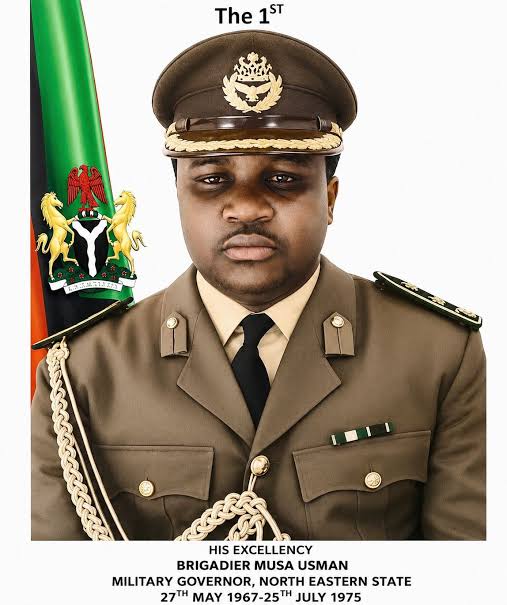
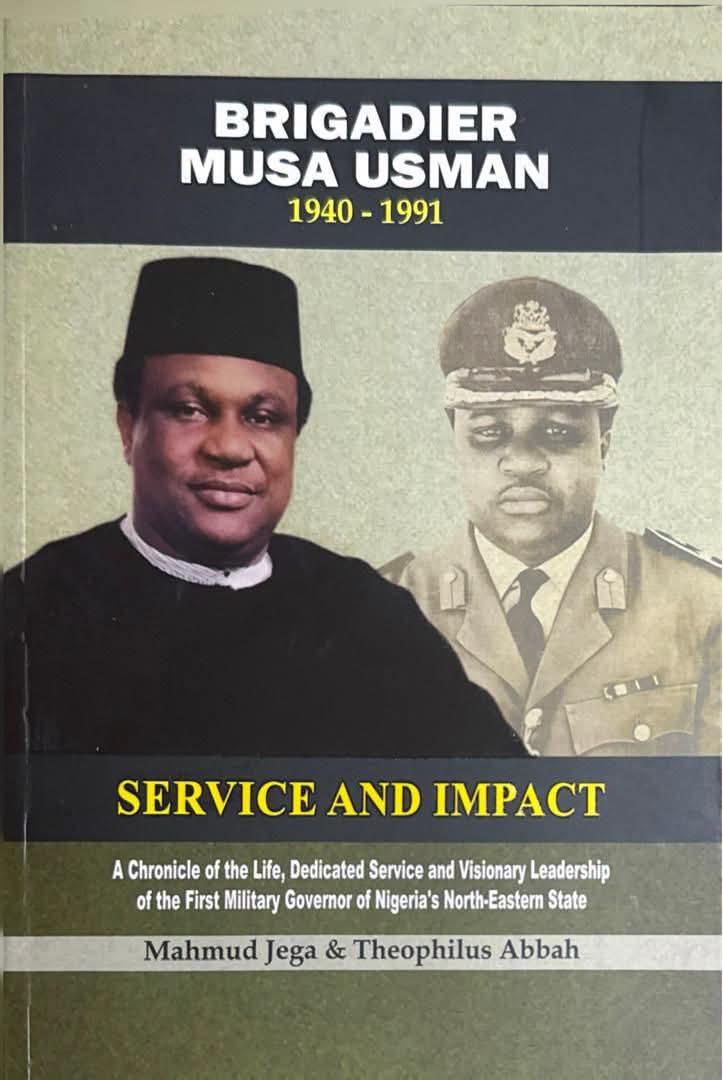
Brıgadıer Musa Usman (1940 – 1991)
Military service, as you are all aware, is not just a job. It is not merely a contract. It is a profound, life-altering choice to place the safety, security and freedom of others above one’s own comfort — and sometimes, one’s own survival. It is an acknowledgment that there is something greater than the individual.
Service in the military is rarely glamorous. It is found in the quiet, gruelling hours of basic training, where individuals are stripped of their civilian identities and forged into a team.
It is found in the uncomfortable conditions of a midnight watch, the exhausting heat of a desert deployment, the treacherous forests and jungles, the unruly oceans, the waterways and creeks, the unsafe airspace, and the monotonous, relentless maintenance of equipment in readiness for war, or to take on an adversary attempting to assault our territorial integrity.
Service means missing birthdays, anniversaries and the first steps of our children. It means answering the call when the phone rings at 2:00 a.m., knowing that your life might change in an instant. It means looking at the person to your left and the person to your right and realising that their life is now your responsibility. This environment breeds a unique kind of currency.
In the military, your status isn’t determined by your bank account; it’s earned through your character, your competence, and your reliability under pressure.
When I think of the military in these circumstances, one name always comes to mind: Brigadier Musa Usman.
Service strips away the superficial. It reveals who you are when you are tired, hungry, cold and tested. Those officers and men from the Eastern Region will attest to how Musa and Jummai protected them and their families until they were evacuated from the Kaduna Air Force base to safety back to the Eastern Region at the height of the crisis leading to that avoidable Civil War. He did that at the risk of his own life and those of his wife and young family back then.
And it is precisely because of these heavy demands that the impact of military service is so incredibly vast.
When I think of the military in these circumstances, one name always comes to mind: Brigadier Musa Usman — the officer and gentleman, the disciplinarian, the perfectionist, the innovator, the unceasing demander of excellence from his officers and men, the accomplisher, the quintessential administrator of people and assets, the humanitarian, the steady hand that helped establish the then North Eastern State (now Borno, Yobe, Adamawa, Taraba and Gombe States of Nigeria) and set it on the irreversible path of greatness and development; the man who provided the environment for citizens of his state to sleep peacefully at night in readiness to face their daily challenges with strength; the man who, like a shield, provided a barrier between peace and chaos; the peacemaker, the man to whom ethnicity, religion, sex or creed didn’t matter, but the bond of shared values; and, finally, the man who, like a true hybrid, worked for the unity and wellbeing of Nigeria, and in particular for our most unique and most enviable family group.
Musa, you passed on to higher glory too early in life. Yet your essence looms even larger in our hearts, our life and society.
I must publicly thank my darling sister, Jummai, for keeping Musa’s family, and even our wider family, together all these years. God bless you for being an exemplary wife, mother and grandmother.
Today we acknowledge, honour and remember you, Brigadier General Musa Usman, for your contributions to the Nigerian Army, the Nigerian Air Force, to the then North Eastern State, and to Nigeria.
Help us intercede with the Almighty God to make Nigeria work for the good of all. I thank you.
Sen Gen Ike Omar Sanda Nwachukwu rtd, GCMG CFR COM psc+ mni fniia etc. Abuja
Read Also:Service & Impact of Brigadier Musa Usman: A Book Revıew
Author

Sign up for The Insight Newsletter
Get in-depth, research and data-based interpretative reports from around Nigeria.