
₦2.36trn Lost to Subsidy, Fake Agencies Uncovered, Kwara Abductee Speaks: Top Stories This Week
By Emmanuel Kwada
From staggering subsidy figures that drained over ₦2.36 trillion to the uncovering of phantom government agencies, and a rescued Kwara abductee’s harrowing account of six months under open skies in terrorist captivity—Nigeria’s headlines this week cut deep into the realities of governance, security, and public trust.
In this weekly Roundup, THE INSIGHT walks you through the stories that defined the past seven days: the RMAFC’s revelations on petrol subsidy spending and crude sales deductions; a survivor’s raw testimony from the forests; the ICPC’s probe that cleared the Tinubu Presidency while exposing more fake agencies; and a candid take on the real crisis facing Nigerian media.
These are not just headlines—they are windows into the pressures shaping the nation. Settle in and read through for the full details.
Nigeria Spent ₦1.16trn on Petrol Subsidy in 2021, Another ₦1.20trn Deducted From Crude Sales — RMAFC
Nigeria spent about ₦1.16 trillion on petrol subsidy in 2021, while an additional ₦1.20 trillion was deducted directly from the Federation’s crude oil sales proceeds, the Revenue Mobilisation Allocation and Fiscal Commission (RMAFC) has disclosed.
The figures have renewed scrutiny of the financial burden associated with petrol subsidy and other deductions from Nigeria’s oil revenues, particularly at a time when the country continues to grapple with dwindling government income and rising fiscal pressures.
RMAFC Chairman, Dr Mohammed Bello Shehu, disclosed the figures on Thursday in Abuja while appearing before the Senate Public Accounts Committee (SPAC), which is examining the 2021–2023 oil and gas industry audit reports released by the Nigeria Extractive Industries Transparency Initiative (NEITI).
₦1.20 trillion was directly deducted from crude oil sales proceeds during the period.
The committee is chaired by Senator Ibrahim Dankwabo, representing Gombe North.
₦1.16trn subsidy bill
Presenting a breakdown of deductions from crude oil proceeds, Shehu said the Federal Government spent ₦1.16 trillion on petrol subsidies in 2021.
He further disclosed that ₦1.20 trillion was directly deducted from crude oil sales proceeds during the period.
The revelation provides fresh insight into the scale of financial resources that were committed to maintaining petrol subsidies before the Federal Government eventually announced the removal of the subsidy in 2023.
For years, the subsidy regime had been one of the most contentious issues in Nigeria’s public finance, with successive administrations defending it as a mechanism for cushioning consumers from the full cost of imported petroleum products while critics argued that it placed an unsustainable burden on government finances.
Other deductions from oil revenues
According to the RMAFC chairman, subsidy payments were not the only significant deductions affecting the country’s oil revenue.
He told lawmakers that ₦16.20 billion was spent on crude and petroleum product losses, while ₦22.05 billion went into pipeline repairs and maintenance.
The practice of computing 13% derivation on the balance of revenue after deductions from total collections is contrary to the intention of the derivation objective.
Another ₦6.75 billion was attributed to strategic stock holding.
The figures collectively highlight the numerous financial obligations and deductions that can reduce the amount ultimately available for distribution to the three tiers of government.
With crude oil remaining a major source of Nigeria’s foreign exchange and government revenue, the deductions have continued to attract attention from lawmakers, auditors and accountability organisations seeking greater transparency in the management of the country’s petroleum resources.
RMAFC questions 13% derivation formula
Beyond subsidy and other deductions, Shehu also raised concerns about the way the 13 per cent derivation fund for oil-producing states is currently calculated.
The RMAFC chairman argued that calculating derivation on revenue remaining after various deductions from total collections defeats the original objective of the constitutional provision.
“The practice of computing 13% derivation on the balance of revenue after deductions from total collections is contrary to the intention of the derivation objective,” Shehu told the lawmakers.
The derivation principle is designed to give oil-producing states a share of the revenue generated from natural resources extracted from their territories.
However, the commission’s position suggests that the amount available to producing states may be reduced significantly when deductions are made before the 13 per cent is calculated.
The issue could therefore become an important part of the Senate committee’s wider examination of Nigeria’s oil revenue management.
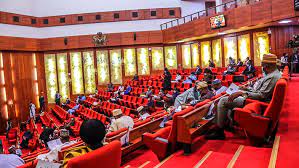
The Nigerian Senate in session
Senate probes oil industry finances
The disclosures were made as the Senate Public Accounts Committee intensifies its examination of Nigeria’s oil and gas accounts covering the 2021–2023 period.
The probe is based on audit reports produced by the Nigeria Extractive Industries Transparency Initiative, which has consistently called for greater transparency in the management of the country’s petroleum resources.
The committee’s investigation is expected to examine how oil revenues were generated, deductions made, funds transferred and the extent to which government agencies complied with financial regulations.
NDDC report stood down
During Thursday’s proceedings, the committee also stood down the submission of the Niger Delta Development Commission (NDDC) to enable senators to properly study the agency’s report.
The commission’s leadership is expected to return before the committee next Wednesday.
The decision indicates that lawmakers intend to scrutinise the documents before questioning the NDDC officials further.
Auditor-General faces Senate summons
The committee also expressed displeasure over the absence of the Auditor-General for the Federation (AuGF) from the hearing.
The Auditor-General neither appeared before the committee nor sent an official representative, a development that angered lawmakers.
Committee chairman Senator Dankwabo issued a strong warning, directing the Auditor-General to appear at the committee’s next sitting on Tuesday.
He warned that failure to comply could result in the National Assembly invoking its constitutional powers to compel his attendance.
“The Auditor-General must unfailingly appear before this committee on Tuesday next week or risk the invocation of powers of the National Assembly against him, which will lead to a forced appearance,” Dankwabo warned.
The warning underscores the seriousness with which the Senate is approaching the ongoing review of the oil and gas audit reports.
The RMAFC disclosure comes at a critical period for Nigeria’s public finances, with government facing competing demands for infrastructure, social services, security and debt servicing.
The ₦1.16 trillion subsidy expenditure in 2021, combined with the additional ₦1.20 trillion deducted from crude sales proceeds, illustrates the scale of resources tied up in petroleum-related obligations during the period under review.
The Auditor-General must unfailingly appear before this committee on Tuesday next week.
The Senate investigation could provide further clarity on how these deductions were calculated, who authorised them and whether they complied with existing financial regulations.
For Nigerians, the central issue goes beyond the size of the figures. It is about whether the country’s oil wealth is being managed efficiently and transparently enough to translate into meaningful improvements in the lives of citizens.
As the Public Accounts Committee continues its investigation, lawmakers are expected to examine the various deductions from oil revenue and the roles played by government agencies in determining how much ultimately reaches the Federation Account.
The outcome could have significant implications for future petroleum revenue management, particularly as Nigeria seeks to reduce dependence on crude oil and strengthen its fiscal position.
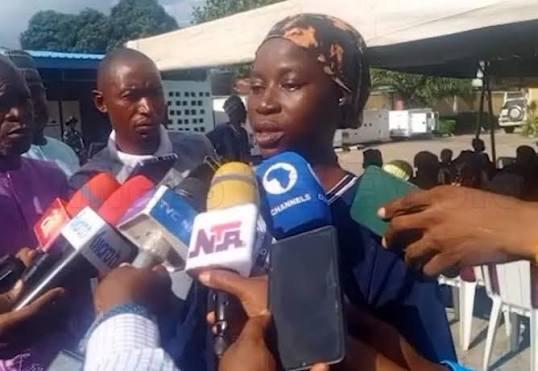
One of the 145 abductees recently rescued from Woro in Kwara State has opened up about the harrowing six months she spent in the hands of terrorists, revealing how she and other captives were forced to sleep in the open, endure hunger and survive without adequate clothing.
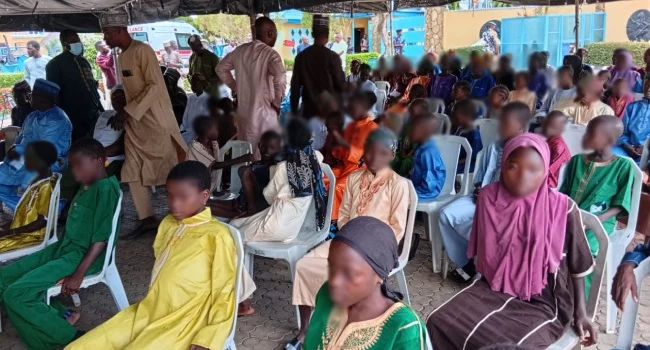
Woro Kidnapped victims
Fatima Mohammed, who was among the victims handed over to the Niger State Government by the Federal Government, said her experience in captivity was marked by fear, deprivation and unimaginable hardship.
Speaking after her rescue, Fatima said she spent approximately six months and two weeks in captivity and was overwhelmed with joy at the prospect of finally returning home to her family.
“I am very excited because I am going to be reunited with my family again,” she said.»
But behind her relief was a painful account of what the abductees endured while in captivity.
There were no rooms to sleep in. We slept in the open, even when it was raining.
According to Fatima, the terrorists provided no proper shelter for the captives. She said they were forced to sleep in open spaces throughout their ordeal, leaving them exposed to rain and other harsh weather conditions.
“There were no rooms to sleep in. We slept in the open, even when it was raining,” she recalled.
The situation was made worse by a severe shortage of clothing. Fatima said the victims had no spare clothes to change into, meaning they had to remain in their wet clothes whenever rain fell.
“We did not have clothes to change. Whenever our clothes got soaked by the rain, they dried on our bodies because we had nothing else to wear,” she said.
She added that inadequate food further compounded their suffering, leaving the captives to endure hunger alongside the constant fear and uncertainty of life under terrorist control.
‘They threatened to kill me’
Another survivor, 17-year-old Isyaka Ahmed, also recounted his terrifying experience, saying an attempt to escape nearly cost him his life.
We did not have clothes to change. Whenever our clothes got soaked by the rain, they dried on our bodies because we had nothing else to wear.
Isyaka said the terrorists threatened to kill him after he tried to flee from captivity.
“They threatened to kill me when I tried to escape,” he said.
For the teenager, hunger and physical exhaustion were among the most difficult aspects of the ordeal. Despite the trauma he experienced, Isyaka said he was grateful to have survived and return to his family.
He also revealed that some boys remained in captivity, highlighting the continuing danger faced by those yet to regain their freedom.
‘Today is like Sallah’ — Emir
The rescued victims were received on behalf of the Niger State Government by the Emir of Borgu, Alhaji Mohammed Sani Dantoro, who described their return as a moment of immense joy for the emirate.
The traditional ruler likened the occasion to a major religious celebration, reflecting the relief and happiness surrounding the safe return of the abductees.
“Today is like a Sallah day in our kingdom,” the Emir said.»
The handover marks an important development in efforts to reunite victims of abduction with their families after prolonged periods in captivity.
For survivors such as Fatima and Isyaka, however, the end of captivity is only the beginning of another difficult journey — recovering from months of fear, hunger, exposure and psychological trauma.
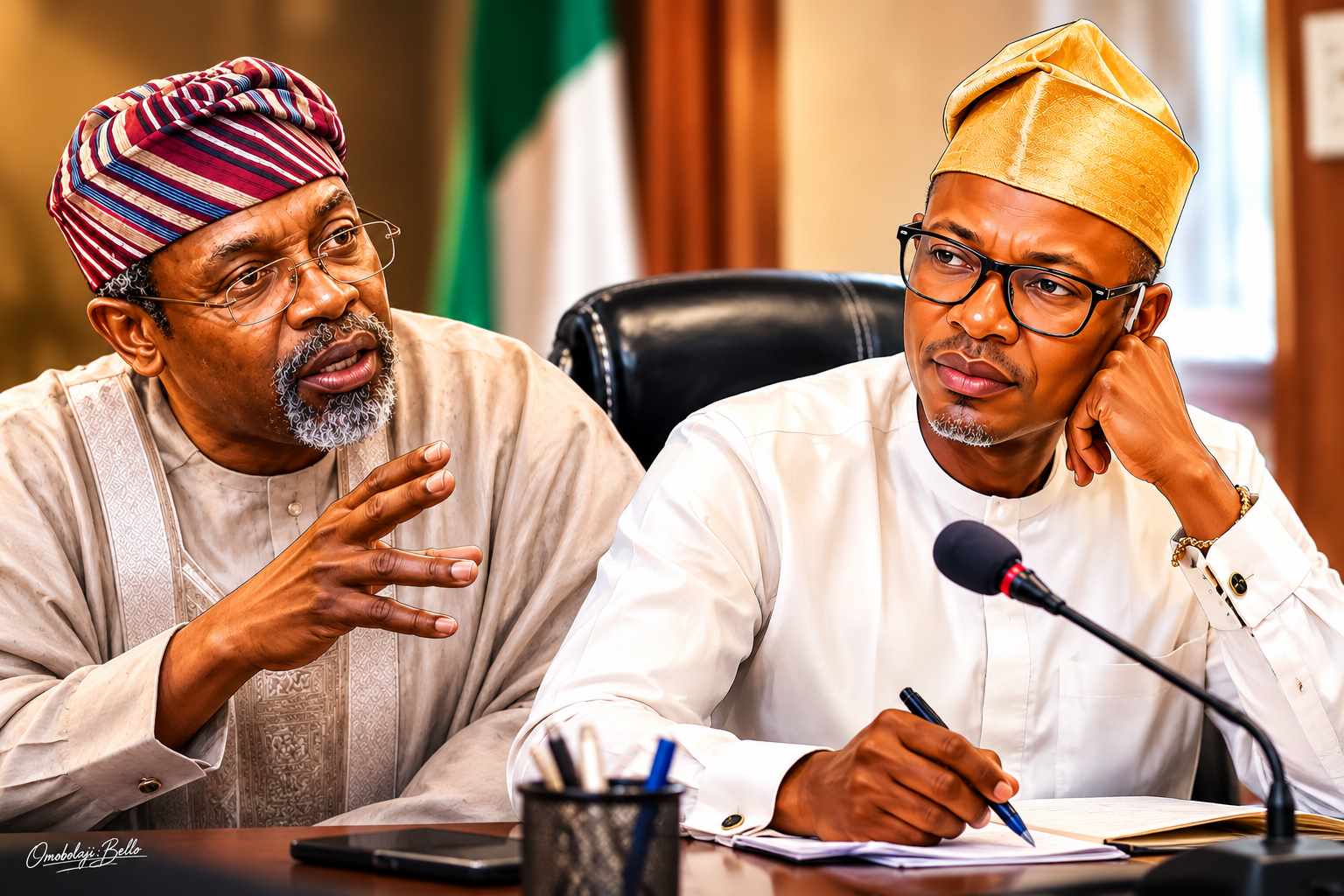
Combo photo of CoS to president Bola Ahmed Tinubu Femi Gbajabiamila and Mathew Adeniyi the acclaim DG of the ‘fake’ PFIPC
Their accounts offer a grim insight into the conditions endured by many kidnapping victims in Nigeria’s troubled security environment and underscore the urgency of sustained efforts to rescue those who remain in captivity.
‘Phantom’ Investment Council: ICPC Clears Tinubu Presidency, Uncovers Two More Fake Agencies
The Independent Corrupt Practices and Other Related Offences Commission (ICPC) has cleared the Presidency of involvement in the controversial creation and appointment of officials of the purported Presidential Foreign Investment Promotion Council (PFIPC), describing the organisation as a fictitious body created through forged government documents.
The anti-corruption agency also revealed that the alleged mastermind behind the council, Adeniyi Adeyemi Matthew, reportedly created two other fictitious government agencies in addition to the PFIPC.
ICPC Chairman, Dr Musa Adamu Aliyu, disclosed the findings on Thursday after presenting the commission’s interim investigation report to President Bola Ahmed Tinubu at the Presidential Villa in Abuja.
The council was never established by any law, executive order or other valid instrument of government.
According to Aliyu, the investigation established that Adeyemi was never appointed by the Federal Government or any recognised government authority and that the PFIPC itself had no legal foundation.
“The council was never established by any law, executive order or other valid instrument of government,” the ICPC chairman said.
The development effectively exonerates the Presidency from direct involvement in the creation of the controversial council, which had generated public concern after allegations emerged that it had operated as though it were a legitimate federal government institution.
Two more fictitious agencies uncovered
The ICPC chairman said investigators discovered that the alleged fraud went beyond the PFIPC.
Aliyu disclosed that Adeyemi had also created two other purported government institutions — the FCT Investment Promotion Agency (FIPA) and the Foreign Investment Promotion Agency and Public Private Partnership (FIPA-PPP).
The discovery, he said, showed the extent to which government processes and institutional verification mechanisms were allegedly exploited.

ICPC Chairman, Dr Musa Adamu Aliyu submitting report to President Bola Ahmed Tinubu
According to the ICPC, Adeyemi appropriated the identity of the defunct Presidential Economic Advisory Council (PEAC), unlawfully occupied its former office and allegedly used forged official documents to give legitimacy to the purported investment council.
Investigators also discovered that the premises used by the purported council had been unlawfully accessed after the lock to the office was broken.
How the alleged fraud passed through government systems
The ICPC findings have raised questions about how a body that allegedly had no legal existence managed to interact with several government institutions and obtain administrative recognition and other official privileges.
Aliyu acknowledged that weaknesses in verification, inter-agency coordination and government oversight created opportunities that were allegedly exploited by Adeyemi.
“Our investigation found that weaknesses in verification, inter-agency oversight and government processes were exploited by Adeyemi with some level of negligence,” he said.
The ICPC, however, said it found no evidence that Federal Government funds were approved or released directly to the purported agency.
The revelation comes against the backdrop of an ongoing investigation by a House of Representatives Ad Hoc Committee, which has been examining how the PFIPC allegedly secured government recognition, office accommodation, budgetary provisions and other privileges despite not having a lawful foundation.
State House: ‘We never knew about the council’
The Presidency had earlier distanced itself from the PFIPC, telling lawmakers that it neither created the organisation nor initiated any correspondence relating to its budget.
Representing the Permanent Secretary of the State House before the House committee, Director of Administration Abdulkadir Idris said officials at the Presidential Villa only became aware of the purported council after reports about it appeared in the media.
Based on the documents and the verification carried out, we approved seven official government number plates.
“We did not send any correspondence or any request to the Office of the Accountant-General in respect of this council. We didn’t even know anything about this council. We never heard about it until we started seeing it in the media,” Idris told the lawmakers.
He also rejected documents purportedly originating from the State House that were allegedly used to request a budget code for the PFIPC.
According to him, the documents were fraudulent, adding that neither the purported signatory nor the office named in the correspondence existed within the State House.
Idris specifically denied knowledge of an individual identified as Akande Adewale, who allegedly signed one of the disputed documents as Director of Administration and Support Services.
He told the committee that official records dating back to 2003 contained no such name.
“At that time, the Director of Administration was Mrs. Aderonke Jaiyesimi, who retired in January 2025,” he said.
He further stated that the State House had no department known as the Directorate of Administration and Support Services.
The official said he and the Permanent Secretary were subsequently invited by the Nigeria Police National Cybercrime Centre after the controversy emerged, where they provided records to assist investigators.
FRSC admits issuing seven number plates
The controversy has also exposed gaps in the verification systems of other government agencies.
The Corps Marshal of the Federal Road Safety Corps (FRSC), Shehu Mohammed, told the House committee that the agency issued seven official government vehicle number plates to the purported council.
Mohammed said the plates were approved after the FRSC received an application supported by documents which appeared, at the time, to establish the organisation as a legitimate government institution.
He explained that the application was received in April 2025 from an office described as the Presidential Economic Advisory Council.
According to him, FRSC officials visited the address supplied by the applicants and found an operational office there.
“Based on the documents and the verification carried out, we approved seven official government number plates,” he said.
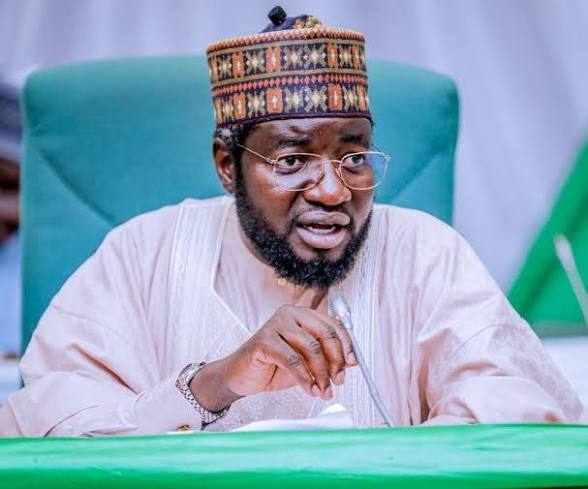
Committee chairman Yusuf Gagdi
However, following the investigation, the FRSC has commenced the process of retrieving the number plates.
The Corps Marshal acknowledged that the episode had exposed weaknesses in the agency’s verification system and pledged to strengthen its intelligence and authentication procedures.
During the hearing, committee chairman Yusuf Gagdi questioned why the documents submitted to the FRSC had not raised greater suspicion, particularly because the purported council’s mandate lacked some of the expected official security features.
Gagdi also questioned the composition of the council’s purported governing board, which allegedly listed President Tinubu, the Secretary to the Government of the Federation and several serving ministers.
“Does this look normal to you?” the lawmaker asked.
Mohammed admitted that the document should have raised concerns.
Committee summons agencies for joint hearing
The House committee has now scheduled a joint hearing involving the government institutions that have testified before it.
The session is expected to hold next Wednesday at noon and will bring together representatives of the State House, Office of the Head of the Civil Service of the Federation, Accountant-General’s Office and other relevant agencies.
We want the Head of the Civil Service, the Accountant-General, the State House.
Gagdi said the purpose would be to reconcile conflicting documentary evidence and establish how the purported council was able to penetrate government systems.
“We want the Head of the Civil Service, the Accountant-General, the State House and all other relevant agencies to be here at the same time so that we can establish exactly where the alleged infractions started and identify the weaknesses in each institution,” he said.
The lawmakers are expected to trace the chain of events that allegedly enabled the PFIPC to secure administrative approvals, office accommodation, vehicle number plates, budgetary provisions and other official privileges.
When will Adeyemi appear before lawmakers?
When will Adeyemi appear before lawmakers?
One major question remains unresolved: when will Adeyemi himself appear before the committee?
The purported Director-General is considered a crucial witness because his testimony could help lawmakers establish how the organisation was created, how it operated and how it allegedly interacted with various government institutions.
The committee had earlier directed the Inspector-General of Police to produce Adeyemi before it. Police representatives, however, told lawmakers that they could not release him because he was being held under a valid remand order issued by the Federal High Court.
The police said releasing him without judicial authorisation could violate the subsisting court order.
The committee subsequently indicated that it would seek the necessary judicial approval to facilitate his appearance.
However, at its latest sitting, Gagdi did not disclose when or whether Adeyemi would testify.
Civil society demands wider accountability
The ICPC’s findings have also triggered calls for a broader investigation into officials and institutions whose actions or lapses may have enabled the purported agency to operate.
When will Adeyemi himself appear before the committee?
The Executive Director of the Civil Society Legislative Advocacy Centre (CISLAC), Auwal Musa Rafsanjani, welcomed the ICPC investigation but argued that accountability should not stop with Adeyemi.
Rafsanjani said officials who facilitated the opening of bank accounts, processed administrative approvals, handled budgetary matters or provided other forms of official recognition should be investigated and sanctioned where wrongdoing is established.
He warned against allowing political considerations to interfere with the process.
According to him, it would be difficult for one individual to sustain such an elaborate operation without institutional failures, negligence or assistance from others.
He also criticised the proposed private questioning of Adeyemi, arguing that Nigerians deserve transparency in a matter involving public institutions.
The Connected Development (CODE) also said the controversy underscored the urgent need to strengthen verification, transparency and coordination among government institutions.
The organisation said the case demonstrated how weaknesses in public financial management, budgeting, verification and inter-agency communication could be exploited.
It called for stronger systems that would make it difficult for individuals to impersonate government agencies or use forged documents to access official privileges.
The PFIPC controversy has now developed beyond the question of whether one individual allegedly created a fake government agency.
It has become a broader test of the strength of Nigeria’s institutional safeguards.
The ICPC’s interim findings suggest that the purported council had no legal foundation and that the Presidency was not responsible for its creation.
Yet, the fact that the organisation allegedly managed to secure interactions with multiple government institutions has raised questions about the effectiveness of verification mechanisms across the public sector.
For the House committee, the next stage will be to reconcile the conflicting records, identify where institutional failures occurred and determine whether any public officials knowingly or negligently facilitated the activities of the purported council.
For the anti-corruption agencies, the challenge will be to establish individual culpability and ensure that those found responsible face appropriate consequences.
The greatest challenge facing Nigerian journalism today is not a lack of innovation.
And for Nigerians, the controversy has revived a familiar concern: how can a body that does not legally exist move through the machinery of government for so long without being detected?
The answer to that question may ultimately determine whether the PFIPC scandal ends as a case involving one alleged fraudster or becomes a catalyst for deeper reforms in the way government institutions verify documents, appointments, budgets and official identities.
Nigeria’s Media Crisis Isn’t Digital — It’s the Market, Says Media Trust Editorial Director
The biggest threat facing Nigeria’s media industry is not the rapid shift to digital platforms or the emergence of artificial intelligence, but a changing market that increasingly rewards those who distribute information rather than those who invest in producing original journalism, Editorial Director of Media Trust Group, Ibrahim Shehu, has said.
Shehu made the observation while examining the economic pressures confronting Nigerian journalism, arguing that years of calls for media organisations to “go digital” have failed to address the deeper structural problems undermining the industry’s sustainability.
For more than a decade, publishers have been encouraged to build digital-first newsrooms, invest in multimedia storytelling, develop podcasts and newsletters, diversify revenue, understand their audiences and create new products.
According to Shehu, Nigerian media organisations have responded significantly to those demands.
It is a market that increasingly rewards those who distribute information more than those who produce it.
Legacy news organisations have restructured their operations around integrated, multi-platform newsrooms, while digital-native publishers have experimented with new formats and revenue models. Newsrooms have also become increasingly data-driven and technologically sophisticated.
But he argued that digital transformation alone cannot resolve the industry’s financial difficulties.
“The greatest challenge facing Nigerian journalism today is not a lack of innovation. It is a market that increasingly rewards those who distribute information more than those who produce it,” Shehu said.
Publishers bear cost while platforms capture value
Shehu said the traditional economic relationship between journalism and revenue has weakened considerably.
Historically, newspapers generated income through sales and advertising, while radio and television depended largely on advertising, sponsorships and, in some cases, public funding.
That model, he noted, created a relatively direct relationship between the production of journalism and the revenue required to sustain it.
The digital economy, however, has fundamentally altered that relationship.
According to Shehu, publishers continue to bear the cost of employing reporters, editors, photographers, videographers, producers, developers and fact-checkers, while also maintaining offices and bureaux, verifying information and dealing with legal and security risks.
News organisations continue to carry the costs of journalism.
Yet much of the economic value generated by their work is increasingly captured by large technology platforms.
“News organisations continue to carry the costs of journalism,” he noted, stressing that the economic value generated by original reporting is often distributed elsewhere.
He said the challenge is global but particularly severe in countries such as Nigeria, where advertising budgets are relatively constrained and independent journalism has fewer institutional sources of financial support.
AI threatens to deepen ‘zero-click’ problem
Shehu identified artificial intelligence as a new force that could further disrupt the relationship between publishers and their audiences.
For years, search engines helped news organisations attract readers by directing users to original stories. A reader searching for information would typically click through to a publisher’s website, creating opportunities for advertising, subscriptions and audience engagement.
That pattern, he said, is changing as AI systems increasingly provide users with direct answers by synthesising information from multiple sources.
Although AI-powered tools offer convenience, Shehu warned that they could reduce the number of users who visit the original websites that invested resources in producing the underlying journalism.
The development is contributing to what industry observers describe as the “zero-click” internet, where users obtain information without visiting the websites that created it.
Traffic has become more difficult to earn. Digital advertising has become harder to sustain.
Shehu said this trend should concern anyone interested in the survival of independent journalism.
“Traffic has become more difficult to earn. Digital advertising has become harder to sustain. The economics of audience growth are changing once again,” he said.
Independence can come at a commercial cost
Beyond technology, Shehu identified editorial independence as another major challenge confronting news organisations.
He argued that journalism’s fundamental responsibility to hold powerful individuals and institutions accountable can sometimes create commercial consequences.
Investigative reports can expose corruption, political journalism can scrutinise government officials, and business reporting can raise uncomfortable questions about influential corporations.
When that happens, commercial consequences can follow.
Such reporting, he noted, can strain relationships with advertisers, governments and corporate partners.
“When that happens, commercial consequences can follow,” he said, pointing to the possibility of advertising campaigns disappearing, government patronage declining or commercial relationships becoming strained.
For Shehu, however, the principle of editorial independence cannot be compromised for financial gain.
He said every independent newsroom eventually confronts the question of whether commercial considerations should influence editorial decisions.
His answer was unequivocal: they should not.
“If journalism becomes merely an extension of commercial interests or political convenience, it ceases to serve the public,” he argued.
He described credibility as the most valuable asset a newsroom possesses, warning that once public trust is compromised, rebuilding it can be extremely difficult.
Truthful journalism costs more than misinformation
Shehu also drew attention to an imbalance at the heart of today’s information ecosystem: credible journalism is expensive to produce, while misinformation can be created and distributed at very little cost.
Professional news organisations must invest in reporting, fact-checking, verification, editing, legal safeguards and, increasingly, digital technology.
Misinformation, by contrast, can spread rapidly without comparable investment in accuracy or accountability.
“The organisations that invest most heavily in accuracy, verification and accountability often face the greatest economic pressures,” he said.
He warned that the imbalance should concern society as much as it concerns publishers because the decline of credible journalism ultimately affects the quality of public information and democratic decision-making.
Despite the challenges, Shehu said Nigerian media organisations are continuing to explore alternative revenue sources.
Subscriptions, membership programmes, events, training, research services, branded content, philanthropy, e-commerce, podcasts and video are among the options being pursued by publishers seeking to reduce their dependence on traditional advertising.
He said some Nigerian publishers, including Media Trust Group, are investing in these areas as part of wider digital transformation efforts.
No amount of newsroom restructuring can, by itself, correct structural imbalances in the digital economy.
However, Shehu cautioned against treating any single revenue model as a permanent solution.
He argued that subscriptions or membership programmes alone cannot fully address structural problems created by the concentration of digital advertising or declining referral traffic.
“No amount of newsroom restructuring can, by itself, correct structural imbalances in the digital economy,” he said.
Shehu called for a broader conversation involving publishers, technology companies, policymakers, advertisers and audiences.
He urged technology companies to engage more constructively with publishers whose journalism provides much of the information circulating across digital platforms.
According to him, discussions about licensing, attribution and fair compensation for the use of journalistic content, particularly in the era of generative AI, should extend beyond Europe, North America and Australia to include markets such as Nigeria.
He also called on advertisers to recognise the broader value of supporting credible journalism.
Supporting trustworthy news organisations, he argued, should not be viewed simply as a conventional advertising transaction but as an investment in the information ecosystem that businesses, consumers and democratic institutions depend upon.
Shehu said audiences cannot be left out of the conversation about the future of journalism.
He urged readers to support credible news organisations by choosing verified journalism over sensational misinformation, subscribing to trusted publications and supporting independent reporting.
Innovation remains essential. But innovation cannot substitute for fairness.
For publishers, he said, the responsibility remains to consistently earn public trust by producing journalism that is accurate, credible and relevant.
‘Innovation cannot substitute for fairness’
Shehu’s central argument is that while technological adaptation remains essential, it cannot by itself solve the economic problems confronting journalism.
“Innovation remains essential. But innovation cannot substitute for fairness,” he said.
He argued that the future of Nigerian journalism would depend not only on how effectively publishers embrace technology but also on whether the broader digital marketplace recognises and rewards the value of original reporting.
Nigerian journalism, he noted, has survived military rule, economic crises, the collapse of traditional print advertising and the disruptive arrival of the internet.
It will also adapt to artificial intelligence, he said.
But survival should not be confused with sustainability.
“If those who create journalism continue receiving the smallest share of the value it generates, then the real crisis facing Nigerian media will not be digital. It will remain the market,” Shehu concluded.
The warning comes at a time when Nigerian news organisations are being pushed simultaneously to invest in technology, maintain editorial independence and discover sustainable ways of financing professional journalism.
For Shehu, the challenge is therefore no longer simply how quickly Nigerian media can become digital. It is whether the economic system surrounding digital journalism can become fair enough to ensure that credible reporting remains financially sustainable.
Read Also: The Victories You Rarely Notice: Why Prevention Is the Highest Form of Nat’l Security
Author

Sign up for The Insight Newsletter
Get in-depth, research and data-based interpretative reports from around Nigeria.


