
RMRDC Unveils Plan To Turn African Feedstock Into Factories
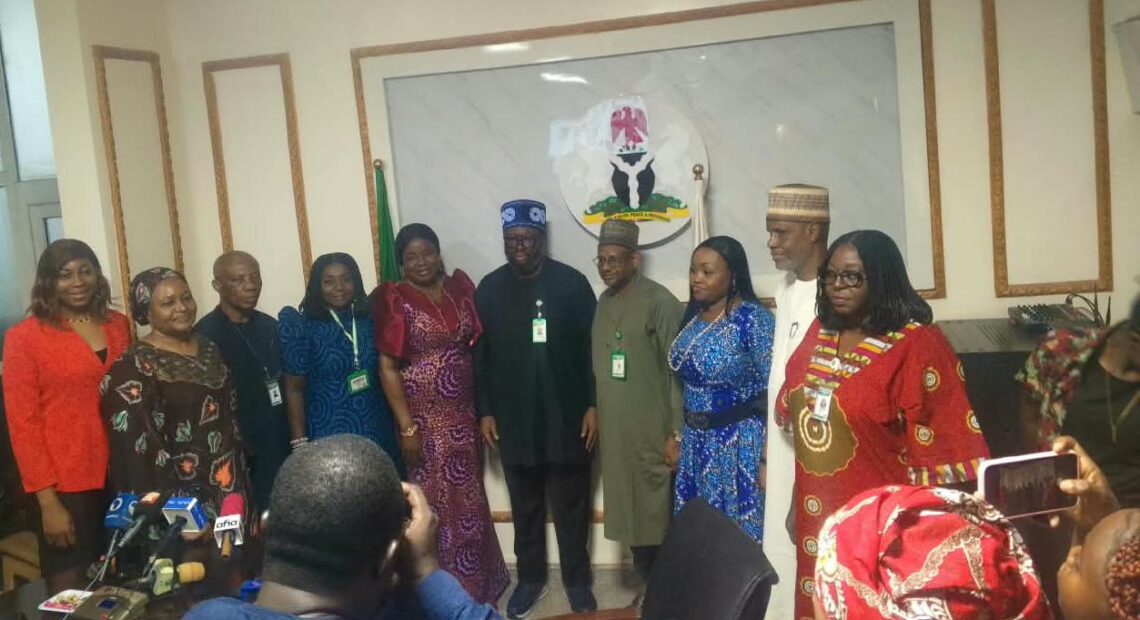
…set to unlock Nigeria’s $582bn untapped resource wealth
By Daniel Adaji
The Director- General and Chief Executive of the Raw Materials Research and Development Council, (RMRDC) Professor Nnanyelugo Ike-Muonso, has unveiled a five-pillar strategy to transform Africa from an exporter of unprocessed raw materials into a continent that processes its resources into finished and industrial products.
Ike-Muonso said the strategy would anchor the second Africa Raw Materials Summit (ARMS) on the theme, “From African Feedstock to African Factories,” scheduled for October 19 and 20, 2026, at the Abuja Continental Hotel.
Speaking on Tuesday ahead of the summit, the DG said Africa had remained trapped in an extractive economic model in which the continent exported raw commodities and later imported finished products at significantly higher costs.
“Beyond making a date on our industrial calendar, I am here today to speak on an economic paradigm shift sweeping our continent,” he said.
According to him, Africa’s soils, mines and forests produce trillions of dollars in raw wealth, yet many African economies continue to suffer from low-value addition, dependence on unrefined commodity exports and the importation of expensive finished goods.
He said Nigeria alone has more than $582.4 billion in documented non-renewable natural resources, while Africa’s 54 countries possess significant deposits of critical transition minerals, agricultural raw materials and industrial feedstock.
“Yet our vulnerability to external commodity price shocks persists. Our currencies face avoidable pressure, and our youth seek jobs that our raw commodity export model ships overseas,” Ike-Muonso said.
He said the summit would provide a platform to align policy, capital, technology and political will towards ensuring that resources extracted from African soil are increasingly transformed on the continent.
The DG recalled that the first edition of the summit, held in May 2025 under the theme “Shaping the Future of Africa’s Resource Landscape,” attracted more than 1,000 delegates from across the world.
He said the maiden summit produced a policy framework for industrial independence, including the unveiling of the 10-year Raw Materials Transformation Roadmap 2025–2034 by the Minister of State for Industry, Senator John Owen Enoh.
According to Ike-Muonso, the roadmap focuses on local technological capabilities, climate-resilient processing and backward integration, while ARMS has now been institutionalised as an annual event on Africa’s industrial calendar.
30% value-addition law
The DG said the RMRDC had formulated and championed the Raw Materials 30% Mandatory Value Addition Bill, which he said was awaiting presidential assent.
He explained that the proposed legislation would require a minimum of 30 per cent value addition to Nigerian raw materials before export.
According to him, the policy is projected to generate more than 1.2 million skilled jobs within five years, reduce pressure on foreign exchange through import substitution, strengthen the country’s foreign reserves and increase manufacturing’s contribution to the economy.
“Voluntary industrialisation has proven too slow. General structural transformation demands a decisive statutory framework that requires natural resources to undergo domestic processing before export,” he said.
Ike-Muonso said the policy would help shift Africa away from exporting low-margin primary commodities towards producing and exporting higher-value industrial goods.
Digital raw materials database
The DG also highlighted the development of the Nigeria Integrated Information Statistical System for Raw Materials and Products (NISRA), describing it as a live digital repository for information on raw-material deposits, specifications, production output and industrial absorption rates.
He said the second-generation system would provide investors and policymakers with information required to make decisions on the country’s raw-material resources.
Ike-Muonso also said the RMRDC had almost completely transitioned to paperless digital operations and had attained data-controller and data-processor status of major importance under the Nigerian Data Protection Commission.
He added that the council had obtained ISO 9001:2015 Quality Management System certification following an external audit.
The DG further cited recognition received by the council and its leadership, including the Adjazira Double Honor Award, which he said recognised the RMRDC as an outstanding government agency in 2024 and 2025.
Training, research and technology transfer
Ike-Muonso said the council had also established RMRDC 360, an online media and radio platform, while restructuring its Journal of Raw Materials Research into an open-access, internationally indexed digital publication.
He said the RMRDC Training School had been established to equip micro, small and medium-sized enterprises, miners and processors with technical, entrepreneurial and processing skills.
According to him, the training school had obtained approval to run diploma programmes.
He said the RMRDC had also signed an operational agreement with the Bank of Industry to support commercial skills and processing activities aimed at reducing structural supply-chain losses in commodities including onions, grains and industrial minerals.
The DG further announced a South-South technology-transfer partnership with the National Innovation Center for Excellence in Shanghai, China, facilitated by the World Association of Industrial and Technological Research Organizations.
He described the partnership as a major pathway for commercialising locally developed research and technology.
Five pillars
Ike-Muonso said ARMS 2026 would focus on five major pillars: logistics, policy, circular economy and waste industrialisation, continental value-chain integration, and technology commercialisation and capital linkage.
On logistics, he said the summit would address infrastructure gaps between farms and mines and manufacturing facilities.
He identified poor transit connectivity, inadequate rural roads, weak supply chains and the absence of regional testing and certification institutions as some of the barriers preventing raw materials from reaching processing facilities.
He said the summit would bring together logistics authorities, haulage operators, regional organisations and standardisation bodies to explore reliable corridors for moving raw materials to processing hubs.
On the 30 per cent value-addition mandate, he said the summit would push for legislation and policies that would make domestic processing a requirement before raw materials are exported.
The third pillar, he said, would focus on a circular economy and waste industrialisation, through which agricultural by-products, mine tailings, scrap metals and biomass could be recovered and reused as industrial inputs.
“This focus not only reduces raw material overhead costs for emerging factories, but it also embeds sustainable, environmentally sound and climate-resilient manufacturing practices deep into Africa’s industrial fabric,” he said.
The fourth pillar would focus on regional value-chain integration under the African Continental Free Trade Area (AfCFTA).
Ike-Muonso said African countries should build cross-border supply networks in which processed materials from one country could serve industries in another.
He gave the example of processed chemicals and reagents supplying pharmaceutical plants in other parts of the continent, while refined oils could feed assembly and fabrication operations across neighbouring economic blocs.
He said deeper regional trade would reduce Africa’s exposure to global supply-chain disruptions while increasing opportunities for wealth creation within the continent.
The fifth pillar would focus on technology commercialisation and capital linkage.
According to the DG, the summit would seek to bridge the gap between academic research, patents and laboratory breakthroughs on one hand, and investors, development financiers and industrial off-takers on the other.
He said South-South technology transfers and business-to-business arrangements would help African enterprises access specialised machinery, technical expertise and financing needed to scale production.
1,000 delegates expected
Ike-Muonso said ARMS 2026 was expected to attract about 1,000 delegates from all 54 African countries, alongside global industry partners.
He said the programme would feature plenary sessions and policy dialogues involving African ministers responsible for industry, mining, agriculture and trade, as well as representatives of multilateral development finance institutions.
He added that interactive sessions would address backward integration, industrial testing and traceability, intellectual-property commercialisation and resource-based industrialisation.
The summit will also feature a Pan-African exhibition showcasing locally fabricated processing machinery, advanced materials, green chemicals and engineered commercial inputs developed by innovators across Africa.
Ike-Muonso said participants would undertake industrial site visits to manufacturing and raw-material processing hubs within the Abuja Industrial Corridor.
The summit will also host the Africa Raw Materials Industry Awards to recognise industrialists, researchers and private companies contributing to domestic raw-material processing across Africa.
Calling on the media to scrutinise the summit and monitor implementation of the proposed policies, the DG said journalists should track the performance of the 30 per cent value-addition policy and hold relevant institutions accountable.
“To the private sector, our financial institutions, and global technology innovators, the era of seeing Africa as a pit for mineral extraction is over. The future belongs to resource-based manufacturing,” he said.
He said registration for the summit had opened and urged investors, technology companies and other stakeholders to participate.
“Let us convert African feedstock into African factory output. Let us forge our continent’s destiny with our own hands,” he said.
‘Nigeria cannot do it alone’
The Chairman of the Local Organising Committee of ARMS 2026, Rachel Kotso, said African countries needed to work together to end the longstanding practice of exporting raw materials in primary form and importing them after processing at higher costs.
Kotso said Nigeria could not achieve meaningful value addition to its raw materials in isolation from other African countries.
She said the summit was conceived to promote continental integration and move Africa from the export of raw materials towards value addition and manufacturing within the continent.
“We recognise that over the years, Nigeria and other African countries have been shipping out raw materials in the primary forms, which are later processed and sent back to us to buy at a much higher value,” she said.
According to Kotso, the solution requires African countries to integrate their production and processing systems.
“And so to address that, it was conceived that Nigeria cannot add value to its raw materials on its own alone, without having other African countries integrated into the process,” she said.
She said this year’s theme, “From African Feedstock to African Factory,” reflects the objective of ensuring that African raw materials are processed within the continent to support industrialisation and economic development.
Kotso said the summit’s original concept also sought to support value addition to iron and other raw materials, including through legislative initiatives.
Author

Sign up for The Insight Newsletter
Get in-depth, research and data-based interpretative reports from around Nigeria.