
INEC Chairman: Algorithms Will Not Decide Nigeria’s 2027 Elections

Amupitan warns against AI-driven misinformation, deepfakes, says human judgment will remain central to electoral process
By Emmanuel Kwada
The Chairman of the Independent National Electoral Commission (INEC), Prof. Joash O. Amupitan, SAN, has declared that artificial intelligence (AI) and automated systems will not determine the outcome of Nigeria’s 2027 general elections, insisting that the people’s will must remain the foundation of democratic governance.
Amupitan made the declaration at the Artificial Intelligence and Democracy Forum 2026 in Abuja, themed “Safeguarding the 2027 General Elections in the Age of Artificial Intelligence.”
He stressed that although technology could improve electoral administration, it must remain a tool for supporting human decisions rather than replacing democratic institutions and the electorate.
The choice of who leads Nigeria belongs exclusively to the Nigerian people.
“Algorithms will not, and must never, decide the 2027 vote,” he said. “The choice of who leads Nigeria belongs exclusively to the Nigerian people.”
The INEC chairman explained that while algorithms could identify patterns, optimise logistics and predict preferences, they lacked the conscience and democratic authority required to determine who should govern the country.
The forum, jointly convened by INEC and Yiaga Africa, brought together electoral officials, political party representatives, civil society organisations, media executives, security agencies, technology companies, diplomats and international development partners to examine the implications of AI for Nigeria’s electoral process.
With the 2027 general elections approaching, Amupitan acknowledged that artificial intelligence would significantly influence the information available to voters, electoral logistics and the strategies employed by both legitimate democratic actors and those seeking to disrupt the process.
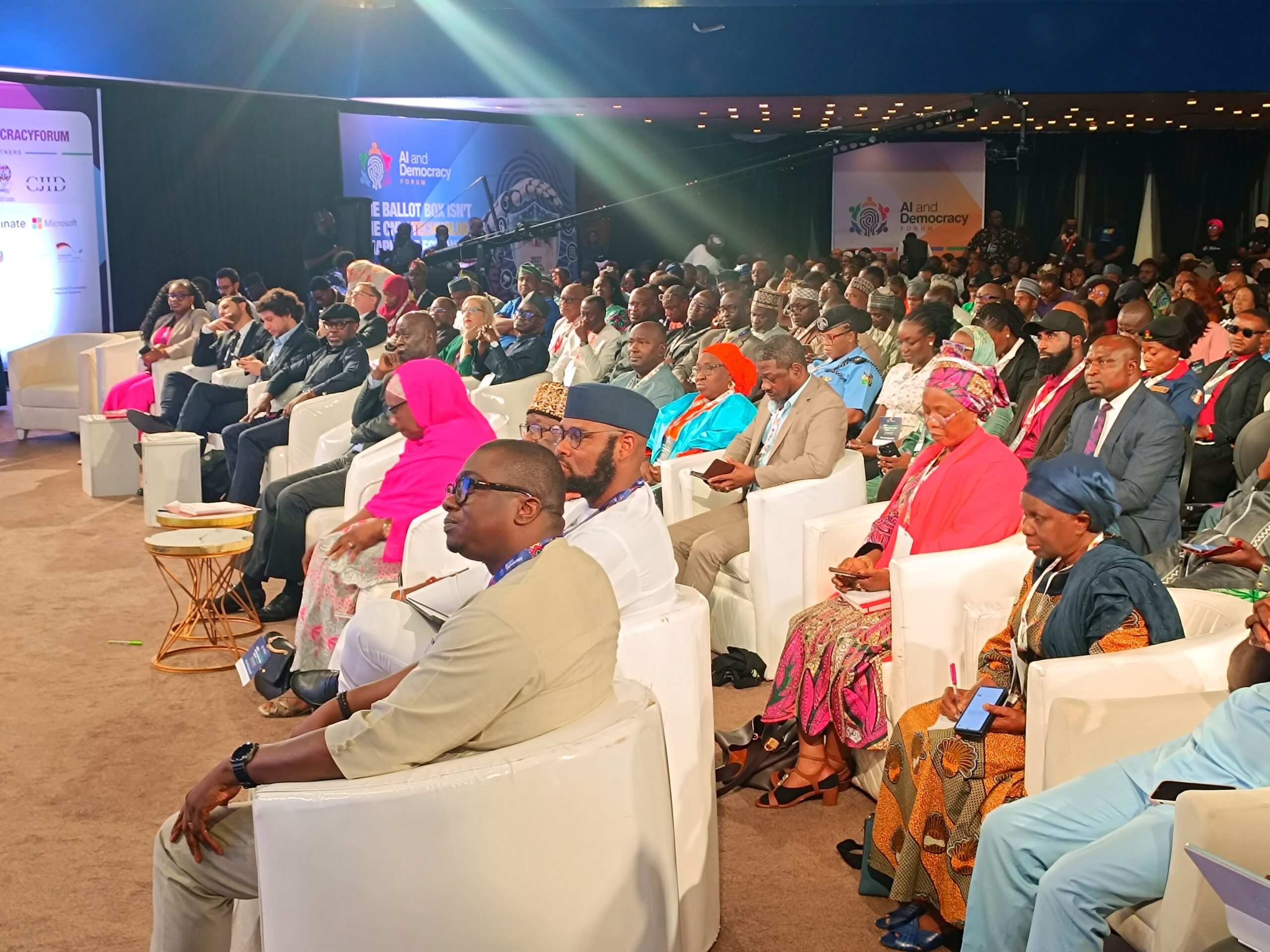
Participants at the Artificial Intelligence and Democracy Forum 2026 in Abuja.
He described the elections as one of the largest and most complex democratic exercises on the continent, involving more than 103 million registered voters, 176,846 polling units across 774 local government areas and multiple elections at federal and state levels.
The greatest threat we face is not the hacking of a ballot box, but the hacking of the voter’s mind.
According to him, INEC has completed 10 of the 14 major operational milestones outlined under the Electoral Act 2026.
He also disclosed that the commission had procured additional Bimodal Voter Accreditation System (BVAS) devices, digitised candidate nominations through its INEC Candidates Nomination Portal and processed more than 15,000 nominations involving 22 political parties.
The commission has also introduced online voter registration, which the chairman described as a significant development in efforts to improve electoral administration.
Amupitan said INEC was exploring the responsible use of AI to improve election logistics, assist in auditing results, maintain the integrity of biometric databases, provide voter information in multiple Nigerian languages and strengthen cybersecurity.
However, he emphasised that the commission would maintain strict human oversight of critical electoral operations.
He said decisions concerning voter accreditation, result collation and candidate qualification would not be left entirely to automated systems, adding that human accountability, statutory oversight and judicial review would remain central to the electoral process.
The INEC chairman also raised concerns about the growing use of generative AI to create deepfakes, manipulate digital content, conduct targeted political advertising and spread misleading information.
He warned that such practices could undermine voters’ ability to make informed decisions if false information became increasingly difficult to distinguish from authentic content.
“The greatest threat we face is not the hacking of a ballot box, but the hacking of the voter’s mind,” Amupitan said.
He added that when voters could no longer distinguish between verified information and fabricated content, the foundation of informed democratic choice would be weakened.
To address these challenges, Amupitan disclosed that INEC had established a specialised AI Unit within its Information and Communication Technology Directorate.
According to him, the unit is equipped with digital monitoring tools, deepfake detection software and data analytics capabilities to identify emerging technological threats and monitor attempts to manipulate electoral information.
He called for stronger cooperation among political parties, civil society groups, the media, security agencies, the judiciary and technology companies to protect the integrity of the 2027 elections.
On election day in 2027, it will be the thumbprint of the Nigerian citizen, guided by their own will and their own hopes, that decides our future.
The chairman urged political parties to adopt an Ethical AI Code of Conduct, while encouraging civil society organisations to monitor algorithmic transparency and digital campaign spending.
He also called on security agencies and judicial institutions to strengthen their capacity in cybercrime investigations and digital forensics.
Media organisations, he said, should establish specialised digital forensic desks to verify user-generated content before publication or broadcast.
As part of the proposed measures, Amupitan advocated the establishment of an Electoral Information Integrity Coalition comprising INEC, civil society organisations, the Nigerian Guild of Editors, the Nigeria Fact-Checking Coalition, media organisations and telecommunications operators.
The proposed coalition, he explained, would serve as an early-warning mechanism for detecting and responding to viral misinformation, including falsehoods generated through artificial intelligence.
Amupitan maintained that the outcome of the 2027 elections would ultimately depend on the choices made by Nigerians across different communities and professions.
He cited market women in Aba, farmers in Sokoto, teachers in Ibadan, technology entrepreneurs in Lagos, fishermen in Bayelsa and students in Maiduguri as examples of citizens whose decisions would shape the country’s political future.
“On election day in 2027, it will be the thumbprint of the Nigerian citizen, guided by their own will and their own hopes, that decides our future,” he said.
“INEC’s job is to ensure that the voice of the people is heard clearly, above the noise of the machines.”
He concluded that the future of Nigerian democracy should not be determined by the capabilities of technology alone, but by the choices citizens make through established democratic institutions and laws.
His remarks placed the responsible use of artificial intelligence, the protection of electoral information and the preservation of human oversight at the centre of preparations for Nigeria’s 2027 general elections.
Read Also: 10 Key Factors: INEC Chairman Reveals What Will Decide 2027
Author

Sign up for The Insight Newsletter
Get in-depth, research and data-based interpretative reports from around Nigeria.