
10 Key Factors: INEC Chairman Reveals What Will Decide 2027
Key points:
- Nigeria has 103.4m voters; Lagos 7.4m leads, Ekiti 1.05m lowest.
- 232,658 disabled voters registered; voters register display Oct 9-15.
- INEC creates AI Division to detect deepfakes and audit results.
- Biggest gap is result collation, not voting; new safeguards introduced.
- INEC demands N873bn for 2027, says staff need living wage.
By Emmanuel Kwada
With just 100 days to Nigeria’s 2027 General Election, the Independent National Electoral Commission (INEC) has identified several factors that could shape the credibility, outcome and public confidence in the polls.
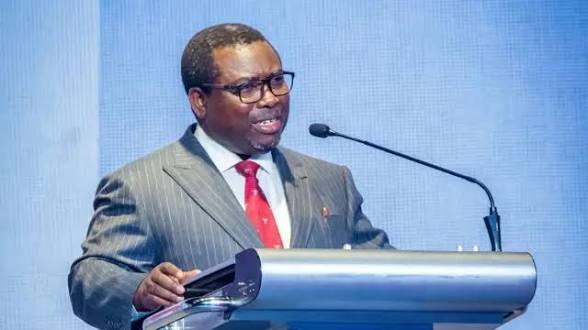
INEC Chairman, Prof. Joash Ojo Amupitan, SAN, disclosed the commission’s latest preparations on Tuesday in Abuja during a World Press Conference and National Stakeholders’ Meeting marking the 100-day countdown to the election.
Nigeria now has about 103.43 million registered voters.
From the size and distribution of the voters’ register to technology, funding, result collation, security, staff welfare and the growing threat of artificial intelligence-generated misinformation, the Chairman’s briefing provided an insight into what could determine the success of the 2027 elections.
Here are 10 key factors:
1. The size and distribution of the voters’ register
INEC says Nigeria now has about 103.43 million registered voters, making the 2027 election one of the largest electoral exercises in the country’s history.
Lagos has the highest number of registered voters with 7,488,633, followed by Kano with 6,570,276.

Permanent Voter’s Cards
Kaduna comes third with 4,662,640, followed by Katsina with 3,876,051 and Rivers with 3,736,434.
Oyo has 3,588,111, Delta 3,525,988, Benue 3,057,225, Ogun 3,037,981, while Bauchi completes the top 10 with 3,012,547 registered voters.
At the lower end, Bayelsa has 1,200,691 registered voters, Ekiti 1,055,708, the FCT 1,732,043, Yobe about 1 million, while Gombe has 1,733,641.
The geographical concentration of voters means that turnout and voting patterns in highly populated states could have significant political consequences.
2. Voter verification before election day
INEC will display the voters’ register nationwide from October 9 to October 15, 2026.
The exercise will give voters an opportunity to verify their details and raise objections where necessary.
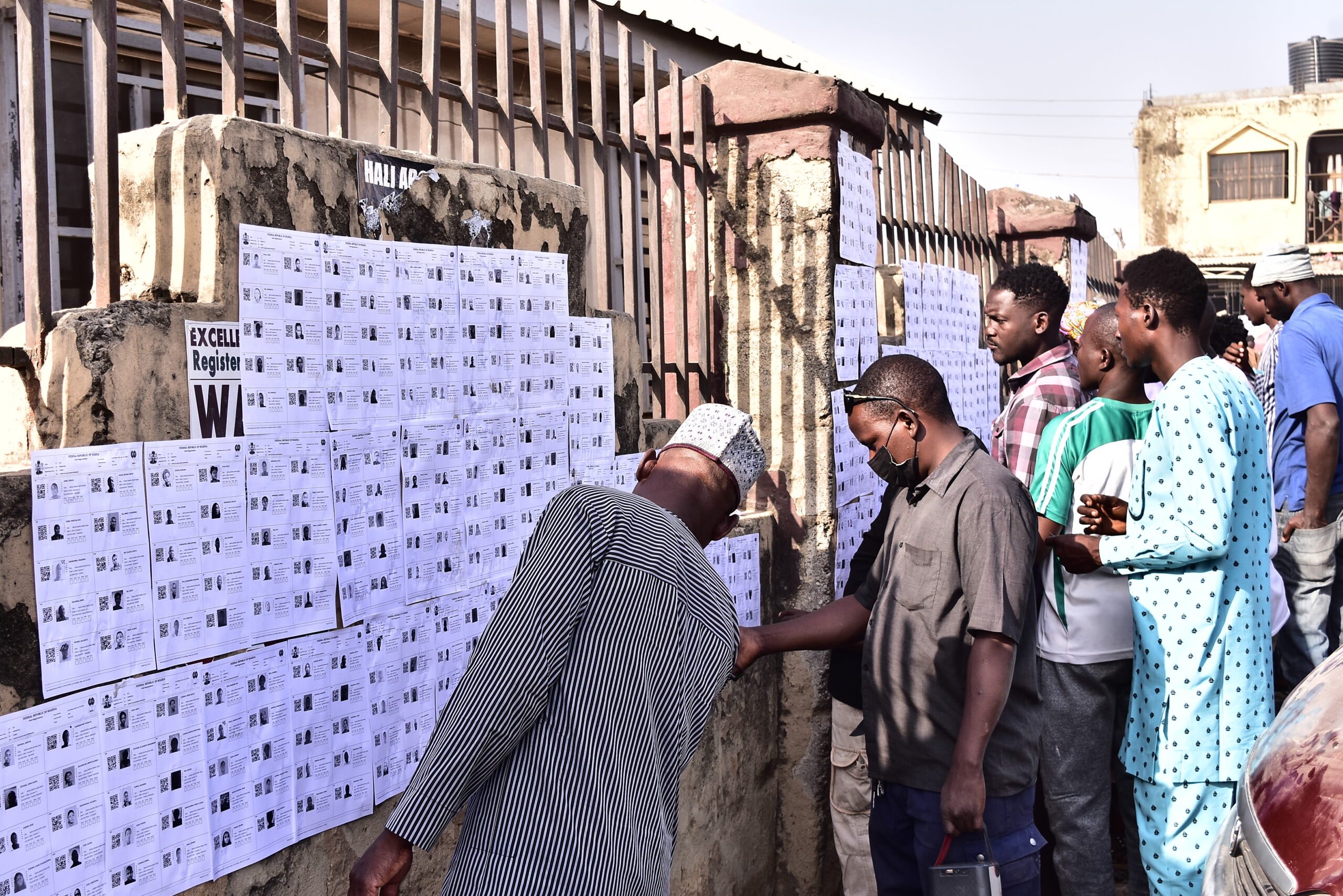
File photo: Voters checking their names at a polling unit before the commencement of voting during the 2023 general elections.
For political parties and voters, the exercise is important because errors, omissions or disputed registrations can become sources of controversy if not addressed before election day.
3. Inclusion of persons with disabilities
INEC disclosed that 232,658 persons with disabilities are registered to vote in 2027, representing about 0.23 per cent of the national register.
The voters are spread across 10 disability categories.
The largest category is classified as “others”, with 101,183 voters, followed by persons with albinism with 44,023, physical impairments with 27,141, visual impairment with 19,936, and deafness with 14,326.
INEC also recorded voters with autism, cognitive or learning disabilities, Down syndrome and spinal cord injuries.
Voters are spread across 10 disability categories.
The figures place accessibility and inclusion firmly on the electoral agenda.
4. BVAS and election technology
Technology will remain central to the 2027 election.
Amupitan disclosed that INEC had acquired 57,000 additional BVAS devices while also replacing existing batteries and upgrading its technological infrastructure.
The commission is also conducting audits and stress tests and plans a nationwide mock accreditation exercise.
The reliability of BVAS and other election technologies could therefore become one of the major determinants of voters’ confidence in the process.
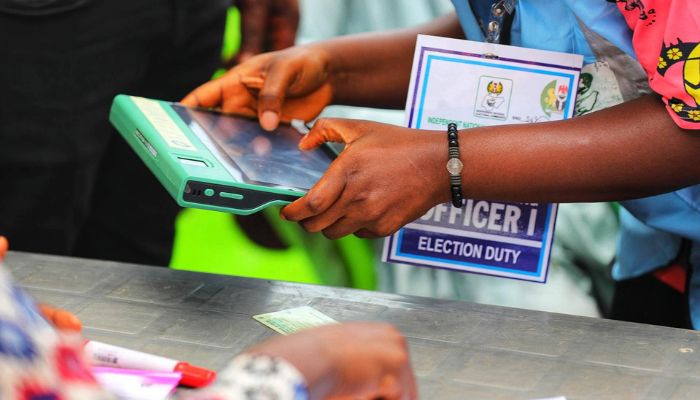
File photo: INEC official operating BVAs Machine during 2023 general elections
5. Artificial intelligence, deepfakes and misinformation
For the first time, AI-generated misinformation is emerging as a major electoral threat.
INEC has established a dedicated Artificial Intelligence Division within its ICT Department and has integrated automated AI auditing tools into its results-verification process.
The system will operate under a five-pillar AI governance framework with mandatory human oversight.
Amupitan warned that generative AI, voice cloning and deepfake videos could be used to fabricate the voices of election officials, result sheets and other official documents.
The challenge, he said, is bigger than individual fake stories because widespread manipulation could cause Nigerians to distrust even genuine information.
6. Result collation
According to Amupitan, one of the major weaknesses identified from previous elections is not necessarily voting at the polling unit but the collation of results.
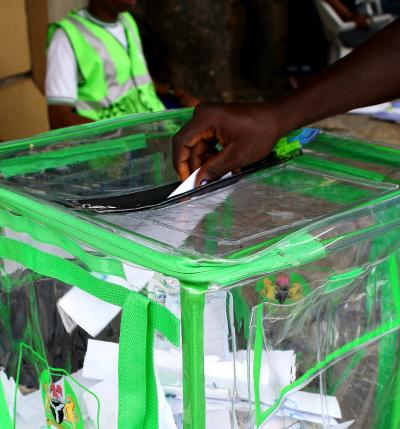
Ballots box
He said INEC was introducing safeguards to address gaps identified in the process and ensure that results from polling units can be reconciled before collation.
The Chairman’s emphasis on collation suggests that the credibility of the 2027 election will depend not only on how Nigerians vote but also on how their votes are transmitted, reconciled, collated and ultimately declared.
7. Media responsibility and premature results
INEC is also putting the media on notice.
Amupitan urged media organisations to strengthen fact-checking mechanisms and use digital forensic tools when dealing with election-related information.
He warned against the declaration of privately collated results, stressing that the statutory authority to declare election results rests with INEC.
For the 2027 election, the race for information could therefore become almost as important as the race for votes, particularly as social media platforms make it possible for unverified claims to spread within minutes.
8. Funding and logistics
Money remains another critical factor.
Amupitan appealed to the Federal Government to release the outstanding funds under INEC’s 2026 budget, stressing that a national election of this magnitude requires strong financial backing and fiscal discipline.
INEC has projected substantial expenditure for the 2027 polls, covering personnel, logistics, technology, administration, infrastructure and other election-related activities.
No electoral technology or logistics plan can succeed without a secure environment.
The commission has also commenced procurement, including the acquisition of new BVAS devices, voting cubicles and operational vehicles, as well as the construction of dedicated BVAS storage facilities and renovation of offices nationwide.
Timely funding will therefore be crucial to completing these preparations without disruption.
9. Security and stakeholder cooperation
No electoral technology or logistics plan can succeed without a secure environment.
INEC’s preparations involve cooperation with security agencies, political parties, civil society organisations, election observers, traditional and religious leaders, development partners and the media.
The ability of these stakeholders to work together before, during and after the election will be critical to preventing violence, intimidation and disruption.
10. Welfare and integrity of election officials
The people who conduct the election remain at the centre of the process.
Amupitan said INEC staff were among the least-paid workers in Nigeria and argued that the commission could not demand accountability from its personnel without providing them with a living wage.
He disclosed that INEC was moving away from the conventional civil service salary structure to establish a separate salary structure for its personnel.
The Chairman’s argument is straightforward: properly trained, adequately paid and motivated election officials are more likely to deliver a credible election and resist pressures that could undermine the process.
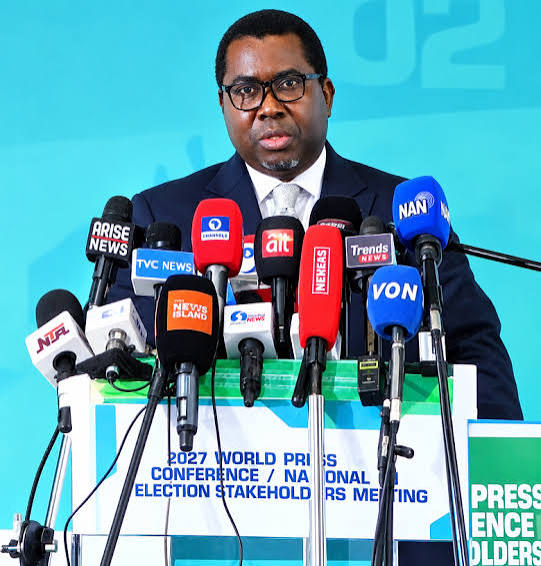
INEC Chairman Prof Joash Amupitan
Amupitan’s 100-day briefing suggests that the 2027 election will be determined by much more than the number of political parties and candidates on the ballot.
It will be shaped by who turns out to vote, the integrity of the voters’ register, the reliability of BVAS, the security environment, the quality of result collation, timely funding, the conduct of election officials, media responsibility and the ability of INEC to contain AI-driven misinformation.
With Nigeria now entering the final stretch to the 2027 polls, the INEC Chairman described the 100-day milestone not simply as a countdown but as “a call to action.”
For voters, political parties, the media, security agencies and INEC itself, the message is clear: the credibility of the 2027 election will ultimately depend on what each stakeholder does between now and election day.
Read Also: Nigeria at 66: 10 Key Takeaways from Tinubu’s Independence Day Address
Author

Sign up for The Insight Newsletter
Get in-depth, research and data-based interpretative reports from around Nigeria.