
Fight Malnutrition With Eggs — Experts Tell Nigerian Parents

Key Points:
- Experts urge parents to include eggs in children’s diets regularly.
- Study shows eggs improve weight but not height scores significantly.
- Daily recommendation is two eggs for students, one for adults.
- Rising feed and chick costs make eggs less affordable nationwide.
- Experts seek government subsidies to boost egg production and accessibility.
By Emmanuel Kwada
Experts urge families to embrace egg consumption as research shows benefits for children’s weight, while calling for government subsidies to make the protein source more affordable.
Experts in animal science and nutrition have urged Nigerian parents to include eggs regularly in their children’s diets, describing them as a nutrient-rich food that could help address malnutrition and support healthy childhood development.
The call comes amid growing concerns about child malnutrition and rising food prices, which have made it increasingly difficult for many Nigerian households to provide balanced meals for their children.
The experts also urged the government to subsidise poultry production inputs, particularly animal feed and day-old chicks, to reduce production costs and improve access to eggs across the country.
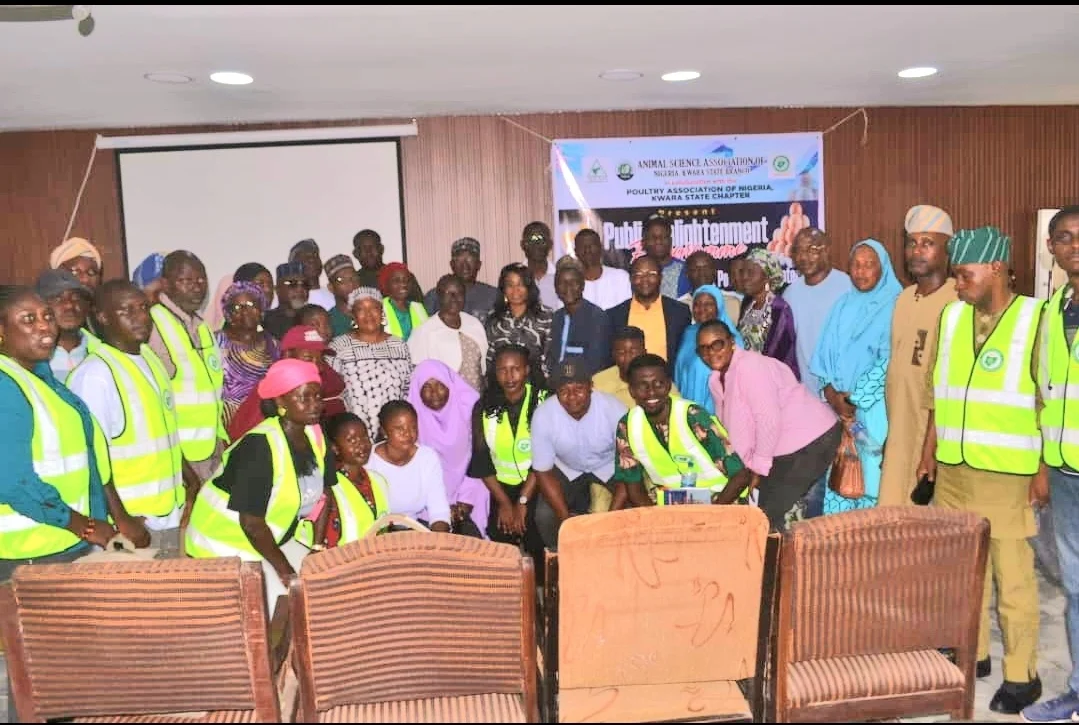
Cross-section of stakeholders from the Animal Science Association of Nigeria, Kwara State Branch, the Poultry Association of Nigeria, Kwara State Branch, and others at an event in Ilorin to mark the 30th anniversary of World Egg Day. Credit: Punch online
Their recommendations were made at a public enlightenment programme held in Ilorin, Kwara State, on Saturday to mark the 30th anniversary of World Egg Day. The event was organised by the Animal Science Association of Nigeria (ASAN), Kwara State Branch, in collaboration with the Poultry Association of Nigeria (PAN), Kwara State Branch.
Speaking at the programme, Victoria Chimezie of the Department of Animal Production, University of Ilorin, said eggs contain essential nutrients required for children’s growth and development.
Chimezie, an animal geneticist, explained that eggs provide essential and non-essential amino acids, vitamins and minerals that can help address nutritional deficiencies associated with poor physical development.
“We see the problem of stunting growth among children. You see the hospital filled with children that are malnourished,” she said, emphasising the need to improve children’s access to nutritious foods.
She also challenged the perception that eating eggs necessarily raises blood cholesterol, explaining that the presence of cholesterol in eggs does not automatically mean that consuming them will increase an individual’s blood cholesterol level.
“The fact that cholesterol is present in eggs doesn’t translate to the fact that the cholesterol in your blood will increase by taking an egg,” she added.
Research Backs Eggs as Part of the Solution
The experts’ recommendations are supported by scientific evidence suggesting that egg-based dietary interventions can improve some nutritional outcomes among children under five in sub-Saharan Africa.
The fact that cholesterol is present in eggs doesn’t translate to the fact that the cholesterol in your blood will increase by taking an egg.
A meta-analysis published in the Journal of Nutritional Science by Cambridge University Press in May 2026 examined seven studies involving 3,673 children to assess the effects of egg-based interventions on childhood nutritional status.
The researchers found that children who received egg-based interventions recorded statistically significant improvements in weight-for-age and weight-for-height scores compared with children in the comparison groups.
The pooled results showed a mean difference of 0.33 in weight-for-age scores and 0.30 in weight-for-height scores, indicating improvements in these measures of nutritional status.
However, the study found no statistically significant improvement in height-for-age scores, which are commonly used to assess stunting and long-term linear growth.
The findings suggest that eggs can contribute to improved weight-related nutritional outcomes, but they should not be presented as a standalone solution to stunting or childhood malnutrition.
The researchers’ analysis focused on randomised controlled trials published between 2013 and 2023 involving children aged six to 59 months in sub-Saharan Africa.
The evidence strengthens the case for considering eggs as part of broader nutrition interventions, alongside a diverse diet, access to healthcare, safe water, sanitation and other measures needed to support children’s development.
The Chairman of ASAN, Kwara State Branch, Samuel Akanbi, also encouraged Nigerians to incorporate eggs into their diets, citing their nutritional contributions to brain development, energy supply and general well-being.
We are encouraging the students to eat two eggs per day.
Akanbi encouraged students to consume eggs regularly and offered a separate recommendation for adults.
“We are encouraging the students to eat two eggs per day; adults can also eat up to that, but the recommendation is one egg per day for adults,” he said.
He cautioned consumers against eating spoiled eggs and urged poultry farmers to maintain proper biosecurity practices and use antibiotics responsibly to reduce disease risks.
While eggs can contribute valuable nutrients to a balanced diet, appropriate consumption levels may vary according to individual nutritional needs and health circumstances.
Rising Prices Threaten Access to Affordable Protein
Despite the nutritional benefits highlighted at the programme, the rising cost of eggs remains a major concern for households already struggling with food inflation.
The Vice-Chairman of PAN, Kwara State Branch, Adedayo Gawati, acknowledged that eggs had become more expensive but maintained that they remained a relatively accessible source of animal protein compared with other options.
“We are not saying eggs are affordable because the price has increased too, but what we are saying is that it is still the cheapest. Everything has gone up. We need to preach the value of eggs,” Gawati said.
He argued that many consumers needed greater awareness of the nutritional value of eggs to encourage healthier food choices.
“I think our problem with eggs is more of the value we place on the eggs themselves. It is the right time for us to place value on eggs, to let people know that it extends life. It makes you live healthier,” he added.
Gawati also called on the government to support poultry farmers, identifying the rising costs of day-old chicks, animal feed and other production inputs as major challenges confronting the sector.
He said reducing these expenses could encourage increased production, improve market supply and potentially make eggs more affordable to consumers.
Similarly, the representative of Civil Society Scaling Up Nutrition in Nigeria, Olufunke Bolaji, urged the government and private sector to provide greater support for poultry farmers.
Bolaji advocated subsidies on animal feed and other essential production inputs, arguing that lowering production costs could help ease the burden on farmers and improve household access to eggs.
The programme, themed “The Mighty Egg: Protein that Powers and Protects,” brought together animal scientists, poultry farmers, students and other stakeholders to discuss egg nutrition, healthy eating and challenges facing poultry production.
Some participating students said the event had improved their understanding of the nutritional benefits of eggs.
Blessing Adeogun of Glory Seed High School, Ilorin, said she learnt that eggs could provide energy and help students maintain concentration.
Another participant, Maryam Abdulakeem of Ansar-Ud-Deen Islamic Senior Secondary School, Ogbondoroko, said the programme had broadened her understanding of eggs as an important source of protein.
Children who received egg-based interventions recorded statistically significant improvements in weight-for-age and weight-for-height scores.
The event also featured goodwill messages from representatives of the Kwara State Ministries of Livestock Development and Youth Development, as well as the Agricultural and Rural Management Training Institute.
The stakeholders called for sustained nutrition education, improved poultry production practices and government intervention to make eggs more accessible to Nigerian families.
Their recommendations come against the backdrop of persistent childhood undernutrition, which can affect physical growth, development and long-term well-being.
For many households, the challenge is not simply knowing which foods are nutritious but being able to afford them consistently.
Making eggs more accessible, experts argue, will require cooperation among government agencies, poultry farmers, nutrition organisations and the private sector.
The 2026 meta-analysis provides evidence that egg-based interventions can improve certain measures of nutritional status among children under five. However, addressing malnutrition requires a broader approach that combines nutritious food with effective healthcare, improved sanitation, nutrition education and support for vulnerable households.
Read Also: One Healthy Meal Eats 66% of Minimum Wage; Ekiti Worst Hit: 90% of Wage Gone on Food
Author

Sign up for The Insight Newsletter
Get in-depth, research and data-based interpretative reports from around Nigeria.


