
Experts Warn Against Fake Panels, Push for Local Manufacturing, Single-Digit Financing, Zero Duty on Raw Materials
Key Points:
- FG urged to support local solar manufacturing with low-interest loans and tax incentives.
- Experts reject immediate import ban, warn it would raise prices by 15-25%.
- Nigeria imported 2.9m solar panels worth ₦435bn in 2025 alone.
- Stakeholders demand crackdown on fake, substandard and recycled solar panels.
- Roundtable proposes 3-5 year phased plan to grow local capacity without hurting consumers.
By Emmanuel Kwada
Energy experts, policymakers and renewable energy advocates have called for affordable financing, stronger quality control and a phased localisation policy to strengthen Nigeria’s solar industry without making solar products unaffordable for households and businesses.
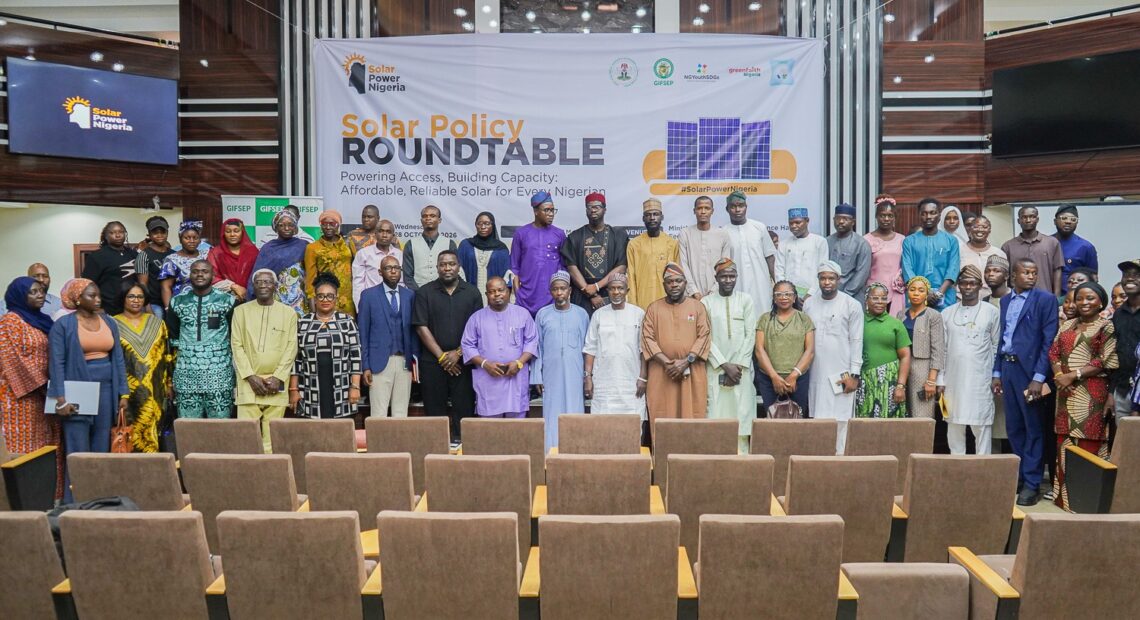
The call was made on Wednesday, October 28, 2026, at the Abuja Solar Policy Roundtable, organised by the Global Initiative for Food Security and Ecosystem Preservation (GIFSEP), the office of the Special Assistant to President on Climate Change Matters, the Solar Power Nigeria Campaign, and other partners at the Federal Ministry of Education Conference Hall, Abuja.
Participants stressed that although local solar manufacturing could create jobs, conserve foreign exchange and improve energy security, the government must first address gaps in production capacity, access to finance, raw materials and quality assurance before imposing restrictions on imported solar panels.
Expanding access to solar power could reduce operating costs for farmers, minimise post-harvest losses and strengthen food security.
In his welcome address, Comrade Yussuf Olatunji Kelani, Special Assistant to the President on Climate Change Matters, described affordable and reliable energy as essential to Nigeria’s economic development, climate objectives and resilience.
He said solar energy could help address electricity challenges while supporting agriculture, particularly irrigation, food storage and processing. According to him, expanding access to solar power could reduce operating costs for farmers, minimise post-harvest losses and strengthen food security.
Kelani emphasised that the energy transition must benefit ordinary Nigerians, including young people, women and vulnerable communities, rather than being limited to government institutions and large investors.
“Our energy transition must therefore be inclusive,” he said.
He urged stakeholders to ensure that policies designed to promote local manufacturing did not undermine affordability or restrict access to electricity for households and small businesses.
Kelani also stressed that the success of Nigeria’s energy transition should be measured by the practical benefits citizens receive.
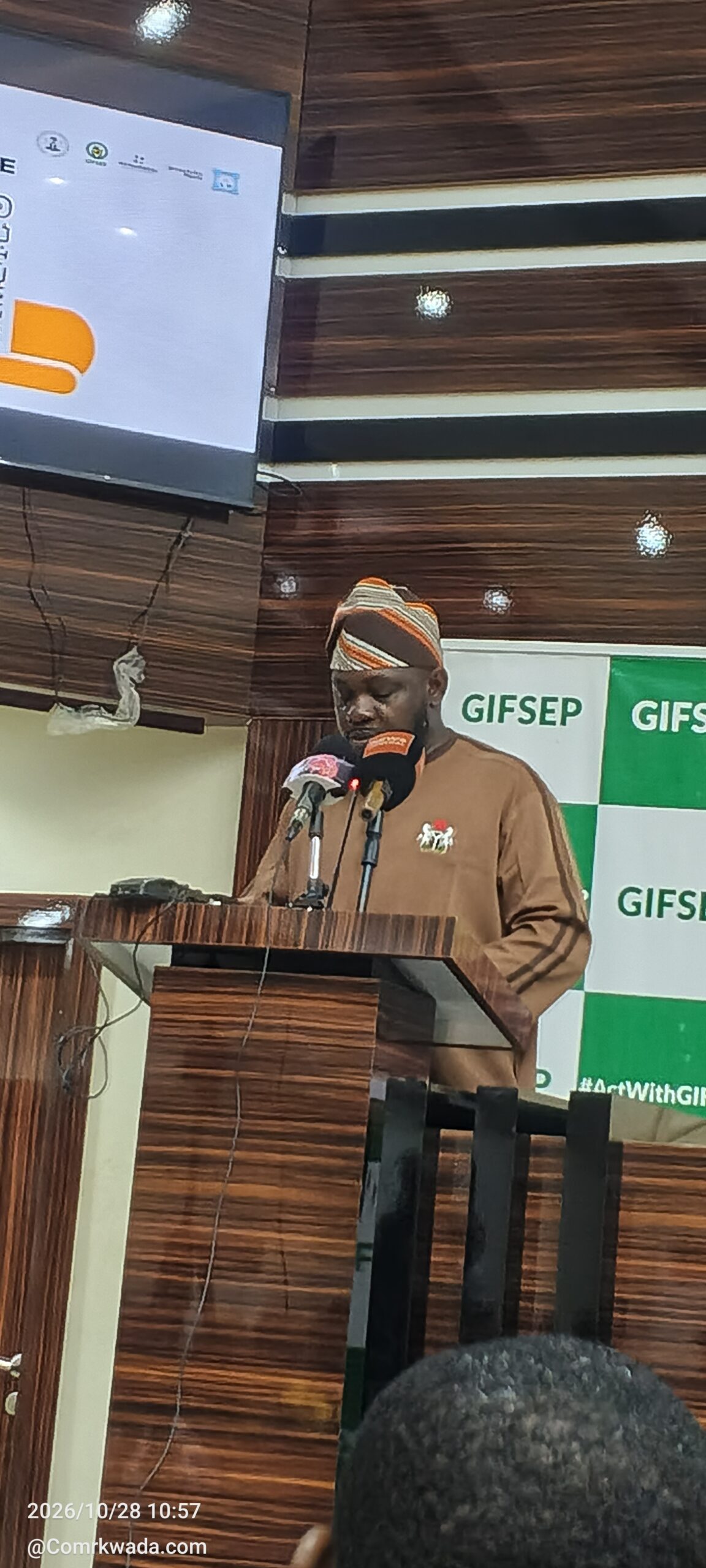
Comrade Yussuf Olatunji Kelani, Special Assistant to the President on Climate Change Matters.
“Our success must ultimately be measured, not in policies adopted or investments announced, but by household pricing relative to electricity,” he said.
His remarks set the tone for discussions on how Nigeria could develop its domestic solar industry while protecting consumers from excessive prices and substandard products.
In his opening remarks, Dr Michael T. David, Executive Director of GIFSEP and co-convener of the Solar Power Nigeria Campaign, described solar energy as a practical route to more reliable and affordable electricity.
He noted that millions of Nigerians continue to contend with unreliable grid power and depend on petrol and diesel generators, which impose significant costs on households and businesses.
You can’t ban importation of solar panels if you do not have manufacturing capabilities in the country.
David commended the Minister of Innovation, Science and Technology, Dr Kingsley Tochukwu Udeh, for stating that Nigeria would not prohibit solar panel imports before developing adequate domestic manufacturing capacity.
Quoting the minister, David said: “You can’t ban importation of solar panels if you do not have manufacturing capabilities in the country.”
He argued that Nigeria needed a coordinated policy framework that would encourage local production without exposing consumers to unnecessary price increases or unreliable alternatives.
“The solar sector is too important to be left with fragmented oversight and inconsistent standards,” he said.
David identified skills development, local manufacturing and assembly, and quality assurance as three priorities for building a sustainable solar industry.

He called for technician certification, continuous training and retraining, including opportunities for generator technicians to acquire solar installation and maintenance skills.
He also advocated predictable government policies, accessible financing and stronger coordination among relevant regulatory and standards institutions, including the Standards Organisation of Nigeria (SON), the Nigerian Electricity Management Services Agency (NEMSA) and the Nigerian Electricity Regulatory Commission (NERC), within their respective mandates.
According to him, improving the quality and reliability of solar products and services would strengthen public confidence and support wider adoption of renewable energy.
A major highlight of the roundtable was the presentation of a policy brief by Professor Nasir Fagge Isa, Director of the Centre for Renewable Energy and Sustainability Transition at Bayero University Kano.
Nigeria imported approximately 2.9 million solar panels in 2025, valued at about ₦435.52 billion.
The assessment examined Nigeria’s readiness to expand domestic solar panel manufacturing and the possible consequences of imposing an immediate ban on imported solar modules.
According to the policy brief, Nigeria imported approximately 2.9 million solar panels in 2025, valued at about ₦435.52 billion. It described the country as Africa’s second-largest solar panel importer, citing the Global Solar Council.
The assessment estimated that Nigeria’s operational solar module assembly capacity stood at about 350 megawatts, representing less than 10 per cent of national demand.
It warned that an immediate import ban could increase solar panel prices by between 15 and 25 per cent. For a household system using four 400-watt panels, the additional hardware cost could reach at least ₦80,000.
The policy brief also identified a price gap of approximately ₦14,000 to ₦20,000 per panel between locally assembled products and imported alternatives, underscoring the need to improve local competitiveness before introducing stringent import restrictions.

It recommended a three-to-five-year phased localisation strategy, during which regulated imports would continue while domestic manufacturing capacity, technical skills, supply chains and quality assurance systems were strengthened.
The assessment reported that 80 per cent of industry experts supported a phased transition, while only 1.5 per cent of surveyed respondents considered Nigeria ready for an immediate import ban.
It further indicated that about 90 per cent of experts surveyed rated domestic raw-material supply as inadequate or very inadequate.
Professor Fagge’s presentation highlighted the distinction between assembling imported solar cells and manufacturing the components locally. It noted that much of Nigeria’s existing capacity remains concentrated on assembly rather than the full production chain, including silicon cells and wafers.
The policy brief identified facilities and initiatives involving LPV Technologies, Auxano Solar and the National Agency for Science and Engineering Infrastructure (NASENI) as part of Nigeria’s domestic manufacturing landscape.
The young people are no longer just the leaders of tomorrow; they are leaders for now.
To accelerate the development of local manufacturing, the assessment recommended single-digit, long-term concessional loans, credit guarantees and access to local-currency financing.
It also proposed zero import duties and VAT exemptions for selected raw materials and manufacturing equipment, alongside tax incentives lasting three to five years for qualifying manufacturers.
The brief suggested that Nigeria could consider tariffs of between 10 and 20 per cent on finished imported solar modules as part of a gradual localisation framework, provided consumer affordability and market competitiveness were protected.
It further recommended progressive local-content requirements for selected publicly funded electrification projects, with proposed quotas of between 30 and 50 per cent where certified domestic capacity could meet demand at competitive prices.
The assessment stressed that any local-content requirements should depend on demonstrated production capacity, product quality and affordability rather than political targets alone.
It also called for improved testing facilities, anti-counterfeit measures, compliance with relevant international standards, reliable warranties and after-sales services.
Other recommendations included dedicated industrial power solutions, simplified licensing procedures, research partnerships between universities and manufacturers, and safe disposal and recycling systems for solar panels and batteries.
The brief identified existing policy instruments, including the Electricity Act 2023, Climate Change Act 2021, Presidential Executive Order No. 5, the National Renewable Energy and Energy Efficiency Policy, and Nigeria’s Nationally Determined Contributions, as frameworks that could support the transition.
It argued that effective implementation and policy coordination would be essential to achieving Nigeria’s renewable energy ambitions and net-zero target for 2060.
Panel Discussions Focus on Affordability, Standards and Local Production
Following the policy brief presentation, participants engaged in panel discussions moderated by Professor Jude Omeje.
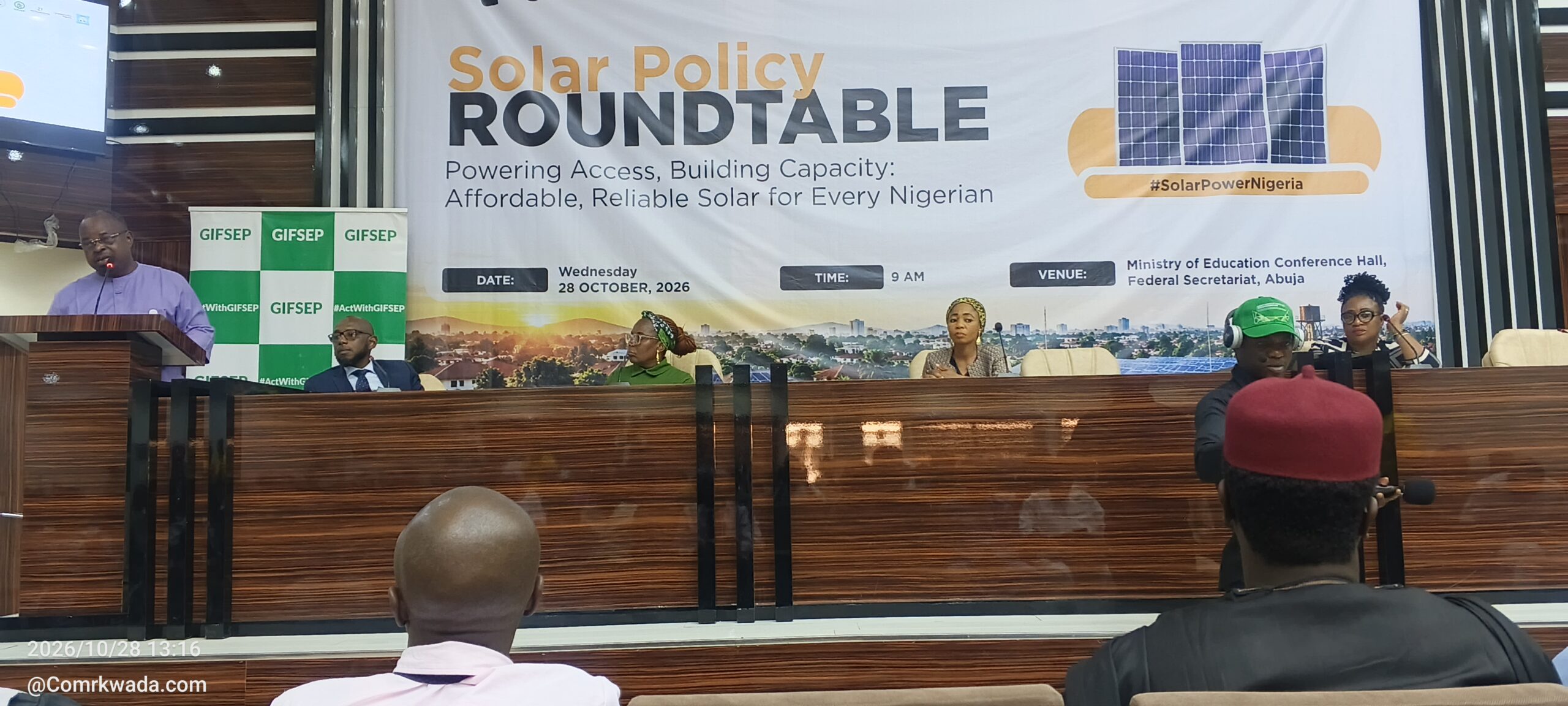
The panelists
The discussions focused on how Nigeria could expand local solar manufacturing while ensuring that consumers continued to have access to affordable, reliable and quality-assured products.
Participants examined the risks associated with an immediate import ban, particularly the potential for higher prices, inadequate supply and reduced access to electricity among low-income households and small businesses.
They also considered the challenges facing domestic manufacturers, including limited access to affordable credit, inadequate local raw-material supply, high production costs, infrastructure constraints and the need for skilled technicians.
Quality assurance emerged as another major concern, with participants emphasising the importance of preventing counterfeit and substandard solar products from entering the market.
The discussions underscored the need for stronger product testing, enforcement of standards, consumer protection and clear warranty requirements to ensure that solar investments deliver reliable performance over time.
Participants also stressed that promoting local production should go hand in hand with investment in research, technical education, workforce development and industrial infrastructure.
The roundtable called for a coordinated approach involving government agencies, manufacturers, financial institutions, research organisations, civil society and development partners.
Our first point of call is to present all the actionable recommendations from our engagement to that committee.
The emerging consensus was that Nigeria should pursue local manufacturing through a carefully managed transition rather than an immediate blanket ban on imports.
Under such an approach, imported products would continue to meet market demand while local manufacturers received targeted support to expand capacity, improve quality and reduce costs.
In his closing remarks, Kelani said the recommendations from the roundtable would be communicated to relevant government authorities and stakeholders for consideration.
He linked the development of Nigeria’s solar industry to President Bola Ahmed Tinubu’s Renewed Hope Agenda, particularly its objectives of economic empowerment, environmental sustainability and the growth of a green economy.
Kelani also highlighted the role of young Nigerians in the energy transition, arguing that they should be actively involved in developing solutions, building businesses and creating jobs in the renewable energy sector.
“The young people are no longer just the leaders of tomorrow; they are leaders for now,” he said.
He urged stakeholders to translate the roundtable’s recommendations into practical measures that would expand electricity access, encourage local innovation and create opportunities for young people.
Kelani reiterated that Nigeria’s transition to cleaner energy must deliver measurable benefits to citizens while advancing the country’s long-term climate commitments.
In his closing remarks, Joseph Ibrahim, Nigeria Campaign Director of the Secure Energy Project, welcomed the government’s reconsideration of an immediate import ban and the reported establishment of an inter-agency committee to develop a coordinated regulatory and safety framework for the solar industry.
He said the campaign would engage with the relevant committee and present actionable recommendations arising from the roundtable.
“Our first point of call is to present all the actionable recommendations from our engagement to that committee,” Ibrahim said.
He added that the policy brief would be shared as an advocacy tool to support further engagement with policymakers and industry stakeholders.
According to him, the recommendations are intended to strengthen product standards, protect consumers, support domestic manufacturing and preserve access to affordable solar energy.
Ibrahim emphasised that the development of local manufacturing must be accompanied by clear standards and practical policies that address the needs of consumers and industry operators.
The roundtable concluded with calls for a balanced solar policy that supports domestic production, discourages counterfeit products, attracts investment and protects Nigerians from unnecessary increases in energy costs.
Participants stressed that Nigeria’s solar transition would be most effective if local manufacturing grew alongside affordable financing, strong quality control, reliable supply chains and continued access to competitively priced products.
Read Also: 2027: Vote Clean Energy – Abuja Campaigners Tell Nigerians as 86 Million Remain Without Electricity
Author

Sign up for The Insight Newsletter
Get in-depth, research and data-based interpretative reports from around Nigeria.

