Ten African Teams to Play at the 2026 World Cup, a First Ever
By Emmanuel Kwada
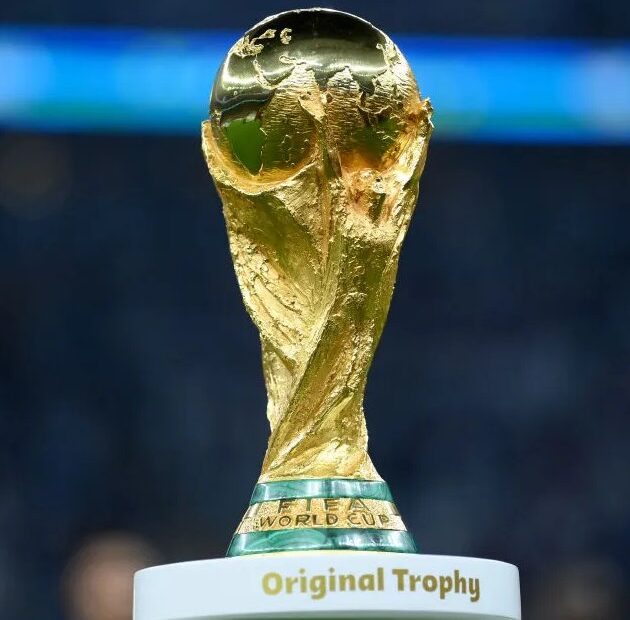
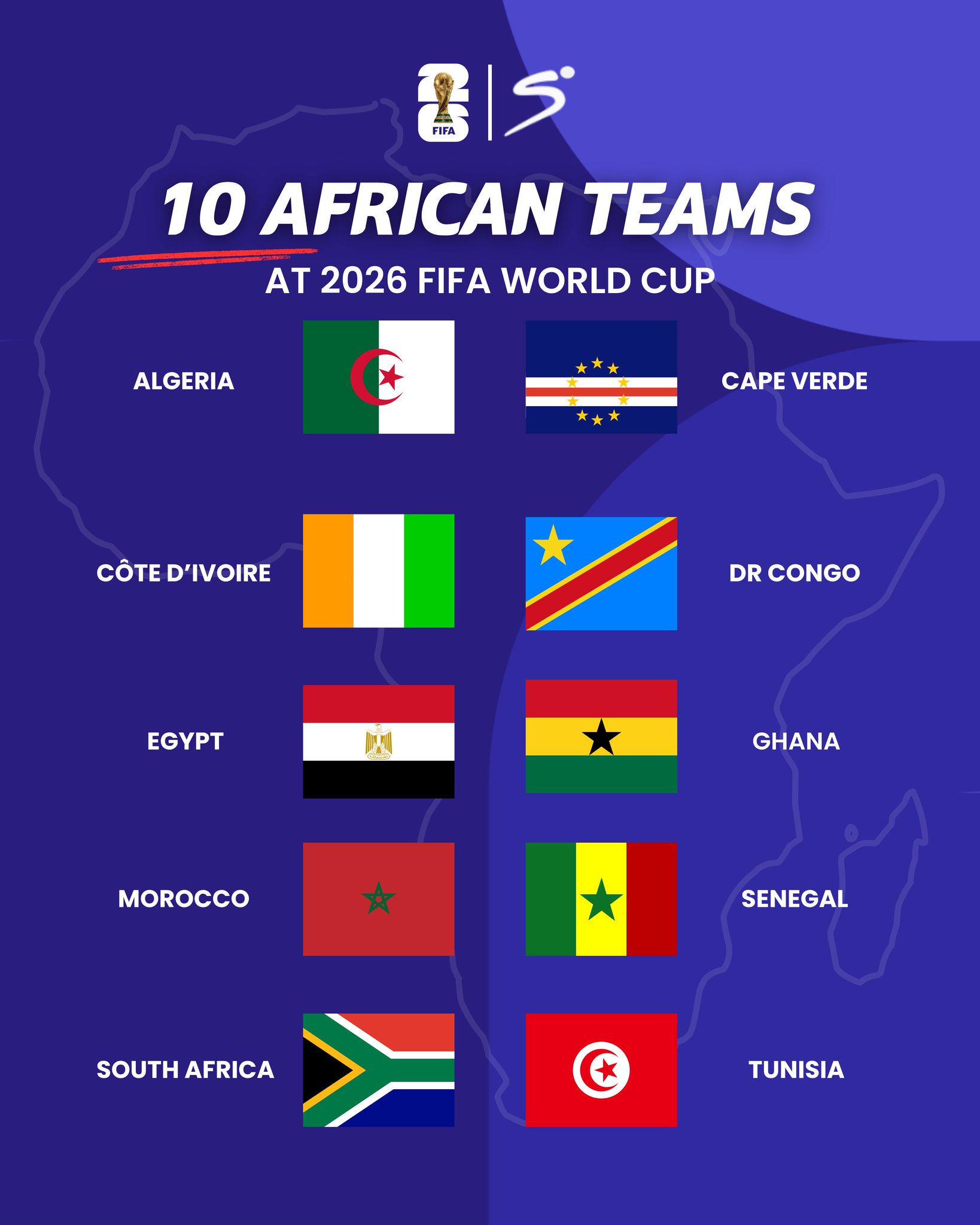
The Confederation of African Football (CAF) has achieved an unprecedented milestone: ten African teams will compete at the 2026 FIFA World Cup in the United States, Canada, and Mexico. This represents the largest-ever representation from the continent at the global showpiece, eclipsing the previous maximum of five teams that featured in every edition from 1998 to 2022 under the 32-team format.
The breakthrough is the direct result of FIFA’s landmark decision to expand the tournament to 48 teams, allocating CAF nine guaranteed direct qualification slots and one additional berth via the inter-confederation playoffs.
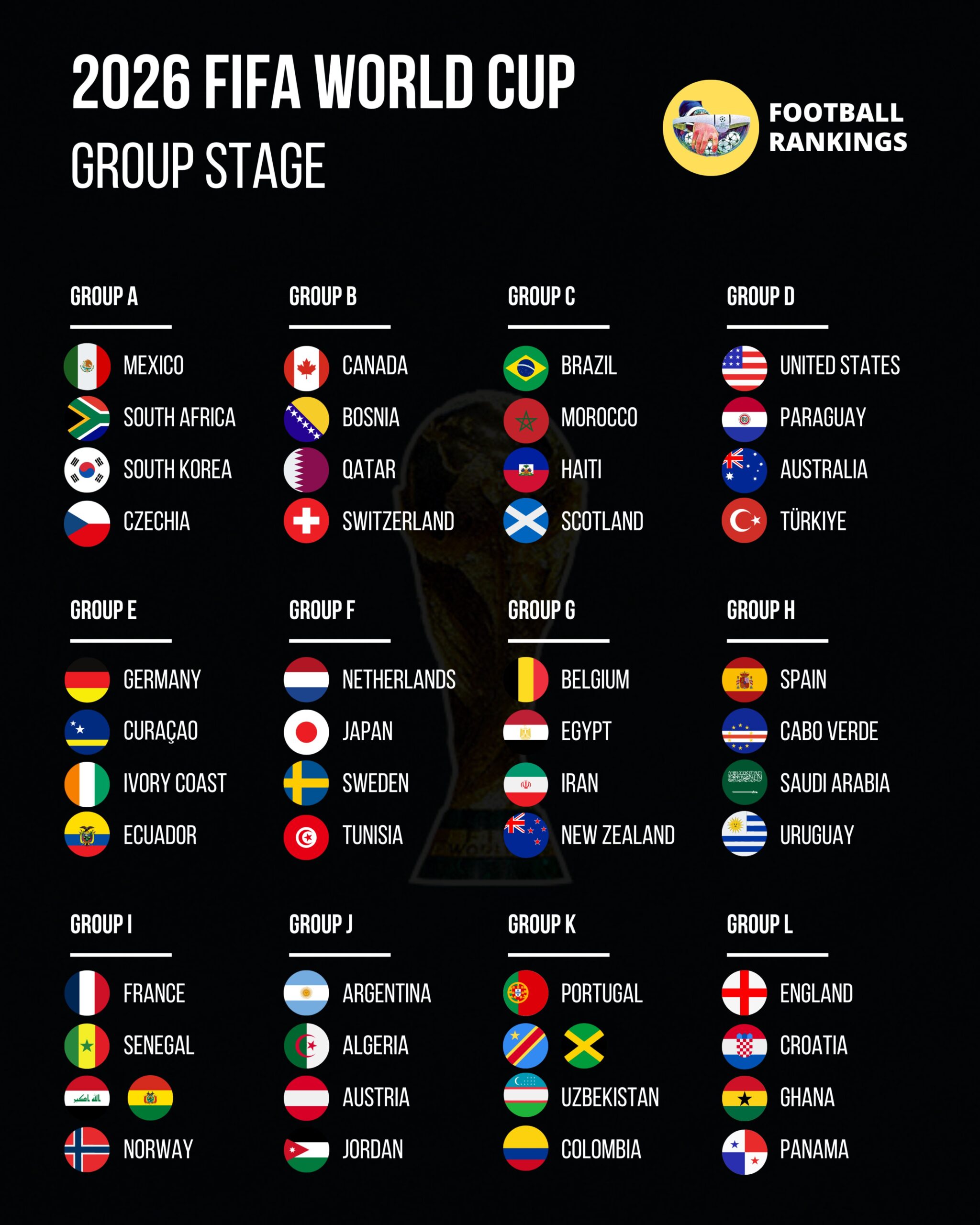
Credit: Football Rankings
After more than two years of grueling qualifiers involving 53 African nations, the final chapter unfolded dramatically in Mexico during late March. DR Congo sealed the tenth and final African spot with a hard-fought 1-0 extra-time victory over Jamaica on March 31, courtesy of a 100th-minute goal by defender Axel Tuanzebe.
The nine teams that secured automatic qualification by topping their respective CAF groups between September and October 2025 are Morocco, Senegal, Algeria, Tunisia, Egypt, Côte d’Ivoire, Ghana, Cape Verde, and South Africa. Together with DR Congo, they form an elite African contingent that promises to inject flair, resilience, and tactical sophistication into a tournament already buzzing with anticipation.
CAF’s qualifying campaign was the most competitive in history. Nine groups of six teams each battled it out in a home-and-away format, producing moments of brilliance and heartbreak.
This is not just about numbers—it is about the elevation of African football, the inspiration it provides to our youth.
Morocco, fresh from their fairy-tale semi-final run in Qatar 2022, stormed through undefeated. Senegal, riding high after recent continental success, showcased trademark defensive steel and attacking verve.
Heavyweights like Algeria, Egypt, and Tunisia reasserted their pedigree, while underdogs Cape Verde and South Africa delivered upsets that captured the imagination of fans across the continent.
The playoff route to the tenth spot was equally theatrical. Nigeria and DR Congo emerged as the final contenders from a mini-tournament among the strongest runners-up, with DR Congo ultimately prevailing to book their inter-confederation date.
Their narrow triumph over Jamaica not only ended a 48-year World Cup absence for the Leopards but also symbolized the depth of talent bubbling beneath Africa’s traditional powerhouses.
FIFA President Gianni Infantino hailed the achievement as “a powerful validation of our vision for a more inclusive World Cup that truly reflects the global game.”
CAF President Patrice Motsepe echoed the sentiment, stating: “This is not just about numbers—it is about the elevation of African football, the inspiration it provides to our youth, and the economic and social transformation it will drive in our communities.”
Under FIFA’s geographic separation rule, no two CAF teams will face each other in the group stage, ensuring each African side has a clear path to progress while adding global flavor to every matchday.
Football fans worldwide—especially the 1.4 billion people across Africa—will be watching. The beautiful game is about to get a distinctly African rhythm.
Read Also: Forbes’ World’s Richest People in 2026
Author

Sign up for The Insight Newsletter
Get in-depth, research and data-based interpretative reports from around Nigeria.