NASRDA, ANSO, AIRCAS Partner to Digitally Transform Agriculture in West Africa

The National Space Research and Development Agency (NASRDA), in partnership with the Aerospace Information Research Institute of the Chinese Academy of Sciences (AIRCAS) and the Alliance of International Science Organisations (ANSO), has launched a regional training workshop to advance digital agriculture across West Africa using satellite technology.
The three-day event which opened on Monday in Abuja, is centered on empowering agricultural extension workers through the use of the CropWatch system — a platform that leverages satellite remote sensing, artificial intelligence, and big data to monitor crop growth, predict yields, and guide policy decisions.
The workshop, titled “Empowering Agriculture Extension Workers for Food Security: The Role of CropWatch in Enabling Agricultural Monitoring and Stabilizing Food Productivity in West Africa”, brings together delegates from Nigeria, Ghana, Liberia, Côte d’Ivoire, Guinea, and other West African countries.
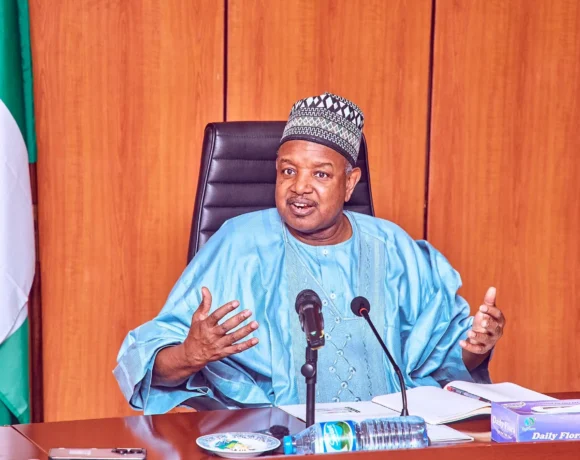
Dr. Matthew Olumide Adepoju, NASRDA Director General, in a speech delivered on his behalf by Alaga Adebayo said, “This collaboration underscores the importance of international cooperation within the UN Agenda 2030 in addressing food security, climate resilience, and agricultural productivity.”
“Our collaboration with AIRCAS on the CropWatch platform will expedite the development of satellite-based information required to achieve zero hunger sooner than expected,” he said.
Adepoju noted that hunger remains a critical challenge across West Africa. “Hunger and malnutrition mean less productive individuals, who are more prone to disease and thus often unable to earn more and improve their livelihoods. NASRDA will continue to support all efforts and partnerships to end hunger in Nigeria and Sub-Saharan Africa,” he stated.
Over the course of the training, participants will learn to interpret satellite data for early warning systems, monitor agricultural trends across the region, and develop informed policies for sustainable food production.
Dr. Rakiya Babamaaji, NASRDA’s CropWatch Nigeria Coordinator, emphasized the strategic importance of the regional center hosted in Nigeria. “Nigeria and Mozambique have the best CropWatch dashboards. Based on our performance, Nigeria was chosen as the host for the West Africa CropWatch Regional Center,” she said.
“This workshop is the first activity under the center and demonstrates that we are ready to support the entire West African region,” she said.
She added that budget and infrastructure constraints were overcome through strategic partnerships. “We approached ANSO and AIRCAS, and they supported us. NASRDA also contributed. The strategy is collaboration — we cannot do it alone.”
Speaking on behalf of the Nigeria Integrated Water Resources Management Commission, Sakinatu Jimeta emphasised the link between agriculture and water sustainability.
“The efforts put into scaling the scope of the project to the West African sub-region to empower agriculture extension workers and stakeholders are crucial for food security. CropWatch is a valuable tool enabling agricultural monitoring and stabilizing food productivity,” she said.
Prof. Wu Yirong, Director General of AIRCAS, highlighted the significance of real-time data in transforming food systems.
“Global CropWatch provides critical information for farmers, policymakers, and food traders. It allows stakeholders to use satellite data to monitor crop conditions and make informed decisions. We want to train more young talent in Nigeria and West Africa to use this platform to support food security,” he said.
Dr. Kofi Asare of the Ghana Space Science and Technology Institute echoed this vision.
“We are moving to digitalize agriculture so that farmers can manage their farms using scientific evidence. With satellite data, they can identify problems on their fields—whether it’s soil moisture, pests, or fertility—and apply the right solutions,” he said.
He also pointed out that satellite-driven data would enhance access to financing and insurance. “Once you are able to digitalize agriculture, it becomes more attractive to youth. It also helps financial institutions assess farmers better, reducing risk perceptions,” Asare added.
With participation from regional stakeholders, ministries, and the private sector, the CropWatch training workshop aims to build a unified framework for using space-based tools to tackle hunger, improve food production, and make West Africa more resilient to climate change.
“This training represents a significant milestone in our collective efforts to harness space technology and remote sensing for sustainable agricultural development,” Dr. Adepoju added.
“To our participants, take full advantage of this opportunity — the knowledge gained here will shape the future of farming in West Africa.”
Author

Sign up for The Insight Newsletter
Get in-depth, research and data-based interpretative reports from around Nigeria.