
GIFSEP Empowers 50 More Women in Katsina-Ala, Oju on Path to Economic Resilience
…GIFSEP Empowers 90 Women in Benue Through Livelihood Support Programme
By Emmanuel Kwada
The Global Initiative for Food Security and Ecosystem Preservation (GIFSEP) has onboarded 50 additional women in Katsina-Ala and Oju Local Government Areas of Benue State into a livelihood support programme aimed at strengthening household economic resilience and promoting sustainable livelihoods.
The latest intervention brings to 90 the number of women engaged in the programme, following the earlier onboarding of 40 women in Makurdi under the Bridging the Gaps in Women’s Health and Well-being (BtG) Project.
The initiative is designed to help economically vulnerable women develop sustainable sources of income, improve their household welfare and gradually achieve greater financial independence.
BtG Project’s focus on improving the well-being and economic resilience of women and girls.
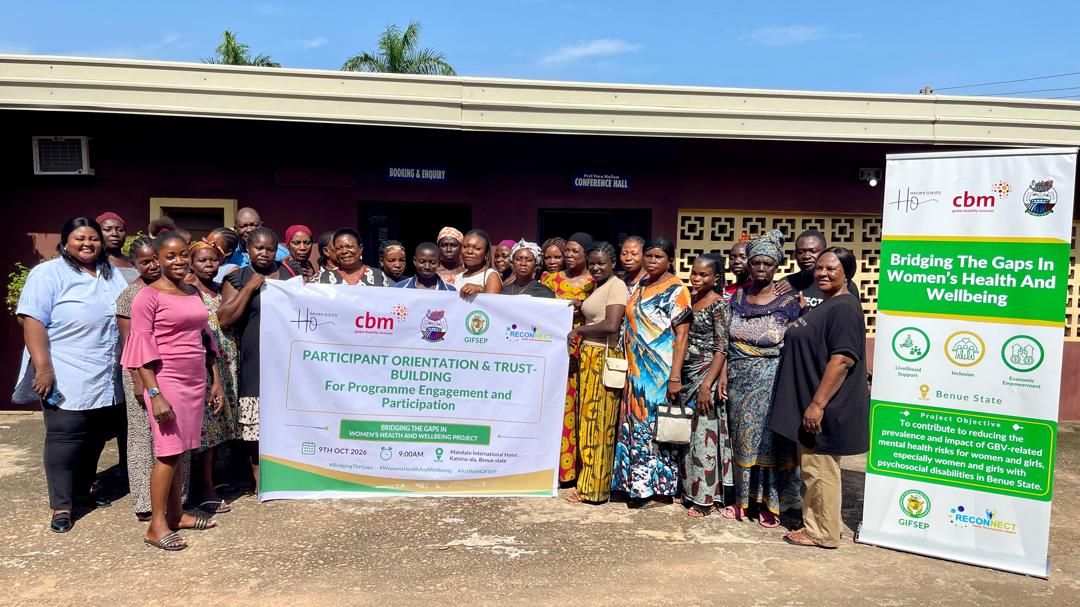
The orientation sessions in Katsina-Ala and Oju brought together 25 women from each local government area. The project is implemented by GIFSEP, funded by the Hauwa Ojeifo Global Impact Fund for Women and Girls, with technical support from CBM Global Nigeria.
The sessions introduced participants to the project’s objectives, implementation framework and expectations, while providing an opportunity to clarify their responsibilities and understand the support available throughout the programme.
Speaking during the sessions, Project Manager Dorcas Nicanor outlined the BtG Project’s focus on improving the well-being and economic resilience of women and girls.
She explained the programme’s implementation timeline and emphasised the importance of participants’ commitment and active involvement in achieving its objectives.
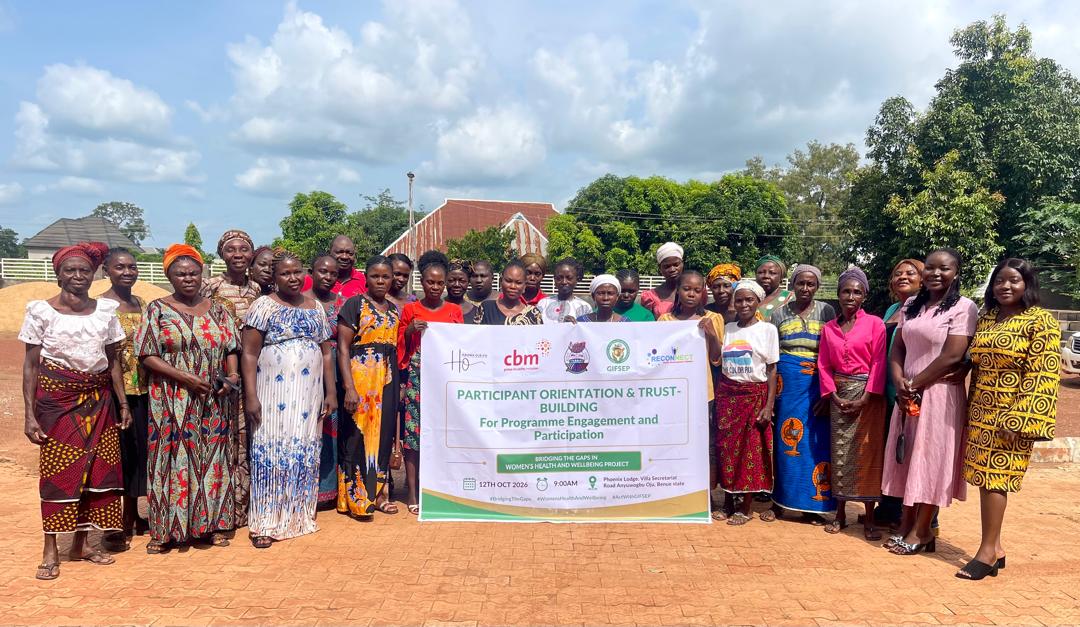
Participants during the orientation and onboarding session for the Graduation Programme under the Bridging the Gaps in Women’s Health and Well-being (BtG) Project in Katsina-Ala LGA, Benue State. The project is implemented by GIFSEP.
The Graduation Approach was further explained by Project Officer Dorcas Iorkusa as a structured, phased intervention designed to help participants move from economic vulnerability towards more stable livelihoods and self-reliance.
Under the programme, the women will receive support to establish or strengthen businesses that align with their skills, interests and available market opportunities.
Potential livelihood activities include vegetable and crop farming, small-scale retail and trading, food vending and catering, poultry farming, and small livestock rearing.
The approach seeks to provide participants with a practical pathway to economic independence rather than relying solely on short-term financial assistance.
Through the combination of livelihood development and other support measures, the programme aims to help women build income-generating activities capable of supporting their households over time.
Participants were encouraged to identify trusted individuals and safe locations, memorise emergency contact.
Beyond economic empowerment, the orientation sessions placed significant emphasis on safeguarding, gender-based violence (GBV) prevention and the protection of women’s rights.
Participants were sensitised to different forms of abuse and harmful behaviour, including sexual violence, molestation, emotional abuse and cyberbullying.
The discussions highlighted the importance of recognising early warning signs, establishing healthy personal boundaries and seeking assistance when faced with potentially dangerous situations.
The women were also reminded of their rights to dignity, access to information, freedom to express concerns and the ability to live in safe environments, regardless of gender, age or disability.
As part of the safety guidance, participants were encouraged to identify trusted individuals and safe locations, memorise emergency contact numbers, keep important contacts accessible and understand how to report abuse through appropriate channels.
The sessions also stressed the need to create supportive environments where women and girls can report incidents and seek help without fear of intimidation or retaliation.
The Graduation Approach combines social protection with livelihood development to help vulnerable households meet immediate needs while building long-term financial stability.
Organisers said integrating safeguarding and protection awareness into livelihood support was essential to ensuring that participants could pursue economic opportunities while protecting their dignity, safety and well-being.
The onboarding of the 50 women in Katsina-Ala and Oju builds on the earlier engagement with 40 women in Makurdi, extending the reach of the BtG Project to more beneficiaries across Benue State.
During the Makurdi orientation, GIFSEP Executive Director, Dr. Michael Terungwa David, explained that the Graduation Approach combines social protection with livelihood development to help vulnerable households meet immediate needs while building long-term financial stability.
He also highlighted the importance of responsible financial decisions, careful livelihood planning and sustained participation in the programme.
The Makurdi intervention included plans for conditional cash transfers over six months to help stabilise household consumption and ease immediate financial pressures as participants develop their livelihoods.
GIFSEP and its partners are working to bridge gaps in women’s health and well-being by expanding access to livelihood opportunities.
Together, the engagements in Makurdi, Katsina-Ala and Oju demonstrate the project’s broader commitment to addressing the economic and social challenges affecting women and girls.
Participants in Katsina-Ala and Oju expressed enthusiasm about their inclusion in the programme and readiness to begin the next phase of their livelihood development.
Through the BtG Project, GIFSEP and its partners are working to bridge gaps in women’s health and well-being by expanding access to livelihood opportunities, strengthening protection mechanisms and supporting women to become more economically resilient.
With 90 women now onboarded across the three locations, the initiative seeks to create pathways towards sustainable incomes, stronger households and more inclusive communities.
Read Also: GIFSEP Launches Livelihood Journey for 40 Women Under Women’s Health, Well-being Project
Author

Sign up for The Insight Newsletter
Get in-depth, research and data-based interpretative reports from around Nigeria.