Five miracles that took Dogara to the House of Representatives
By Emmanuel Kwada
A former Speaker of the House of Representatives, Yakubu Dogara’s entry into the National Assembly in 2007 can rightly be described as miraculous, especially when compared to the enormous financial demands placed on today’s aspirants. Contemporary candidates must raise millions of naira to cover the cost of expression of interest forms, nomination fees, primary elections, campaigns, court cases, and other expenses.
Dogara represented the Bogoro/Dass/Tafawa Balewa Federal Constituency of Bauchi State, a politically vibrant zone comprising three local government areas in southern Bauchi.
For the 2027 elections, aspirants to the House of Representatives are required to pay ₦1 million for the expression of interest form and ₦9 million for the nomination form, totaling ₦10 million.
Dogara’s experience may be tagged as an out of the world miracle for aspirants into seats in the National Assembly today.
In contrast, Dogara recalled that in 2007 his nomination form was sent to him directly by the Peoples Democratic Party (PDP), courtesy of then Bauchi State Governor Adamu Mu’azu.. Dogara’s experience may be tagged as an out of the world miracle for aspirants into seats in the National Assembly today.
For instance, the high nomination fees and institutional hurdles in obtaining nomination forms and winning elections, are now prohibitive for many, especially younger politicians and those without strong financial backers.
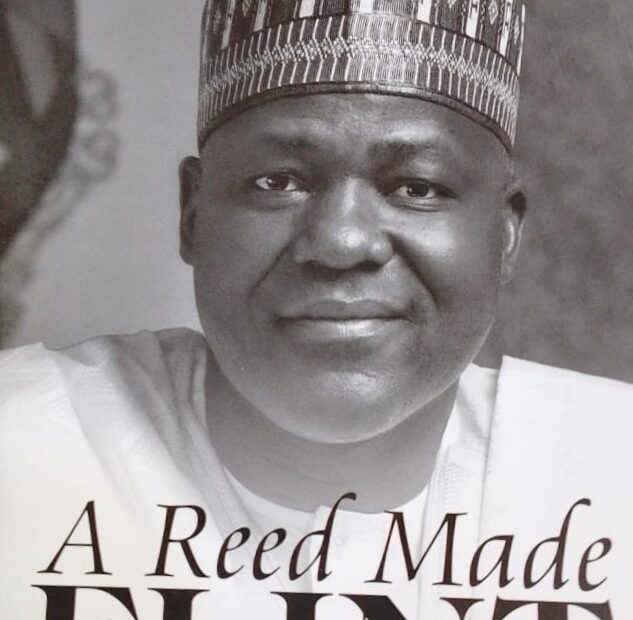
Recounting his experience in his biography, A Reed Made Flint, by Dele Momodu, Dogara said Ex-Governor Muazu held his hand and dragged him into the tough race, by buying the form for him and encouraging him to enter into the contest, against all odds.
Why would Muazu invest so much in him? The ex-Governor explained in an interview featured in the book: “You [Dogara] have all it takes. And so, I’ve decided that since your constituency is made up of three local governments and we have representatives from the other two local governments, to ensure fairness I feel the seat should move to your local government Bogo. Having considered all the options, I am convinced you’re the one who should run for that office. You are reasonable enough to occupy political positions and have more responsibility.”
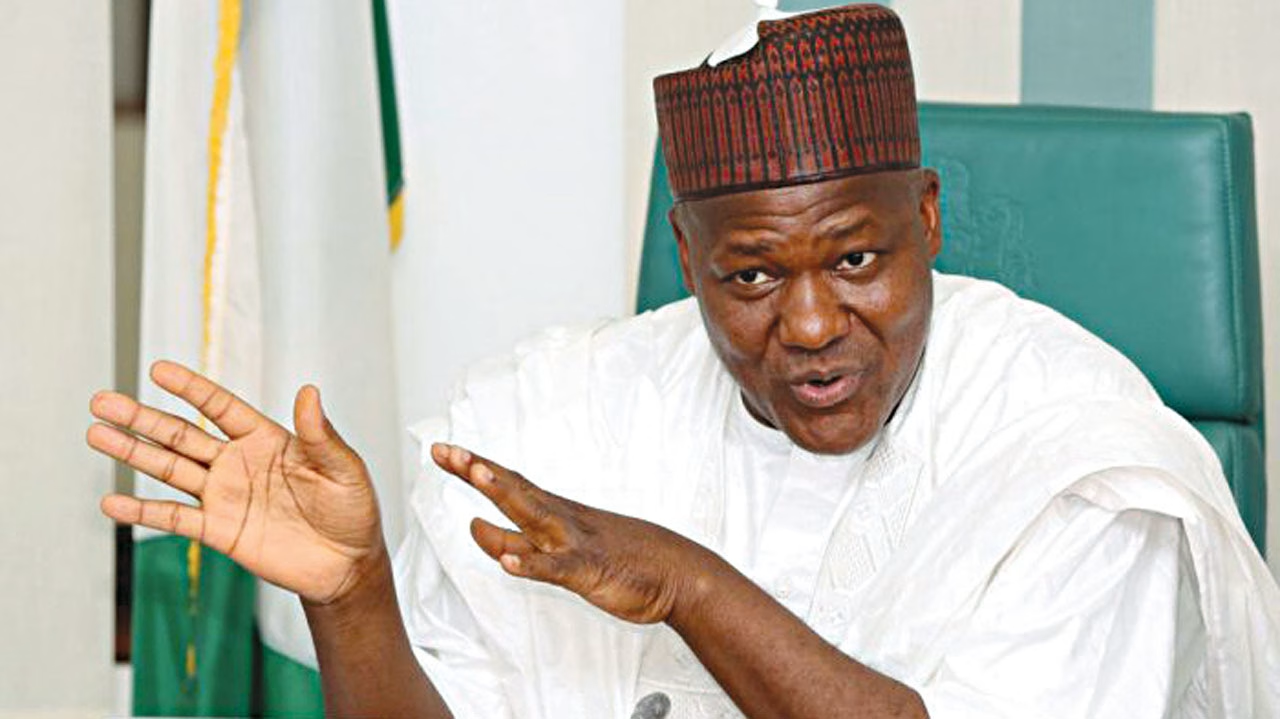
Yakubu Dogara
Former Governor Adamu Mu’azu had already tested Yakubu Dogara’s capacity for public service through a prior appointment. When Alhaji Habibu Mohammed from Bauchi State was named Minister of State for Transportation, under former President Olusegun Obasanjo in June 2001,Mu’azu nominated Dogara to serve as the Minister’s Special Assistant.
In that role, Dogara quickly distinguished himself as the intellectual and administrative backbone of the minister. He immersed himself in research, policy writing, and the practical execution of projects, often overcoming the bureaucratic bottlenecks and resistance that civil servants placed before every decision.
His diligence, creativity, and loyalty ensured that the Minister’s office functioned with unusual efficiency.
This experience became a proving ground for Dogara’s leadership qualities. Mu’azu observed how the young aide transformed challenges into opportunities, demonstrating both competence and resilience. Convinced by Dogara’s performance, the governor concluded that he possessed the maturity, discipline, and vision required to represent Bauchi State at the national level.
It was this conviction—rooted in Dogara’s hard work and integrity—that led Mu’azu to support his candidacy for the House of Representatives. In hindsight, the appointment was not just a test but a divine stepping stone, preparing Dogara for the larger responsibilities that awaited him in Nigeria’s legislature.
Balewa’s death was not just history—it was a cautionary tale, a stark reminder of the dangers that lurked in politics.
The former governor’s endorsement was only the first and simplest step in the chain of events that eventually carried Yakubu Dogara to the House of Representatives.
What followed was far more arduous, marked by resistance, uncertainty, and what many would later describe as a succession of miracles. One of the earliest obstacles came from within his own family.
Dogara’s father and siblings strongly opposed his ambition, insisting that politics was both corrupt and perilous. To them, the political arena was a treacherous space where integrity was often sacrificed and lives put at risk.
Their fears were not unfounded. They pointed to the tragic fate of Sir Abubakar Tafawa Balewa, Nigeria’s first Prime Minister, who hailed from the same local government area as Dogara.
Balewa was assassinated during the illfated coup of January 15, 1966, a national trauma that left deep scars in the collective memory of the people. For Dogara’s family and community, Balewa’s death was not just history—it was a cautionary tale, a stark reminder of the dangers that lurked in politics.
To them, his fate symbolized the “evil nature” of political life, reinforcing their conviction that Dogara should steer clear of such a hazardous path.

Former Governor of Bauchi state Adamu Mu’azu
After convincing his family to enter into the race, a second hurdle emerged. A maternal uncle, now late Alhaji Barau Shingiri, obtained the form to contest for the seat under the banner of the PDP. Dogara explained the challenge thus: “My major opponent, then, Alhaji Barau Shingari, was like an uncle… He came roughly from the same place as my Mum. Party elders tried to bring us together to talk to us, so we could have a consensus candidate. But he was prevailed upon by others who perceived I was being favoured by the governor. They insisted there must be primary elections.”
Alhaji Shingiri insisted on a primary election because he believed he possessed what could be described as a “religious advantage” over Yakubu Dogara. As a Muslim in Bauchi State—a region with an overwhelmingly Muslim population—Shingiri assumed that the odds were naturally tilted in his favour.
In contrast, Christians, though present in significant numbers, were regarded as a minority within the state’s political landscape. At the time, electoral behaviour was often shaped by religious identity, with communities expected to vote along sectarian lines.
This dynamic created an environment where Dogara’s candidacy seemed improbable, as prevailing assumptions suggested that religious affiliation would overshadow merit, vision, or competence.
Then, a second miracle occurred. In the primary election, against Shingiri’s expectations, the people voted Dogara as the PDP’s candidate for the election.
Not giving up, Shingiri decamped from the PDP to the All Nigeria Peoples Party (ANPP), the main opposition party in Bauchi State and in the country at the time. As it turned out, Shingiri got the ANPP ticket to run for the election.
Dogara and his team were being urged by people to do same, to try and bribe the justices. But Dogara the born-again Christian said NO!
Unfortunately for the PDP, now late Major General Muhammadu Buhari, had the ANPP ticket to contest for the presidency in 2007. Known then as an ‘honest and anti-corruption’ ideologue, Buhari had cult followership that became visible in Bauchi State and several states with majority Muslim population in northern Nigeria.
The 2007 election would be tough. The presidency had been zoned to the North; a less popular PDP candidate, Umaru Musa Yar’Adua was contesting against Buhari. To many observers, the elections was going to be a walkover for Buhari, and the votes from Bauchi may not be different.
That moment became the source of the third “miracle” that propelled Dogara to the National Assembly. The 2007 elections were particularly turbulent in northern Nigeria, where many voters rallied behind the All Nigeria Peoples Party (ANPP) in the hope that Muhammadu Buhari would emerge as the next president.
As a result, numerous candidates of the ruling Peoples Democratic Party (PDP) were swept aside by the ANPP wave. Even Governor Adamu Mu’azu, who contested for a senatorial seat, was defeated, and all three senatorial positions in Bauchi State fell to ANPP candidates.
However, Dogara defeated ANPP candidate Shingiri, as one of the few PDP candidates to sail through to the National Assembly. Against this backdrop of widespread PDP losses, Dogara’s victory stood out as extraordinary. His success defied the prevailing political tide, reinforcing the perception that his journey was sustained not merely by strategy or chance, but by providence working through seemingly insurmountable odds.
Shocked at his loss, not believing that the election was transparent, his ANPP opponent would not give up. Shingiri went to the election tribunal, asking for Dogara’s election to be quashed. It became a tough challenge. Dogara engaged the services of his former lecturer at the University of Jos, Professor Joash Amupitan (now the Independent National Electoral Commission (INEC) chairman), to defend his election at the tribunal.
The book says: “As the case went on, stories started reaching Dogara that money could be changing hands. There were insinuations that the then Bauchi State Government, now controlled by the ANPP, would do anything to ensure that his ANPP party man won at the tribunal.
“There were allegations that money was being given to the tribunal justices, that the ANPP had done everything to give their candidate a smooth ride at the tribunal. Dogara and his team were being urged by people to do same, to try and bribe the justices. But Dogara the born-again Christian said NO!”
Though he resisted the pressure to bribe the justices, Dogara was declared winner of the election by the tribunal. Shingiri did not give up; he took the case to the Court of Appeal.
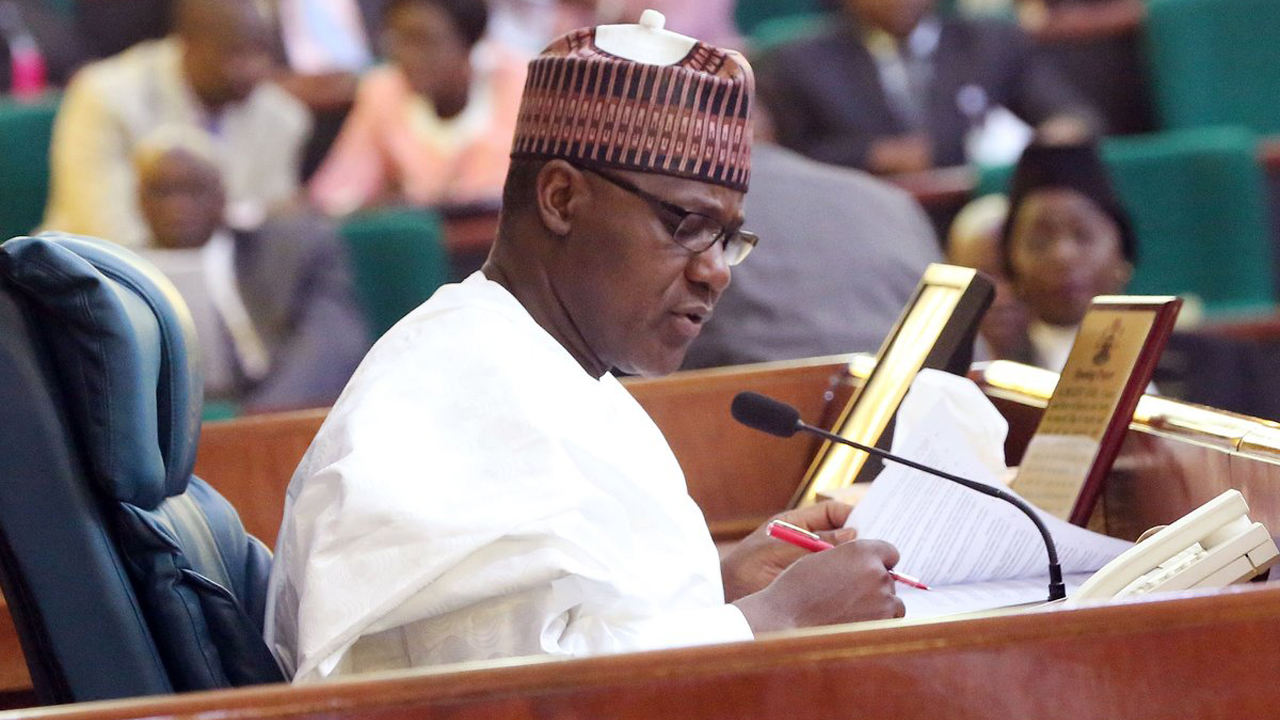
Rtd Hon. Yakubu Dogara, seated in the Speaker’s chair in the House of Representatives during plenary
Alhaji Shingiri suffered from an attack of stroke at a point during the contest for the House of Representatives seat. But he would not give up the struggle in spite of his ill-health. As the court hearings proceeded, he lost the battle to keep alive, and brought an end to the legal battles.
Yakubu Dogara’s journey to the House of Representatives and ultimately to the Speakership in June 2015 stands as a testimony of divine providence. His path was marked by circumstances that could have easily derailed his ambition: he emerged as the candidate almost effortlessly, securing the ticket “on a platter of gold.”
Despite being a Christian minority in Bauchi State, he won the election against the odds, a feat that many considered improbable. It is a reminder that integrity, faith, and providence can align to produce extraordinary leadership.
Read Also: Nigeria This Week: 2027 Elections: Governors impose candidates and call it ‘consensus’
Author

Sign up for The Insight Newsletter
Get in-depth, research and data-based interpretative reports from around Nigeria.