Electricity Crime: APPA President Calls On Imo Govt, Seeks Protection Over Alleged Threat
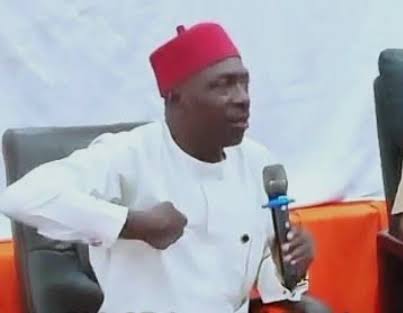
The President of the Association for Public Policy Analysis (APPA), Princewill Okorie, has appealed to Imo State Governor Hope Uzodimma, the Inspector-General of Police and other relevant authorities to protect his life and allow him to continue his campaign against alleged electricity-related crimes and consumer exploitation in the state.
Okorie said he had faced alleged threats, attempts to abduct him and physical confrontations involving staff of Transpower Electricity Distribution Limited, a subsidiary of Enugu Electricity Distribution Company operating in Imo State, following his involvement in a police investigation into alleged violations of electricity consumers’ rights.
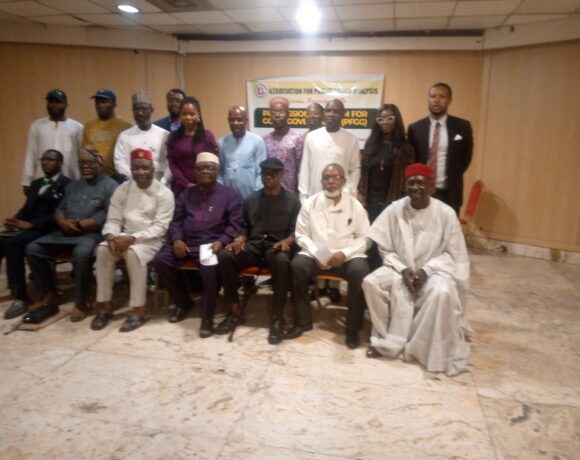
Speaking at a press briefing in Abuja on Friday, Okorie, who is also the Executive Director of the Electricity Consumer Protection Advocacy Center, said the alleged attacks would not deter him from pursuing accountability in the electricity sector.
“I deserve safety. I deserve security. This work must be done. I’m not giving up on this job,” he said.
He urged the authorities to intervene, warning that the alleged intimidation of consumer rights advocates and the failure to enforce regulatory decisions could undermine efforts to protect electricity consumers and allow extortion to flourish.
The activist also called on the Inspector-General of Police to establish anti-electricity crime units at the Force Headquarters and across states, particularly those that have established their own electricity markets.
Okorie said the first incident occurred on September 28, 2026, when two staff members of Transpower Electricity Distribution Limited allegedly entered his residence in Ohohia Mbieri in Mbaitoli Local Government Area Council of Imo State, accompanied by seven armed men.
He said the men arrived at about 6:30 a.m., with four of them entering his sitting room and insisting that he accompany them.
According to him, the men failed to produce an arrest warrant or a police invitation when he requested the documents.
“I requested to see the warrant of arrest. They didn’t show me,” he said, adding that the men claimed to have come from Zone 9 Police Headquarters in Umuahia.
Okorie said members of his community intervened and prevented the men from taking him away after they failed to establish the legal authority for their action.
He alleged that the incident occurred on the same day he was scheduled to meet a police panel investigating a petition he had submitted against the electricity distribution company.
The petition, he said, was presented to Governor Uzodimma on June 29, 2026, and the governor directed the state Commissioner of Police to investigate the allegations.
Okorie said the police subsequently asked him to assist with the investigation by providing evidence concerning alleged electricity-related offences by the company.
He expressed concern that staff of the company, whom he considered subjects of the investigation, allegedly attempted to take him away hours before the scheduled meeting.
The activist also accused the company of refusing to attend the police meeting on September 28, claiming it had lost confidence in the Imo State Police Command.
He said he had petitioned Zone 9 Police Headquarters and the Inspector-General of Police over the incident.
Okorie alleged that another confrontation occurred on October 2 at the premises of the Imo State Electricity Regulatory Commission.
He said the commission had previously responded to issues raised in his petition and had communicated its position to the parties involved.
According to him, the regulator had rejected an appeal by Transpower over a dispute involving the collective disconnection of electricity consumers in Ohohia Mbieri in Mbaitoli Local Government Area Council of Imo State.
He said the commission maintained that the company must comply with its directive of March 5, 2025, before it would entertain the appeal.
Okorie alleged that during a meeting convened by the commission’s consumer affairs department on October 2, two men brought by the electricity company advanced towards him in a manner he considered threatening.
He said people accompanying him intervened to prevent a physical attack.
According to him, the men subsequently moved to the gate and barricaded it, threatening to prevent him from leaving.
“My people resisted them,” he said.
Okorie questioned why his efforts to pursue alleged consumer rights violations through regulatory and law enforcement channels had exposed him to what he described as threats to his life.
He urged the state government and the police to ensure that the dispute did not degenerate into further confrontation.
The controversy stems partly from allegations that personnel of Transpower Electricity Distribution Limited unlawfully disconnected consumers and collected money without proper billing procedures in Ohohia community.
Okorie said three staff members of the company were allegedly caught in the community on August 24 while disconnecting electricity consumers without disconnection notices and collecting payments without issuing receipts.
He alleged that the personnel used point-of-sale terminals to collect money without meters to establish the quantity of electricity consumed by the affected customers.
According to him, some residents were asked to pay varying amounts, including N22,000 and N18,000, while the company’s personnel allegedly sought N20,000 from individual consumers.
He said the amounts were later reduced to N14,600 in some cases after residents protested.
Okorie said he contacted the divisional police officer in the area to intervene, but the officer initially asked the community to bring the company personnel to the station.
He alleged that the personnel had collected money from about 10 residents and disconnected approximately 15 consumers before the dispute escalated.
According to him, the situation became violent while the parties were travelling to the police station, with the electricity company personnel allegedly assaulting a community member.
He said the police initially treated the matter as conduct capable of causing a breach of public peace before transferring it to the Imo State Police Command.
Okorie added that the state Commissioner of Police subsequently consolidated the complaint with the governor-directed investigation and assigned both matters to a five-member panel led by an Assistant Commissioner of Police, Linus Nwiu.
He questioned why a dispute involving alleged electricity-related offences had become a source of confrontation rather than being resolved through established regulatory and law enforcement procedures.
Okorie also expressed concern over a court action allegedly instituted by the electricity company’s personnel and its chief security officer in connection with the dispute.
He said he learnt that the suit was filed on October 8 at a High Court in the Ihitte-Uboma/Ikeduru judicial area, but claimed he had not been served as of October 16, despite being informed that he was the principal respondent.
He expressed suspicion that the delay could prevent him from adequately preparing his defence, although he did not provide independent evidence that the company intended to ambush him.
Okorie said the suit reportedly included the Imo State Commissioner of Police, the Inspector-General of Police, the state electricity regulatory commission, its commissioner for consumer affairs and himself.
He questioned why the company was pursuing legal action while the police were investigating the allegations, arguing that the relevant authorities should be allowed to establish the facts.
The company had not responded to the allegations in the account of the briefing provided by Okorie.
Beyond his personal safety, Okorie said the dispute exposed wider concerns about the enforcement of consumer protection decisions in Imo State’s electricity market.
He claimed that documents from the Imo State Electricity Regulatory Commission showed that the regulator had ruled on about 78 cases involving alleged consumer rights abuses as of March 2026, but that the company had failed to comply with the decisions.
He also questioned the company’s licensing status, alleging that its representatives told the police panel they had applied for a licence but had not completed the process.
The allegation, if established, could raise questions about the company’s compliance with the regulatory requirements governing electricity distribution in the state.
Okorie said the regulator’s March 5, 2025, directive concerning Ohohia community had not been enforced, despite the company allegedly disconnecting the entire community five days after the decision.
He claimed that residents remained without electricity from March 2025 until January 2026.
The case, he argued, illustrated the difficulties consumers could face when regulatory decisions were not enforced and disputes over electricity supply escalated.
“Why will it be that Imo State Electricity Regulatory Commission could not enforce ruling they gave, order they gave, since 5th of March 2025 in Ohoya case?” he asked.
Okorie warned that weak enforcement could embolden electricity distribution companies to disregard consumer protection rules and impose charges without adequate accountability.
He cited complaints from other states, including allegations that three rural communities in Edo State owed a distribution company N1.056bn and that some communities in Akwa Ibom State had experienced prolonged electricity outages.
He said such cases underscored the need for stronger oversight and effective mechanisms for resolving disputes between electricity companies and consumers.
Okorie urged the Inspector-General of Police to establish specialised anti-electricity crime units at the Force Headquarters and in states operating electricity markets.
He argued that such units would help investigate alleged illegal disconnections, unauthorised collections, consumer exploitation and other offences associated with electricity distribution.
He said the units could perform a role similar to that of anti-kidnapping units by providing specialised attention to electricity-related offences and improving coordination between regulators and law enforcement agencies.
Okorie also appealed to the media to draw the attention of the Imo State governor and the police leadership to his allegations and concerns about consumer protection.
He maintained that his campaign was intended to help the state enforce its electricity law and protect residents from exploitation.
“What I’m trying to do is to assist him, provide welfare and security for the people of Imo State,” he said, referring to the governor.
He urged the government to guarantee his safety and ensure that the investigation proceeds without intimidation, adding that effective enforcement of electricity regulations was necessary to protect consumers and sustain confidence in the state’s electricity market.
There is no official response from the stakeholders involved as of the time of filing this report.
Author

Sign up for The Insight Newsletter
Get in-depth, research and data-based interpretative reports from around Nigeria.