The Ownership Deficit: Africa’s Real Talent Problem Is Not Talent
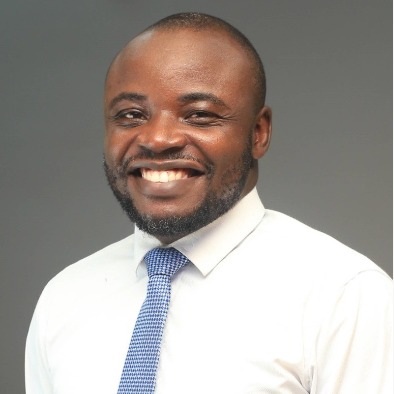
By Great Ukazim, Founder, Beingsphere
We were moving offices a few years ago, and in the middle of the chaos, a colleague pointed at a good, sturdy table and said we should leave it behind. Buying a new one would be cheaper than moving this one, he said. But something made me ask him: if that table were yours, sitting in your own house, would you leave it? He answered without hesitation, “No. But it isn’t mine.”
The table hadn’t changed. Only his relationship to it had. I have thought about that answer for years because I keep running into it in African companies.
The standard diagnosis is one I have heard for years: One of Africa’s business problem is a shortage of skilled talent. I have never been fully convinced. I grew up inside my father’s business in Eastern Nigeria, where ownership was never a concept anyone taught; it was simply a way of life. The pattern only became clear later to me, while I worked at FATE Foundation and then working closely with entrepreneurs across Nigeria. I observed that the companies that towered were rarely the ones with the best CVs. Often their products were ordinary too. What they had was people at every level who behaved as if the result belonged to them personally, not just to the founder.
Organisational psychologists have a name for this. They call it psychological ownership, the felt sense that a job, business, institution or an outcome is mine, whether or not I hold a single share. It has been studied for two decades on hundreds of thousands of people. One finding stands out: people who feel ownership do the kind of work nobody can force, fixing and protecting things, and improving what everyone else has accepted.” A committed employee stays. A satisfied one rates the job well. An owner treats your problems as theirs, which is a different ball game.
Of all the numbers I have read, one remains top of mind. Gallup reports that roughly 72% of employees in Sub-Saharan Africa are actively seeking their next job. Not someday; now, at the highest rate in the world. Global engagement is grim too, at around 20% and costing some ten trillion dollars each year. That 72% that should keep a Nigerian CEO alert. The competition is no longer just the fintechs and MNO’s, it is London, Canada, remote-first America, and, according to Afrobarometer, more than half of young Africans would rather build their own business than work for yours at all.
Many leaders respond to these numbers by calling this generation entitled. I understand the frustration. I have felt it too. But the evidence is clear. Deloitte found that 76% of Gen Z professionals still aim for senior leadership. The ambition is there. What they want is honesty about the business, recognition for what they build, and a clear path forward. Those are the exact conditions, research says, that lead to ownership growth. They are not refusing ownership. They are asking for its preconditions, and leaving when we will not provide them.
So, what does providing them look like? Let me be honest: not free. It costs managers’ time. It costs you the discomfort of opening your numbers to people you used to keep out. It costs recognizing individuals by name when it would be easier to praise the team. What it does not cost is equity. Studies of employee share schemes revealed that shares alone have little impact on performance. It is shares plus real participation, real information, and real decision rights pushed to the front line that change companies. Start with your managers, because Gallup shows they are both the biggest influence on their teams and the fastest-disengaging group in the workforce, and nobody hands over what they do not feel they hold in the first place.
A word of caution. Ownership, taken too far, becomes territory and silos. It must never be an excuse for burnout. Owners care about outcomes, but they are not required to sacrifice their evenings every day.
At Beingsphere, my table question became the OWN IT methodology. I got tired of admiring research without action. Before you decide to enroll your team in the 6-week OWN IT behavioural transformation program, start by walking through your floor this week. Ask your people what they would never leave behind, and what they would abandon without a second thought.
Africa’s real constraint is not ideas or capital, but people equipped to build institutions that last. Those people are made, not found, and ownership is how they are made. The most dangerous words in any organisation are still “that is not my job”. The most valuable is still “I will own it.”
Great Ukazim is the Founder of Beingsphere International, a leading African Innovation Infrastructure and Human Development company, and creator of the OWN IT methodology for building cultures of ownership. Over the years, his work has taken him deep into entrepreneurship ecosystems across 28 states in Nigeria while training and mentoring founders, professionals, and emerging leaders from Senegal, Egypt, Mali, Ghana, Côte d’Ivoire, and across Africa. Today, he helps organisations and entrepreneurs build people, cultures, and institutions that endure.
beingsphereint.com
Author

Sign up for The Insight Newsletter
Get in-depth, research and data-based interpretative reports from around Nigeria.


