Nigeria This Week: 7 African Teams Advance, NBS Reports 614K Killed, 2.2M Kidnapped, Others
By Emmanuel Kwada
As another eventful week draws to a close, Nigeria and the world witnessed major developments in politics, security, the economy, and sports. From the Senate’s historic passage of the State Police Bill to alarming figures from the National Bureau of Statistics revealing over 614,000 killings and 2.2 million abductions in one year, the headlines underscore the urgent challenges facing the nation.
The week also saw renewed debates over fuel pricing, allegations of vote buying in the Ekiti governorship election, and the arraignment of former Kaduna State Governor Nasir El-Rufai. On the global stage, seven African nations advanced to the 2026 FIFA World Cup Round of 32.
Stay with us as we take you through the events, decisions, and trends defining Nigeria and beyond.
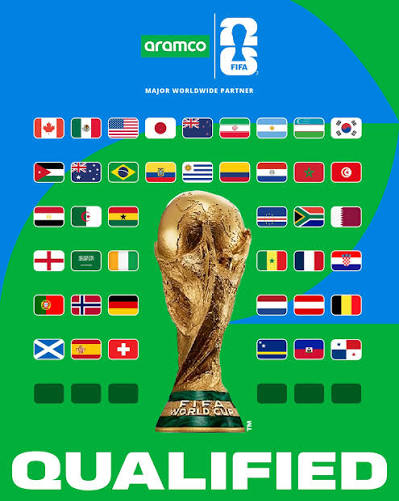
Credit: Aramco
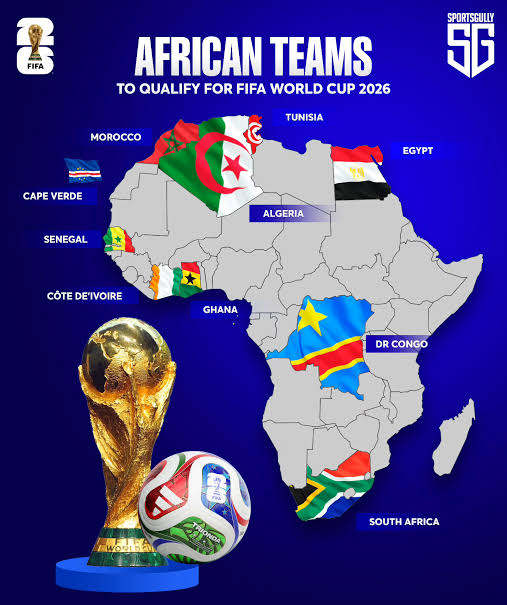
2026 World Cup: Seven African Nations Reach Historic Round of 32 as Knockout Stage Begins June 28
The 2026 FIFA World Cup enters a decisive new phase on June 28 as the historic Round of 32 begins across the United States, Canada and Mexico, with seven African nations securing places in the tournament’s expanded knockout stage.
For the first time in World Cup history, the competition features 48 teams, creating additional qualification opportunities and allowing more nations to advance beyond the group stage. Africa has emerged as one of the major beneficiaries of the new format, with South Africa, Morocco, Ivory Coast, Ghana, Egypt, Senegal and Cape Verde all progressing to the knockout rounds.
The unprecedented achievement marks one of the continent’s strongest collective performances at a FIFA World Cup and underscores the growing competitiveness of African football on the global stage.
With seven African nations securing places in the tournament’s expanded knockout stage.
Among the qualifiers, Morocco once again demonstrated why it remains Africa’s highest-ranked side, building on its historic semifinal appearance at the 2022 World Cup in Qatar. The Atlas Lions advanced from a challenging group and enter the knockout rounds with renewed confidence.
South Africa also impressed during the group phase, securing qualification after a series of disciplined performances. Bafana Bafana will open their Round of 32 campaign against Canada at Los Angeles Stadium in one of the standout fixtures on June 28.
Ivory Coast continued its resurgence on the international stage by advancing from a difficult group that included Germany. The Elephants showcased their trademark blend of physical strength, technical ability and attacking flair to secure a place among the final 32 teams.
African heavyweights Senegal, Egypt and Ghana also booked their places in the knockout phase, reaffirming their status as continental powerhouses. Meanwhile, Cape Verde continued its remarkable rise in international football by reaching the knockout stage, further highlighting the depth of talent emerging from Africa.
Morocco is set for a blockbuster encounter against the Netherlands in Monterrey.
The expanded World Cup format allows the top two teams from each group, alongside the eight best third-placed finishers, to advance to the Round of 32. The change has doubled the number of teams competing in the knockout rounds from 16 to 32, providing more nations with the opportunity to challenge for football’s most prestigious trophy.
Several teams that may have been eliminated under the previous format have remained in contention, contributing to one of the most competitive World Cups in recent history.
Traditional football giants have also lived up to expectations. Brazil, Germany, Argentina, Mexico, the Netherlands, Switzerland and the United States all secured qualification as group winners, while France, Norway and Colombia also advanced to strengthen an already formidable knockout field.
Among the headline fixtures confirmed for the Round of 32 is Brazil’s clash with Japan in Houston, while Morocco is set for a blockbuster encounter against the Netherlands in Monterrey. The United States will face Bosnia and Herzegovina in San Francisco, while defending champions Argentina continue their quest to retain the title.
For African football supporters, hopes now rest on the continent’s seven representatives to continue their impressive run and challenge the traditional powers of world football.
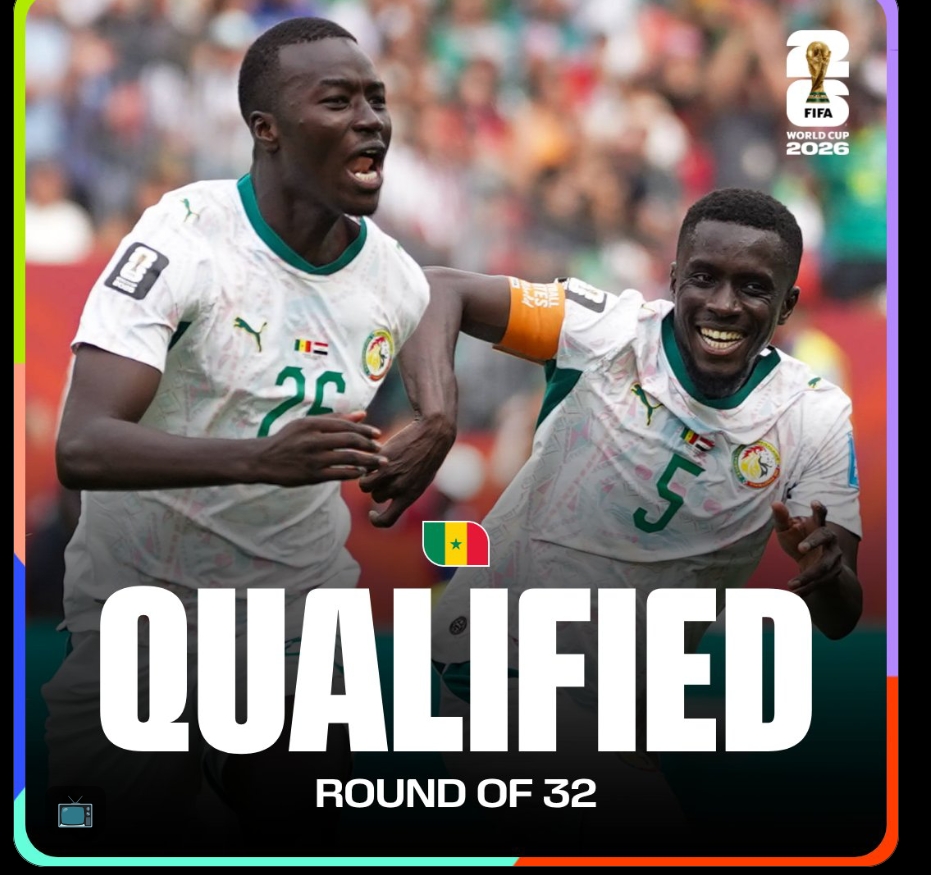
Senegal have qualified for the Round of 32
Morocco carries the highest expectations following its groundbreaking achievement in Qatar four years ago, while Senegal, Egypt, Ghana, South Africa, Ivory Coast and Cape Verde will all be aiming to write their own chapters of World Cup history.
With the knockout stage running from June 28 to July 3, the tournament now enters a win-or-go-home phase where every match could define a nation’s legacy.
Insecurity: 614,937 Nigerians Killed, 2.2 Million Abducted in One Year- NBS Reveals
Nigeria’s security crisis has reached alarming proportions, with a new report by the National Bureau of Statistics revealing that 614,937 Nigerians were killed and 2,235,954 others abducted between May 2023 and April 2024. The findings, contained in the agency’s Crime Experience and Security Perception Survey (CESPS) 2024, paint a disturbing picture of the scale of violence, kidnapping, and criminality across the country.
Victims and their families paid an estimated ₦2.23 trillion in ransom to kidnappers during the 12-month period.
The report, based on a nationwide household survey covering Nigerians aged 15 years and above, also disclosed that victims and their families paid an estimated ₦2.23 trillion in ransom to kidnappers during the 12-month period, highlighting the growing economic burden of insecurity on households.
According to the survey, kidnapping has become one of the most widespread crimes in the country, affecting approximately 1.4 million households. Of those who experienced kidnapping incidents, about 65 per cent paid ransom to secure the release of victims. The average ransom payment stood at approximately ₦2.7 million per incident, with urban households paying higher amounts than their rural counterparts.
The findings indicate that criminal gangs and armed groups continue to exploit vulnerable communities despite increased security spending and ongoing military operations in several parts of the country.
Nigerian households experienced more than 51.8 million crime incidents during the review period.
The NBS data further revealed that nearly half of all kidnappings occurred at or around victims’ residences, underscoring growing concerns about the safety of homes and communities. Approximately 49.3 per cent of kidnappings took place near residential areas, while another significant portion occurred on roads and public streets.
Over 51 Million Crime Incidents Recorded
Beyond killings and kidnappings, the report estimated that Nigerian households experienced more than 51.8 million crime incidents during the review period. The North-West recorded the highest number of crime incidents at household level, followed by the North-Central zone, while the South-East reported the lowest figures.
₦2.23 trillion paid in ransom within one year.
The survey suggests that insecurity has become deeply embedded in the daily experiences of many Nigerians, affecting livelihoods, business activities, education, and freedom of movement.
Regional Disparities in Violence
Data from the report indicate that the burden of insecurity is not evenly distributed across the country.
The North-West, which has witnessed years of banditry and mass abductions, recorded some of the highest levels of crime and ransom payments. The region alone accounted for approximately ₦1.2 trillion of the total ransom paid nationwide. In contrast, the South-East recorded the lowest ransom payments at about ₦85.4 billion.
Rural communities were disproportionately affected, accounting for roughly 1.67 million kidnapping incidents, compared to about 568,000 cases in urban centres.

Bandits kidnapped victims in Zamfara forest.
Experts attribute the trend to weak security presence in remote areas, difficult terrain, poverty, and limited access to emergency response services.
Economic Cost of Insecurity
The financial implications of the crisis are staggering.
With ₦2.23 trillion paid in ransom within one year, the amount exceeds the annual budgets of several Nigerian states and rivals major national infrastructure allocations. Analysts warn that the enormous flow of money to criminal networks could further strengthen the operational capacity of kidnappers and armed groups.
The report comes despite over ₦9 trillion reportedly allocated to Nigeria’s security agencies between 2020 and 2024, raising questions about the effectiveness of existing security strategies and investments.
Economists note that beyond ransom payments, insecurity has increased transportation costs, disrupted agricultural production, discouraged investment, and contributed to food inflation in several parts of the country.
Public Confidence in Security Agencies Declining
Separate surveys on public perception show growing dissatisfaction with the government’s handling of insecurity.
A recent survey found that nearly eight out of every ten Nigerians consider kidnapping and abduction a serious national problem, while a majority expressed concerns about their personal safety and the effectiveness of security agencies. More than two-thirds of respondents rated the performance of security agencies in tackling kidnappings as poor.
The survey also found that many Nigerians now personally know someone who has been kidnapped, reflecting how widespread the crisis has become.
The report has renewed calls for stronger security reforms, improved intelligence gathering, enhanced policing, and greater collaboration between federal, state, and local authorities.
Motorists Demand Immediate Petrol Price Cut as Crude Oil Falls Below $75
Motorists, commuters, and business operators across Nigeria have intensified calls for an immediate reduction in petrol prices following a sharp decline in global crude oil prices, arguing that consumers are yet to benefit from improving conditions in the international energy market.
The demand comes as Brent crude, the international oil benchmark, dropped significantly from recent highs triggered by the Iran-Israel conflict and tensions surrounding the Strait of Hormuz, a key global oil shipping route responsible for nearly 20 per cent of the world’s oil supply.
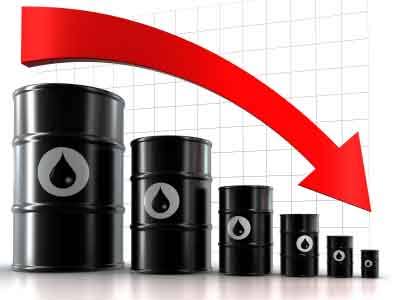
Oil price showing falling in the global market
Market data showed that Brent crude fell to $73.14 per barrel, while the United States benchmark, West Texas Intermediate (WTI), declined to $69.85 per barrel. Prices later fluctuated between $72 and $74 per barrel, marking a notable retreat from levels recorded during the peak of Middle East hostilities.
However, despite the easing of global prices, Nigerians continue to pay between ₦1,200 and ₦1,400 per litre for Premium Motor Spirit (PMS), commonly known as petrol.
Fuel Prices Remain Elevated
Before the escalation of the Middle East conflict, petrol sold between ₦770 and ₦800 per litre in many parts of Nigeria. Following the geopolitical crisis, prices surged by over 50 percent, climbing to between ₦1,200 and ₦1,400 per litre depending on location.
A breakdown of current retail prices across states reveals significant regional disparities:
State Current PMS Price
Kano ₦1,330 per litre
Rivers ₦1,200 – ₦1,300 per litre
Borno ₦1,300 – ₦1,400 per litre
Taraba About ₦1,390 per litre
Kwara Above ₦1,200 per litre
Residents argue that while fuel prices rose almost immediately when crude prices increased, marketers have been slow to pass on the benefits of falling international prices to consumers.
Dangote Refinery Announces Price Reduction
In a development welcomed by industry observers, the Dangote Refinery reduced its ex-depot or gantry price by ₦50, bringing the price down to ₦1,125 per litre.
Dangote Refinery reduced its ex-depot or gantry price by ₦50
Industry sources also reported a marginal decline in the landing cost of imported petrol, leading some marketers to slightly adjust their prices.
Many consumers, however, insist that the reduction remains insignificant compared to the decline in crude oil prices.
Economic Pressure on Households
Across the country, rising fuel costs continue to affect transportation, food prices, and household expenditures.
In Kano State, commercial drivers reported that operating costs remain unsustainably high, forcing many to maintain elevated transport fares despite declining passenger patronage.
Some private vehicle owners said they have drastically reduced their use of personal cars and increasingly depend on public transport to cope with rising expenses.
In Maiduguri, Borno State, tricycle operators lamented a decline in customer patronage as commuters increasingly avoid non-essential travel due to high fares.
A litre of diesel in Maiduguri currently sells for about ₦2,200, adding further pressure on businesses dependent on generators and transport logistics.
Experts Explain Why Prices Remain High
Energy experts say the relationship between crude oil prices and petrol pump prices is not always immediate.
Executive Secretary of the Major Energies Marketers Association of Nigeria (MEMAN), Clement Isong, explained that there is often a time lag between movements in crude oil prices and adjustments in refined petroleum product prices.
According to him, inventories purchased at higher costs must first be sold before consumers can fully benefit from lower international prices.
Similarly, petroleum economist Wumi Iledare noted that crude oil is only one component of fuel pricing.
He identified several additional factors influencing pump prices, including:
Foreign exchange rates; Refining costs; Transportation and distribution expenses; Taxes and levies; Domestic regulatory policies; Storage and logistics costs
Iledare explained that although lower crude prices could eventually moderate fuel costs, a return to pre-conflict pump prices is not guaranteed.
NNPCL: Market Forces Determine Prices
The Nigerian National Petroleum Company Limited (NNPCL) says petrol prices in a deregulated market cannot be determined solely by crude oil prices.
Individual marketers now set prices based on their cost structures.
According to the company’s Chief Corporate Communications Officer, Andy Odey, factors such as foreign exchange fluctuations, transportation expenses, distribution costs, and existing inventory levels all influence final retail prices.
He emphasized that individual marketers now set prices based on their cost structures, as Nigeria’s downstream petroleum sector operates under a deregulated framework.
The Nigerian Midstream and Downstream Petroleum Regulatory Authority (NMDPRA) also reiterated that petrol prices are subject to market forces under the current regime.
Despite these explanations, motorists are demanding stronger oversight to ensure that benefits from favorable global market developments reach consumers.
Many argue that Nigeria, as Africa’s largest crude oil producer, should be better insulated from international market volatility.
With Brent crude now trading below $75 per barrel and local refining capacity increasing, consumers are increasingly questioning why petrol prices remain nearly double what they paid only weeks before the Middle East crisis.
For millions of Nigerians grappling with rising living costs, any reduction in fuel prices could provide much-needed relief and potentially ease inflationary pressures across key sectors of the economy.
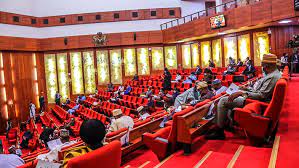
The Nigerian Senate in session
Senate Passes State Police Bill, Empowers Governors to Appoint Commissioners
The Senate has taken a historic step toward restructuring Nigeria’s security architecture by passing a constitutional amendment bill seeking to establish state police across the federation, a move that would grant governors the authority to appoint commissioners of police for their respective states.
The development is widely seen as one of the most significant security reforms since Nigeria’s return to democratic rule in 1999 and comes amid growing concerns over rising cases of banditry, kidnapping, terrorism, communal clashes, and other violent crimes across the country.
Under the proposed arrangement, states would be allowed to establish and manage their own police services alongside the existing federal police system. Governors, who are currently regarded as chief security officers of their states but lack direct control over police operations, would have greater influence in coordinating security efforts through the appointment of state police commissioners.
Nigeria’s centralized policing structure has become overstretched.
Supporters of the bill argue that decentralized policing will improve intelligence gathering, strengthen community policing, and enable faster responses to security threats. They contend that officers recruited and deployed within their states are more familiar with local languages, cultures, and terrain, making them better equipped to tackle crime and maintain law and order.
The passage of the bill reflects growing calls from governors, traditional rulers, security experts, and civil society groups for a policing system that addresses the unique security challenges facing different parts of the country. Many have long argued that Nigeria’s centralized policing structure has become overstretched in the face of evolving security threats.
However, the proposal has also generated concerns among critics who fear that state police could be misused by political leaders to intimidate opponents or influence electoral processes. They have called for strong constitutional safeguards and independent oversight mechanisms to ensure professionalism, accountability, and respect for human rights.
The bill must still secure approval from the House of Representatives and be ratified by at least two-thirds of state Houses of Assembly before it can become law. If successfully enacted, it would mark a major shift in Nigeria’s approach to security and federal governance.
Vote Buying Overshadows Ekiti Poll as INEC Declares Oyebanji Winner
The re-election of Ekiti State Governor, Biodun Oyebanji, has been overshadowed by widespread allegations of vote buying and voter inducement, with domestic and international election observers warning that the practice remains a major threat to Nigeria’s democratic process despite improvements in election administration.
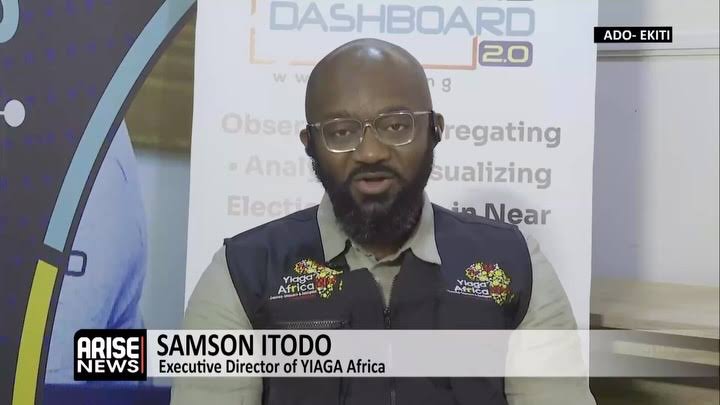
Credit: Arise Tv.
The Independent National Electoral Commission (INEC) declared Oyebanji, candidate of the All Progressives Congress (APC), winner of the June 20 governorship election after securing victory across the state’s 16 local government areas. However, several observer groups expressed concern that the integrity of voter choice was compromised by the extensive distribution of cash and other inducements to voters.
Among the most vocal observers was Yiaga Africa, which deployed hundreds of observers across the state under its Watching The Vote methodology. While the organization commended INEC for improved logistics, timely deployment of officials, and the generally peaceful conduct of the election, it noted that widespread reports of vote buying and voter inducement undermined the credibility of the process.
The increasing normalization of vote trading poses a serious danger to democratic accountability.
According to Yiaga Africa’s assessment, the election recorded significant progress in election-day administration, but concerns over the monetization of the electoral process persisted. The group warned that the increasing normalization of vote trading poses a serious danger to democratic accountability and genuine voter representation.
Election observers affiliated with the Nigerian Civil Society Situation Room similarly reported that financial inducement was widespread across several polling units. Executive Director of Yiaga Africa, Samson Itodo, described vote buying as one of the most troubling features of the election, noting that many voters appeared to have been influenced by monetary incentives.
International stakeholders, including representatives of the United Kingdom and other diplomatic partners monitoring Nigeria’s democratic process, have repeatedly expressed concern over the persistence of vote buying in elections, warning that the trend undermines electoral credibility and weakens public confidence in democratic institutions.
Observers reported that political actors adopted increasingly sophisticated methods to influence voters, including covert payment systems and post-voting verification mechanisms designed to ensure compliance by beneficiaries. Such tactics, analysts say, have made detection and prosecution more difficult.
Despite the concerns, Yiaga Africa’s independent verification concluded that the results announced by INEC were consistent with ballots counted at polling units, affirming the accuracy of the declared outcome. However, the organization stressed that accurate vote counting alone does not eliminate concerns about whether voters exercised their choices freely and without undue influence.
The growing commercialization of votes continues to threaten the substance of democracy.
The observer group subsequently called on security agencies and anti-corruption institutions to intensify efforts to investigate and prosecute electoral offenders involved in vote buying, voter intimidation, and other violations of the Electoral Act.
Political analysts say the Ekiti governorship election has once again highlighted a recurring challenge in Nigeria’s electoral system: while technological innovations and logistical improvements have strengthened the conduct of elections, the growing commercialization of votes continues to threaten the substance of democracy.
As preparations begin for future off-cycle and general elections, stakeholders argue that tackling vote buying may prove to be one of the most important tests of Nigeria’s commitment to free, fair, and credible elections.
ICPC Arraigns El-Rufai, Ex-Aide Over Alleged ₦8.68bn CCTV Contract Fraud
The Independent Corrupt Practices and Other Related Offences Commission (ICPC) has arraigned former Kaduna State Governor, Nasir Ahmad El-Rufai, alongside his former Senior Special Adviser and Counsellor, Jimi Lawal, over an alleged ₦8.68 billion Closed-Circuit Television (CCTV) surveillance contract fraud.

Former Kaduna state Governor, Nasir El-Rufai
The defendants were arraigned before Justice Hauwa’u Buhari of the Federal High Court in Kaduna on an amended 11-count charge bordering on alleged corruption, money laundering, abuse of office, and related offences.
According to the anti-graft agency, the case centers on the award of a contract for the procurement, survey planning, final design, and installation of a CCTV surveillance system within Kaduna metropolis during El-Rufai’s administration. The project was valued at ₦8,682,574,054.94.
ICPC alleged that the contract was awarded to Singularity Network Security Limited, a company it claims lacked the requisite technical experience and qualifications required to execute a project of such magnitude. Investigators further alleged that the approval of the contract violated established procurement laws and procedures.
The commission named several corporate entities as co-defendants in the suit, including Singularity Network Security Limited, Solar Life Nigeria Limited, Knowledge Investment Nigeria Limited, Intercellular Nigeria Limited, and Noble Coast Resources Limited.
More than ₦2 billion linked to the contract was received and retained by the defendants.
In its amended charge, ICPC alleged that proceeds from the CCTV contract were subsequently transferred through multiple companies and individuals in a series of transactions carried out between 2017 and 2022. The commission claimed that more than ₦2 billion linked to the contract was received and retained by the defendants under circumstances suggesting the funds were proceeds of unlawful activities.
One of the charges specifically accused El-Rufai of aiding an act of corruption by approving the award of the contract despite allegedly knowing that the contractor lacked the capacity and experience required under procurement regulations. Prosecutors contend that such actions contravened provisions of the Money Laundering (Prevention and Prohibition) Act, 2022.
The ICPC also listed Bashir El-Rufai, identified as an elder brother of the former governor, in one of the counts and described him as being at large.
When the charges were read in court, both El-Rufai and Lawal pleaded not guilty to all allegations. Their legal teams subsequently applied for bail, arguing that the defendants were prepared to stand trial and had no intention of evading the judicial process.
Following the plea, Justice Buhari adjourned proceedings until July 1, 2026, for ruling on the bail applications and further directions on the trial.
The arraignment marks one of the most high-profile corruption cases involving a former state governor in recent years and is expected to attract significant public and political attention. The outcome could have far-reaching implications for accountability in public procurement and the management of major infrastructure projects by state governments.
The case also comes as El-Rufai faces separate legal proceedings instituted by the Department of State Services (DSS) over allegations relating to the interception of communications involving the National Security Adviser, Nuhu Ribadu.
With the former governor maintaining his innocence and the ICPC insisting it possesses substantial evidence, the trial is expected to test the strength of Nigeria’s anti-corruption framework and the judiciary’s handling of complex financial crime cases involving politically exposed persons.
Read Also: 10 Things Nigerians Need to Know About the NIMC Act 2026
Author

Sign up for The Insight Newsletter
Get in-depth, research and data-based interpretative reports from around Nigeria.