
Nigeria Excluded as UK Relaxes Student Visa Financial Document Rules for 60 Countries
By Emmanuel Kwada
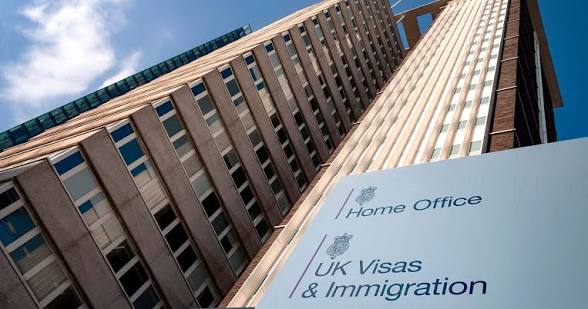
Thousands of Nigerian students aspiring to study in the United Kingdom will continue to face stricter visa documentation requirements after the UK government excluded Nigeria from a revised list of more than 60 countries whose citizens are no longer required to submit proof of funds at the point of applying for a Student visa.
The updated guidance issued by UK Visas and Immigration (UKVI) introduces a “differential evidence requirement,” allowing applicants from countries such as Botswana, Mauritius, Tunisia, Australia, Canada, China, Germany, Japan, Singapore, Switzerland, the United States and several others to apply without attaching financial documents to their initial applications. However, Nigeria is not among the beneficiaries of the policy.
Applicants who fail to maintain proper financial records risk delays or outright refusal of their visa applications.
The exclusion means Nigerian applicants must continue to prepare comprehensive financial documentation to demonstrate that they have sufficient funds to pay tuition fees and support themselves throughout their studies in the UK.
Although the UK government noted that applicants from exempt countries may also be asked to produce financial evidence before a final decision is made, Nigerian students are expected to remain fully compliant with the documentation requirements from the outset.
For many Nigerian families already grappling with rising exchange rates, increasing tuition costs and the high cost of living abroad, the policy reinforces the financial burden associated with studying in the UK. Education consultants say applicants who fail to maintain proper financial records risk delays or outright refusal of their visa applications.
According to the UK guidance, every Student visa applicant must prove they have enough money to pay their first year’s tuition fees as stated on their Confirmation of Acceptance for Studies (CAS), in addition to meeting prescribed maintenance requirements.
Students studying in London must demonstrate access to £1,529 per month for living expenses for up to nine months, amounting to £13,761, excluding tuition fees. Those studying outside London must show £1,171 per month, bringing the maximum maintenance requirement to £10,539 for the same period.
Applicants travelling with spouses or children must also show additional maintenance funds. For dependants accompanying students outside London, the requirement is £680 per month, while those studying in London must demonstrate £845 per month for each dependant for up to nine months.
The UK government also outlined separate financial requirements for Child Student visa applicants. Children attending boarding schools must show they can cover boarding fees for an academic year, while maintenance requirements vary depending on whether the child lives with a foster carer, parent or independently.
To satisfy the financial requirement, applicants may rely on government-backed student loans, official sponsorship from governments or educational institutions, personal savings, funds belonging to parents supported by written consent, or money from a spouse or partner applying at the same time or already resident in the UK.
Funds used for the application must have remained in an eligible bank account for at least 28 consecutive days before the visa application is submitted.
However, UKVI made it clear that certain assets will not be accepted as proof of financial capacity. These include overdrafts, cryptocurrencies, pensions, stocks and shares, as well as funds held in banks that are not regulated or do not operate electronic record-keeping systems.
The guidance further requires that funds used for the application must have remained in an eligible bank account for at least 28 consecutive days before the visa application is submitted. The supporting bank statements or financial documents must be issued no more than 31 days before the application date and may be verified directly with the issuing financial institution.
Where balances are held in foreign currencies, they will be converted into pounds sterling using the prevailing OANDA exchange rate on the day the application is assessed.
While citizens of more than 60 countries enjoy simplified documentary requirements, the UK government stressed that the exemption is not a relaxation of financial rules. Rather, it is an administrative measure that allows certain nationalities to omit financial documents during the initial application, with UKVI retaining the authority to request the evidence at any stage before making a decision.
The guidance also exempts applicants who have legally lived in the UK for at least 12 months before applying for further permission to stay, as well as Student Union Sabbatical Officers and doctors or dentists undertaking recognised training programmes.
Nigeria remains one of the UK’s largest international student markets, with thousands of young Nigerians enrolling in British universities every year despite tightening immigration rules and increasing education costs.
Analysts believe the country’s continued exclusion from the documentary exemption reflects the UK’s risk-based visa assessment approach and underscores the need for Nigerian applicants to ensure that every aspect of their financial records meets immigration standards.
The supporting bank statements or financial documents must be issued no more than 31 days before the application.
For prospective Nigerian students, the latest guidance serves as a reminder that early financial planning, accurate documentation and strict compliance with UK visa requirements remain essential to securing a successful Student visa application.
Full list:
- Australia
- Austria
- Bahrain
- Barbados
- Belgium
- Botswana
- Brazil
- Brunei
- Bulgaria
- Cambodia
- Canada
- Chile
- China
- Croatia
- Cyprus
- Czechia
- Denmark
- Dominican Republic
- Estonia
- Finland
- France
- Germany
- Greece
- Hungary
- Iceland
- Indonesia
- Ireland
- Italy
- Japan
- Kazakhstan
- Kuwait
- Latvia
- Liechtenstein
- Lithuania
- Luxembourg
- Malaysia
- Malta
- Mauritius
- Mexico
- Netherlands
- New Zealand
- Norway
- Oman
- Peru
- Poland
- Portugal
- Qatar
- Romania
- Serbia
- Singapore
- Slovakia
- Slovenia
- South Korea
- Spain
- Sweden
- Switzerland
- Thailand
- Tunisia
- United Arab Emirates
- USA.
Read Also: National Security Begins in the Information Space
Author

Sign up for The Insight Newsletter
Get in-depth, research and data-based interpretative reports from around Nigeria.


