I gave Ribadu N100m take-off fund for EFCC – El-Rufai
By Emmanuel Kwada
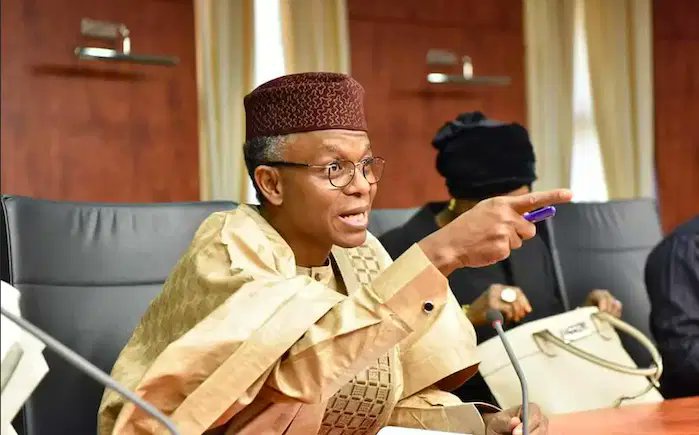
Former Kaduna State Governor Nasir Ahmad El-Rufai, embroiled in a face-off with the National Security Adviser, Malam Nuhu Ribadu, claims to have provided a take-off support fund of N100 million for Ribadu to begin operation as Chairman of the Economic and Financial Crimes Commission (EFCC) in 2002.
This claim is contained in his book, The Accidental Public Servant, known for its exposition of the relationship between the former governor and many high-profile Nigerians who served under former President Olusegun Obasanjo.
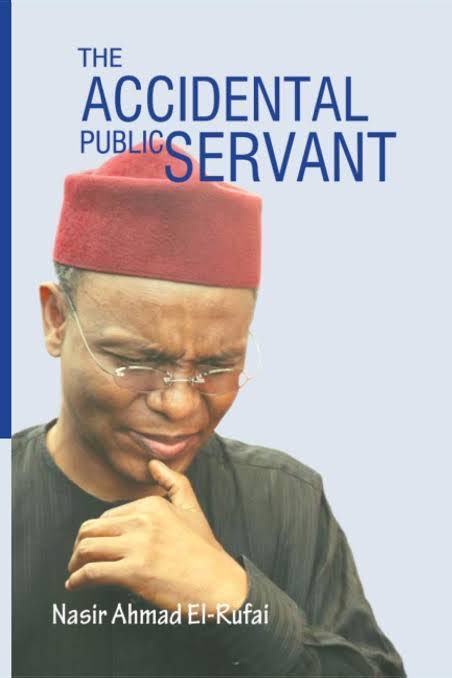
Back Cover of El-Rufai’s Book, ‘The Accidental Public Servant’
El-Rufai is facing multiple probes from the Independent Corrupt Practices and Other Related Offences Commission (ICPC), the Economic and Financial Crimes Commission (EFCC), and the Department of State Security (DSS) on multiple charges, one of them an allegation that of phone interception.
El-Rufai claimed that Ribadu’s phone was tapped and that Ribadu allegedly instructed security agencies to arrest him.
This led to charges against El-Rufai himself, as the Department of State Services (DSS) accused him of unlawfully intercepting Ribadu’s phone conversation, violating Nigeria’s Cybercrimes Act.
Secondly, in a letter, El-Rufai accused Ribadu’s office of being linked to the importation of thallium sulphate, a highly toxic substance, demanding clarification.
The arrest showed that the relationship between the two bosom friends who worked in harmony under former President Olusegun Obasanjo has gone sour. As at the time of this report, El-Rufai had not been granted bail by the ICPC.
I am a police officer and just been appointed to this position, but all I got is this letter…I have no budget, I have no office, I have no personnel nothing. But I have this important job to do.
Discussing his relationship with Ribadu from page 158 to 169, 11 pages, El-Rufai gives a comprehensive account of how Ribadu met him at the Bureau of Public Enterprise (BPE) in Abuja to solicit for take-off fund for the EFCC because at the time of Ribadu’s appointment, there was no vote in the annual budget for the EFCC.
El-Rufai quotes Ribadu in the book, as saying: “I am a police officer and just been appointed to this position, but all I got is this letter…I have no budget, I have no office, I have no personnel nothing. But I have this important job to do.” (page159).
The former Minister of the Federal Capital Territory (FCT), claims that Ribadu demonstrated passion for the job, a desire “to do something, to prove that something could be done in our country’s political space.”
This passion is evident in the following lines where El-Rufai quotes Ribadu again: “If I just get a minimum level of support, in three weeks, I will shut down and arrest all the leaders of these scam letter operations, because I know them.

Mallam Nuhu Ribadu, NSA
“The senior officers of the police force know who and where they [fraudsters] are but they pay our bosses and have become untouchable but I know them, I know where they are, I will get them. I will shut them all down. These letters are giving the country a bad name. We have to do something, right away.” (page 162).
El-Rufai says when he asked Ribadu how much money he needed to bring to swing into action, Ribadu requested for N20 million. But to El-Rufai, that amount what too insignificant to set up an effective operational office.
El-Rufai says he promised to support him with N100 million, but in his request to then Vice President Atiku Abubakar who supervised the BPE, El-Rufai requested for N200 million, as he was familiar with Atiku’s penchant for approving only a half of any funding request.
Apart from securing the take-off fund for Ribadu, El-Rufai claims in his book that he assisted Ribadu when head of security agencies opposed Ribadu as Chairman of the EFCC while the Inspector General of Police, Director-General of the Department of State Security (DSS) and the like would sit as members.
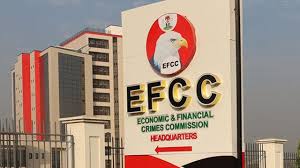
EFCC headquarters, Abuja
El-Rufai claims that he convinced Obasanjo to amend to EFCC Act to read ‘representatives of the police, DSS, etc,’ so that the heads of the agencies did not need to sit in a meeting presided over by Ribadu.
Under this arrangement, Ribadu no longer faced the threat of being removed due to his low rank in the Police; he was an Assistant Commissioner of Police at the time of his appointment.
El-Rufai recalls first hearing about Nuhu Ribadu during his university days. Ribadu became famous in Ahmadu Bello University, Zaria for a daring incident where he slapped back an armed robber who had slapped him during a car hijack.
This story spread across campus and gave Ribadu a reputation for courage and fearlessness. Years later, El-Rufai formally met Nuhu Ribadu after he was appointed chairman of the EFCC, contrary to a popular belief that they had been childhood friends.
Nuhu Ribadu was appointed EFCC chairman in 2003. His appointment was largely based on the recommendation of Attorney General Kanu Agabi, whom Obasanjo trusted.
The EFCC was created to enforce anti-money laundering laws and fight fraud.
At the time, Nigeria was on the Financial Action Task Force (FATF) blacklist due to money laundering and 419 scams. The EFCC was created to enforce anti-money laundering laws and fight fraud.
This money El-Rufai provided for the EFCC was technically a loan from BPE funds, using a legal loophole in the Privatization Act. Though unconventional, it allowed EFCC to start functioning.
Nuhu Ribadu’s first staff members who were borrowed from the BPE included Dr. Abdu Mukhtar, Toyin Ibrahim, Hadiza Dagabana Sani, and Rakiya. They helped establish EFCC’s organizational structure, salary scales, and operational plans.
Within weeks, Ribadu launched raids against 419 operators, arresting several notorious fraudsters. This gave EFCC immediate visibility and credibility. Nigeria was eventually removed from the FATF blacklist, largely due to EFCC’s early successes.
Over the years, the two were seen as friends who had political ambitions, but it was not clear when and why El-Rufai and Ribadu fell out. But the rift became open after Bola Tinubu became president. El-Rufai was initially considered for a role as minister, and it seemed he had been slated to be in charge of the power sector.
However, the Senate claimed El-Rufai failed security screening. His name was dropped from the list of cleared for ministerial appointment. El-Rufai would later accuse Ribadu of orchestrating actions against him, including attempts to block his political influence.
Ribadu responded calmly, saying he “won’t join issues” and urged the public to disregard El-Rufai’s accusations, focusing instead on national security duties. Commentators now describe them as “frenemies shaping Nigeria’s democracy,” noting that their ambitions, once aligned, now fuel rivalry.
Read Also: Tinubu’s Govt is About Enrichment, Not Public Good – Nasir El-Rufai
Author

Sign up for The Insight Newsletter
Get in-depth, research and data-based interpretative reports from around Nigeria.