
Champions to Lift Trophy at Maracanã as FIFA Unveils 2027 Women’s World Cup Match Schedule

By Emmanuel Kwada
The stage is set for another historic chapter in women’s football after FIFA unveiled the complete match schedule for the 2027 FIFA Women’s World Cup in Brazil, confirming that the tournament’s opening match and grand final will be played at the iconic Estádio do Maracanã in Rio de Janeiro.
FIFA announced the schedule on Thursday, August 20, 2026, confirming the dates and venues for all 64 matches of the expanded tournament across Brazil’s eight Host Cities.
The decision to place the opening match and final at the legendary Maracanã gives the tournament a fitting backdrop, with the eventual world champions set to lift the Women’s World Cup trophy at one of football’s most famous stadiums.
Each of Brazil’s eight Host Cities will stage at least seven matches, including a minimum of one knockout-stage fixture.
The Maracanã will become only the third stadium in history to host both a FIFA Men’s World Cup final and a FIFA Women’s World Cup final, joining the former Råsunda Stadium in Solna, Sweden, and the Rose Bowl in Pasadena, United States.
Brazil to Open Campaign at Maracanã
Hosts Brazil will begin their World Cup campaign on Thursday, June 24, 2027, at the Maracanã in Rio de Janeiro.
The Brazilian team will then travel to São Paulo for its second group-stage fixture at Arena Itaquera on Tuesday, June 29, before completing the group phase at the Estádio Nacional in Brasília on Sunday, July 4.
The schedule ensures that Brazilian supporters in three major cities will have the opportunity to watch the hosts during the group stage.
Brazil enters the tournament with the advantage of home support and the enormous expectations that accompany hosting the world’s biggest women’s football competition.
Eight Cities to Share the Spotlight
FIFA confirmed that each of Brazil’s eight Host Cities will stage at least seven matches, including a minimum of one knockout-stage fixture.
Brasília, Porto Alegre, Recife and Salvador will host matches through the Round of 16, while Belo Horizonte and Fortaleza will join Rio de Janeiro and São Paulo in hosting quarter-final matches.
The arrangement is designed to distribute the tournament’s economic, sporting and cultural impact across the host country rather than concentrating the competition in a handful of cities.

The tournament will eventually narrow to the final four, with São Paulo hosting one semi-final and the Bronze Final.
Rio de Janeiro will then take centre stage for the decisive conclusion, with the other semi-final and the FIFA Women’s World Cup final scheduled for the Maracanã.
FIFA President Gianni Infantino said the tournament would provide an opportunity for the world’s best players, coaches and supporters to create a new chapter in women’s football history.
He expressed confidence that Brazilian fans would bring their renowned passion and energy to the competition.
Infantino said he was already anticipating the atmosphere that would accompany the tournament as supporters from Brazil and around the world converge on the eight Host Cities.
Brazil’s reputation as one of football’s great nations is expected to add a unique dimension to the competition, with organisers hoping the tournament will combine elite sporting competition with the colour and culture associated with the South American country.
FIFA Chief Women’s Football Officer Dame Sarai Bareman said the schedule was developed with sporting fairness in mind.
Each Host City will bring its own identity and character to the tournament, creating a colourful and memorable experience for players and spectators.
She explained that FIFA considered factors including travel distances, recovery periods and the overall experience of the 32 participating teams.
At the same time, organisers sought to ensure that supporters throughout Brazil would have opportunities to participate in the tournament.
Bareman described the decision to open the competition at the Maracanã as particularly significant, saying the iconic stadium would provide an appropriate setting for the beginning of the global celebration.
For former Brazil women’s national team captain Aline Pellegrino, who is serving as FIFA Women’s World Cup 2027 Executive Director of Legacy and Stakeholder Affairs, hosting the tournament represents a deeply personal and national milestone.
Pellegrino recalled her childhood in São Paulo, saying the young girl who once played football in the streets could hardly have imagined being part of a moment in which Brazil would host the world’s premier women’s football tournament.
She described the event as a source of immense pride for Brazil and predicted that supporters from across the country and around the world would come together to celebrate women’s football.
According to Pellegrino, each Host City will bring its own identity and character to the tournament, creating a colourful and memorable experience for players and spectators.
She also highlighted the potential of the competition to inspire a new generation of girls and boys to take up football.
Maracanã Set for Another Historic Final
The choice of the Maracanã for the final carries considerable historical significance.
The Rio stadium hosted the 2014 FIFA World Cup final, when Germany defeated Argentina 1-0 after extra time to claim the men’s world title.
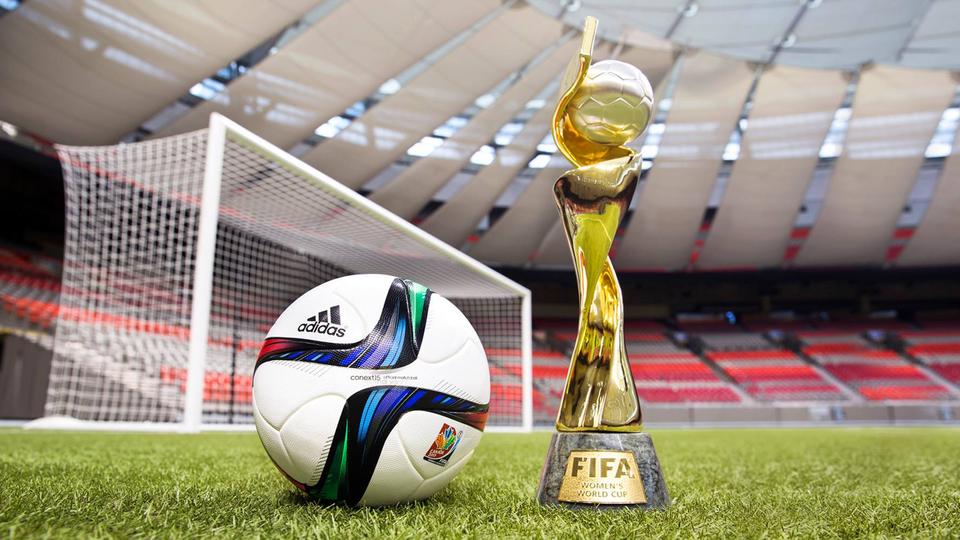
More than a decade later, the iconic venue will once again host a FIFA World Cup final—this time with the world’s leading women’s teams competing for global supremacy.
By the end of July 2027, one team will emerge from the 32-nation tournament as world champions, with the winning captain expected to raise the trophy in front of a global audience inside the historic stadium.
With the match schedule now released, supporters can begin planning their travel and tournament experience.
FIFA said the schedule is available through its digital platforms, while a revised version will be issued after the final draw later in 2026.
The final draw will determine the composition of the groups and establish the specific opponents for the participating teams.
FIFA has also opened registration for supporters interested in receiving ticket information, while prospective volunteers can register for updates ahead of the tournament.
The 2027 FIFA Women’s World Cup promises to be a landmark event for women’s football, with Brazil preparing to welcome the world to eight cities and the Maracanã waiting to crown a new generation of champions.
When the final whistle sounds in Rio de Janeiro, the world’s attention will once again turn to the famous stadium—not simply to witness another football match, but to see a new world champion crowned on one of the most celebrated stages in the sport.
Read Also: Cameroon Crowned WAFCON Champions After Emphatic 3-0 Victory Over Malawi
Author

Sign up for The Insight Newsletter
Get in-depth, research and data-based interpretative reports from around Nigeria.