Now, Nigerian journalists are trapped in ‘theatre of terror’

A disturbing news judgment I made in January 2012 when I occupied the magisterial seat as Editor of Sunday Trust makes me feel like a guilty old man when dry bone is mentioned in a proverb. In this case, I feel unease when security personnel and government officials throw missiles at the media for allegedly using their platforms to breathe life into terrorists’ propaganda. That Saturday, while we savoured the freshness of the new year, the news desk received a lengthy statement from Boko Haram in Maiduguri. It was the era when the terrorist group were ghosts walking around the North-East, wearing garments that render them invisible, but still made phone calls to journalists to refute allegations against them and comment on national issues. The most prominent and frequent official spokesperson of the sect used the nom de guerre (pseudonym) Abu Qaqa.
As I agonised and worked my phones to review possible lead stories from reports received from across the country, we received a three-page gun-wielding and blood-soaked statement from Boko Haram. The document, carefully crafted by a master propagandist, poured drums of accusations upon security operatives in Kano for ‘persecuting’ their members and throwing some into the dark corners of prisons. Quoting from the scriptures and advancing twisted arguments that were averse to Nigeria’s legal statutes, the sect accused security operatives and Kano State government of bias. It threatened to unleash its forces on Kano for unprecedented bloodshed.
The group believed they had hit the jackpot by earning a front-page spot in my newspaper
By 2012, the sect had not yet extended its violence to the North-West; its attacks remained concentrated on government institutions and security operatives in the North-East, mainly Borno and Yobe States. The threat to invade Kano introduced a new twist to its violent campaign—an editor’s dream of a banner headline. Perhaps the group believed they had hit the jackpot by earning a front-page spot in my newspaper. Yet, a voice in the back of my mind asked: “Would you allow terrorists to use your paper to justify their evil act?” On second thought, I decided not to play into their hands. I reduced the story to a six-paragraph item titled “Boko Haram threatens to attack Kano,” deliberately setting aside their reasons for the plot.
Disappointed that their statement did not earn a prominent space in Sunday Trust, the sect’s leaders, with effrontery, protested that we failed to publish the context of their threat. My response was that as Editor, I, not Boko Haram, decided what I would publish; that I was not even under any obligation to publish their statement. I felt proud that I took that decision.
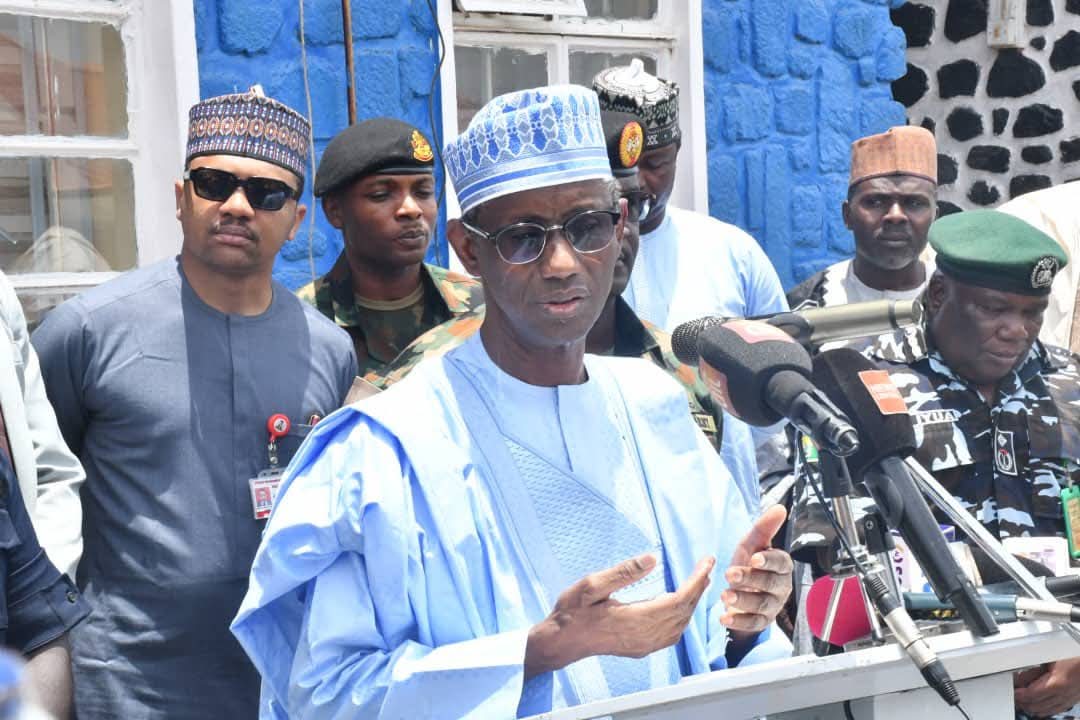
Malam Nuhu Ribadu, Nigeria’s National Security Adviser
On Friday, January 20, 2012, Boko Haram stormed Kano and unleashed mayhem on the ancient city, killing over 200 people. Among the victims was a police officer, who was my bosom friend and fellow member of our local church during my years in Kano. As the full picture of the bloodshed came to light on Saturday, January 21, and I edited the story for the Sunday front page, a flood of tears made it hard to keep my head above water. The haunting question remained: could the violence have been averted if I had sounded the alarm with a banner headline from Boko Haram’s earlier statement? Might the authorities have tried to cut a deal by releasing their members from prison to stave off the carnage? Truth be told, even today, I cannot give a clear answer, and the doubt still hangs over me like a cloud.
The dilemma is brought to life today, now that President Bola Ahmed Tinubu, the top hierarchy of the country’s security architecture, and the Minister of Information and National Orientation, Alhaji Muhammad Idris, tend to impress on journalists who publish reports from activities of bandits and terrorists that they are furthering the propaganda of criminals. Since 2009, Nigeria has grappled with insecurity driven by terrorism, insurgency, and banditry. For over two decades, the violence has persisted, yet only now is the government seeking to curtail media coverage of these issues. The divergence between media and security agencies shows they have not shared a unified approach to covering terrorism, leaving citizens caught between fear and filtered information.
It argues that terrorists rely on media for amplification of their activities, while media use terrorist events as compelling news that attracts an audience.
The government’s position is an idea about media and terrorism that has attracted scholars in the last four decades. In the 1980s, when Terrorism studies were at their infancy, the concept was referred to as the ‘Symbiotic Relationship Model’ of communication. It argues that terrorists rely on media for amplification of their activities, while media use terrorist events as compelling news that attracts an audience. This theory says both terrorists and media owners benefit from each other’s activities in a cyclical manner.
The second theory that emerged is called the’ Communicative Act Theory,’ propounded by Alex Schmid & Janny de Graaf in 1982, which argues that Terrorism is fundamentally a communicative act; victims serve as channels for the terrorist’s message. By implication, according to the theorists, media reporting extends the reach of the terrorist’s intended audience. Then we have the ‘Theatre of Terror’ theory, by Gabriel Weimann, an icon of Terrorism studies in the 1980s and 1990s, who says terrorist acts are staged as symbolic performances designed to maximise media attention. Therefore, media coverage would transform violence into a ‘spectacle’ reinforcing intimidation by terrorists.
In the same vein, Brigitte Nacos came up with the Mass-Mediated Terrorism theory that argues that terrorism loses symbolic power without media coverage. Media, therefore, becomes a vehicle for fear, recruitment, and legitimisation, so journalists risk amplifying terrorist propaganda by reporting attacks and statements without critical assessment of them.

File photo of bandits somewhere in the North-West.
From the intellectual perspective, these theories are validated by the fact that terrorists constantly send their messages to the media for amplification. However, terrorist organisations are founded on ideologies, whether religious, regional, ethnic, economic, or even political. Ideologies are, in reality, responsible for the kinds of violence they exhibit; no terrorist group engages in violence for the sake of media coverage. This is why denying terrorists media attention alone does not curb their evil activities.
In 2023, at a workshop for journalists on conflict-sensitive reporting in Katsina State, some participants confessed that they had stopped reporting the activities of bandits, having been persuaded by the authorities to ignore such violence. Many of them considered the strategy revolutionary, but the media blackout did not prevent bandits from abducting peasants from communities in Katsina State, killing some and imposing hefty levies on the people.
In the digital age, terrorists increasingly use their own platforms (encrypted apps, social media, video releases) to spread ideology directly
In reality, terrorist groups often act primarily out of deeply held ideological, religious, or political convictions. Violence is not staged only for cameras; it is meant to punish enemies, enforce beliefs, or achieve concrete political goals. Media coverage may amplify the act, but it is not the root cause. Also, many attacks are designed to weaken governments, destabilise societies, or provoke military responses. These are strategic calculations, not just attempts to gain headlines. For example, insurgent groups often target military installations or infrastructure where media coverage is secondary to tactical impact. Also, framing terrorism as “media theatre” risks trivialising victims’ suffering and ignoring the complex socio-political roots of violence. Worse still, now, in the digital age, terrorists increasingly use their own platforms (encrypted apps, social media, video releases) to spread ideology directly. This undermines the idea that mainstream media is their primary propaganda tool.

Minister of Defense, Gen Christopher Musa (rtd)
It is good that the government is sensitising the media on the implications of giving space and airtime to terrorists and their activities. But such pressure to impose a blackout on the activities of violent groups may be construed as a strategy for normalising insecurity in Nigeria. The measure could mean the authorities are subtly deflecting from the state’s primary duty to protect lives and property, making insecurity seem like a shared burden rather than a failure of governance. The situation in Mexico is instructive. The Mexican government tends to have normalised insecurity by systematically gagging the media, creating what rights groups call “structures of silence.” Through censorship, restricted access to information, and intimidation of journalists, the state limits independent reporting on violence, corruption, and organized crime. Judicial harassment and surveillance further discourage investigative journalism, while physical attacks and murders of reporters foster self-censorship. By silencing watchdogs, the Mexican government intends to reduce public scrutiny, making violence appear routine and inevitable. Citizens receive incomplete or distorted accounts of insecurity, which embeds violence into daily life as a “normal” condition. Such normalisation sustains a cycle where insecurity thrives unchecked.
But such pressure to impose a blackout on the activities of violent groups may be construed as a strategy for normalising insecurity in Nigeria
In societies where insecurity is normalised, governments take some measures that may be considered irresponsible. First, governments highlight dialogue, communication strategies, or public awareness campaigns, while downplaying direct enforcement. Secondly, they warn against reporting attacks too quickly or withholding casualty figures, suggesting that managing perception is prioritised over transparency and accountability. Thirdly, governments often highlight isolated successes — a rescued victim, a dismantled camp — while widespread insecurity persists. This selective narrative can mask systemic weakness and shift expectations toward living with “manageable” violence. In some cases, officials describe crime or terrorism as something that “will always be with us” or stress resilience over eradication. They implicitly ask people to accept violence as part of daily life instead of promising concrete solutions. May Nigeria never descend into such a mire at the clay bottom.
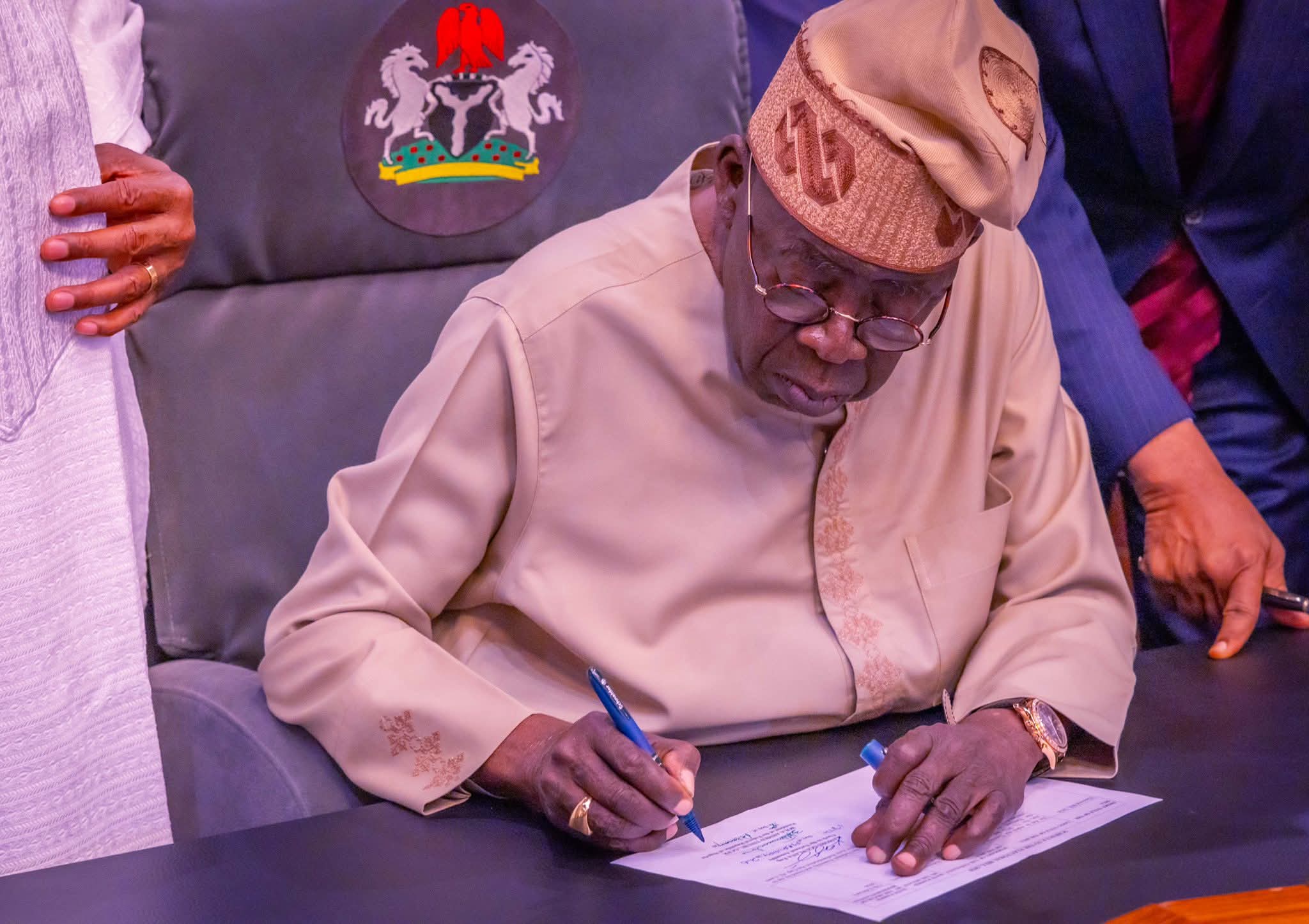
Author

Sign up for The Insight Newsletter
Get in-depth, research and data-based interpretative reports from around Nigeria.