
Why Debt Hurts Africa More: The High Cost of Borrowing and the Continent’s Development Dilemma

By Emmanuel Kwada
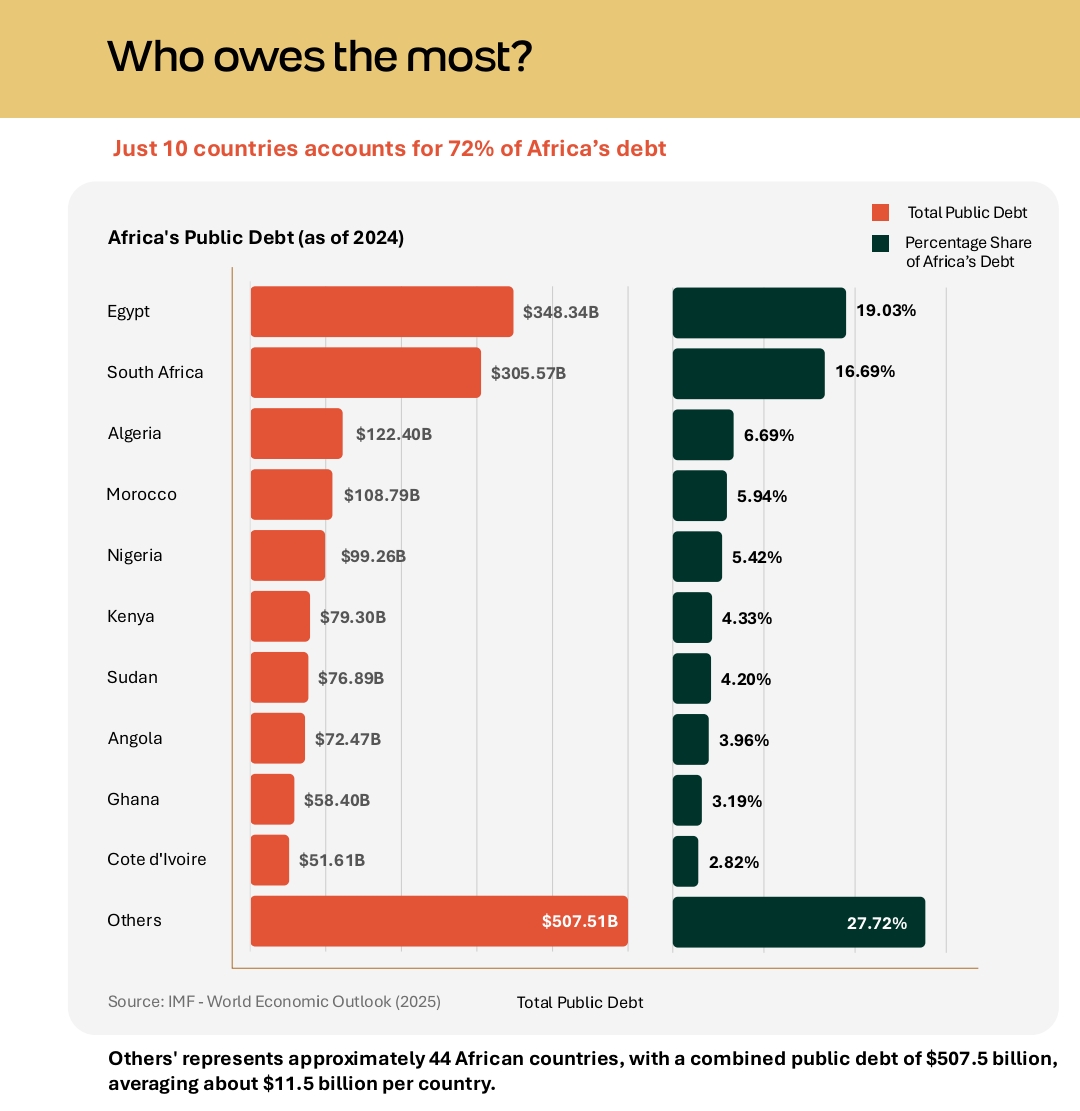
Africa’s debt burden has become one of the most pressing economic challenges confronting the continent. While debt is a common feature of modern economies, experts argue that debt hurts Africa more severely than other regions because of a combination of high borrowing costs, economic vulnerability, limited fiscal space, climate shocks, and an international financial system that often treats African countries as high-risk borrowers.
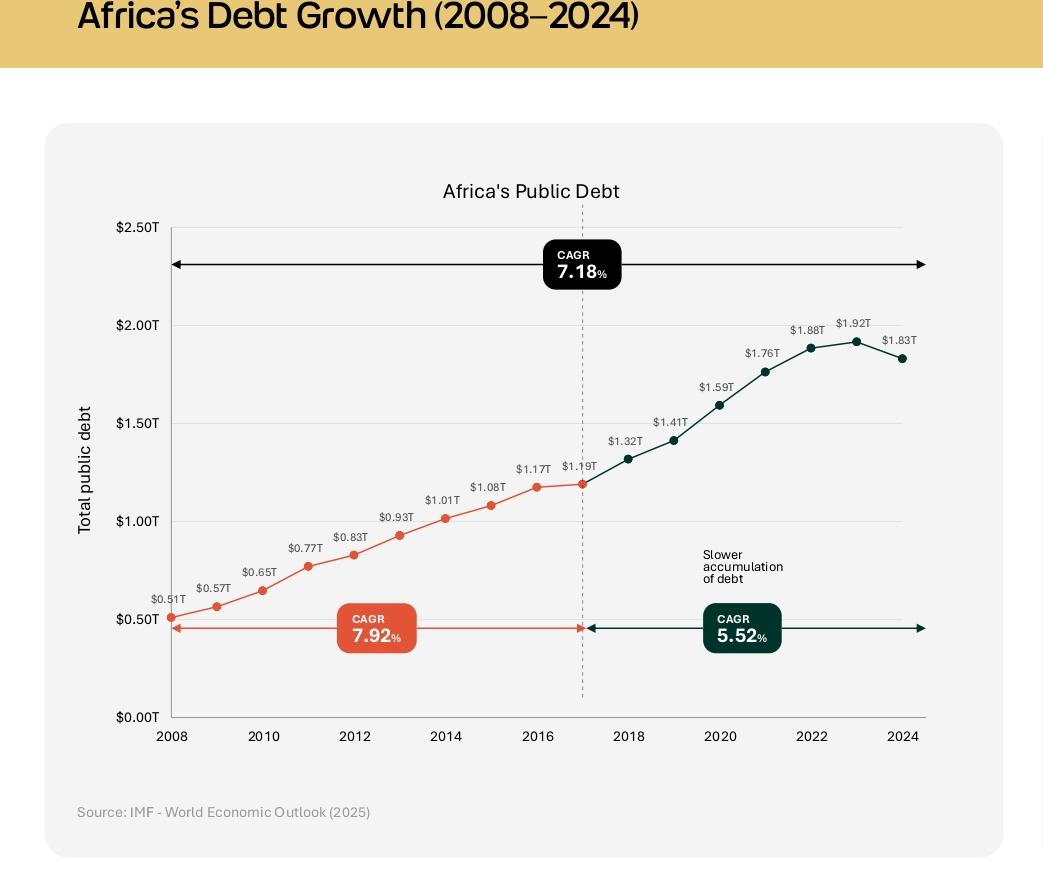
Recent data from LEAF Africa’s December 2025 report, alongside findings from international financial institutions and economic researchers, reveal a troubling reality: African nations are paying disproportionately higher costs for debt, diverting scarce resources away from healthcare, education, infrastructure, and economic development.
Credit: LEAF Africa
Africa’s Debt Burden by the Numbers
Africa’s public debt has expanded dramatically over the past two decades. Research from the African Debt Database shows that the continent’s total public debt has increased more than fourfold since the early 2000s, reflecting growing financing needs for infrastructure, social services, and economic recovery programmes.
Key indicators paint a concerning picture:
- Indicator Situation
- Public debt growth More than fourfold increase since early 2000s
- Debt-to-GDP ratio Nearly 60% in many African economies by 2024
- Countries at high risk of debt distress About 20 African nations
- Countries spending more on debt than healthcare 32 countries
- Average government revenue spent on interest payments 18%
According to economic analysts, Africa’s challenge is not merely the size of its debt but the cost of servicing it. African countries often pay interest rates up to four times higher than those paid by G7 nations, despite generally carrying lower debt-to-GDP ratios.
Why Debt Hurts Africa More Than Other Regions
1. Higher Borrowing Costs
One of the biggest reasons debt hurts Africa more is the premium investors demand when lending to African governments.
Many African nations are perceived as risky investment destinations due to political instability, commodity dependence, currency volatility, and weak credit ratings. As a result, they borrow at significantly higher interest rates than developed economies.
This means that a country in Africa may spend a far greater share of its budget repaying loans than a developed country borrowing the same amount. Economic experts describe this as a “risk-perception trap” that keeps African nations paying excessive financing costs.
Credit: LEAF Africa
2. Debt Crowds Out Development Spending
The consequences are visible across the continent.
Data show that more than 30 African countries now spend more money servicing debt than funding healthcare systems. In several countries, debt repayments also exceed spending on education.
For governments already struggling with poverty, unemployment, and inadequate infrastructure, this creates difficult choices:
Build hospitals or repay creditors.
Expand schools or service loans.
Invest in roads or cover interest payments.
The result is slower economic transformation and weaker human development outcomes.
3. Dependence on Commodities
Many African economies remain heavily dependent on exports of crude oil, minerals, agricultural products, and other commodities.
When global prices fall, government revenues decline sharply, making debt repayments more difficult. Conversely, debt obligations remain fixed regardless of market conditions.
When local currencies weaken, debt repayments become more expensive.
This exposure to external shocks makes African countries more vulnerable to debt crises than diversified economies in other regions.
4. Climate Change Intensifies Debt Pressure
Climate change has emerged as a major debt multiplier across Africa.
Floods, droughts, desertification, cyclones, and food insecurity force governments to spend heavily on emergency responses and reconstruction. Yet many of these countries contribute minimally to global greenhouse gas emissions.
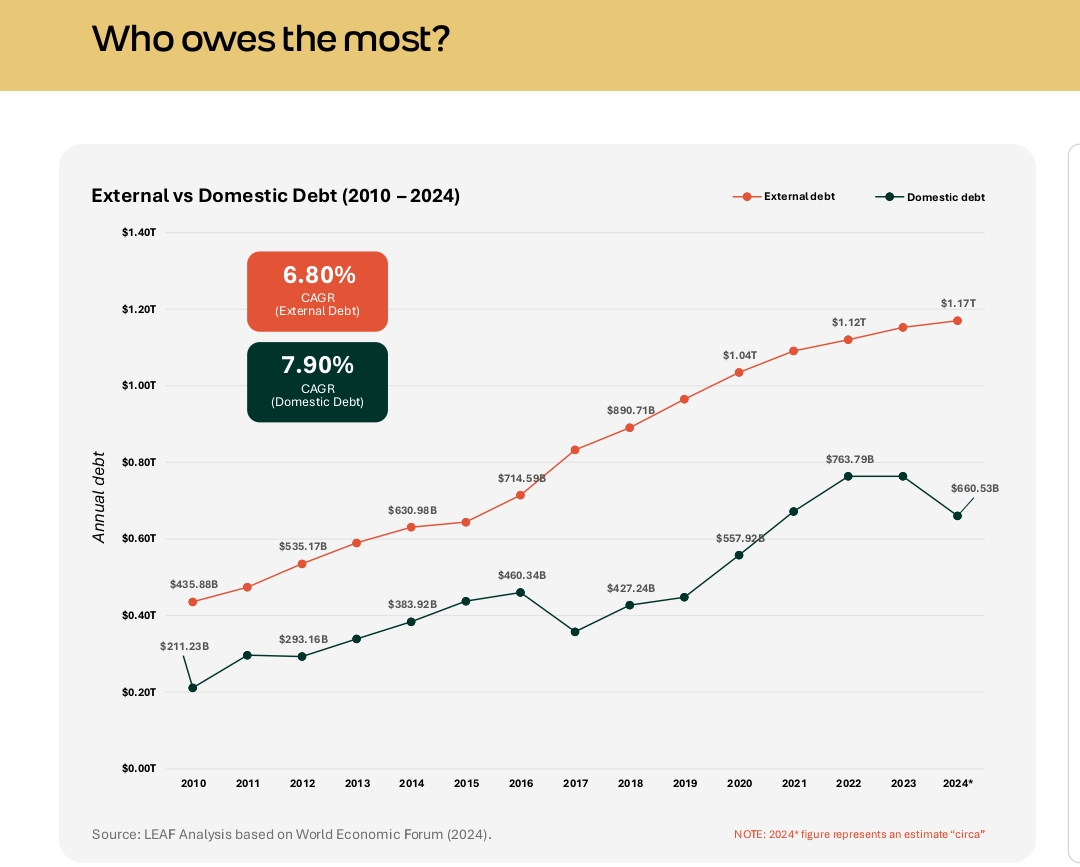
Policy experts describe a “vicious cycle” where climate disasters increase borrowing needs while existing debt limits investments in climate resilience. External debt in Africa has more than tripled since 2008, while climate financing remains inadequate.
5. Currency Depreciation
A significant share of Africa’s debt is denominated in foreign currencies such as the US dollar and euro.
When local currencies weaken, debt repayments become more expensive. Governments must generate more local currency revenue to meet the same external obligations.
This challenge has intensified in recent years as several African currencies have experienced substantial depreciation against major international currencies.
Credit: LEAF Africa
The Emerging Shift to Domestic Debt
Interestingly, Africa’s debt landscape is changing.
New evidence from the African Debt Database indicates that African governments now raise more than half of their financing domestically, reversing decades of dependence on external lenders. Domestic debt markets are expanding rapidly across the continent.
While domestic borrowing can reduce foreign exchange risks, economists warn that excessive reliance on local financing can crowd out private sector lending and limit access to credit for businesses.
The Human Cost
Behind the statistics lies a human story.
When governments allocate larger portions of national budgets to debt servicing, fewer resources remain for:
Healthcare delivery
Education
Job creation
Water and sanitation
Infrastructure development
Climate adaptation programmes
Analysts warn that this trend threatens to reverse gains made in poverty reduction and sustainable development across the continent. Some observers argue that Africa is effectively “defaulting on development” even when it successfully meets its debt obligations.
Calls for Reform
African leaders and international development advocates are increasingly calling for reforms to the global financial architecture.
Recent discussions at African Union and G20 forums have focused on:
Fairer debt restructuring mechanisms.
Lower borrowing costs.
Improved credit rating methodologies.
Expanded access to concessional financing.
Climate-linked debt relief programmes.
Innovative financing instruments such as diaspora bonds and sustainability-linked bonds.
Can Africa secure the investment it needs for development without becoming trapped in a cycle of costly debt?
African Union leaders argue that current debt restructuring frameworks remain too slow and ineffective for countries facing acute debt distress.
Despite mounting debt pressures, economists maintain that borrowing itself is not the problem. The critical issue is whether borrowed funds generate sufficient economic growth and productivity to repay the debt sustainably.
For Africa, the challenge is compounded by high financing costs, climate vulnerability, dependence on commodity exports, and structural inequities in the global financial system.
As governments seek nearly $83 billion in financing needs for 2026, the continent faces a defining question: can Africa secure the investment it needs for development without becoming trapped in a cycle of costly debt?
Read Also: One Healthy Meal Eats 66% of Minimum Wage; Ekiti Worst Hit: 90% of Wage Gone on Food
Author

Sign up for The Insight Newsletter
Get in-depth, research and data-based interpretative reports from around Nigeria.


