
From 13 Teams in 1930 to 48 in 2026: 8 Winners as the World Cup Kicks Off a New Era
By Emmanuel Kwada
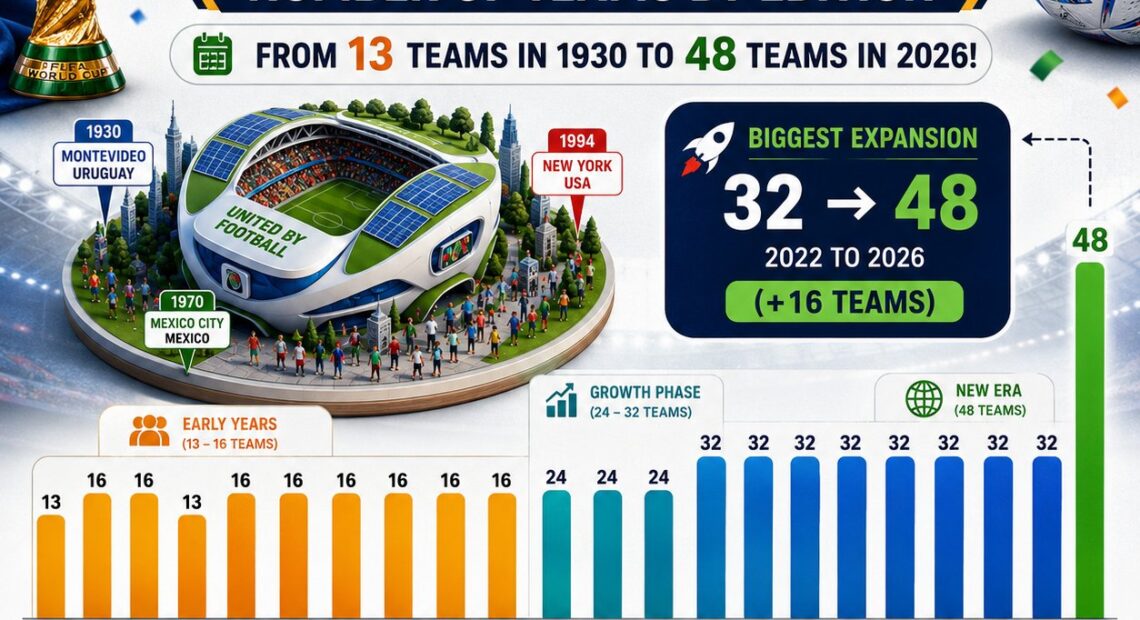
As the countdown to the 2026 FIFA World Cup gathers momentum, the tournament is poised to usher in the most transformative chapter in its 96-year history. From a modest competition featuring just 13 teams in 1930 to a global spectacle involving 48 nations in 2026, the World Cup’s evolution mirrors football’s rise from a regional sport to the world’s most celebrated sporting event.
The 2026 edition, jointly hosted by the United States, Canada and Mexico, will be the largest World Cup ever staged, marking the first time three nations will share hosting duties.
The FIFA World Cup began in 1930 in Uruguay, where 13 teams competed for football’s biggest prize. The hosts emerged champions, setting the stage for what would become the most prestigious tournament in global sport.
FIFA World Cup began in 1930 in Uruguay, where 13 teams competed for football’s biggest prize.
Over the decades, the competition expanded steadily, reflecting football’s growing popularity across continents. From Europe and South America to Africa, Asia, North America and the Middle East, the World Cup has become a platform where cultures converge and sporting dreams are realized.
The tournament has survived world wars, political tensions and global crises, yet its appeal has only grown stronger, attracting billions of viewers and producing some of the greatest moments in sporting history.
The World Cup has traveled across the globe since its inception. Historic hosts such as Italy, France, Brazil and Germany have each left lasting legacies.
The tournament reached new milestones with the first co-hosted edition in 2002 by South Korea and Japan, the first African World Cup in South Africa, and the first Middle Eastern edition in Qatar.
Now, the 2026 tournament will break new ground again, with 16 host cities spread across North America and the final scheduled for MetLife Stadium.
Despite the tournament’s global reach, only eight countries have ever lifted the World Cup trophy.
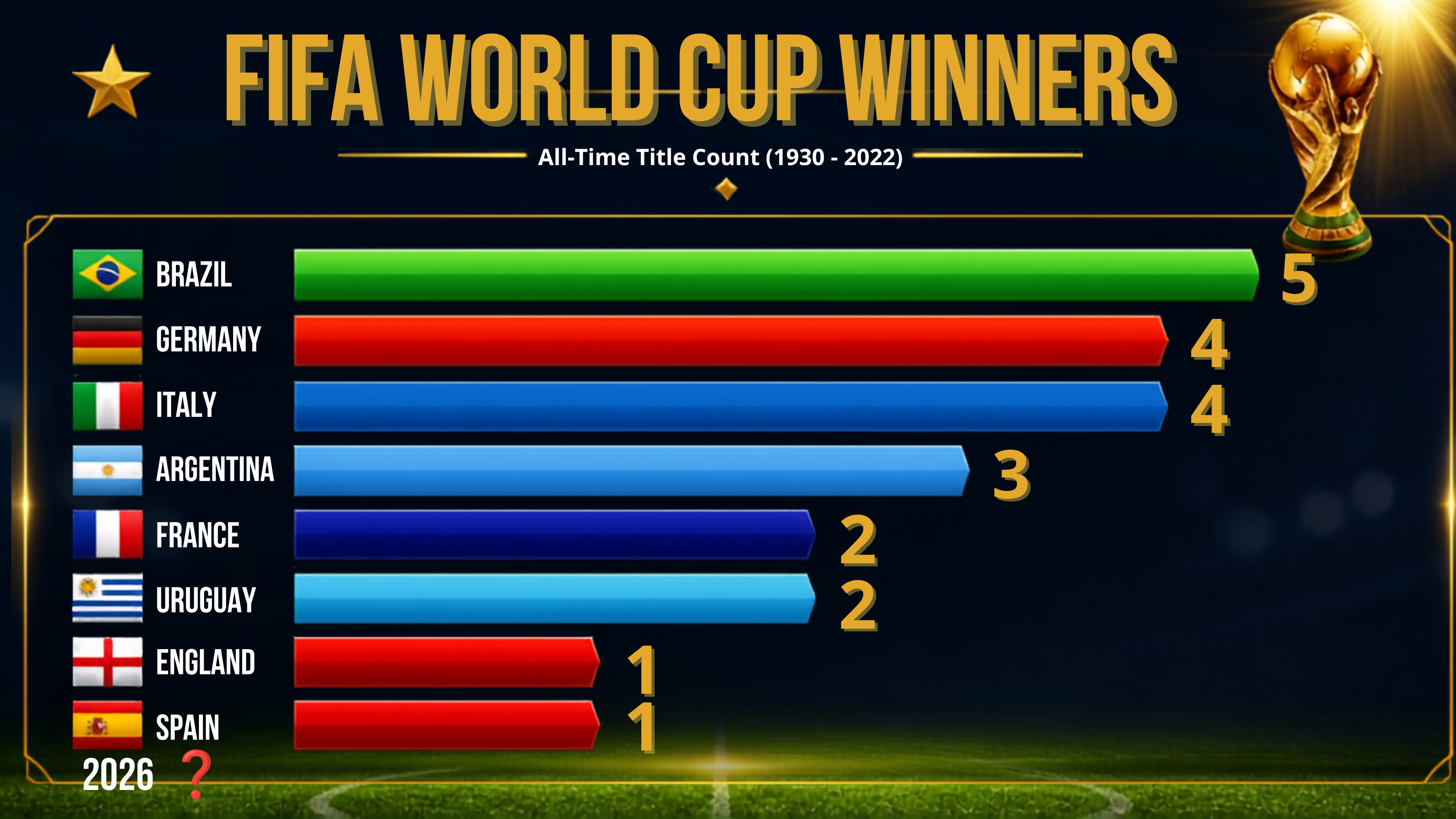
Among them, Brazil remains the tournament’s most successful nation and the only country to have participated in every World Cup since 1930.
The World Cup has produced countless iconic stories. Six host nations have won the tournament on home soil, while legendary players such as Pelé, Diego Maradona and Lionel Messi have etched their names into football folklore.
Argentina’s dramatic triumph over France in the 2022 final in Qatar is widely regarded as one of the greatest matches in World Cup history, completing Messi’s quest for football’s most coveted prize.
The Dawn of the 48-Team Era
The 2026 tournament represents more than just an expansion in numbers. The increase from 32 to 48 teams will provide opportunities for more nations to compete on football’s grandest stage, potentially bringing fresh rivalries, new stars and unexpected success stories.
Football analysts believe the expanded format will increase competitiveness and strengthen the game’s development in emerging football nations, while also giving millions more fans around the world a direct stake in the tournament.
From 13 teams gathered in Montevideo in 1930 to 48 nations preparing to compete across North America in 2026, the FIFA World Cup has undergone an extraordinary transformation.
As the tournament prepares to begin a new era, the essence of the competition remains unchanged: nations chasing glory, players pursuing immortality, and billions of fans united by a shared passion for the beautiful game.
Read Also: 11 New FIFA Laws Debuting at the 2026 World Cup
Author

Sign up for The Insight Newsletter
Get in-depth, research and data-based interpretative reports from around Nigeria.