
US Report: 30,000 Armed Fulani Militants Fuel Religious Violence in Nigeria
By Emmanuel Kwada
The United States Commission on International Religious Freedom (USCIRF) has released a detailed report highlighting the significant role of armed Fulani militants in Nigeria’s worsening security and religious freedom crisis.
In its May 2026 Issue Update titled Nonstate Violators of Religious Freedom in Nigeria: Fulani Militants, the commission estimates that approximately 30,000 armed Fulani militants are operating across the country.
These militants work in mobile groups of between 10 and 1,000 members, traditionally concentrated in the northwest before moving through the Middle Belt and increasingly into southern states.
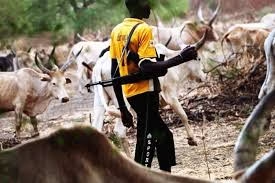
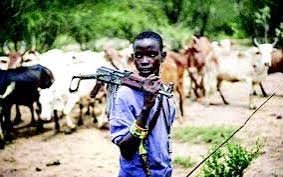
Fulani Herdsmen with AK47
According to the report, violence by these Fulani militants has caused the highest number of deaths among religious communities in Nigeria over the past year, surpassing attacks by organised insurgent groups and criminal gangs.
The militants frequently launch nighttime raids on isolated rural communities using motorcycles, automatic weapons, and machetes.
Attacks often involve burning homes and churches, killings, rapes, and kidnappings. While many incidents target Christian farming communities, Muslim communities — including non-Fulani Muslims and even Fulani herders — have also been victims of cattle rustling and ransom-driven abductions.
The report documents several large-scale attacks that claimed hundreds of lives in 2025 and early 2026. In June 2025, one attack in Benue State killed at least 200 people, including internally displaced persons sheltering at a Catholic mission.
That same month, militants carried out a massacre in Yelwata, Benue State, killing over 200 Christians — mostly sleeping women and children — and displacing more than 3,000 residents.
Fulani militants has caused the highest number of deaths among religious communities in Nigeria.
In early 2026, violence continued unabated. In February, suspected Fulani militants killed at least 32 people in the Borgu area of Niger State. In the same month, they attacked Holy Trinity Parish in the Kafanchan Diocese of Kaduna State, killing three people and abducting 11 others, including the parish priest, Father Nathaniel Asuwaye. Also in February, 12 people were killed in attacks on Barkin Ladi and Riyom areas of Plateau State.
Holiday periods saw particularly brutal incidents. On Palm Sunday in April 2026, assailants killed at least 28 people in a heavily Christian area of Plateau State.
One week later on Easter Sunday, Fulani militants reportedly killed five worshippers at two churches in Kaduna State and abducted 31 others. On the same day, 17 people were killed in Benue State.
The militants have also targeted Muslim communities. In February 2026, armed men kidnapped an imam and seven worshippers from a mosque in Plateau State, demanding a ransom of N16 million. In October 2025, seven Fulani Muslim herders were killed in Kano State, with 70 cattle stolen and 10 others abducted.
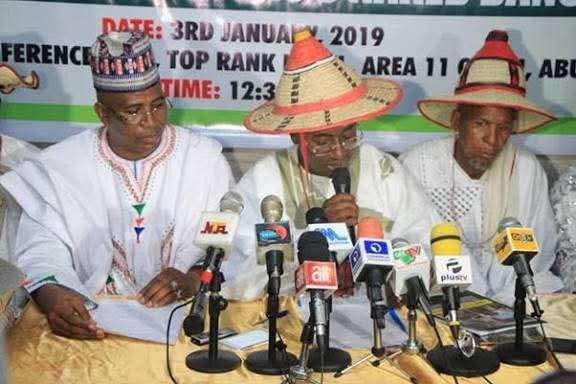
File photo: MACBAN Leaders in Abuja
These attacks, among others, have forced at least 1.3 million people in the Middle Belt into overcrowded and unsafe displacement camps. Some operations are deliberately timed with Christian holidays to maximise psychological impact.
USCIRF emphasised that the militants do not operate under a centralised leadership. While some groups act independently, others collaborate with bandit gangs or extremist organisations.
The commission stated that motivations are multiple and overlapping, including competition for land and resources, economic gain through ransom, population pressures, and religious factors in many cases.
“Multiple and overlapping factors, including religion in many cases, likely spur Fulani militants to attack communities or individuals,” the report said.
The report criticises both federal and state governments for slow and often inadequate responses to the violence. Victims have repeatedly complained that security forces arrive late or show alleged bias during operations and investigations.
Only a minority of Fulani are involved in militancy.
In response to mounting international pressure, particularly after the United States designated Nigeria as a Country of Particular Concern (CPC) in October 2025, President Bola Tinubu designated kidnappers and violent armed groups, including Fulani militants, as terrorists in December 2025.
Security operations in January 2026 resulted in the rescue of 309 hostages, the arrest of 129 suspected militants, and the killing of 55 others. Eleven state governors also launched a ranching land initiative in June 2025 to reduce herder-farmer clashes.
The Miyetti Allah Cattle Breeders Association of Nigeria (MACBAN) continues to face criticism from Christian leaders, who accuse it of failing to curb violence or indirectly supporting land invasions.
Read Also: Sultan Abubakar’s Burden and the Herdsmen Crisis
MACBAN has denied these claims, insisting it does not support criminality and that only a minority of Fulani are involved in militancy. In February 2026, the U.S. Congress introduced a bill proposing targeted sanctions against the group.
Despite recent government initiatives, USCIRF warned that central Nigeria remains trapped in a cycle of intense daily violence and insecurity.
The commission concluded that the crisis is likely to continue “until the federal and several state governments create broader underlying conditions that are more conducive to the safe practice of religious freedom.”
Read Also: Data: Now, herdsmen shed more blood than bandits and terrorists
Author

Sign up for The Insight Newsletter
Get in-depth, research and data-based interpretative reports from around Nigeria.


