
Meet the 7 Registrars JAMB Has Had in 48 Years, From 1978 to 2026

By Emmanuel Kwada
In its 48-year history, the Joint Admissions and Matriculation Board (JAMB), established in 1978 to standardize tertiary admissions in Nigeria, has demonstrated remarkable leadership stability.
Only seven individuals have served as Registrar, with most recent ones completing two full five-year terms spanning 10 years each. This level of continuity is uncommon among Nigerian government agencies.
All appointees emerged directly from Nigerian universities, with Obafemi Awolowo University and Ahmadu Bello University Zaria each producing two registrars.

Professor Segun Aina
As the newest leader takes office, JAMB’s leadership evolution reflects a clear progression from foundational establishment and security enhancements in the early years to bridging manual and digital systems, full-scale computer-based testing, expanded infrastructure and transparency, and now advanced technological optimization for greater efficiency and integrity.
Professor Segun Aina (Effective August 1, 2026)
Professor Segun Aina assumes office as the seventh Registrar effective August 1, 2026, following his appointment by President Bola Tinubu.
At 39 years old (turning 40 in July 2026), he becomes the youngest Registrar in JAMB’s history and brings deep expertise in digital systems and examination technology as a Professor of Computer Engineering at Obafemi Awolowo University, Ile-Ife.
From Oyo State in the South West, Aina holds a BSc in Computer Systems Engineering from the University of Kent, an MSc in Internet Computing and Network Security and a PhD in Digital Signal Processing from Loughborough University, as well as an Executive Senior Management Programme from Lagos Business School.
He began his connection with JAMB as a NYSC corps member, gaining direct insight into admissions and examination processes, and later served as a consultant to bodies such as NECO and NABTEB on ICT systems, exam integrity, and digital process management.
Highest scores under his tenure set records, including 375 by Okeke Chinedu Christian in 2025 and 372 by Owoeye Daniella Jesudunsin in 2026.
He is a member of COREN, the Nigerian Society of Engineers, IEEE, and the Institution of Engineering and Technology.
President Tinubu expects him to build on previous gains with a stronger technology-driven approach, enhancing efficiency, security, accessibility, and innovation while addressing infrastructure gaps for millions of Nigerian candidates.
With candidature projected to surpass 2.2 million annually, Professor Segun Aina will need to focus on strengthening digital resilience to prevent technical glitches, expanding reliable CBT infrastructure in rural and underserved areas, optimizing systems for scalability and equity, further improving result processing speed and transparency, and sustaining high integrity standards amid growing participation.
Professor Is-haq Olanrewaju Oloyede (2016–2026)
Professor Is-haq Olanrewaju Oloyede served from 2016 to 2026 after his appointment by President Muhammadu Buhari.
From Abeokuta in Ogun State (South West) and a former Vice-Chancellor of the University of Ilorin, his decade-long tenure transformed JAMB through landmark reforms in transparency, exam integrity, and financial accountability.

Professor Is-haq Olanrewaju Oloyede
Annual candidate numbers grew significantly under him, reaching peaks of around 1.8 to 2.24 million registrants in later years, with over 1.95 million in 2025.
He dramatically expanded computer-based testing infrastructure to hundreds of centres nationwide, incorporating biometrics, real-time monitoring, and enhanced surveillance to curb malpractice.
Revenue generation improved significantly, rising from modest annual remittances averaging around ₦50 million to billions of naira, with over ₦7.8 billion remitted in his first year and higher figures thereafter.
Oloyede strengthened the Central Admissions Processing System for greater fairness and transparency in placements while restoring public confidence in the board’s processes, despite challenges such as the 2025 UTME technical issues for which he assumed responsibility.
Annual remittances averaging around ₦50 million to billions of naira.
Highest scores under his tenure set records, including 375 by Okeke Chinedu Christian in 2025 and 372 by Owoeye Daniella Jesudunsin in 2026. His leadership left JAMB as a more credible, efficient, and self-sustaining institution.
Professor Adedibu Ojerinde (2007–2016)
Professor Adedibu Ojerinde, a Professor of Tests and Measurement from Igboho in Oyo State (South West), served from 2007 to 2016 and drove JAMB’s major shift into the digital era.
Candidate numbers during his tenure grew steadily from several hundred thousand to well over one million annually as the examination gained wider national reach and acceptance.
He introduced the Unified Tertiary Matriculation Examination as a single national examination, replacing fragmented institutional tests.
Under his leadership, JAMB phased in computer-based testing starting in 2013 and achieved full transition by 2015, significantly reducing vulnerabilities associated with paper-based examinations.
He also launched the Central Admissions Processing System, which enhanced transparency and minimized arbitrary admission practices.
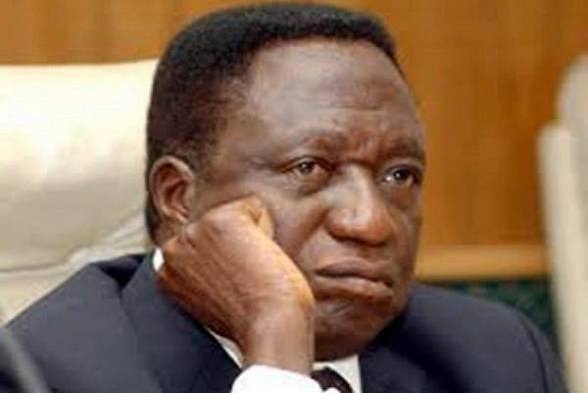
Professor Adedibu Ojerinde (2007–2016)
Highest scores in this period reflected the CBT transition, with top performers consistently achieving 300 and above as systems stabilized.
These reforms modernized JAMB’s operations substantially and provided the technological foundation for subsequent advancements.
Professor Bello Ahmad Salim (1996–2006)
Professor Bello Ahmad Salim, from Kano State in the North West and affiliated with institutions linked to Ahmadu Bello University Zaria and Bayero University Kano, served from 1996 to 2006 and played a pivotal role in JAMB’s early digital evolution.
Candidate participation expanded steadily into the hundreds of thousands during his decade. He advanced e-registration systems that markedly reduced impersonation and examination malpractice.
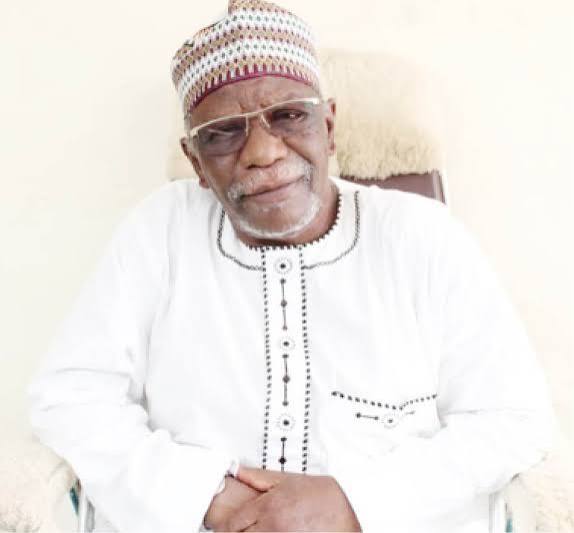
Professor Bello Ahmad Salim
His tenure emphasized technological optimization of registration and examination processes, laying essential groundwork for the eventual full adoption of computer-based testing. Highest scores reflected the manual-to-digital transition era, with top performers often in the high 200s to low 300s as systems improved.
Salim’s leadership helped improve administrative efficiency and accessibility during Nigeria’s transition from military to democratic rule.
Dr. Momodu A. B. Tukur mid-1990s transition
Tukur expanded JAMB’s operational reach to underserved regions and introduced early digital pilots. These included elements of online registration and barcode-enabled exam documentation, helping bridge purely manual processes with technology. His tenure improved candidate accessibility and began modernizing administrative workflows.
Brigadier-General Muhammad Mustapha (1986–1996)
Dr. Mohammed S. Abdulrahman (also referred to as Brigadier-General Muhammad Mustapha in some records), who served from 1986 to 1996, succeeded the pioneer registrar.
Candidate numbers were significantly lower during this period, typically ranging from tens of thousands to low hundreds of thousands amid national population and education growth.
His administration prioritized examination security through centralized printing and strict control of materials, which substantially reduced leakage risks.
Early discussions and planning for computerization began during this stable decade-long period, marking the initial institutional shift toward technology adoption in exam administration.
Highest scores were recorded under the prevailing paper-based system, reflecting the security-focused operations of the time.

Brigadier-General Muhammad Mustapha
Mr. Michael Saidu Angulu (1978–1986)
Mr. Michael Saidu Angulu, the pioneer Registrar from Niger State in the North Central, served from 1978 to 1986. In the early years, the number of candidates was relatively modest, often in the range of tens of thousands as the new centralized system took root across the country.
He established JAMB’s foundational framework at a time when multiple inconsistent university entrance examinations created widespread chaos.
Angulu created a centralized national admissions system that ensured orderly placement of qualified candidates into available spaces, defining the board’s core mandate and operational structures.
His eight-year tenure provided the bedrock upon which all subsequent reforms and developments were built, with highest scores determined under the initial unified examination framework.
From foundational unification and security to comprehensive digital transformation, revenue prudence.
JAMB’s leadership trajectory over nearly five decades illustrates progressive enhancement—from foundational unification and security to comprehensive digital transformation, revenue prudence, and cutting-edge technological integration.
As Professor Segun Aina takes the helm, stakeholders anticipate continued innovation in a digital-first era. This rare institutional stability positions JAMB strongly to shape Nigeria’s tertiary education landscape more effectively in the years ahead, while tackling ongoing challenges such as equitable access and infrastructure resilience.
Read Also: Why the North Falls Behind Southern States in UTME Performance
Author

Sign up for The Insight Newsletter
Get in-depth, research and data-based interpretative reports from around Nigeria.

