
Cooking Gas, Oil Prices Surge Amidst US-Israel-Iran War
By Emmanuel Kwada
The escalating conflict in the Middle East, marked by coordinated military strikes on Iran by the United States and Israel starting February 28, 2026, has triggered a sharp surge in global oil prices, with immediate knock-on effects felt in Nigeria’s energy sector.
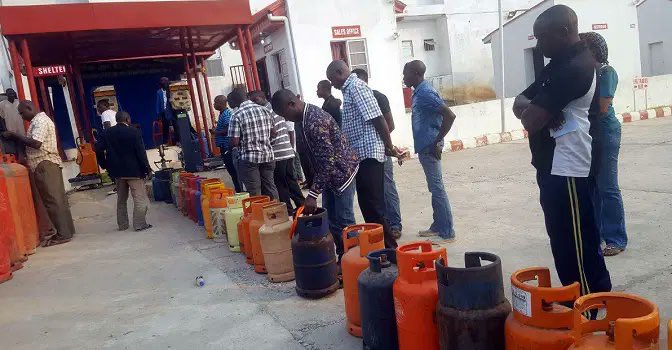
Depot owners have raised the price of Liquefied Petroleum Gas (LPG), commonly known as cooking gas, by an average of N100 per kilogram, pushing retail prices higher and adding pressure on households already grappling with energy costs.
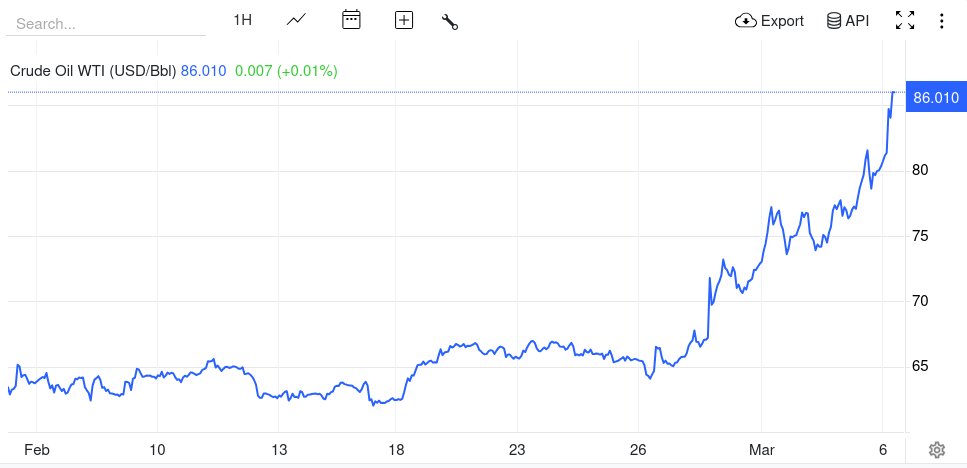
Image shows crude oil price topping $86/barrel and continuing to rise amid U.S.-Iran conflict in the Middle East
According to market checks by THE INSIGHT and other sources, major LPG suppliers in Nigeria have adjusted their ex-depot rates upward. Nipco Plc is now selling at N950 per kilogram, Navgas Limited at N900 per kilogram, and Techno Oil Limited at N885 per kilogram.
These figures represent a significant jump from the previous average of around N800 per kilogram before the latest adjustments.
The price hike stems directly from volatility in international crude oil markets, fueled by disruptions linked to the US-Israel-Iran conflict.
Reports indicate that Iranian oil production and exports estimated at around 3 million barrels per day, primarily to destinations like China have faced interruptions.
Nigeria’s Bonny Light crude has jumped to $80 per barrel.
More critically, retaliatory actions by Iran, including attacks on shipping and energy facilities, have led to a de facto restriction or slowdown in navigation through the Strait of Hormuz, a vital chokepoint for roughly 20% of global oil and liquefied natural gas (LNG) supplies.
The recent escalation of tensions between the US, Israel, and Iran has sent shockwaves through the global oil market, causing widespread concerns over potential supply shocks. As a result, crude oil prices have surged across various benchmarks.
Nigeria’s Bonny Light crude has jumped to $80 per barrel, its highest level since July 2025, up from around $70 per barrel.
Similarly, Brent crude has climbed to approximately $79-83 per barrel, while Murban crude rose to $81.05 per barrel from $74.24. West Texas Intermediate (WTI) has also increased to $72.24 per barrel from $62.
This volatility is largely driven by fears of disrupted oil supplies through the Strait of Hormuz, a critical global energy transit route. Experts warn that if tensions persist, prices could rise further, potentially exceeding $100 per barrel.
Oil prices began rising sharply over the weekend amid initial reports of disruptions, with further gains as the conflict intensified into early March 2026.
The Organization of the Petroleum Exporting Countries (OPEC) has noted Iran’s significant hydrocarbon resources, underscoring how any major output hit could ripple through global supply dynamics.
In Nigeria, an import-dependent market for products like LPG, these global trends translate quickly into higher replacement costs for marketers.
Depot operators have cited elevated landing costs for incoming cargoes and the need to avoid inventory losses amid market swings.
Nigeria’s downstream sector remains highly sensitive to both crude price movements and foreign exchange rates, amplifying the impact.
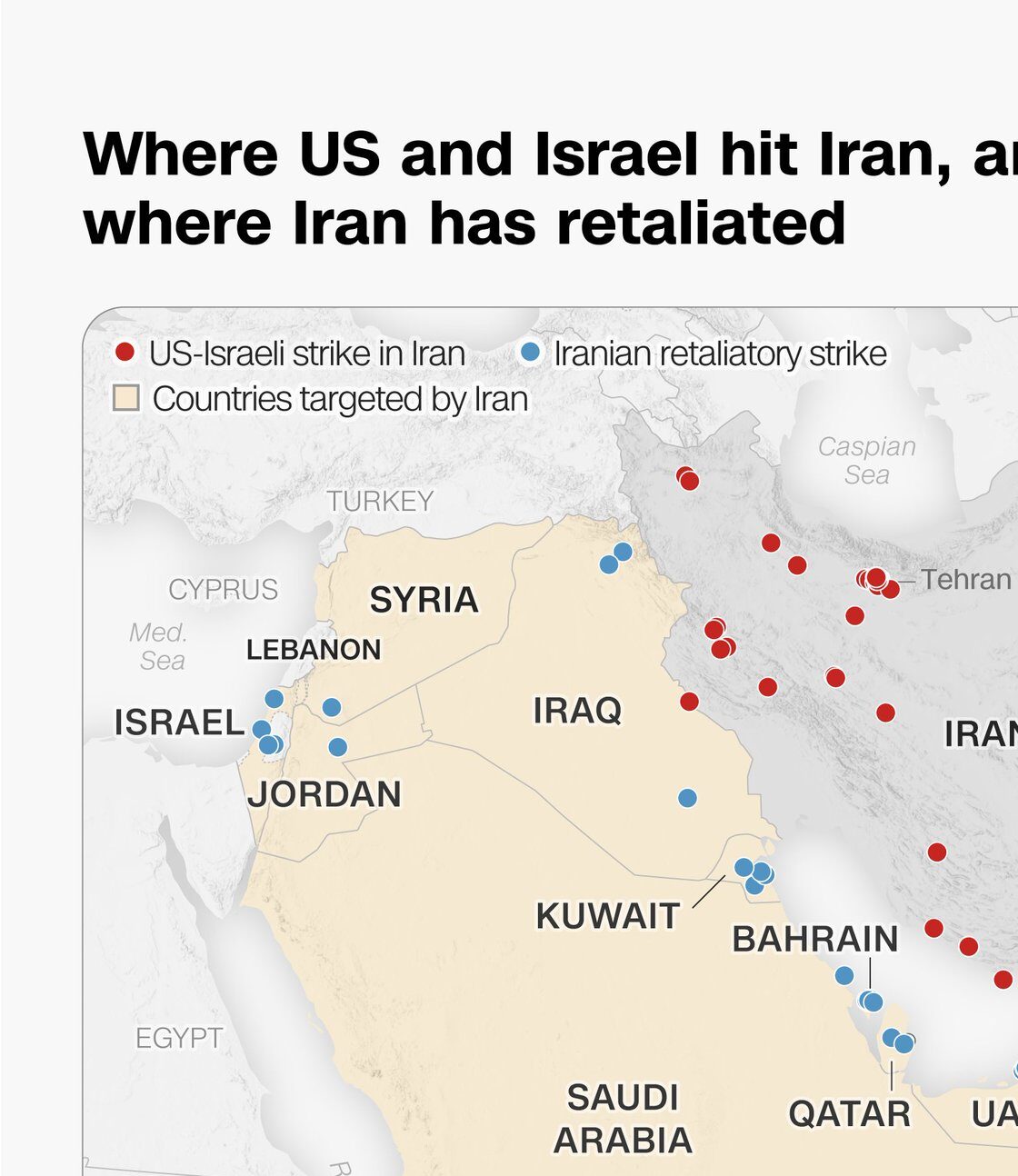
The conflict’s origins trace to February 28, 2026, when US and Israeli forces launched strikes targeting Iranian leadership (including the reported killing of Supreme Leader Ayatollah Ali Khamenei), military sites, nuclear facilities, and missile capabilities.
Objectives cited include regime change pressures, neutralizing nuclear ambitions, and curbing support for militant groups.
Iran has retaliated with missile and drone strikes across the region, hitting targets in Israel, Gulf states hosting US bases, and energy infrastructure, further complicating oil flows.
While OPEC+ announced a modest production increase of 206,000 barrels per day starting in April 2026 to help stabilize markets, the immediate outlook remains uncertain as fighting continues and the Strait of Hormuz situation evolves.
For Nigerian households and small businesses reliant on LPG for cooking and commercial needs, the latest increase compounds existing economic strains.
Many may face higher living costs or shift to alternatives like kerosene or firewood, potentially raising health and environmental concerns.
The situation underscores Nigeria’s vulnerability to geopolitical events far beyond its borders, highlighting the need for greater domestic energy security and diversification in the long term.
Read Also: FG partners firm on Biogas production across 774 LGAs
Author

Sign up for The Insight Newsletter
Get in-depth, research and data-based interpretative reports from around Nigeria.


