2027: Amupitan, AI and troublers of our democracy

Doubt stared back at me as I tried to read the lines etched across the foreheads of participants at a workshop on Artificial Intelligence Generated Content (AIGC) and the 2027 elections two weeks ago. Much like Jesus Christ discerning the doubtful thoughts of the Pharisees who questioned his miracles and recoiled at his radical teachings, I could feel the heat of skepticism and the weight of negative assumptions filling the bright, elegant, and compact meeting room. The threads of thought crisscrossing their minds may have included notions such as, “We know AI is a manipulative tool”; “The voter register is already infested with AI-generated content”; “AI will only complicate next year’s elections”; or even the sneering question, “What could this man possibly tell us about AI?”
Unfortunately for me, the day the Public Accountability, Citizenship and Transparency Initiative (PACT), an NGO, fixed for the workshop coincided with the broadcast of a red news – that the INEC voter’s register was contaminated with more than a million AI-generated photos. Really disappointing. But the discouraging paragraphs that gave energy to doubters were that many names were manipulated to appear in the register multiple times. This context deflated the main thesis of my paper at the workshop. I had gone there to argue that AIGC was a double-edged sword. It could aid transparency, rather than the unproven speculations that it can only soil election results.
To feel the pulse of the room, I utilised the first five minutes of my session to test my unpronounced hypothesis. “INEC will use AI to rig the elections for APC,” one participant, in a formulaic manner, as a matter of fact, announced. “Why should INEC use AI in the conduct of the 2027 elections?” another fired at me. “The duplicated names will be used to vote for APC,” another would say. “INEC talked about technical glitches in the 2023 elections. How would AI that is compounding the voter register eliminate technical glitches?” At this rhetorical question, the room erupted in doubtful laughter, as he would be mocked when a trickster is trapped in his own mischief.
The episode [AI entries in voter register] exposes a culture of indiscipline, lax oversight, and alarming unseriousness among officials entrusted with one of democracy’s most sacred responsibilities
Without a rigmarole, INEC had owned up to the blunders under reference. From its explanations, it was the umpire that noticed that some photos in the voter register appeared to be AI-generated, while others resulted from poor registration practices rather than AI. But certain registration personnel allegedly bypassed or misused registration procedures, including provisions intended for special cases, to upload doubtful materials. INEC claimed to have traced the problem to compromised or improperly used credentials and access points within the registration system. By its own admission, the episode exposes a culture of indiscipline, lax oversight, and alarming unseriousness among officials entrusted with one of democracy’s most sacred responsibilities. Now, the public is left wondering whether the system was asleep at the wheel while confidence in the electoral process has drifted dangerously off course.
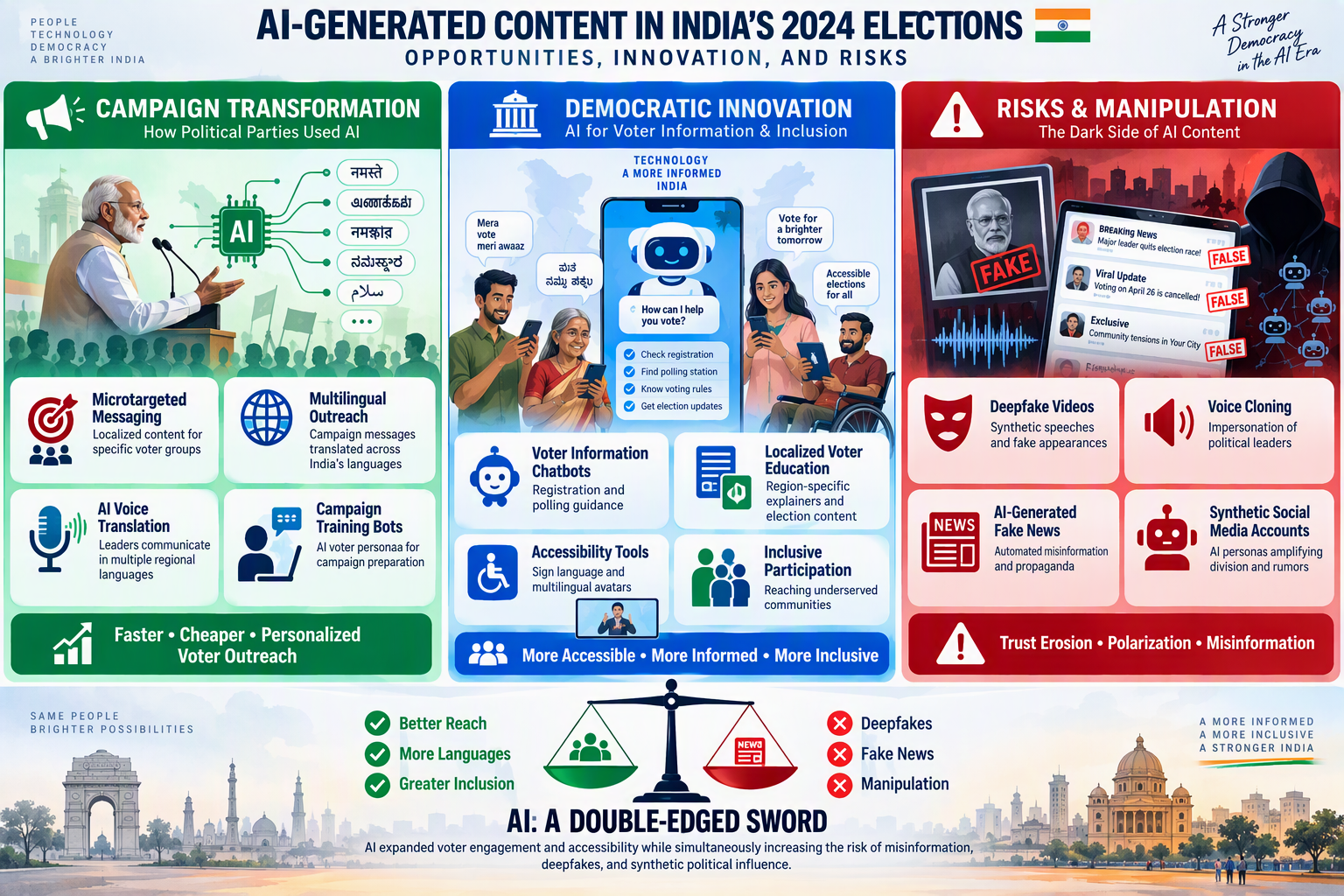
For my presentation at the workshop, my case study was the Indian election in 2024, where AI technology created many possibilities, though some politicians utilised it in their service to Satan. The Electoral Commission of India (ECI) effectively used AI for voter engagement and communication, reaching diverse communities through AIGC. Also, political actors used it to translate messages across dozens of languages, personalise voter outreach, and broaden citizen engagement. The ECI mediated such political content by limiting abuse and protecting the integrity of the process.
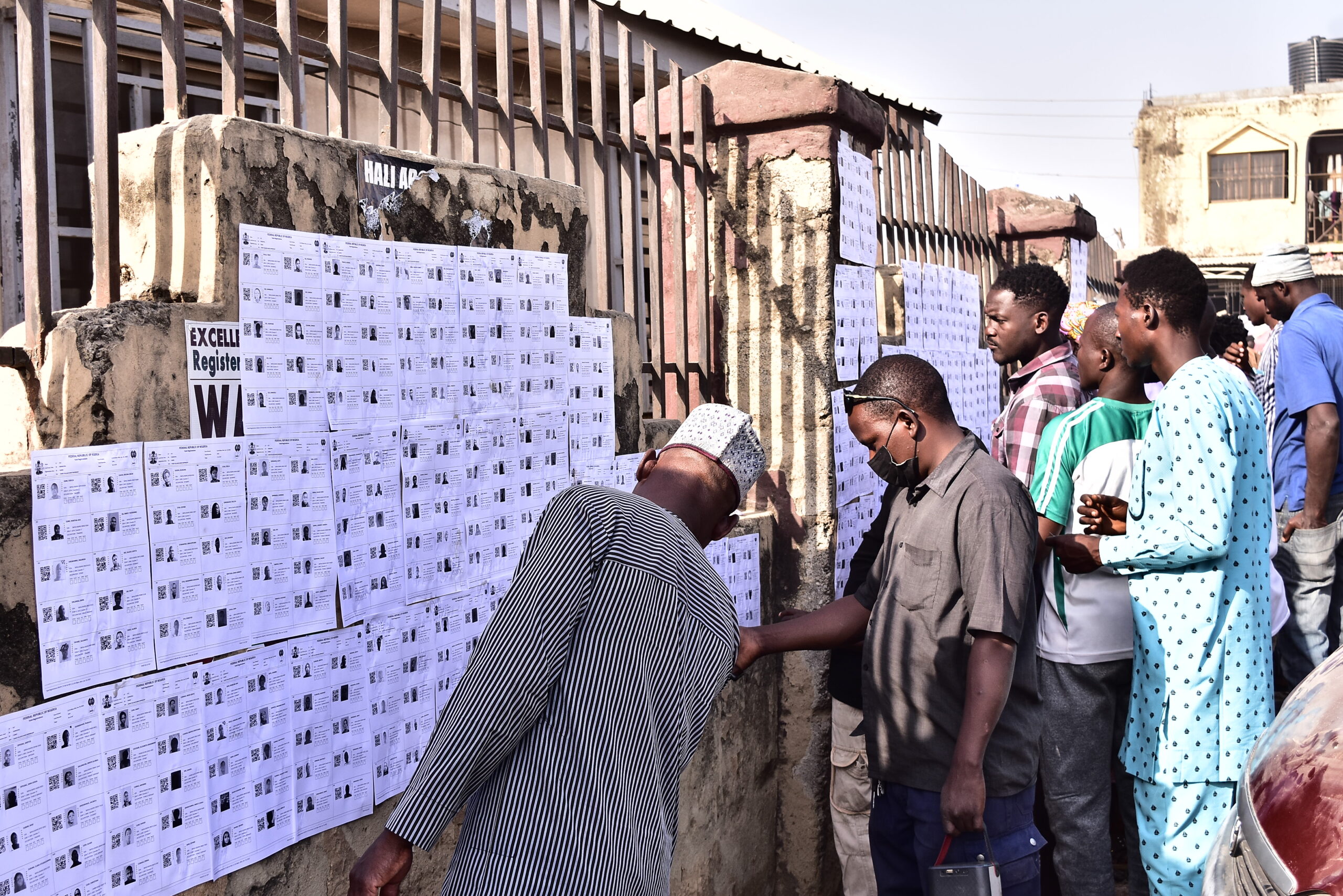
Voters checking their names at a polling unit before the commencement of voting during the 2023 general elections.
The Commission went beyond the use of AI to reach the Indian population to monitoring and penalising politicians who used the technology to manipulate contents to cast dirt on their competitors. In reality, in the electoral environment in India that year, there were deepfake videos, cloned voices, manipulated images, and misleading campaign messages that could distort facts, spread misinformation, and unfairly influence voters. But the ECI had issued a formal advisory, warning parties against the misuse of AI.
My case study was the Indian elections in 2024, where AI technology created many possibilities, though some politicians utilised it in their service to Satan
From the Indian experience, AI, as a technology, should not be a threat to the conduct of a free and fair election in 2027. If the elections fail the integrity test, Nigerians know who the spoilers would be. These spoilers have been the snare of our elections over the years: not just manipulating INEC, not just falsifying figures, not just buying votes at the polling unit, not just maligning their opponents, not just manipulating the judiciary to issue ugly injunctions and judgements, not just buying security operatives; they are now behind the pre-election misuse of AI. They have an elevated title called the political elite.
They are the true troublers of the nation, violators of due process, and merchants of electoral deceit. Like the serpent in the Garden of Eden that lured Eve away from her inheritance into a wilderness of pain and suffering, they seduce democracy away from its promise and into the shadows of manipulation. Although INEC has employed the language of bureaucratic restraint to soften the gravity of the damage inflicted on the voter register, the scale of the fraud suggests a far more deliberate enterprise. It is conceivable that the architects behind the insertion of approximately 1.6 million fictitious names into the register were not merely opportunistic actors but highly educated political strategists, perhaps armed with doctoral credentials and driven by the calculus of power. From the comfort of air-conditioned war rooms, they may have convinced themselves that an inflated register could become a ladder to electoral victory for their principals. In pursuit of that objective, they allegedly preyed upon vulnerable registrants, recruiting them into a scheme that polluted a vital national security and democratic document. Such actions do not merely tamper with records; they drive a dagger into the heart of electoral integrity and public trust.
The narratives about failed elections in Nigeria, if well told, are stories whose main characters are from the political elite; they antagonise the work of the electoral umpire and the people, preventing their votes from deciding who the country’s leaders should be. They are double agents who claim to belong but destabilise their own political parties in favour of another, for a pot of porridge. Security operatives who should play a neutral role in an election trade their powers and privileges for cash that would disappear from their pockets before the characters they worked for are sworn into power. During party primaries, political party delegates sell their birthrights to sick and questionable presidents, comforting themselves with the belief that they had received their own slice of the national cake; the rest of the country could perish in hellfire afterwards.
The flaws in Nigeria’s elections are triggered by the political elite. INEC Chairman Joash Amupitan nor Artificial Intelligence (AI) are lucky to be at the receiving end of most accusations. Stakeholders in the electoral value chain are the real roadblocks to effective democracy in Nigeria. If we have to number the stakeholders here, we would produce an unwieldy list.
However, the frontline institutions and participants include the electoral umpire, responsible for voter registration, election administration, result management, and election oversight; political parties that nominate candidates, campaign, mobilise voters, and compete for elective offices; candidates who contest for elected positions at federal, state, and local levels; and security agencies, including the Nigeria Police Force, Department of State Services (DSS), Nigeria Security and Civil Defence Corps (NSCDC), and the military (when authorised), which provide election security.
For the conduct of a credible election in Nigeria, there must be a consensus among these stakeholders that the Electoral Act (2026) and INEC’s Electoral Guidelines must not be violated
There are also election officials and ad hoc staff, who operate as polling officials, returning officers, presiding officers, and collation officers responsible for conducting elections; Civil Society Organisations that conduct voter education, election observation, advocacy, and accountability initiatives; traditional and religious organisations who are influential actors that shape public opinion, promote peaceful participation, and support voter mobilisation; the Judiciary, that is, the courts and election tribunals that adjudicate electoral disputes and petitions; and the media, both traditional and digital platforms that facilitate political communication but also require monitoring for misinformation, disinformation, and AI-generated content.
For the conduct of a credible election in Nigeria, there must be a consensus among these stakeholders that the creed of the Electoral Act (2026) and INEC’s Electoral Guidelines must not be violated. To build this atmosphere, INEC and its officials must demonstrate their independence and wield the big stick on those who abuse the rules. They must not spare reckless characters in the ruling APC who assume they have immunity from the harsh edges of the law.
Specifically, INEC must establish robust internal and external mechanisms to monitor the misuse of AI and social media before, during and even after the 2027 elections. The rapid spread of AI-generated content, deepfakes, and misleading narratives poses a significant threat to electoral integrity, voter confidence, and democratic stability. Internal monitoring units should track online campaign activities, investigate complaints, and collaborate with technology platforms to identify false or manipulated content. External monitoring should involve civil society organisations, fact-checking groups, academic institutions, and independent observers to provide transparent oversight and early warnings.
The experience from India’s 2024 Lok Sabha Election demonstrates why such vigilance is necessary. During the campaign, the ECI formally reprimanded both the ruling Bharatiya Janata Party (BJP) and the opposition Indian National Congress after receiving complaints about statements made by their star campaigners. The ECI warned the BJP against speeches that could create social divisions or use religious and communal themes in campaigning, while Congress was directed to avoid statements that could give voters a false impression, including claims suggesting that India’s Constitution might be abolished or undermined. The Commission rejected both parties’ defences as not tenable and instructed party leaders to correct campaign discourse and maintain decorum.
For Nigeria to conduct credible, peaceful, and democratically legitimate elections in 2027, INEC cannot throw up its hands like a helpless orphan while the elite destabilises the process and renders worthless all the hard work, financial and material resources that would go into the planning and conduct of the elections. The umpire cannot afford to remain a passive observer while the political elite use the growing sophistication of artificial intelligence, deepfakes, synthetic media, algorithmic amplification, and coordinated disinformation campaigns to weaken the integrity of the 2027 elections.

Prof. Joash Amupitan INEC Chairman
False narratives can spread faster than facts, manipulate public opinion, damage reputations, suppress voter participation, and undermine confidence in election outcomes. INEC must, therefore. take a clear and proactive stand by developing robust regulations, strengthening digital monitoring mechanisms, partnering with technology companies, supporting independent fact-checkers, and working closely with civil society, security agencies, and the media to identify and counter harmful content. By acting decisively against the misuse of AI and social media, Professor Amupitan will not only protect his own image but also safeguard public trust and reinforce the principle that informed voters, not algorithms, deception, or digital manipulation, should decide elections.
Author

Sign up for The Insight Newsletter
Get in-depth, research and data-based interpretative reports from around Nigeria.